Source Customized Color Appointment Reminder Cards for clinics, hospitals, and events
Find 30 suppliers offering Customized Color Appointment Reminder Cards made from paper or PVC. Buyers can compare materials, printing types, and sizes to select the right option for medical, campus, or enterprise applications.
Key considerations
Products List







Comprehensive Sourcing Guide
Strategic Sourcing Guide for Customized Color Appointment Reminder Cards
Navigating the B2B market for Customized Color Appointment Reminder Cards requires a nuanced understanding of the divergence between traditional paper-based solutions and advanced electronic card technologies. Buyers searching for this specific keyword often encounter a complex landscape where product attributes vary significantly between suppliers. The core objective is to secure a solution that aligns with the specific operational needs of the business, whether that involves simple physical reminders or integrated electronic identification systems. This guide synthesizes observed market data to provide a disciplined framework for evaluating suppliers, verifying technical specifications, and ensuring compliance without relying on unverified claims.
Distinguishing Product Categories and Material Specifications
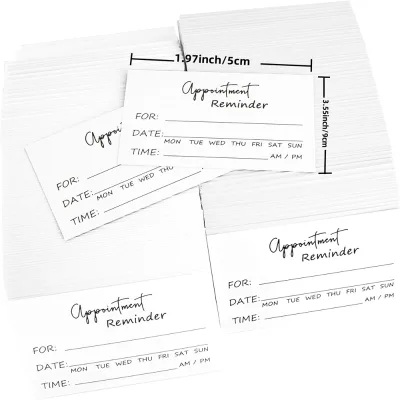
The first critical step in sourcing is clarifying the material composition of the product. Market observations reveal a distinct split between two primary categories: paper-based reminder cards and PVC-based electronic cards. For buyers specifically seeking "appointment reminder cards" in a traditional sense, the relevant material is Paper & Paperboard. These products are typically manufactured using Art Paper, Cardboard, or Coated Paper, offering a tactile and visual medium for communication. The standard size for these paper-based items often varies, with some specifications noting a single package size of 26x11x0.1 cm, indicating a compact, portable format suitable for mailing or hand-distribution.
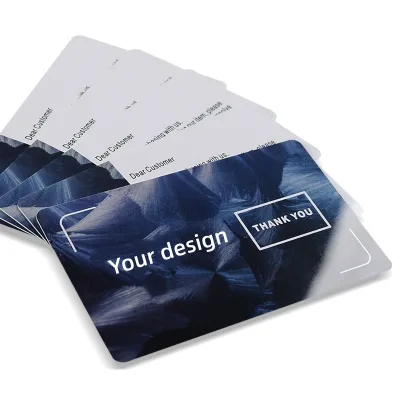
Conversely, a significant portion of the market lists products under the classification of PVC Cards. These items, while sometimes marketed with similar functional names, are fundamentally different. They are constructed from PVC material and function as electronic devices rather than simple paper notices. These cards are often described as Memory Cards, RFID Cards, or Magnetic Stripe Cards, featuring complex internal structures such as High Frequency carriers and specific data transmission modes like Serial or Parallel. The standard dimensions for these electronic variants frequently align with the ISO 7810 ID-1 format, measuring 85.5mm x 54mm x 0.76mm or 0.85mm. Buyers must rigorously verify whether the supplier is offering a passive paper card or an active electronic card, as the procurement strategy, cost structure, and application use cases differ entirely between these two material classes.
Technical Specifications and Functional Capabilities
When evaluating the technical specifications of the cards, buyers must look beyond the surface-level description of "customized color." For paper-based appointment cards, the printing type is a primary determinant of quality. Offset Printing is a common method observed in the market, allowing for high-volume, consistent color reproduction. The surface finish often includes Film Lamination, which enhances durability and provides a professional sheen. The color profile is typically standardized to White, though customization is available to match brand identity.
For the PVC electronic variants, the technical requirements are far more stringent. These cards are classified by their internal structure and function. They may serve as Identification, Payment, or Information cards, capable of Encrypt/Decrypt functions. The magnetic strip specifications are critical for compatibility; observed data indicates the use of Hico (2750OE) and Loco (300OE) magnetic strips, which dictate the erasure and recording capabilities of the card. Furthermore, the data transmission mode, whether Contact or Contactless (RFID), determines the hardware infrastructure required to read the card. The "Power Supply Mode" is noted as Passive Card for many electronic variants, meaning they derive energy from the reader rather than having an internal battery. Understanding these specifications is essential to ensure the card functions within the existing IT or operational infrastructure of the purchasing organization.
Compliance, Certification, and Standard Verification
Compliance is a non-negotiable aspect of B2B procurement, particularly when dealing with electronic cards that may interact with financial or medical systems. The market data indicates that suppliers often claim adherence to international standards such as ISO. For electronic cards, specific certifications like CE, FCC, CCC, and RoHS are frequently cited. These certifications validate that the product meets safety, electromagnetic compatibility, and environmental standards. However, buyers must treat these as observations rather than guaranteed attributes for every listed product.
The standard dimensions for the cards are also a matter of compliance. The ISO standard of 85.5540.85mm is a common benchmark for credit card-sized formats, but "Customized Size" is also a prevalent offering. When sourcing, it is imperative to verify if the specific batch of cards meets the required ISO tolerance levels, especially if the cards are intended for use in automated readers or specific hardware slots. For paper-based cards, while formal electronic certifications may not apply, buyers should verify the environmental certifications of the paper and inks used, ensuring they align with corporate sustainability goals. The presence of a "Business History" of 16 years or "Foreign Trade Experience" with numerous overseas clients suggests a level of operational maturity, but these should be cross-referenced with actual certification documentation provided during the due diligence phase.
Cost Drivers and Procurement Economics
The economics of sourcing these cards are influenced by several variables, including material type, customization level, and order volume. The observed price range in the market spans from 0.01 to 29.8 USD, a wide disparity that reflects the difference between simple paper stock and complex electronic chips. For paper-based reminder cards, the cost is primarily driven by the weight of the paper, the complexity of the offset printing, and the lamination process. The single gross weight of 0.01 kg suggests a lightweight product, which keeps shipping costs relatively low for bulk orders.
In contrast, the cost of PVC electronic cards is heavily influenced by the embedded technology. The inclusion of RFID chips, magnetic stripes, or memory structures significantly increases the unit price. The Minimum Order Quantity (MOQ) is another critical cost driver. While some suppliers offer an MOQ as low as 1 piece, others require a commitment of 1000 pieces or even up to 5000 pieces. The "Factory Price" model is common, but buyers must account for the volume discounts that typically accompany higher MOQs. Additionally, the packaging specifications, such as 250 pieces per inner box and 20 boxes per carton, impact the logistics and storage costs. Buyers should calculate the total landed cost, including the potential premium for custom colors and the logistics of handling different packaging configurations.
Supplier Evaluation and Operational Reliability
Evaluating a supplier requires a focus on their production capabilities and logistical reliability. The market data highlights a "Place of Origin" in Guangdong, China, a region known for its manufacturing density. When assessing potential partners, buyers should verify the supplier's "Business History" and "Foreign Trade Experience." A track record of 16 years and experience with overseas clients can be a positive indicator of stability, but it must be validated through references and past performance reviews.
The "Delivery" lead time is another critical factor. Observed data suggests a lead time of "in 7 Days After Payment" for certain products, which is relatively fast. However, this should be confirmed for the specific order volume and customization level required. The availability of "Free Samples" is a valuable tool for quality assessment before committing to a large order. Buyers should utilize this opportunity to physically inspect the print quality, material thickness, and the functionality of any electronic components. The "Customization" attribute being "Available" across the board indicates flexibility, but the lead time for custom orders may differ from standard stock items. It is essential to establish clear communication channels regarding the timeline for design approval, production, and shipping to avoid delays.
Quality Control and Long-Term Procurement Strategy
Implementing a robust quality control (QC) strategy is vital for maintaining the integrity of the procurement process. For paper-based cards, QC should focus on print registration, color consistency, and the durability of the lamination. The "Single package size" and "Single gross weight" should be verified against the contract specifications to ensure consistency across batches. For electronic cards, QC must extend to functional testing. This includes verifying the magnetic stripe encoding, the readability of RFID chips, and the durability of the card structure under repeated use.
Long-term procurement considerations involve building a sustainable relationship with the supplier. The "Application Field" for these cards is diverse, ranging from Medical Insurance and Campus Cards to Supermarket and Traffic systems. Buyers should ensure that the supplier has the capacity to scale production as their needs grow. The "Payment" terms, typically T/T (Telegraphic Transfer), should be negotiated to balance risk and cash flow. Furthermore, the "Product Type" classification as a Label or Card should be clearly defined in all future contracts to prevent ambiguity. By focusing on verified specifications, maintaining strict quality controls, and fostering transparent communication, buyers can secure a reliable supply chain for their Customized Color Appointment Reminder Cards.
Application Scenarios and Market Fit
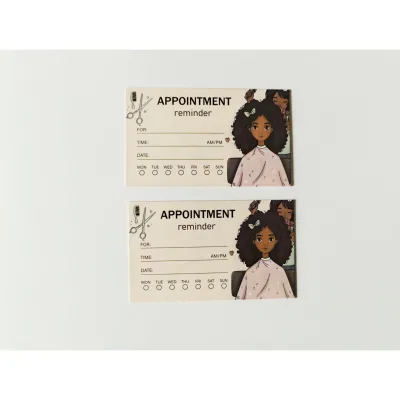
The versatility of these products allows them to fit into a wide array of application scenarios. Paper-based appointment reminder cards are ideal for healthcare clinics, salons, and service businesses that require a low-cost, high-visibility method to confirm appointments. The "Standard Card" shape and "White" color provide a clean canvas for branding. On the other hand, PVC electronic cards are suited for more complex environments such as enterprise access control, social security systems, and hotel management. The "Kind" of card, whether ID Card or Smartcard Application, dictates the specific use case.
The following table summarizes the key differences between the two primary product categories observed in the market:
| Feature | Paper-Based Reminder Cards | PVC Electronic Cards |
|---|---|---|
| Primary Material | Paper & Paperboard (Art Paper, Cardboard) | PVC |
| Key Function | Information Display, Appointment Reminder | Identification, Payment, Encryption |
| Printing/Finish | Offset Printing, Film Lamination | Magnetic Stripe, RFID, Memory Chip |
| Standard Size | Variable (e.g., 26x11x0.1 cm package) | ISO Standard (85.5x54x0.76mm) |
| Typical Application | Clinics, Salons, General Reminders | Medical Insurance, Traffic, Enterprise Access |
| Power Supply | Passive (No power needed) | Passive Card (Inductive/Contact) |
| Certification Focus | Environmental, Print Quality | CE, FCC, RoHS, ISO |
Understanding these distinctions ensures that buyers select the correct product for their specific operational needs, avoiding the common pitfall of purchasing electronic components for a simple paper-based reminder task, or vice versa. By adhering to these evidence-based guidelines, organizations can optimize their procurement strategy and ensure the successful deployment of their appointment reminder systems.
FAQs
What materials are used for appointment reminder cards?
The primary materials observed are Paper & Paperboard or PVC. Paper variants use Art Paper, Cardboard, or Coated Paper, while electronic cards are constructed from PVC material to support memory or RFID functions.
Which printing type is standard for these cards?
Offset Printing is the standard method observed for producing these cards. This technique allows for high-volume production with consistent color reproduction, often finished with Film Lamination for durability.
Can I find suppliers with a specific minimum order quantity?
Yes, suppliers offer varying minimum order quantities ranging from 1 to 5000 pieces. Some listings specify an MOQ of 1000 pieces, while others may accommodate smaller initial orders depending on the customization level.
What certifications are available for PVC electronic cards?
Certifications such as CE, FCC, CCC, and RoHS are frequently cited for PVC electronic cards. These validate compliance with safety, electromagnetic compatibility, and environmental standards required for specific applications.
How long is the typical delivery lead time after payment?
The observed delivery lead time is typically within 7 days after payment. This fast turnaround applies to standard orders, though custom specifications may require additional processing time.
Where are these products primarily manufactured?
The products are primarily manufactured in Guangdong, China. This region is a known hub for printing and card manufacturing, offering a dense network of suppliers for this specific product category.
What is the standard size for credit card formats?
The standard size for credit card formats is 85.5mm by 54mm with a thickness of 0.76mm or 0.85mm. Custom sizes are also available, but this dimension aligns with ISO standards for ID cards.