Source Customized Cotton Linen Place Mat for Home Office Restaurant
Explore 30 options for Customized Cotton Linen Place Mat designed for dining tables in homes, offices, and restaurants. Buyers can compare specifications, customization features, and pricing to find the ideal eco-friendly placemat for their needs.
Key considerations
Products List


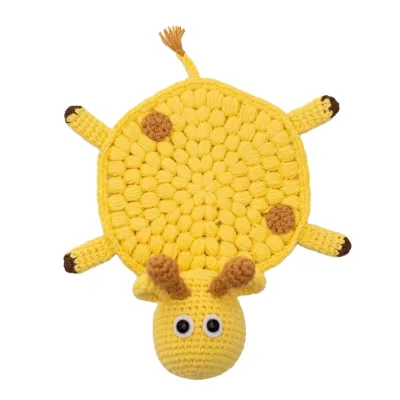
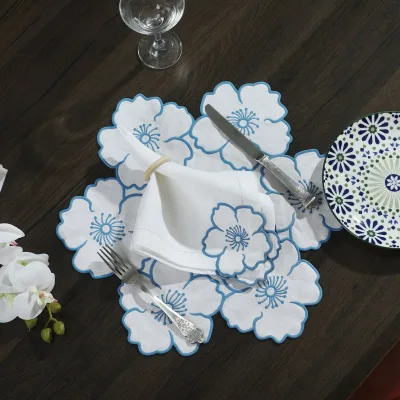
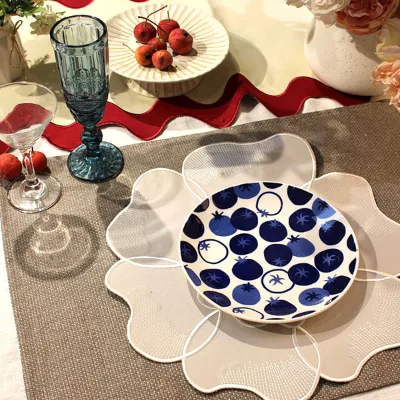


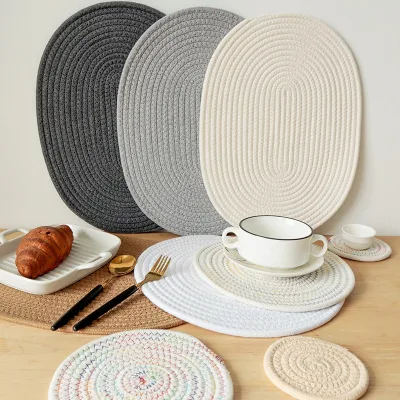


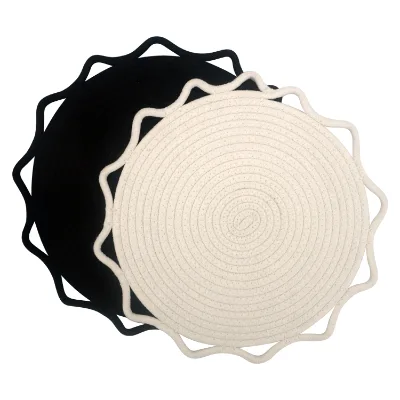
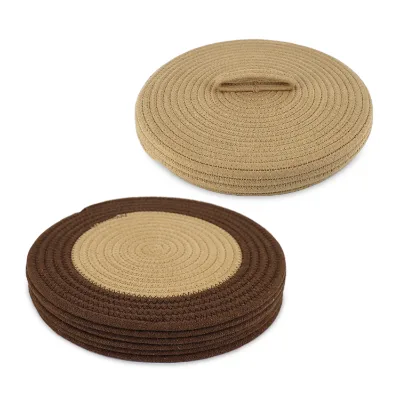
Customize Logo Handmade Rope Woven Coaster Mats Cotton Pot Mat bowl Placemat
$0.50 - $0.70
MOQ: 500 Pieces


Comprehensive Sourcing Guide
Strategic Sourcing Guide for Customized Cotton Linen Place Mats
The global market for table linens has seen a significant shift toward sustainable, customizable, and aesthetically versatile products. For procurement professionals seeking customized cotton linen place mats, the sourcing landscape offers a diverse array of options ranging from simple, eco-friendly designs to complex, branded solutions. This guide provides a disciplined approach to evaluating suppliers, verifying technical specifications, and ensuring compliance without relying on unverified market claims. The focus remains strictly on observable product attributes and verified data points to support informed decision-making.
Technical Specifications and Material Composition
When sourcing customized cotton linen place mats, the primary technical differentiator lies in the raw material composition and the resulting physical characteristics. The supplied data indicates a clear distinction between products utilizing natural fibers and those employing synthetic alternatives. For the specific target of cotton linen, buyers must verify the exact blend ratio, as this dictates the hand feel, durability, and aesthetic finish.
The observed product attributes highlight "Cotton Linen" and "Cotton yarn" as primary raw materials for specific models, such as the promotion gift-038K and BM240303 series. These materials are associated with a "Soft and Comfortable" hand feeling, a critical attribute for dining table applications where tactile experience is paramount. In contrast, other entries in the market data reference "PU Leather" or "Cotton yarn" with different surface treatments like "PU or PVC," which suggests a broader market segment that buyers must carefully filter out if the core requirement is strictly natural fiber.
Dimensions and shape are equally critical technical parameters. The data reveals a variety of standard sizes, including 3838cm, 44x35cm, and 17CM (likely referring to a specific component or diameter). The shape varies significantly between "Round" and "Square" configurations, with the "European" and "Classic Pastoral" styles often dictating the geometric preference. For a customized order, the buyer must confirm whether the supplier can accommodate non-standard dimensions or if they are restricted to the observed standard sizes like 3838cm or 44x35cm. Furthermore, the "Surface Treatment" of "Linen" for cotton-based products implies a specific weave or finish that enhances the natural texture, distinguishing it from the "PU or PVC" treatments found in synthetic alternatives.
Compliance, Certification, and Safety Standards
For B2B procurement, particularly in the food-contact and hospitality sectors, compliance is not merely a formality but a prerequisite for market entry. The supplied facts explicitly list "Cpsia" and "LFGB" as certifications for specific product lines. These are high-confidence indicators of safety and regulatory adherence. CPSIA (Consumer Product Safety Improvement Act) is a US standard focusing on lead content and phthalates, while LFGB (German Food and Feed Code) is a rigorous European standard for food contact materials.
Buyers must verify that the specific customized order retains these certifications. The data also notes a "Standard" of "Sustainable, Non-Toxic, Lead Free," which aligns with the observed certifications. However, it is crucial to distinguish between observed facts and general market claims. While "OEKO-TEX" and "CE" appear in the low-confidence background section, they should not be assumed as guaranteed attributes for every supplier offering cotton linen place mats. Instead, procurement teams should request current, valid test reports from the supplier to confirm that the specific batch of customized mats meets the required safety thresholds.
The "Advantage" of being "Eco Friendly" is a common marketing claim, but it must be substantiated by the raw material source and the production process. A "Lead Free" standard is a tangible metric that can be verified through third-party testing. When evaluating suppliers, the presence of these certifications should be a primary filter. If a supplier cannot provide documentation for CPSIA or LFGB compliance, the risk of non-compliance in regulated markets increases significantly, regardless of their marketing materials.
Cost Drivers and Pricing Dynamics
Understanding the cost structure of customized cotton linen place mats requires an analysis of material, customization, and order volume. The observed price range in the market data spans from $0.26 to $13.99 USD. This wide variance is not indicative of a single product type but rather reflects differences in material quality, customization complexity, and order quantity.
The Minimum Order Quantity (MOQ) is a significant cost driver. The data shows an observed MOQ range of 12 to 1000 units, with specific entries citing 100PCS and 500pcs. A lower MOQ, such as 12 units, typically results in a higher unit cost due to the fixed costs of setup and production runs. Conversely, an MOQ of 500 or 1000 units allows for economies of scale, potentially bringing the unit price closer to the lower end of the observed range.
Customization is another major factor influencing cost. The data confirms that "Customization" is available, with options for "Custom" color, "Customized" packing, and "Customized" standards. The ability to print a logo is noted as "Without Logo Printing" in some entries, implying that logo printing is an add-on service that may incur additional fees. Buyers should anticipate that requests for specific colors, custom dimensions, or branded packaging will increase the base cost. Additionally, the "Supply Ability" of 500 pieces per month for some suppliers suggests that larger orders may require phased production or extended lead times, which can impact the overall cost of capital and inventory management.
Typical Applications and Usage Scenarios
The versatility of cotton linen place mats makes them suitable for a wide range of applications. The observed usage categories include "Home," "Office," "Restaurant," "Cafe," and "Hotel." This broad applicability allows buyers to target multiple market segments with a single product specification, provided the customization aligns with the specific environment.
For the "Home" and "Office" sectors, the "Soft and Comfortable" hand feel and "Classic Pastoral" or "European" styles are particularly relevant. These environments often prioritize aesthetics and tactile comfort over extreme durability. The "Round" and "Square" shapes allow for flexibility in table settings, accommodating both formal dining and casual workspaces.
In the "Restaurant," "Cafe," and "Hotel" sectors, the focus shifts slightly toward durability and branding. The "Application" of "Use for Dining Table" is universal, but commercial establishments often require mats that can withstand frequent washing and heavy use. The "Eco Friendly" and "Non-Toxic" attributes are strong selling points for hospitality venues that market themselves as sustainable or health-conscious. The "Theme" of "Animals & Nature" observed in the data suggests that these mats can be tailored to specific interior design themes, making them ideal for boutique hotels or themed restaurants.
Supplier Evaluation and Verification
Evaluating suppliers for customized cotton linen place mats requires a rigorous approach to verifying claims against the provided facts. The origin of the products is consistently listed as "China," which is a common hub for textile manufacturing. However, the specific port of dispatch varies, with "Shanghai," "Ningbo," and "Lianyungang" identified as key logistics hubs. Buyers should confirm the port of dispatch to accurately calculate shipping costs and lead times.
When assessing a supplier, the "Production Model" numbers (e.g., BM240303, BMP240308) serve as unique identifiers. Buyers should request these model numbers to ensure they are evaluating the exact product specifications they intend to order. The "Packing Details" vary from "PE Bag with Carton Box" to "Opp Bag" and "Carton," which impacts the final cost and the condition of the goods upon arrival. For customized orders, the "Customized" packing option is a critical feature to confirm, as it allows for branded packaging that enhances the product's value.
The "Supply Ability" of 500 pieces per month is a specific constraint that buyers must respect. If the order volume exceeds this capacity, the supplier may need to schedule production in batches, affecting the delivery timeline. It is essential to verify if the supplier can scale up production for larger orders or if they rely on a network of subcontractors. The "Hand Feeling" and "Raw Materil" attributes should be verified through physical samples before placing a large order, as these are subjective qualities that can vary between batches.
Quality Control and Long-Term Procurement
Quality control in the production of cotton linen place mats involves monitoring several key parameters. The "Surface Treatment" of "Linen" must be consistent to ensure the desired texture and appearance. Any deviation in the weaving process or dyeing technique can affect the final product's quality. The "Standard" of "Sustainable, Non-Toxic, Lead Free" must be maintained throughout the production cycle, requiring regular testing of raw materials and finished goods.
For long-term procurement, buyers should establish a relationship with suppliers who demonstrate flexibility in customization. The ability to offer "Custom" color and "Customized" packing is a strong indicator of a supplier's capability to adapt to changing market needs. Additionally, the "Advantage" of being "Eco Friendly" should be a core part of the supplier's value proposition, as sustainability is increasingly becoming a requirement for B2B contracts.
Buyers should also consider the "Age Range" of 12+y, which implies that the product is suitable for general use but may not be intended for very young children without supervision. This is a relevant consideration for products marketed to families or educational institutions. The "Weight" of 42g and "Single gross weight" of 0.300 kg are useful metrics for calculating shipping costs and storage requirements.
Comparative Analysis of Product Attributes
To facilitate decision-making, the following table summarizes the key attributes observed in the market data, highlighting the differences between various product configurations.
| Attribute | Observation A (Cotton Linen Focus) | Observation B (Synthetic/Alternative) | Procurement Implication |
|---|---|---|---|
| Raw Material | Cotton Linen, Cotton yarn | PU Leather, Cotton yarn | Verify material blend for sustainability goals. |
| Surface Treatment | Linen | PU or PVC | Linen offers natural texture; PU offers durability. |
| Shape | Round, Square | Square | Match shape to table design and theme. |
| Certification | CPSIA, LFGB | CE (Low confidence) | Prioritize suppliers with CPSIA/LFGB for food safety. |
| MOQ | 100 PCS, 500 pcs | 12 - 1000 | Lower MOQ increases unit cost; verify scalability. |
| Packing | Customized, PE Bag + Carton | Opp Bag, Carton | Customized packing adds value for branding. |
| Style | European, Classic Pastoral | Classic Pastoral | Align style with target market aesthetic. |
| Application | Dining Table, Home, Hotel | Dining Table, Restaurant | Ensure application matches intended use case. |
This comparison underscores the importance of precise specification matching. While some products share similar shapes or styles, the raw material and certification differences are critical for compliance and brand alignment.
Conclusion
Sourcing customized cotton linen place mats requires a meticulous approach that balances aesthetic preferences with technical compliance and cost efficiency. The market offers a wide range of options, from basic cotton yarn mats to complex, certified products with custom branding. Buyers must prioritize suppliers who can demonstrate verified certifications like CPSIA and LFGB, offer flexible customization options, and maintain consistent quality standards. By carefully evaluating the technical specifications, cost drivers, and supplier capabilities, procurement professionals can secure a reliable supply chain that meets the demands of modern dining and hospitality environments. The key to success lies in rigorous verification of all claims against the provided facts and a clear understanding of the specific requirements of the target market.
FAQs
What certifications do these place mats have?
The products hold CPSIA and LFGB certifications for safety. These standards ensure the mats are non-toxic and lead-free, meeting strict US and European food contact requirements for dining use.
Can I customize the color and packing?
Yes, customization is available for both color and packing. Buyers can request specific colors and choose from options like PE bags with carton boxes or fully customized packaging solutions.
What is the minimum order quantity required?
The minimum order quantity varies by supplier, typically ranging from 100 to 500 pieces. Some entries specify 100 PCS while others require 500 pcs, depending on the specific model and customization level.
Which raw materials are used for these mats?
Primary materials include cotton linen and cotton yarn for natural fiber options. Some variations utilize PU leather with PU or PVC surface treatments, offering different textures and durability profiles.
How do I verify the product dimensions?
Standard sizes include 38x38cm, 44x35cm, and 17cm diameters. Models like BM240303 and BML239079 correspond to specific square or round dimensions that buyers must confirm before ordering.
What is the supply capacity for large orders?
Supply ability is listed as 500 pieces per month for certain suppliers. Larger orders may require phased production or extended lead times to accommodate the monthly manufacturing capacity limits.