Source Customized Durable Montessori Busy Book for Preschools, Homes, and Daycares
Compare 30 listings of customized durable Montessori busy books designed for early childhood development. These fabric and paper educational toys feature eco-friendly materials, sound recording, and various themes to support hand-eye coordination and color recognition for children aged 0 to 8 years.
Key considerations
Products List


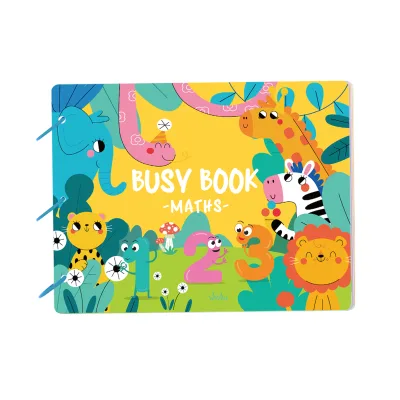
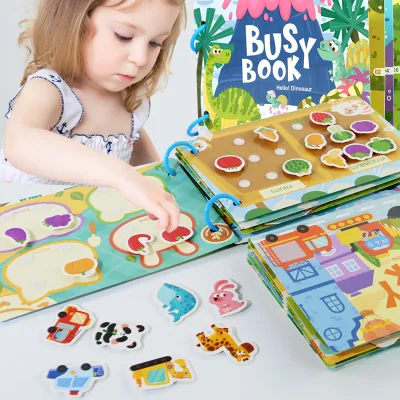


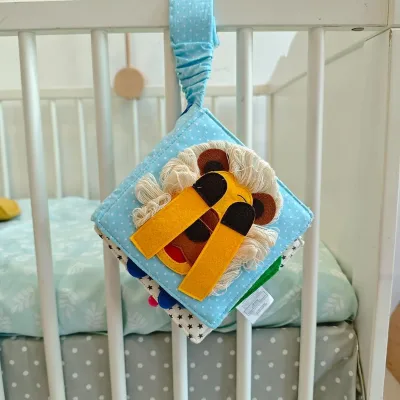
Montessori Early Education Paper Tactile Book Baby Tearing Apart a Book
$18.00 - $23.00
MOQ: 10 Pieces


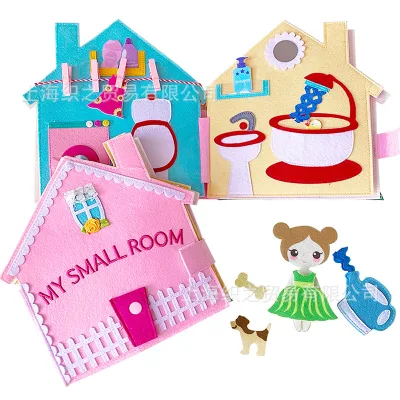
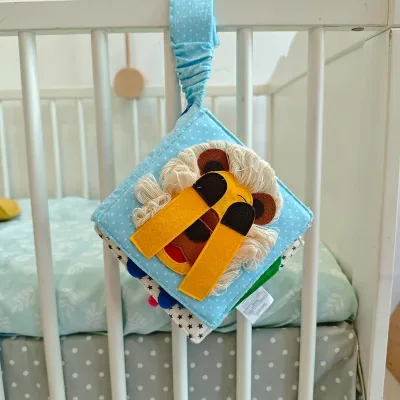
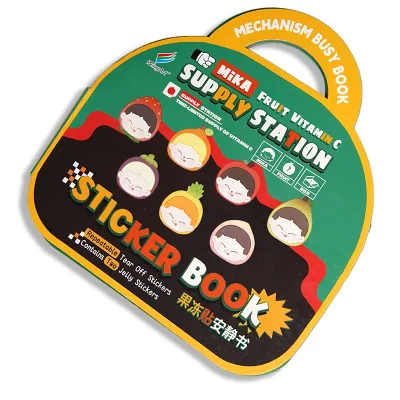
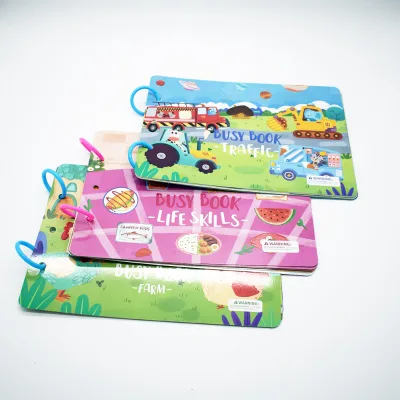
Creative Jelly Sticker Quite Busy Book Montessori Busy Book for Kids and Toddlers
$1.13 - $1.18
MOQ: 5000 pieces






Comprehensive Sourcing Guide
Strategic Sourcing Guide for Customized Durable Montessori Busy Books
Defining Product Specifications and Material Integrity
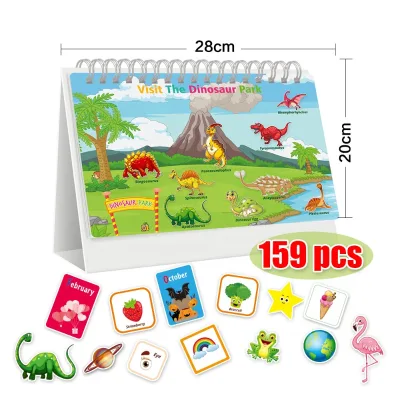
When sourcing a Customized Durable Montessori Busy Book, the primary objective is to identify a product that balances educational efficacy with robust construction. The core product category is identified as an educational toy, specifically functioning as an educational book designed to develop intelligence and support early learning. The physical form factor is typically a line-shaped or rectangular object, with dimensions varying significantly based on the specific model and target age group. For instance, observed specifications include models with standard sizes such as 2620 cm, 18cm * 15cm, and 2424 cm, while other variants measure 21.514.51.5cm or 22X15X2 cm. Buyers must verify the exact dimensions against their packaging and shipping requirements, as the single package size and gross weight can impact logistics costs.
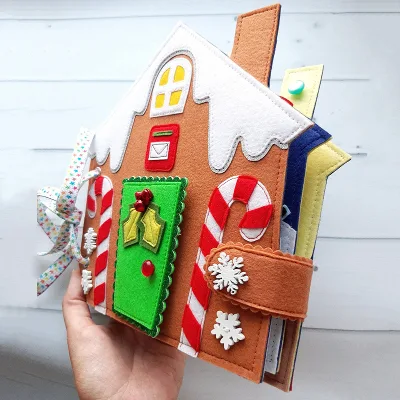
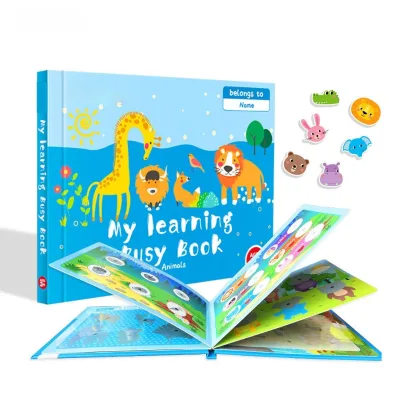
Material selection is the most critical factor in determining durability. The supply chain for these items predominantly utilizes fabric-based materials, specifically thickened eco-friendly needle-punched non-woven fabric. This material choice is essential for the "tear-resistant" and "no deformation" attributes observed in high-quality listings. The construction often involves fabric binding and three-dimensional non-woven fabric accessories to create interactive elements. While some product descriptions mention paper as a material, the primary durable variant relies on the non-woven fabric structure to withstand repeated manipulation by children. The product theme styles vary widely, including Home Cabin Edition, Tool Knowledge Edition, and specific themes like farm, sea, forest, traffic, dinosaur, and alarm clock busy books. These themes dictate the visual content and the specific interactive components attached to the fabric pages.
Compliance Standards and Safety Certifications
Safety compliance is non-negotiable in the children's toy industry. For buyers sourcing from China, verifying that the product meets international safety standards is the first step in risk mitigation. The high-confidence facts indicate that compliant products must hold ASTM F963-96a and EN71 certifications. These are the primary benchmarks for toy safety in North America and the European Union, respectively. The presence of these certifications suggests that the materials used are free from harmful substances and that the mechanical construction prevents choking hazards or sharp edges.
Buyers should explicitly request current certification test reports from the supplier rather than relying on generic claims. While some background information mentions CE or OEKO-TEX, these are not confirmed as high-confidence facts for the specific product listings provided. Therefore, the procurement strategy must focus on verifying the ASTM F963-96a and EN71 standards directly. The certification status applies to the finished product, ensuring that the fabric, adhesives, and any auxiliary accessories meet the necessary safety thresholds. It is also important to note that the product is categorized under "All Human" toy departments, implying a broad applicability, but specific age ranges must be strictly adhered to. The observed age ranges span from 0 to 24 months up to 3-8 years, and sometimes "All Ages." The certification must align with the intended age group; for instance, toys for children under 36 months have stricter requirements regarding small parts and tear strength.
Cost Drivers and Pricing Dynamics
The pricing structure for customized Montessori busy books is influenced by several variables, including material thickness, customization complexity, and order volume. The observed listed price range in the market spans from $0.20 to $25.00 USD. This wide variance reflects the difference between basic, unbranded units and premium, highly customized versions with advanced features like sound recording and music capabilities. The lower end of the price spectrum likely corresponds to simpler fabric books with minimal interactive elements, while the higher end includes models with electronic components, complex 3D accessories, and specialized packaging.
Minimum Order Quantity (MOQ) is another significant cost driver. The observed MOQ range is broad, extending from 1 box to 5,000 units. Some suppliers offer an MOQ of just 1 box, which is beneficial for small businesses or those testing the market, while larger manufacturers may require bulk commitments to achieve economies of scale. The unit price is inversely related to the order volume; higher quantities typically reduce the per-unit cost. Additionally, customization costs, such as adding a customized logo or specific branding, will increase the base price. The "OEM/ODM" capability is highly welcomed, indicating that buyers can tailor the product to their brand identity, but this service comes with its own cost structure. Buyers should calculate the total landed cost, including shipping, duties, and any customization fees, rather than focusing solely on the factory gate price.
Functional Applications and Educational Philosophy
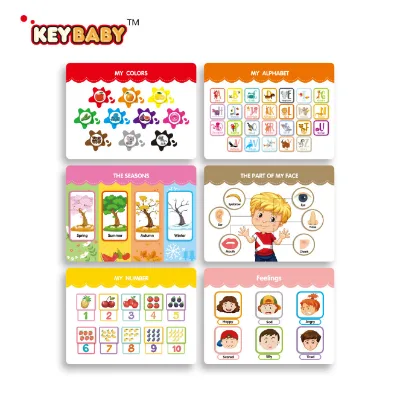
The functional design of these busy books is rooted in the Montessori early education philosophy, which emphasizes self-directed learning and hands-on interaction. The primary function is to develop intelligence, specifically targeting hand-eye coordination, color recognition, and scene recognition. The product is designed for preschool educational use, making it suitable for home environments, daycare centers, and early childhood education programs. The "train ability" attributes highlight the cognitive and motor skill development goals of the toy.
The product features extend beyond simple pages; they include interactive elements that may involve sound recording and music, adding an auditory dimension to the learning experience. The eco-friendly and anti-bacterial features are also key functional attributes, ensuring the toy remains safe and hygienic for repeated use. The color options are diverse, ranging from multi-color schemes to specific theme-based palettes like farm, sea, forest, traffic, dinosaur, and alarm clock. These thematic choices allow buyers to target specific educational niches or market segments. The "All Human" classification suggests that the toy is designed to be universally accessible, though the specific age recommendations must be respected to ensure developmental appropriateness.
Supplier Evaluation and Customization Capabilities
Evaluating a supplier for this product category requires a focus on their customization capabilities and production flexibility. The high-confidence facts confirm that customization is available, with options for customized logos and specific product themes. The "OEM/ODM" status being "highly welcomed" indicates that suppliers are generally open to working with buyers to create unique products. However, buyers must verify the extent of this customization. Can the supplier alter the fabric material? Can they design unique interactive elements? Can they adjust the dimensions to fit specific branding needs?
The origin of the product is consistently listed as China, with specific mentions of Zhejiang as a place of origin. This region is known for its manufacturing ecosystem, but buyers should still conduct due diligence on the specific factory's capacity and quality control processes. The "High-confidence facts" do not provide specific supplier names, so the evaluation must be based on the supplier's ability to demonstrate their production capabilities. Key questions to ask include: What is their lead time for custom orders? How do they handle sample production? What is their process for quality assurance before mass production? The ability to provide samples is crucial for verifying the "tear-resistant" and "no deformation" claims before committing to a large order.
Quality Control and Long-Term Procurement Strategy
Quality control (QC) is essential to ensure that the "durable" aspect of the busy book is maintained throughout the production run. The observed description emphasizes "tear-resistant" and "no deformation" properties, which must be verified through physical testing. Buyers should establish clear acceptance criteria for fabric strength, stitching quality, and the durability of the interactive elements. The "light weight" specification is a positive attribute for portability, but it must not compromise the structural integrity of the book.
For long-term procurement, consistency is key. The supply chain should be able to maintain the same material quality and design standards across multiple orders. The "carton" packing and "color box" options suggest that packaging is a variable that can be customized, which is important for brand consistency. Buyers should also consider the "QTY/CTN" (quantity per carton) metric, which is observed as 96 in some listings, to optimize shipping efficiency. Long-term relationships with suppliers who understand the Montessori philosophy and can adapt to changing educational trends will provide a competitive advantage. Regular audits and quality checks, especially for the first few production runs, will help mitigate the risk of defects and ensure that the product meets the high standards expected in the educational toy market.
Comparative Analysis of Product Variants
To assist in decision-making, the following table summarizes the key differences observed in the product specifications and attributes. This comparison highlights the variability in size, material, and features that buyers must consider when selecting a supplier.
| Feature | Variant A (Standard) | Variant B (Thematic) | Variant C (Advanced) |
|---|---|---|---|
| Model Number | xy-068, xy-047, QM-001 | F03 | Customizable |
| Dimensions | 26*20 cm, 18cm * 15cm | 24*24 cm | 21.514.51.5 cm |
| Primary Material | Thickened Eco-Friendly Needle-Punched Non-Woven Fabric | Non-Woven Fabric Three-Dim | Fabric, Paper (Mixed) |
| Age Range | 3-8 Years, 0-24 Months | All Ages | Preschool (0-24 Months) |
| Key Features | Tear Resistant, Eco-Friendly | Farm, Sea, Forest Themes | Sound Recording, Music |
| Certifications | ASTM F963-96a, EN71 | ASTM F963-96a, EN71 | ASTM F963-96a, EN71 |
| MOQ | 1 box | 1 box | Variable |
| Customization | Logo, Theme | Theme, Logo | Full OEM/ODM |
This table illustrates that while the core material and certification standards remain consistent across variants, the dimensions, themes, and functional additions vary significantly. Buyers should use this comparison to align their specific market needs with the appropriate product variant. The "Advanced" variant, for instance, offers sound and music features, which may command a higher price point but offer greater engagement for older children. Conversely, the "Standard" variant focuses on the fundamental Montessori principles of tactile learning without electronic components.
Final Procurement Considerations
In conclusion, sourcing a Customized Durable Montessori Busy Book requires a meticulous approach to specification, compliance, and supplier evaluation. The market offers a wide range of options, from simple fabric books to complex interactive models with sound capabilities. The critical success factors include verifying the ASTM F963-96a and EN71 certifications, ensuring the use of high-quality thickened non-woven fabric, and confirming the supplier's ability to deliver consistent quality across large orders. By focusing on these core elements and avoiding assumptions about unverified standards or prices, buyers can build a reliable supply chain that supports their educational toy business. The flexibility of the market, with its broad MOQ range and customization options, allows for scalable growth, provided that the initial quality checks are rigorous and the long-term relationship with the supplier is managed with clear communication and expectations.
FAQs
What certifications do these books hold for safety?
The products hold ASTM F963-96a and EN71 certifications to ensure safety compliance. These standards verify that materials are free from harmful substances and that construction prevents choking hazards for children aged 0 to 24 months or 3 to 8 years.
How can I customize the logo and theme?
Customization is available for logos and specific themes like farm, sea, or forest. Buyers can request OEM or ODM services to tailor the product, though customization costs may vary based on the complexity of the design and order volume.
Which materials ensure the book is durable?
Durable books are made from thickened eco-friendly needle-punched non-woven fabric. This material provides tear-resistant and no-deformation properties, ensuring the book withstands repeated use by children while maintaining its structural integrity over time.
What is the minimum order quantity for these items?
The minimum order quantity ranges from 1 box to 5000 units depending on the supplier. Some vendors offer low MOQs for market testing, while larger manufacturers may require bulk commitments to achieve better economies of scale for the order.
Can these books include sound recording features?
Yes, some advanced variants include sound recording and music functions. These features add an auditory dimension to the educational experience, targeting intelligence development and hand-eye coordination for preschoolers and older children within the specified age ranges.
Where are these educational toys manufactured?
The products originate from China, with specific manufacturing hubs in Zhejiang. Buyers should verify the specific factory location and lead times, as production capacity and logistics costs can vary significantly based on the supplier's location within this region.