Source Customized Logo Shopping Trolley for Supermarket, Portable, Children
Compare 30 options for Customized Logo Shopping Trolley designed for supermarket, portable, and children use. These units feature durable construction, foldable designs, and various material choices including stainless steel and plastic.
Key considerations
Products List


Premium Shopping Trolley for Retail with Zinc Alloy Lock and Logo Printing
$50.00 - $55.00
MOQ: 200 Pieces


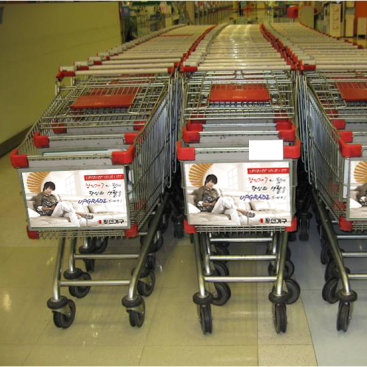
OEM Custom Shopping Trolley with Handle Logo and Advertise Board Options
$50.00 - $55.00
MOQ: 200 Pieces

OEM Service Shopping Trolley with Handle Logo and Plastic Part Color Options
$50.00 - $55.00
MOQ: 200 Pieces

Custom Logo Shopping Trolley with Pantone Color Plastic Parts Customization
$50.00 - $55.00
MOQ: 200 Pieces




Shopping Trolley Cart, Foldable Shopping Trolley, Folding Shopping Trolley with Seat
$32.00 - $36.00
MOQ: 100 Pieces
Comprehensive Sourcing Guide
Strategic Sourcing Guide for Customized Logo Shopping Trolleys
Understanding Product Variants and Core Specifications
The market for customized logo shopping trolleys presents a diverse landscape where functionality, material composition, and branding capabilities intersect. Buyers initiating a procurement search must first distinguish between the specific structural forms available, as the term "shopping trolley" encompasses distinct categories ranging from portable baskets to full-sized trolley carts. Based on observed product attributes, the primary style classifications include shopping baskets, shopping trolley bags, and shopping trolley carts. Each variant serves a different operational need within the retail or consumer environment.
Material selection is a critical initial decision point that dictates durability, weight, and aesthetic finish. The supply base demonstrates a range of construction materials, including chrome-plated metal, stainless steel, and various plastic composites. Metal-based trolleys often feature powder coating as a surface treatment process, which enhances corrosion resistance and allows for vibrant color customization. In contrast, plastic variants may offer specific advantages such as waterproof functionality, making them suitable for wet environments like supermarkets or outdoor markets. The structural integrity of these units is further defined by their trolley systems, which can be constructed from aluminum with two-section designs, or feature soft-sided constructions with reinforced bases.
When evaluating the technical specifications of a potential unit, buyers should note specific dimensions and capacity metrics. Observed data indicates that capacity volumes can reach up to 60 liters, with some models adhering to standard carry-on size dimensions while others offer custom sizing. Wheel specifications are equally vital for operational efficiency; standard configurations often include 3-inch wheels, which provide a balance between maneuverability and load-bearing capacity. The folding mechanism is another key differentiator. While some units are designed to remain in an unfolded state for maximum utility, others offer foldable or height-adjustable features to optimize storage space when not in use. Buyers must verify whether a specific model is listed as "Folded" or "Unfolded" in its current configuration to ensure it meets their logistical requirements.
Compliance, Certification, and Regulatory Verification
In the B2B procurement of retail equipment, compliance with international standards is a non-negotiable aspect of supplier evaluation. The supply chain for customized shopping trolleys often references specific certification frameworks that validate manufacturing quality and safety. High-confidence data indicates that suppliers may hold ISO9001-2000 certification, which serves as a baseline for quality management systems. Additionally, product safety certifications such as CE and GS are frequently cited, ensuring that the trolleys meet European safety and health requirements for consumer goods.
However, buyers must exercise caution when interpreting certification claims. While some product listings explicitly mention ISO9001-2000, CE, and GS, other background information may reference standards like REACH. It is essential to treat such references as background context rather than confirmed product attributes unless explicitly verified in the specific product listing. The presence of a certification does not automatically apply to every SKU within a supplier's catalog; therefore, verification of the specific model number against the certification document is required.
Customization processes, particularly logo printing and branding, introduce additional regulatory considerations. The ability to apply a customized logo is a common feature, with options for OEM, ODM, and direct logo printing. When customizing, buyers must ensure that the inks and materials used for the logo comply with relevant safety standards, especially if the trolleys are intended for food retail environments. The "Customized" attribute is widely available, but the extent of customization—whether limited to logo placement or extending to size and color modifications—must be clearly defined in the contract. Suppliers located in regions like Jiangsu and Shandong in China are prominent sources, but the origin location itself does not guarantee compliance; the specific factory audit and certification status must be confirmed.
Cost Drivers and Pricing Structure Analysis
The pricing structure for customized shopping trolleys is influenced by a complex interplay of material costs, customization complexity, and order volume. Observed market data suggests a wide price range, with unit costs potentially varying from 1 to 80 USD depending on the configuration. This significant variance highlights the importance of defining precise requirements before requesting quotes. A basic plastic shopping basket with a simple logo will naturally command a lower price point compared to a stainless steel, height-adjustable trolley cart with advanced folding mechanisms and a complex multi-color logo application.
Minimum Order Quantity (MOQ) is a primary driver of unit economics. The data indicates an MOQ range of 1 to 500 pieces, with a specific observation of 30 pieces as a common threshold for certain models. Suppliers that accept small orders provide flexibility for startups or testing phases, but the per-unit cost is typically higher. Conversely, larger orders allow for economies of scale, reducing the cost per unit. Buyers should be aware that "Small Orders: Accepted" is a specific attribute that may not apply to all custom configurations, particularly those requiring unique molds or extensive color matching.
Additional cost factors include surface treatments and packaging. Powder coating, while enhancing durability, adds to the production cost compared to standard finishes. Packaging requirements also impact the final price; options range from standard export packaging to specialized bubble film or air bubble film protection. For customized orders, the setup costs for logo printing and mold creation may be amortized over the order quantity. Buyers must request a detailed breakdown of costs to understand how much of the price is attributed to the base unit versus the customization and logistics. It is crucial to avoid assuming that a low MOQ implies a low price; the inverse is often true for highly customized items.
Typical Applications and Functional Requirements
The application of customized shopping trolleys extends beyond simple retail use, with specific models designed for distinct environments and user groups. The primary use case identified is for supermarkets, where durability and capacity are paramount. In these settings, trolleys must withstand frequent use, heavy loads, and potential exposure to moisture. The "Waterproof" functionality observed in certain models makes them particularly suitable for such environments, preventing rust and degradation of the metal components.
Another significant application segment is the children's shopping cart market. These units often feature smaller dimensions, specific wheel sizes, and ergonomic handles designed for younger users or parents. The "Type of Shopping Cart: Children Shopping Cart" attribute indicates a specialized niche where safety and size are critical. These trolleys may also be designed as portable shopping baskets, offering convenience for consumers who prefer to carry their purchases manually rather than pushing a full cart. The "Convenient" and "Portable" attributes are key selling points for this segment.
For corporate or promotional use, the customization aspect becomes the primary driver. Businesses often utilize these trolleys as branded marketing tools, distributing them to customers or using them in trade shows. The ability to customize the logo, size, and color allows companies to align the product with their brand identity. The "Branding & Customization" attribute confirms that OEM and ODM services are available, enabling deep integration of corporate identity into the product design. Whether for a supermarket chain, a children's store, or a promotional campaign, the functional requirements must align with the specific operational context to ensure long-term utility.
Supplier Evaluation and Quality Control Protocols
Evaluating suppliers for customized shopping trolleys requires a rigorous approach to quality control and capability assessment. Buyers should prioritize suppliers who demonstrate transparency in their production processes and provide clear evidence of their certifications. The presence of ISO9001-2000 is a positive indicator, but it should be accompanied by recent audit reports. When assessing a supplier's ability to handle customization, buyers must verify their capacity for logo printing, color matching, and structural modifications. The "Customized Logo" and "Customization: Available" attributes suggest that the supplier has the necessary infrastructure, but the depth of this capability varies.
Quality control should be integrated into the procurement process from the design phase through to final delivery. Buyers should request samples to verify the quality of materials, such as the finish of the powder coating or the strength of the plastic components. The "Condition: New" attribute is a baseline expectation, but the physical inspection of the sample is necessary to confirm that the product meets the specified standards for durability and safety. For metal trolleys, checking for consistent chrome plating or stainless steel quality is essential to prevent corrosion. For plastic units, verifying the thickness and impact resistance is crucial.
Packaging standards are also a critical component of quality control. The observed use of bubble film, air bubble film, and standard export packaging indicates that suppliers are aware of the need to protect the product during transit. However, buyers should specify their own packaging requirements if the standard options are insufficient for their logistics chain. The "Standard Export Packaging" and "Standard Packing" attributes provide a baseline, but custom packaging solutions may be required for high-value or fragile items. Establishing a clear quality assurance protocol, including pre-shipment inspections and acceptance criteria, is essential to mitigate the risk of receiving substandard goods.
Long-Term Procurement and Operational Considerations
Sourcing customized shopping trolleys is not merely a transactional activity but a strategic decision that impacts long-term operational efficiency and brand perception. Buyers must consider the lifecycle of the product, including maintenance, replacement costs, and the potential for future customization. The "Durable" and "Foldable" attributes suggest that these products are designed for extended use, but the actual lifespan depends on the quality of materials and the intensity of usage. Regular maintenance, such as cleaning and lubricating wheels, can extend the life of the trolley, but this must be factored into the total cost of ownership.
Scalability is another critical consideration. As a business grows, the demand for customized trolleys may increase, requiring a supplier capable of scaling production without compromising quality. The "MOQ: 30 PCS" observation indicates that some suppliers can accommodate small initial orders, but buyers must verify if the supplier can handle larger volumes efficiently. Lead times and production capacity should be discussed early in the negotiation process to ensure that the supply chain can meet demand fluctuations.
Furthermore, the customization aspect offers opportunities for brand evolution. As a company's branding changes, the ability to update the logo or color scheme on existing trolley models can be a cost-effective way to refresh the brand image. The "Customization: Available" and "Logo: Customized Logo" attributes confirm that this flexibility exists, but buyers should establish a long-term agreement with the supplier to ensure consistency in quality and design over time. Finally, buyers should remain vigilant about changes in regulations and standards, ensuring that their procurement strategy remains compliant with evolving safety and environmental requirements. By focusing on these long-term factors, buyers can build a resilient supply chain that supports their business goals for years to come.
FAQs
What certifications do customized logo shopping trolleys typically have?
Products often carry ISO9001-2000, CE, and GS certifications to ensure quality and safety. Buyers should verify specific model numbers against these documents as not every SKU automatically includes all listed standards.
Can I order small quantities of customized shopping trolleys?
Yes, many suppliers accept small orders with a minimum quantity of 30 pieces or as low as one unit. However, per-unit costs may be higher for smaller batches compared to large volume purchases.
Which materials are used for durable shopping trolley carts?
Common materials include chrome-plated metal, stainless steel, and various plastic composites. Metal units often feature powder coating for corrosion resistance while plastic variants may offer waterproof functionality.
How is the capacity of a shopping trolley defined?
Capacity volumes can reach up to 60 liters depending on the specific model and design. Some units adhere to standard carry-on size dimensions while others offer custom sizing options.
What customization options are available for branding?
Suppliers offer customized logo printing, OEM, ODM services, and modifications to size and color. The extent of customization varies, so specific requirements must be defined clearly in the contract.
Where are these shopping trolleys typically manufactured?
Manufacturing origins are primarily located in Jiangsu and Shandong provinces in China. Buyers should confirm the specific factory location and audit status rather than relying solely on the general region.