Source Customized RGB Neon Light Signs for Restaurants, Offices, and Schools
Compare 30 listings for Customized RGB Neon Light Signs featuring flexible designs, waterproof ratings, and multi-color options. Buyers can evaluate specifications like voltage, material, and warranty to find suitable illuminated letter signs for indoor and outdoor applications.
Key considerations
Products List


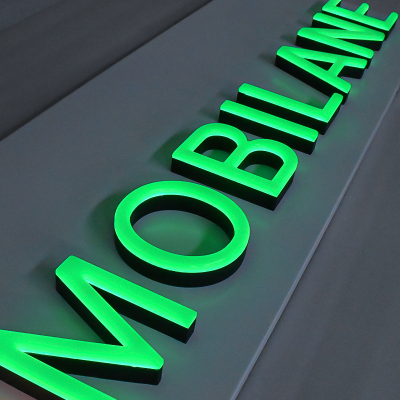


Decoration-Light Neon Light/RGB Neon Sign/Neon LED Lighting for Indoor Lighting
$1.00 - $1.99
MOQ: 100 Pieces


RGB LED/Decoration-Light/LED Lighting/Neon Light Sign for House Decoration
$1.00 - $1.99
MOQ: 100 Pieces


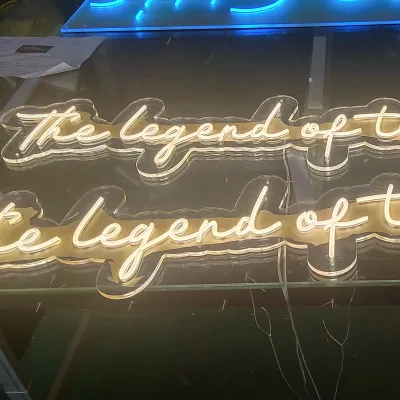
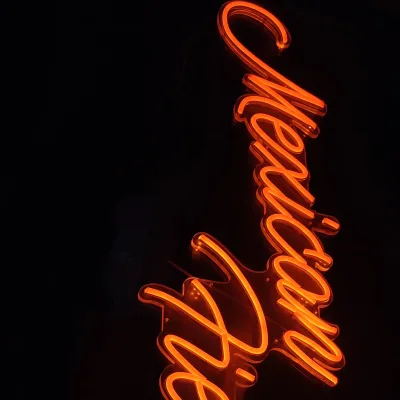
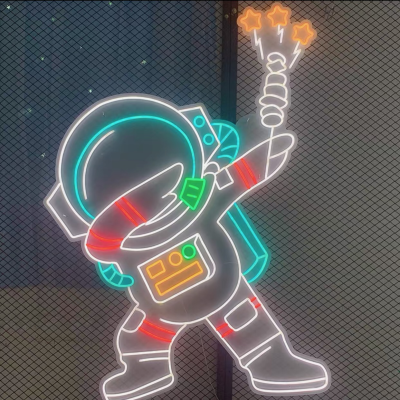
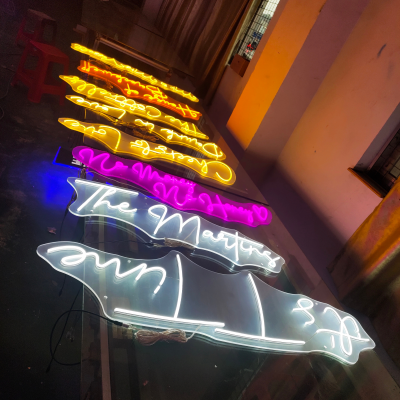


Comprehensive Sourcing Guide
Strategic Sourcing Guide for Customized RGB Neon Light Signs
Understanding Technical Specifications and Customization Capabilities
When sourcing Customized RGB Neon Light Signs, buyers must first distinguish between traditional glass tubing and modern flexible LED solutions. The current market for "flex neon" relies heavily on SMD lamp technology encased in a durable plastic or acrylic housing. Based on available product data, these units typically operate at safe low voltages, with observed specifications including 12V and 24V DC inputs. This low-voltage operation is a critical safety feature for both indoor and outdoor installations, reducing the risk of electrical hazards while maintaining high luminous intensity.
The core of the customization process lies in the ability to produce specific shapes and dimensions. Suppliers often offer "Custom Products" where the size, model number, and lettering are tailored to the buyer's design requirements. Observed specifications indicate that the product model can vary, with examples like "GV," "001," and "Yj-N019" representing different configurations. The physical construction often involves an acrylic face and a stainless steel side structure, providing a sleek, modern aesthetic. The depth of these signs typically ranges from 5cm to 10cm, allowing for significant three-dimensional presence without excessive bulk.
Color rendering is a primary driver for RGB selection. The observed attributes confirm that these signs support multi-color outputs and customized color schemes. This is achieved through programmable LED strips that can shift through the full RGB spectrum. The lighting effect is described as "Custom Products," implying that the hue, brightness, and dynamic patterns can be adjusted to match specific branding or ambiance needs. Furthermore, the bending direction is noted as horizontal, which suggests that the flexible nature of the neon allows for curves and angles, though the specific bending radius should be verified during the design phase.
| Feature | Observed Specification | Sourcing Verification Point |
|---|---|---|
| LED Type | SMD Lamp | Verify chip quality and binning consistency |
| Material | Acrylic (Face), Plastic (Body), Stainless Steel (Side) | Confirm material thickness and UV resistance |
| Voltage | 12V / 24V | Ensure driver compatibility with local power standards |
| IP Rating | IP65 (implied by Waterproof) | Request specific IP test reports for outdoor use |
| Power | 10W (typical unit) | Calculate total wattage for large-scale installations |
| Life | 50,000 Hours | Verify testing conditions for claimed lifespan |
| Packing | Carton / Wooden Case | Confirm packaging for sea vs. air freight |
Compliance and Certification Verification Protocols
In the B2B procurement of lighting products, compliance is not merely a formality but a prerequisite for market access and liability protection. The supplied data explicitly lists CE certification as a high-confidence attribute for these neon signs. This indicates that the products are designed to meet European Union safety, health, and environmental protection requirements. However, buyers should not assume that every unit in a bulk order automatically carries this certification without verification. The presence of CE on a product page is an observation of the supplier's claims, but the actual documentation must be reviewed.
Beyond CE, the context mentions RoHS as a background attribute, though with lower confidence. RoHS (Restriction of Hazardous Substances) compliance is essential for ensuring that the plastic, acrylic, and electronic components do not contain restricted hazardous materials like lead or mercury. Buyers should explicitly request a RoHS compliance statement or test report from the supplier, as this is a standard requirement for many international markets, including the EU and parts of Asia.
The origin of the products is listed as China, with specific mentions of Jiangsu and Jiang Su as production locations. While this is a major manufacturing hub, it necessitates rigorous supplier vetting. The "standard" attribute is listed as "customized," which implies that the products may not always adhere to a rigid, pre-existing industrial standard but rather to a custom agreement. In such cases, the buyer must define the technical standard in the purchase order. This includes specifying the exact IP rating required for the intended environment (e.g., IP65 for outdoor use) and the specific safety standards for the electrical drivers.
For outdoor applications, the "Waterproof" attribute is critical. While the data confirms the signs are waterproof, the specific IP rating (e.g., IP65, IP67) must be confirmed. An IP65 rating protects against water jets, while IP67 offers protection against temporary immersion. Buyers should not rely on the general term "Waterproof" alone but must demand the specific numerical rating and evidence of testing, such as an IP test report from an accredited laboratory. This verification is vital to prevent premature failure due to moisture ingress, which can lead to short circuits and safety hazards.
Cost Drivers and Pricing Structure Analysis
The pricing for Customized RGB Neon Light Signs is influenced by a complex interplay of factors, primarily driven by the level of customization and the scale of the order. The observed price range in the market spans from 1 to 250 USD, a wide variance that reflects the difference between small, pre-fabricated units and large, bespoke installations. The "MOQ" (Minimum Order Quantity) is observed to range from 1 to 1000 pieces, with some suppliers offering a low MOQ of 1 piece for prototyping or small projects. This flexibility allows buyers to test the market with minimal financial risk.
However, the cost per unit is not linear. Customization is a significant cost driver. When a buyer requests a "Customized Color" or a unique "Size" that deviates from standard inventory, the production process requires new molds, manual labor for bending the flexible neon, and potentially new programming for the RGB controllers. The "Lighting Solutions Service" being categorized as "Other" suggests that the cost may also include design fees or engineering support, which should be itemized in the quotation.
Material costs also play a role. The use of acrylic for the face and stainless steel for the sides adds to the material expense compared to purely plastic alternatives. The "Product Name" being "RGB Illuminated Neon Letter" indicates that the complexity of the lettering affects the price. Intricate fonts with many curves or small details require more precise manufacturing and higher labor costs. Additionally, the "Power Consumption" is noted as "Low Power," which is a selling point for energy efficiency, but the initial cost of high-efficiency LEDs (with a luminous efficiency of 80 Lm/W) may be higher than standard LEDs.
Shipping and logistics are often hidden cost drivers. The "Shipment Way" is listed as "by Sea/Air/Express," and the "prod_packing" varies between "Carton" and "Wooden Case." Wooden cases are more expensive but necessary for sea freight to protect the signs from damage during long transit. For air freight, lighter carton packaging is preferred to reduce shipping costs. Buyers should calculate the total landed cost, including duties, taxes, and freight, rather than focusing solely on the unit price. The "Warranty" of 1 year is a standard industry offering, but the cost of potential returns or replacements should be factored into the long-term procurement budget.
Typical Applications and Installation Requirements
Customized RGB Neon Light Signs are versatile and find applications across a wide spectrum of commercial and residential environments. The observed "Application" fields list "Indoor and Outdoor Neon Light," "Restaurant, Office, Door, School," and general "Neon Signs, Illuminated Signs." This breadth of use highlights the adaptability of the product. In commercial settings like restaurants and offices, these signs serve as powerful branding tools, creating a vibrant atmosphere that attracts customers and enhances brand identity. The "Multi-color" capability allows for dynamic lighting that can change with the time of day or specific events.
For outdoor applications, the "Waterproof" attribute is non-negotiable. These signs are often used for storefront signage, building facades, and outdoor advertising. The ability to withstand various weather conditions, including rain and humidity, is essential. The "Depth" of 5cm-10cm provides a substantial presence that is visible from a distance, making it ideal for high-traffic areas. The "Bending Direction" being horizontal suggests that the signs can be mounted on flat surfaces or curved around corners, offering design flexibility for architects and interior designers.
Installation is another critical consideration. The "Installation" method is listed as "Mounted," which typically implies that the signs are designed to be affixed to a wall or a frame. The "Easy to Clean" attribute is a practical feature for maintenance, especially for outdoor signs that may accumulate dust or dirt. Buyers should verify the mounting hardware included with the product. Some suppliers may provide mounting brackets, while others may require the buyer to source them separately. The "Working Time" of 50,000 hours indicates a long operational life, reducing the frequency of maintenance and replacement, which is a significant advantage for large-scale installations.
The "Luminous Intensity" is described as "High," ensuring that the signs are visible even in well-lit environments. This is particularly important for signage that needs to be seen during the day or in brightly lit commercial spaces. The "Style" of "Neon Signs, Illuminated Signs" suggests a modern, aesthetic appeal that fits contemporary design trends. Whether used in a school for wayfinding or in a restaurant for ambiance, the customization options allow the signs to be tailored to the specific needs of the space.
Supplier Evaluation and Quality Control Measures
Selecting the right supplier is paramount to the success of any procurement project involving customized neon signs. Buyers should evaluate suppliers based on their ability to deliver on the "Custom Products" promise. This includes their design capabilities, manufacturing precision, and quality control processes. The "Place of Origin" being Jiangsu, China, is a common manufacturing hub, but the specific factory's reputation and capacity should be verified. Buyers should request a company profile, including details about their production lines, quality assurance teams, and past projects.
Quality control should be a continuous process, not just a final inspection. Buyers should inquire about the supplier's QC protocols, including incoming material inspection, in-process checks, and final product testing. The "Certification" of CE is a good starting point, but buyers should also ask for factory audit reports or third-party quality certifications. The "Warranty" of 1 year is a standard offering, but the terms and conditions of the warranty should be clearly understood. Does it cover manufacturing defects, or does it exclude damage caused by improper installation?
The "Product Name" and "Model Number" variations (e.g., YJ-018, Yj-N019) suggest that the supplier has a range of products. Buyers should ensure that the specific model they are ordering matches their requirements exactly. The "Specification" field often includes a note to "Contact us to get the shipping cost," which indicates that the supplier is willing to engage in a dialogue to clarify details. This responsiveness is a positive indicator of a reliable supplier.
Buyers should also consider the supplier's ability to handle large orders. The "MOQ" range of 1 to 1000 suggests flexibility, but for large projects, the supplier must demonstrate the capacity to scale production without compromising quality. The "prod_packing" options (Carton vs. Wooden Case) should be discussed to ensure that the packaging is suitable for the intended shipping method. The "Shipment Way" being flexible (Sea/Air/Express) is a plus, but the supplier should provide clear lead times and shipping schedules.
Long-Term Procurement and Lifecycle Management
Procuring Customized RGB Neon Light Signs is not a one-time transaction but part of a long-term relationship that requires careful planning. The "Life(h)" of 50,000 hours is a significant factor in lifecycle management. This translates to approximately 5.7 years of continuous operation, assuming 24/7 usage. However, real-world conditions, such as temperature fluctuations and power surges, can affect the actual lifespan. Buyers should plan for periodic maintenance and potential component replacements, even if the signs are designed to be durable.
The "Power Consumption" being "Low Power" is a key advantage for long-term cost savings. Lower energy consumption reduces the operational cost of the signs, making them an economically viable choice for large-scale installations. Buyers should calculate the total cost of ownership (TCO), including energy costs, maintenance, and replacement, to make an informed decision. The "Feature" of being "Durable" supports the idea that these signs are built to last, but the specific durability claims should be backed by test data.
As technology evolves, the "RGB" capabilities of these signs may need to be upgraded or expanded. Buyers should consider the scalability of the system. Can the signs be easily integrated with smart lighting systems or IoT platforms? The "Lighting Solutions Service" being "Other" suggests that the supplier may offer additional services, such as software updates or remote control integration, which could be valuable for future expansion.
Finally, the "Warranty" of 1 year provides a safety net for the initial period of operation. However, buyers should consider extending the warranty or purchasing a maintenance contract for long-term projects. The "Product Origin" being China means that the supply chain is global, and buyers should be prepared for potential logistics challenges. Establishing a strong relationship with the supplier can help mitigate these risks and ensure a steady supply of replacement parts or new designs.
In conclusion, sourcing Customized RGB Neon Light Signs requires a comprehensive understanding of technical specifications, compliance requirements, cost drivers, and supplier capabilities. By following the guidelines outlined in this guide, buyers can make informed decisions that ensure the quality, safety, and longevity of their neon sign projects. The flexibility of customization, combined with the durability and energy efficiency of modern LED technology, makes these signs an excellent choice for a wide range of applications.
FAQs
Can I get customized colors for these neon signs?
Yes, customized colors are available for these RGB illuminated neon letters. The product supports multi-color outputs and specific color schemes can be tailored to match your branding needs through programmable LED strips.
What voltage do these flexible neon lights operate at?
These signs operate at safe low voltages, specifically 12V and 24V DC inputs. This low-voltage operation reduces electrical hazards while maintaining high luminous intensity for both indoor and outdoor installations.
Which certifications do these neon light signs hold?
The products hold CE certification, indicating compliance with European Union safety and environmental requirements. Buyers should verify specific documentation for this certification and request additional reports like RoHS for hazardous substance compliance.
How long is the warranty period for these signs?
The standard warranty period for these neon signs is one year. This coverage applies to manufacturing defects and ensures reliability for commercial applications in restaurants, offices, and schools.
What is the minimum order quantity for these products?
The minimum order quantity can be as low as one piece for prototyping or small projects. Some suppliers may require up to 1000 pieces depending on the level of customization and specific model requirements.
Are these signs suitable for outdoor waterproof applications?
Yes, these signs are designed to be waterproof for outdoor use. They feature durable plastic or acrylic housing and should be verified for specific IP ratings like IP65 to ensure protection against water jets.
What materials are used for the face and sides?
The face is made of acrylic while the side structure uses stainless steel. This combination provides a sleek, modern aesthetic with a depth ranging from 5cm to 10cm for significant three-dimensional presence.