Source Customized Rice Length Grading Machine for Wheat, Oats, Barley
Find 30 customized rice length grading machines designed for separating grains by length. Buyers can compare specifications like cylinder count, mesh size, and capacity across suppliers offering on-site training and export-standard packing.
Key considerations
Products List


Rice Length Sorting Grading Equipment Length Grader for Rice Mill Plant
$5000.00 - $6500.00
MOQ: 1 set


Rice Indented Cylinder Rice Length Grader Price Rice Length Classifier Length Sorter
$5000.00 - $20000.00
MOQ: 1 set

High Capacity Customized Rice Color Sorter White Rice Grader Rice Selector Machine
$15000.00 - $16000.00
MOQ: 1 Pieces


High Capacity Rice Color Sorter Machine White Rice Grader Rice Selecting Machine
$11000.00 - $12000.00
MOQ: 1 Pieces

Rice Color Sorting Machine Rice Processing Machinery Rice Sorter Machine
$9500.00 - $10500.00
MOQ: 1 Pieces


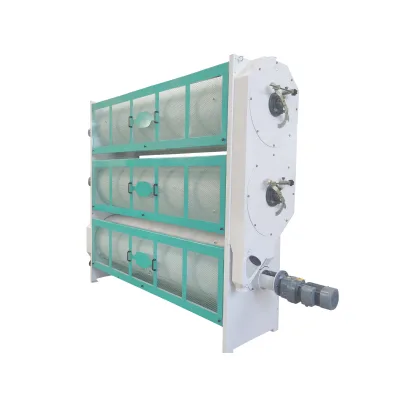

White Rice Classifying Machine/Rice Sizing Screen Machine/Rice Grading Machine
$1000.00 - $2500.00
MOQ: 1 Sets

Rice Grading and Sorting Machine Easy Operate Paddy Separator High Quality
$800.00 - $850.00
MOQ: 1 Sets


Rice Mill Machine Rice Grading Machine Grader Machine Separating Machine
$6000.00 - $20000.00
MOQ: 1 Pieces


All Kinds of Rice Color Sorter Machine Rice Sorting Machine
$8000.00 - $9000.00
MOQ: 1 Pieces
Anhui Wenyao Intelligent Photoelectronic Technology Co., Ltd.

Excellent Quality Rice Sorting Machines
$5000.00 - $50000.00
MOQ: 1 Pieces
Anhui Wenyao Intelligent Photoelectronic Technology Co., Ltd.

High Accuracy Rice Processing Color Sorting Machine
$16800.00 - $17800.00
MOQ: 1 Pieces
Anhui Wenyao Intelligent Photoelectronic Technology Co., Ltd.

Comprehensive Sourcing Guide
Strategic Sourcing Guide for Customized Rice Length Grading Machines
Understanding the Technical Architecture of Indented Cylinder Separators
When sourcing a Customized Rice Length Grading Machine, buyers must first distinguish between general grain cleaning equipment and specialized length graders. The core technology for this application typically involves an indented cylinder separator, a device designed specifically to separate grains based on their length rather than width or thickness. In the context of rice and wheat processing, the machine functions by rotating a cylinder with precisely sized indentations. Shorter grains fall into the indentations and are carried to the discharge end, while longer grains slide over the surface, achieving the necessary separation.
The technical configuration of these machines varies significantly based on the specific crop and the desired throughput. A critical observation in the current market is the availability of units with varying cylinder counts, ranging from single-cylinder configurations to multi-cylinder setups with up to four cylinders. This modularity allows for customization, enabling buyers to scale the separation process according to their facility's capacity. The physical dimensions of the cylinder are equally important; observed specifications indicate cylinder lengths can range from 1.2 meters to 3 meters. This variation directly impacts the residence time of the grain within the machine, which is a primary driver of separation efficiency.
Furthermore, the mesh size available for these units is a vital specification that must be matched to the grain variety. Data indicates that mesh sizes are available in a range extending from 3.2 meters down to 11.5 millimeters, though this likely refers to the aperture dimensions or specific screen configurations rather than a linear length. Buyers must verify the exact aperture size required for their specific rice or wheat variety to ensure optimal separation without excessive grain loss. The construction of the cylinder itself is another area where customization is prevalent. Some units are designed for parallel connection, while others support series connection, allowing for multi-stage processing. This flexibility in connection type is essential for facilities that require high-purity separation or need to handle mixed grain streams.
Compliance Verification and Certification Standards
In the global agricultural machinery market, compliance with international standards is not merely a formality but a prerequisite for operational safety and market access. When evaluating a Customized Rice Length Grading Machine, buyers should rigorously verify the certification status of the equipment. The supply chain data indicates that reputable manufacturers often adhere to standards such as ISO9001, SGS, and TUV. These certifications suggest that the manufacturing process has been audited for quality management and that the equipment meets specific safety and performance benchmarks.
It is crucial to note that certification requirements can vary by destination market. For instance, some regions may require specific compliance marks like SONCAP for Nigerian markets or CE certification for European Union entry. While some listings mention ISO9001:2008 and CE, buyers must treat these as observations of specific supplier capabilities rather than universal guarantees. A robust procurement strategy involves requesting current, valid certificates from the supplier and cross-referencing them with the issuing body. This verification process ensures that the machine is not only built to a standard but that the standard itself is recognized in the buyer's target market.
Additionally, the material composition of the machine plays a significant role in its longevity and compliance with food safety regulations. The raw material for the main structure is typically described as thickened steel plate, which provides the necessary durability for continuous agricultural processing. However, buyers should confirm that the steel used meets food-grade safety standards if the machine is intended for direct contact with human-consumable grains. The absence of specific food safety certifications in the general data suggests that this is a variable attribute that must be explicitly confirmed during the negotiation phase.
Cost Drivers and Pricing Structure Analysis
The pricing of customized rice length grading machines is influenced by a complex interplay of factors, including cylinder configuration, capacity, and the degree of customization required. The observed price range in the market is substantial, spanning from approximately 459 USD to 50,000 USD. This wide variance indicates that the base models may be simple, single-cylinder units, while the higher price points likely correspond to multi-cylinder systems with advanced automation and higher throughput capabilities.
Capacity is a primary cost driver. Units with a capacity of 3 tons per hour (T/H) are distinct from those capable of handling 5 T/H or more. The difference in structural reinforcement, motor power, and cylinder dimensions required to achieve higher throughput naturally increases the manufacturing cost. Buyers should also consider the power source and voltage requirements. While some units operate on standard 380V or 220V inputs, others offer customized voltage options to match local grid infrastructure. This customization, while necessary for operational compatibility, often incurs additional engineering and testing costs.
The packaging method is another subtle but important cost factor. The standard packaging for these machines is typically export-standard wooden boxes or wooden cases, designed to protect the equipment during long-distance shipping. However, some suppliers may offer plastic or specialized wooden case options. The choice of packaging can affect the final landed cost, particularly regarding shipping volume and weight. Additionally, the inclusion of services such as on-site training can influence the overall value proposition, even if it does not directly alter the hardware price. Buyers should request a detailed breakdown of costs to understand how much of the price is attributed to the hardware versus the services and packaging.
Operational Applications and Processing Versatility
The primary application of a Customized Rice Length Grading Machine is the separation of grains based on their length, a critical step in ensuring the quality of milled rice and wheat products. These machines are specifically designed to grade oat, barley, paddy, and rice seeds, making them versatile tools for various grain processing facilities. The function of the machine is to sort grains into different length categories, which is essential for producing uniform rice flour, beans, and other processed agricultural products.
The versatility of these machines extends to their ability to handle different types of grain seeds. Whether the facility is processing rice for direct consumption or wheat for flour production, the indented cylinder separator can be adapted to the specific requirements of the crop. The horizontal appearance of the machine is a common design feature that facilitates easy integration into existing production lines. This design allows for gravity-fed processing, reducing the energy required to move the grain through the system.
Furthermore, the automatic grade of these machines is a significant advantage for modern processing facilities. Automatic operation reduces the need for manual intervention, thereby increasing efficiency and reducing labor costs. The machine's ability to process special agricultural products means it can be adapted for niche crops beyond standard rice and wheat. However, buyers must ensure that the specific model selected is compatible with their raw material. For instance, the mesh size and cylinder indentation depth must be precisely calibrated to the specific grain variety to avoid damaging the seeds or failing to separate them effectively.
Supplier Evaluation and Production Capabilities
Selecting the right supplier for a Customized Rice Length Grading Machine requires a thorough evaluation of their production capabilities and track record. The origin of the equipment is a key indicator of the supply chain's reliability. Many of these machines are manufactured in regions such as Hebei and Kaifeng in China, which are known hubs for agricultural machinery production. Buyers should verify the specific location of the factory to understand the logistics and potential lead times associated with the order.
The production model numbers, such as 5XWY, 5XWY-71B, and 5xw-3, serve as identifiers for different configurations. These models often correspond to specific cylinder diameters and lengths, such as a drum diameter of 710x2500 mm. Buyers should use these model numbers to request detailed technical drawings and specifications from the supplier. The ability to provide OEM services, such as customized grain cleaning screens, is another important factor. This capability indicates that the supplier is willing to tailor the machine to the buyer's specific needs, which is essential for achieving optimal performance.
Lead time is another critical consideration in supplier evaluation. The observed delivery date for these machines is typically around 25 days, but this can vary based on the level of customization and the supplier's current workload. Buyers should confirm the lead time in writing and include penalties for delays in the contract. Additionally, the condition of the machine, typically listed as "New," should be verified upon delivery. Buyers should also inquire about the availability of spare parts and the supplier's commitment to after-sales support, including on-site training, to ensure long-term operational success.
Quality Control and Long-Term Procurement Strategy
Implementing a robust quality control strategy is essential when procuring customized rice length grading machines. Given the wide range of specifications and the potential for customization, buyers must establish clear acceptance criteria before production begins. This includes verifying the dimensions of the cylinder, the mesh size, and the overall weight of the unit. For example, a specific model might weigh 1300 kg, and deviations from this weight could indicate issues with material quality or manufacturing consistency.
Long-term procurement considerations should focus on the durability and maintainability of the equipment. The use of thickened steel plate suggests a focus on longevity, but buyers should also inquire about the wear resistance of the cylinder indentations and the availability of replacement parts. The standard dimensions of the machine, such as 3500x1040x2100 mm or 3881x1040x2330 mm, should be confirmed to ensure compatibility with the buyer's facility layout.
Finally, buyers should consider the total cost of ownership, which includes not only the purchase price but also energy consumption, maintenance costs, and the potential for downtime. The power rating of the machine, often listed as 3 kW, is a key factor in energy efficiency. By selecting a supplier with a strong track record of quality and support, buyers can minimize risks and ensure that their Customized Rice Length Grading Machine delivers consistent performance over its operational lifespan.
FAQs
How is the cylinder configured for length separation?
The cylinder is configured to operate in either series or parallel connection modes. This setup allows for multi-stage processing to achieve high-purity separation of rice or wheat based on grain length.
What is the typical capacity of these machines?
Typical capacities range from 3 to 5 tons per hour depending on the specific model. Units like the 5xw-3 handle 3 T/H, while others such as the 5XWY series can reach 5 T/H throughput.
Which certifications are commonly available for these units?
Common certifications include ISO9001, SGS, TUV, and CE. Some suppliers also provide SONCAP certification for specific regional markets, ensuring compliance with international quality and safety standards.
Can the voltage be customized for different regions?
Yes, the input voltage can be customized to match local grid infrastructure. While standard options include 220V and 380V, buyers can request specific voltage configurations to ensure operational compatibility.
How long is the delivery lead time for orders?
The standard delivery date is typically around 25 days from order confirmation. This lead time applies to new units manufactured in China, though it may vary based on customization levels.
What materials are used for the main construction?
The main structure is constructed using thickened steel plate for durability. This material choice ensures the machine can withstand continuous agricultural processing while maintaining structural integrity over time.
What is the standard packaging method for export?
Standard packaging usually involves export standard wooden boxes or wooden cases. Some suppliers may offer plastic or specialized wooden case options to protect the equipment during long-distance shipping.