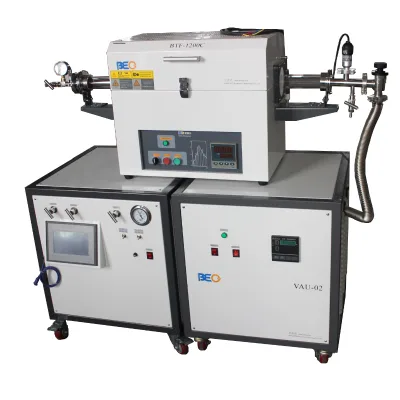
Source Desktop Tubular Vacuum CVD Machine for Lab, School, and Industry
Find a Desktop Tubular Vacuum CVD Machine from 20 verified listings. Compare specifications such as 1200°C operating temperatures, high purity quartz tubes, and customized heating zones for lab, school, and industrial applications; compare the available evidence and request quotations based on your requirements.
Key considerations
Products List


30 or 50 Segment Program Temperature Control Mode Vacuum CVD Equipment
$2000.00 - $20000.00
MOQ: 1 Pieces


High Temperature Electrical Laboratory Vacuum Mixing Gas CVD System Tube Furnace
$2000.00 - $20000.00
MOQ: 1 Pieces

1200 Two Zone Low Vacuum CVD Equipment for Metal Annealing, Quality Inspection
$2000.00 - $20000.00
MOQ: 1 Pieces

Laboratory CVD Equipment, High Temperature Sintering CVD Tube Furnace
$2000.00 - $20000.00
MOQ: 1 Pieces

Laboratory Low Vacuum CVD Equipment with Double Heating Zone for CVD Experiment
$2000.00 - $20000.00
MOQ: 1 Pieces


Comprehensive Sourcing Guide
Desktop Tubular Vacuum CVD Machine Sourcing Guide
Procuring a Desktop Tubular Vacuum CVD Machine requires careful evaluation of compact laboratory equipment designed for precise material deposition. These systems typically integrate high-purity quartz tubes with portable or desktop structures, catering to research institutions and small-scale industrial applications. Buyers must distinguish between standard tubular furnaces and specialized CVD coating machines, as the latter often include integrated gas supply systems and vacuum pumps essential for chemical vapor deposition processes.
The observed market signals indicate a wide range of configurations, from single-zone to multi-zone heating elements, with temperatures reaching up to 1200°C. Key differentiators include tube dimensions, such as 50mm diameter quartz tubes, and heating zone lengths that affect process uniformity. Sourcing decisions should prioritize machines that offer customizable features and certified safety standards, ensuring compatibility with specific laboratory environments and experimental protocols while maintaining operational efficiency.
Product Scope and Observed Listing Signals
The product landscape for desktop tubular vacuum CVD machines includes various models identified by specific codes like TN-PECVD50-1200-Q and CY-O1200-50IIT. These listings frequently highlight high-purity quartz tube materials and precise temperature accuracy, often cited as 1°C, which is critical for reproducible experimental results. Buyers should note that while some units are described as portable, others are explicitly labeled as desktop structures, influencing spatial planning and installation requirements within the laboratory.
Observed specifications reveal diverse heating zone configurations, such as 200mm single zones or 200mm+200mm dual zones, allowing for tailored thermal profiles. The inclusion of gas mass flowmeters and rotary vane pumps, such as 1.1L/S capacity units, underscores the vacuum and gas control capabilities inherent in these systems. Procurement teams must verify these component details against their specific deposition needs, as the presence of these accessories directly impacts the machine’s functionality and ease of use in complex CVD applications.
Technical Specifications to Verify
When evaluating technical specifications, the furnace tube size and length are paramount, with common dimensions including 50mm diameter and 1200mm length. Buyers must confirm the material composition of the heating elements, which may range from alloy resistance wires to more advanced options, and verify the thermocouple type, such as S-type, to ensure accurate temperature monitoring. The ultimate vacuum level, potentially reaching 1.0e-1 PA, is a critical performance metric that determines the quality of the deposition environment and must be validated through supplier documentation.
Heating zone length and temperature accuracy are equally important, with some models offering 200mm zones and 1°C accuracy. The operating temperature range, typically up to 1100°C or 1200°C, should align with the thermal requirements of the materials being processed. Additionally, the gas supply system’s measurement accuracy, often cited as ±0.2%, ensures precise control over reactant gases, which is vital for achieving consistent film quality. Buyers should request detailed schematics to verify these parameters before finalizing any purchase agreement.
Compliance and Safety Documentation
Compliance with international standards is essential for laboratory equipment, with CE certification being a common requirement for machines sourced from China. Buyers must verify that the supplier provides valid CE certificates and, where applicable, ISO certifications to ensure adherence to safety and quality management principles. The documentation should also cover electrical safety standards, particularly for high-temperature devices that operate with significant power loads and complex gas handling systems.
Safety features such as fumigated wooden box packaging and standard export plywood cases indicate attention to logistics and protection during transit, but they do not replace the need for operational safety manuals. Procurement teams should ensure that the machine includes clear instructions for handling high temperatures and vacuum environments, as well as guidelines for maintaining the high-purity quartz tube. Verifying that the supplier provides comprehensive safety documentation helps mitigate risks associated with equipment operation and maintenance in academic or industrial settings.
Cost Drivers and Commercial Terms
Cost drivers for desktop tubular vacuum CVD machines include the complexity of the heating system, the quality of the quartz tube, and the integration of vacuum and gas control components. Models with multiple heating zones or higher temperature capabilities typically command higher prices, reflecting the increased engineering and material costs. Buyers should also consider the impact of customization options, such as specific tube dimensions or specialized gas supply systems, which can significantly influence the final quotation and lead time.
Commercial terms often involve minimum order quantities of one unit, reflecting the specialized nature of this equipment. Payment terms and shipping arrangements, including the use of fumigated wooden boxes, should be clearly defined to avoid unexpected logistics costs. Buyers must also account for potential additional expenses related to installation, calibration, and training, which are crucial for ensuring the machine operates correctly from the outset. Understanding these cost components helps in budgeting accurately and negotiating favorable terms with suppliers.
Supplier Qualification and Quality Control
Supplier qualification involves verifying the manufacturer’s location, such as Zhengzhou Henan China, and assessing their production capabilities for high-precision laboratory equipment. Buyers should request evidence of quality control processes, including factory inspections and pre-shipment testing, to ensure that each unit meets the specified technical parameters. The presence of certifications like CE and ISO indicates a baseline level of compliance, but direct engagement with the supplier’s quality assurance team is necessary to confirm rigorous testing protocols.
Quality control checks should extend to the verification of component origins, particularly for critical parts like heating elements and vacuum pumps. Buyers must ensure that the supplier provides detailed bills of materials and component specifications to trace the quality of each part. Additionally, establishing clear communication channels for post-sale support and technical assistance is vital, as these machines require specialized knowledge for operation and maintenance. A qualified supplier will offer comprehensive support to ensure long-term reliability and performance.
Long-Term Procurement Checks
Long-term procurement checks focus on the sustainability of the supply chain and the availability of spare parts for desktop tubular vacuum CVD machines. Buyers should assess the supplier’s ability to provide consistent quality over multiple orders, particularly if scaling up laboratory operations. The availability of replacement components, such as quartz tubes and heating elements, is crucial for minimizing downtime and maintaining experimental continuity. Establishing a long-term relationship with a reliable supplier can facilitate better pricing and priority support.
Regular performance reviews of the equipment should be conducted to ensure that it continues to meet operational standards over time. Buyers must monitor the condition of the vacuum system and gas supply components, as wear and tear can affect performance. Additionally, staying informed about technological advancements in CVD equipment can help buyers make informed decisions about upgrades or replacements. Proactive maintenance and periodic supplier audits are essential strategies for ensuring the long-term value and reliability of the procurement investment.
FAQs
What is the maximum operating temperature for this Desktop Tubular Vacuum CVD Machine?
The maximum operating temperature is 1200°C. Some models support up to 1150°C with S-type thermocouples. This range suits most lab and school applications requiring precise thermal control for CVD processes without exceeding material limits.
Can I customize the heating zone length for my specific experiment?
Yes, customization is available for the heating zone. Options include 200mm single zones or 200mm*3 multi-zone configurations. This allows precise temperature profiling along the 1200mm quartz tube length to match your specific deposition requirements.
Which certifications ensure the safety and quality of this equipment?
The equipment holds CE and ISO certifications. These standards verify compliance with European safety directives and international quality management systems. This ensures reliable operation in industrial, lab, and school environments while meeting regulatory requirements for electrical safety.
How does the vacuum system achieve high purity conditions?
It uses a rotary vane pump with 1.1L/S capacity to reach an ultimate vacuum of 1.0e-1 PA. Combined with high purity quartz tubes, this system minimizes contamination. Gas mass flowmeters ensure accurate supply for consistent CVD coating results.
What are the standard packaging methods for international shipping?
Products are packed in fumigated wooden boxes or standard export plywood cases. This packaging protects the desktop structure during transit. It ensures the furnace tube and heating elements remain secure, meeting standard export requirements for safe delivery to global buyers.