Source Stainless Steel Egg Whisk for Mixing, Beating, and Stirring
Compare 30 Stainless Steel Egg Whisk options from verified Chinese manufacturers. Buyers can evaluate models with manual or semi-automatic operation, varying sizes, and customization support for home or kitchen use.
Key considerations
Products List


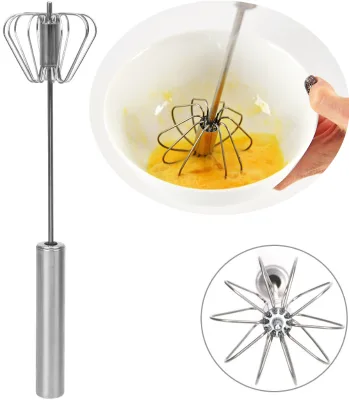





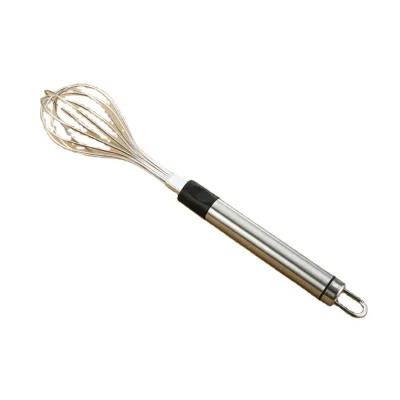


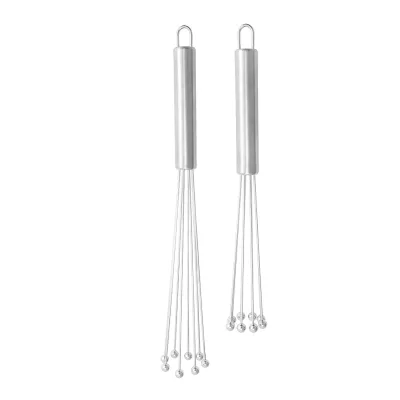


Comprehensive Sourcing Guide
Stainless Steel Egg Whisk Sourcing Guide
Sourcing stainless steel egg whisks requires a careful balance between material durability, ergonomic design, and commercial viability. These tools are essential in both home kitchens and professional culinary environments, serving as primary instruments for aerating eggs, blending batters, and emulsifying sauces. The core value proposition of a stainless steel whisk lies in its resistance to corrosion, ease of cleaning, and structural integrity under repeated mechanical stress. Buyers must navigate a market where product attributes vary significantly, from manual hand-push designs to semi-automatic mechanisms, and from single-layer wire constructions to more complex multi-component assemblies. Understanding these variations is critical for aligning procurement with specific end-user needs, whether for retail packaging, private labeling, or bulk institutional supply.
The procurement landscape for these items is characterized by a wide range of customization options and supply chain flexibility. Manufacturers often support OEM and ODM services, allowing buyers to tailor product features such as handle materials, logo placement, and packaging formats. Observed market signals indicate that suppliers are willing to accommodate custom logos and specialized packing requirements, ranging from individual polybags to bulk cartons. However, this flexibility comes with varying minimum order quantities (MOQs) and price points. Buyers must establish clear specifications early in the sourcing process to ensure that the selected supplier can meet both quality expectations and volume requirements without compromising on material standards or production timelines.
Product Scope and Observed Listing Signals
The current market offers a diverse array of egg whisk configurations, primarily categorized by their operational mode and material composition. Listings frequently highlight manual hand-push designs constructed from stainless steel or metal alloys, emphasizing portability and eco-friendly attributes. Some products are described as semi-automatic, suggesting integrated mechanisms that may require minimal power input, although many remain strictly manual tools. The material spectrum extends beyond pure stainless steel to include plastic handles, which provide ergonomic grip and thermal insulation. Buyers should observe that product descriptions often list multiple types, such as single-layer wire whisks or those with specific size dimensions like 30.5x6.6cm or 21.5x8.5cm, indicating a need for precise specification matching during the ordering phase.
Commercial signals reveal significant variability in pricing and order thresholds, which directly impacts sourcing strategy. The observed price range spans from low-cost entry-level items to higher-priced specialized tools, reflecting differences in material grade, manufacturing complexity, and branding. Minimum order quantities fluctuate widely, from small batches of 100 pieces suitable for testing or niche retail to large-scale orders of 3,000 pieces for mass distribution. This disparity requires buyers to assess their inventory turnover rates and cash flow constraints carefully. Additionally, packaging options are not standardized; some suppliers offer OPP bags or polybags for individual units, while others provide carton packing for bulk shipments, with some allowing fully customized packaging solutions to enhance brand visibility on retail shelves.
Technical Specifications to Verify
Verifying technical specifications is paramount to ensuring product performance and user satisfaction. Buyers must confirm the exact material composition, distinguishing between standard stainless steel grades and other metal alloys that may affect durability and corrosion resistance. The handle material is another critical specification, with plastic handles being common for ergonomic comfort, but buyers should verify the type of plastic used to ensure it is food-safe and durable. Dimensions and weight are also key differentiators; products may vary in size, such as 27x6cm versus 30.5x6.6cm, and weight, with some units weighing around 73 grams. These physical attributes influence user experience, particularly for consumers with limited hand strength or those requiring specific storage dimensions.
Operational features and functional claims require rigorous validation against actual product capabilities. While some listings describe the product as a "hand push egg beater" or "egg whisk," buyers should clarify whether the mechanism is purely manual or if it includes semi-automatic components that might affect ease of use. The number of layers, typically single-layer for standard whisks, impacts the efficiency of egg beating and mixing. Furthermore, care instructions are a vital technical detail; many stainless steel whisks are not dishwasher safe and require hand washing only to maintain their finish and structural integrity. Buyers should also verify the presence of specific features such as eco-friendly certifications or portable designs, ensuring these claims align with the product's actual construction and intended use cases.
Compliance and Safety Documentation
Compliance with food safety standards is non-negotiable for kitchenware procurement. Buyers must ensure that all materials used in the manufacturing process, including stainless steel and plastic handles, meet relevant food contact regulations. Certifications such as FDA, LFGB, and CE/EU are critical indicators of compliance, providing assurance that the products have undergone rigorous testing for chemical migration and physical safety. These certifications are not merely optional add-ons but essential documentation that facilitates market entry in regulated regions. Buyers should request valid certification documents from suppliers and verify their authenticity, as non-compliant products can lead to severe legal repercussions and brand damage.
Beyond material safety, buyers must also consider the broader regulatory landscape, including labeling and packaging requirements. Products must be clearly labeled with care instructions, material composition, and country of origin, such as Guangdong or Zhejiang in China. The absence of dishwasher-safe claims, as seen in some listings, must be accurately communicated to end-users to prevent product damage and customer dissatisfaction. Additionally, buyers should verify that the supplier adheres to environmental regulations, particularly if eco-friendly claims are made. This includes ensuring that packaging materials are recyclable or biodegradable where applicable, and that the manufacturing process minimizes environmental impact. Proper documentation and compliance verification are essential for maintaining trust and ensuring smooth customs clearance.
Cost Drivers and Commercial Terms
Understanding the factors that influence pricing is essential for effective budget management and negotiation. The primary cost drivers for stainless steel egg whisks include the grade of stainless steel used, the complexity of the handle design, and the level of customization required. Products with custom logos, specialized packaging, or unique ergonomic features will typically command higher prices due to the additional manufacturing steps and material costs. Buyers should also consider the impact of order volume on pricing; larger orders often benefit from economies of scale, resulting in lower per-unit costs. However, the observed MOQ ranges from 100 to 3,000 pieces, meaning buyers must balance inventory costs with price advantages.
Commercial terms, including payment methods, lead times, and shipping arrangements, significantly affect the total cost of ownership. Buyers should negotiate clear terms regarding payment schedules, such as deposits and balance payments, to mitigate financial risk. Lead times can vary based on production capacity and customization requirements, so it is crucial to establish realistic delivery expectations. Shipping costs, whether via sea or air freight, also play a role in the final price, especially for bulk orders. Buyers should explore options for consolidated shipping or local warehousing to reduce logistics expenses. Additionally, understanding the supplier's return and warranty policies is important for managing potential quality issues or defects.
Supplier Qualification and Quality Control
Selecting a reliable supplier involves a thorough assessment of their manufacturing capabilities, quality control processes, and business stability. Buyers should verify the supplier's production capacity, ensuring they can meet order volumes without compromising quality. Factories with advanced machinery and skilled labor are more likely to produce consistent, high-quality products. Quality control measures, such as in-process inspections and final random inspections, are critical for identifying defects early and preventing them from reaching the customer. Buyers should request detailed quality control plans and, if possible, conduct third-party inspections to verify compliance with agreed-upon standards.
Beyond technical capabilities, buyers should evaluate the supplier's responsiveness, communication, and ethical practices. A supplier that provides timely updates, transparent pricing, and proactive problem-solving is more likely to be a valuable long-term partner. Buyers should also assess the supplier's commitment to ethical labor practices and environmental sustainability, as these factors can impact brand reputation. Checking references and reviewing past performance can provide insights into the supplier's reliability and consistency. Establishing a strong relationship with a qualified supplier can lead to better pricing, improved service, and greater flexibility in meeting changing market demands.
Long-Term Procurement Checks
Sustaining a successful procurement strategy requires ongoing monitoring and evaluation of supplier performance and market trends. Buyers should regularly review key performance indicators, such as on-time delivery rates, product quality metrics, and customer feedback, to identify areas for improvement. Continuous communication with suppliers is essential for addressing issues promptly and fostering a collaborative relationship. Buyers should also stay informed about industry developments, such as new materials, technologies, and regulatory changes, to ensure their products remain competitive and compliant.
Long-term procurement checks also involve assessing the supplier's ability to innovate and adapt to changing market needs. Suppliers who invest in research and development are more likely to offer new and improved products that can enhance buyer competitiveness. Buyers should encourage suppliers to share their innovation roadmaps and explore opportunities for joint product development. Additionally, buyers should periodically review their supply chain risks, including geopolitical factors, raw material availability, and logistical disruptions, to develop contingency plans. By maintaining a proactive and strategic approach to procurement, buyers can build a resilient and efficient supply chain that supports long-term business growth.
FAQs
What is the primary function of this Stainless Steel Egg Whisk?
The primary function is egg beating and mixing for kitchen use. This manual tool operates as an egg whisk designed for home and kitchen applications, featuring a portable design for easy handling during food preparation tasks.
Can I customize the logo on the Stainless Steel Egg Whisk?
Yes, you can customize the logo on the product. The supplier supports OEM and ODM services, allowing for customized branding options while maintaining the standard stainless steel material and manual operation type for your specific needs.
What are the available specifications for the Stainless Steel Egg Whisk?
Available specifications include sizes like 30.5x6.6cm and 27x6cm, with a weight of 73g. The product comes in two types and is packaged in OPP bags or cartons, originating from Guangdong or Zhejiang, China.
How should I care for the Stainless Steel Egg Whisk?
You should hand wash the egg whisk only as it is not dishwasher safe. The care instructions specify hand washing to maintain the metal and plastic handle materials, ensuring the product remains durable for repeated use.
What certifications does the Stainless Steel Egg Whisk hold?
The product holds FDA, LFGB, and CE/EU certifications. These standards ensure the materials meet safety requirements for food contact, making the stainless steel and plastic components suitable for use in various international markets.
What is the minimum order quantity for the Stainless Steel Egg Whisk?
The minimum order quantity varies, with observed values ranging from 100 to 3000 pieces. Specific orders may require 3000 pieces or 100 pieces depending on the model and supplier terms, so confirm the exact MOQ before purchasing.
Is the Stainless Steel Egg Whisk suitable for all seasons?
Yes, the product is designed for all-season use in home kitchens. Its manual operation and durable stainless steel construction make it a versatile tool for egg mixing tasks regardless of the time of year or specific kitchen environment.