Source Diesel Engine Turbocharger for Excavator, marine, and trailer
Compare 30 listings for Diesel Engine Turbocharger for Excavator with water cooling and portable installation. Options include PC380-6 and 6D31 models for Komatsu and Cummins engines, featuring CE certification and 3-7 day delivery.
Key considerations
Products List

Genuine Original Turbocharger for Excavators and Marine Diesel Engines
$200.00 - $500.00
MOQ: 20 Pieces

Genuine Original Turbocharger for Caterpillar Diesel Engines and Parts
$200.00 - $500.00
MOQ: 20 Pieces


New Genuine Original Turbocharger for Caterpillar Marine Diesel Engines
$200.00 - $500.00
MOQ: 20 Pieces

Genuine Original Turbocharger for Caterpillar Marine Diesel Engines and More
$200.00 - $500.00
MOQ: 20 Pieces
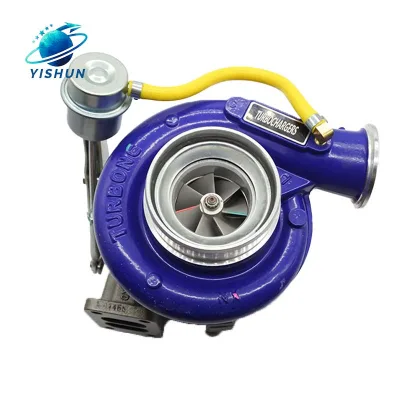
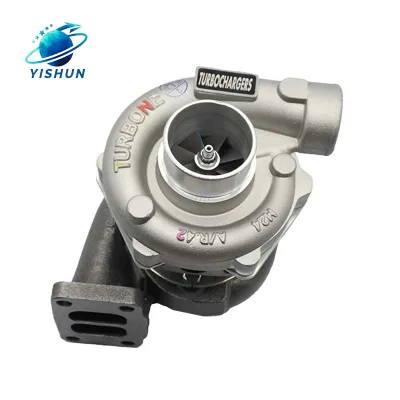


Excavator Bulldozer Turbocharger Engine Supercharger for Engineering Machinery Components
$999.00 - $999999.00
MOQ: 1 Pieces

Engineering Machinery Turbocharger Supercharger Turbo Engine Parts for Excavator Bulldozer Loader
$999.00 - $999999.00
MOQ: 1 Pieces


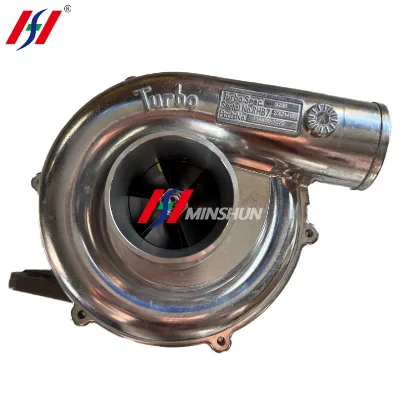


High-Performance Diesel Engine Turbocharger for Construction Machinery Parts
$280.00 - $290.00
MOQ: 1 Pieces


Original Construction Machinery Diesel Engine Parts Turbocharger 12749880003
$260.00 - $290.00
MOQ: 1 Pieces


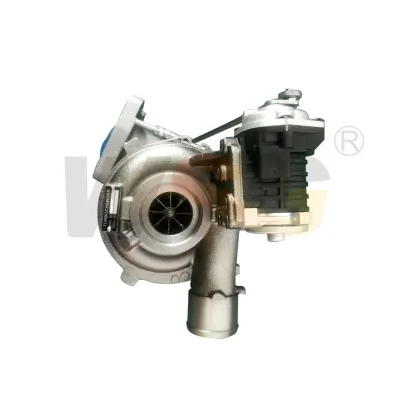


Comprehensive Sourcing Guide
Strategic Sourcing Guide for Diesel Engine Turbochargers for Excavators
Procuring diesel engine turbochargers for heavy machinery, specifically excavators, requires a disciplined approach that balances technical compatibility with rigorous supplier verification. The global market for these critical components is vast, with products ranging from generic aftermarket units to OEM-equivalent replacements. Buyers must navigate a landscape where product attributes are often presented as observations rather than universal guarantees. This guide outlines the essential steps for sourcing these components, focusing on the specific data points available in current market listings while adhering to strict evidence-based procurement practices.
Technical Specifications and Engine Compatibility
The foundation of any successful procurement strategy lies in precise technical matching. The core keyword "Diesel Engine Turbocharger for Excavator" encompasses a wide variety of engine models, each requiring specific flow rates, pressure ratios, and physical dimensions. Market data indicates that specific engine models are frequently associated with particular turbocharger part numbers. For instance, listings often reference the PC380-6 engine, which is a distinct model used in various Komatsu excavator applications. Similarly, the 6D31 engine model appears frequently in the context of SK200-5 excavators, while the 4JG2T model represents another specific variant found in the supply chain.
Buyers must treat these model associations as critical verification points rather than assumptions. A turbocharger listed for a PC380-6 engine may not function correctly in a 6D31 application due to differences in intake manifold geometry and exhaust gas velocity. The product listings provide specific part numbers that serve as the primary identifier for compatibility. Notable examples include part number 129935-18010 and 8971760801, which are explicitly linked to specific engine configurations. Additionally, OEM numbers such as 114400-3770 and 114400-2100 are provided as cross-reference identifiers.
When evaluating a potential supplier, the buyer must demand a direct correlation between the listed part number and the excavator's serial number or engine serial number. The presence of an OEM number does not automatically guarantee fitment; it must be verified against the specific machinery in operation. The weight of the unit is another observable specification that can aid in verification. Listings indicate weights ranging from 12 kg to 15 kg for these components. While this range provides a general expectation, significant deviations should trigger a request for detailed engineering drawings or physical inspection reports.
Compliance, Certification, and Regulatory Standards
In the B2B procurement of industrial machinery parts, compliance is non-negotiable. The market data highlights the prevalence of CE certification as a standard attribute for these turbochargers. This certification indicates that the product meets the health, safety, and environmental protection standards for products sold within the European Economic Area. However, the presence of a CE mark in a product listing must be treated as a claim that requires validation. Buyers should request the specific test reports or the declaration of conformity that substantiates this claim, rather than accepting the label at face value.
Beyond CE, the listings also reference ISO standards, specifically noting "ISOStandard Component." This suggests that the manufacturing process adheres to international quality management systems. For heavy machinery applications, the integrity of the component is paramount, as failure can lead to catastrophic engine damage. Therefore, the verification of ISO certification status is a critical step. Buyers should ensure that the supplier can provide valid, up-to-date certificates from an accredited body, rather than relying on self-declared standards found in the product description.
The origin of the product is another significant factor in compliance. The majority of the observed listings originate from Guangdong, China, with a specific mention of the Huangpu port. While China is a major hub for manufacturing these components, the buyer must verify the specific factory location and its compliance with local and international environmental regulations. The "High Quality" and "Assurence" labels found in descriptions are subjective observations and do not replace formal certification. Procurement teams must establish a protocol to audit the supplier's quality management system to ensure that the "High Quality" claim is backed by documented processes and consistent output.
Cost Drivers and Pricing Structures
Understanding the cost structure of diesel engine turbochargers is essential for budgeting and negotiation. The observed price range in the market spans from 1 USD to 99,999 USD, a variance that reflects the diversity of product types, from small aftermarket units to large, high-performance industrial assemblies. This wide range underscores the importance of defining the exact specification before requesting a quote. A price that seems low may indicate a lower-grade material or a refurbished unit, while a high price may include premium branding or extended warranty terms.
Several factors drive the final cost of these components. The engine model compatibility is a primary driver; rare or specialized models like the PC380-6 or 4JG2T may command different pricing due to production volume and tooling costs. The condition of the product is another critical variable. Listings specify "New" and "100% Brand New" conditions, which generally command a premium over remanufactured or used units. The warranty period also influences cost; a 6-month warranty is commonly observed, while some listings mention a 3-6 month range. A longer warranty period often correlates with a higher initial price but reduces the total cost of ownership by mitigating replacement risks.
Packaging and shipping logistics also contribute to the overall cost. The standard packing methods observed include "Boxed or Crated," "Palletized," or "Carton" packaging, with specific dimensions noted, such as an individual package size of 32x28x38 cm. The weight of the unit, ranging from 12 to 15 kg, impacts freight charges, particularly for international shipping via carriers like DHL, UPS, or FedEx. Buyers should request a detailed breakdown of costs, including the unit price, packaging fees, and shipping estimates, to avoid hidden expenses that can erode the value of the procurement.
Typical Applications and Usage Scenarios
The versatility of diesel engine turbochargers is evident in their application across various operational environments. The product attributes indicate usage in "Land Use," "Marine," "Trailer Type," and "Car Type" scenarios, highlighting the adaptability of these components. However, the primary application for the specific models discussed is the "Excavator," with explicit references to "Komatsu Excavator engine" and general "Excavator engine" applications. This focus on heavy-duty earthmoving equipment dictates the performance requirements, which must withstand high loads, dust, and continuous operation.
The usage classification further refines the procurement strategy. Turbochargers are categorized as "Common Units," "Standby Unit," or "Emergency Crew" components. A "Standby Unit" implies a spare part intended for immediate replacement during scheduled maintenance or unexpected failures, requiring high reliability and quick availability. "Emergency Crew" usage suggests a critical role in maintaining operational continuity during breakdowns, where downtime costs are substantial. Understanding the intended usage helps buyers determine the appropriate level of quality assurance and warranty support required.
Furthermore, the installation method is specified as "Portable," which is crucial for maintenance teams. A portable installation method implies that the component can be easily transported to the job site and installed without the need for heavy lifting equipment or specialized facilities. This attribute is particularly relevant for excavators operating in remote locations where access to a fully equipped workshop is limited. Buyers should verify that the packaging and design of the turbocharger support this portability, ensuring that the unit can be safely handled and transported to the excavation site.
Supplier Evaluation and Operational Capabilities
Selecting the right supplier is as important as selecting the right part. The market data reveals several key operational capabilities that buyers should evaluate. Delivery times vary significantly, with observed ranges of "3-7 Working Days" and "1-3 days." These lead times are critical for minimizing equipment downtime. A supplier offering a 1-3 day delivery time may be better suited for emergency replacements, while a 3-7 day timeline might be acceptable for planned maintenance stockpiling. Buyers must align their inventory strategy with these lead times to ensure operational resilience.
Payment terms are another critical evaluation metric. The standard payment method observed is "T/T" (Telegraphic Transfer), which is a common practice in international trade. However, buyers should negotiate terms that protect their interests, such as partial payments upon shipment or inspection. The "Selling Units" attribute indicates that these products are often sold as a "Single Item," which simplifies the ordering process but requires careful attention to the Minimum Order Quantity (MOQ). The observed MOQ is "1PCS/Set," suggesting that buyers can purchase single units without being forced into bulk orders, which is advantageous for small-scale repairs or testing.
Video outgoing inspection is a valuable feature mentioned in the listings, where the supplier provides a video of the product before shipping. This transparency allows buyers to verify the physical condition, packaging, and labeling of the unit prior to payment. It serves as a form of remote quality control, reducing the risk of receiving damaged or incorrect items. Buyers should insist on this feature as a standard part of the procurement process, ensuring that the visual inspection matches the product description and specifications.
Quality Control and Long-Term Procurement Considerations
Ensuring long-term reliability requires a robust quality control strategy. The product attributes emphasize "High Quality" and "Assurence," but these terms must be backed by concrete actions. The warranty period, typically ranging from 3 to 6 months, is a key indicator of the supplier's confidence in their product. However, buyers should look beyond the warranty duration and investigate the supplier's return and replacement policies. A clear policy for handling defective units is essential for managing risk.
The condition of the product is explicitly stated as "New" or "100% Brand New." This distinction is vital, as refurbished units may have hidden defects that compromise performance. Buyers should request documentation that confirms the new condition, such as manufacturing dates or batch numbers. Additionally, the "Customization" attribute suggests that some suppliers may offer tailored solutions. While this can be beneficial for unique applications, it introduces complexity in the quality control process. Customized parts require rigorous testing to ensure they meet the specific performance requirements of the excavator.
Long-term procurement considerations also involve building a relationship with a reliable supplier. Consistency in quality, delivery times, and communication is key to maintaining a stable supply chain. Buyers should evaluate the supplier's ability to scale their operations as their needs grow. The "Place of Origin" being Guangdong, China, is a common hub, but buyers should verify the specific factory's capacity and history. Establishing a long-term partnership can lead to better pricing, priority production, and improved support during critical periods.
In conclusion, sourcing diesel engine turbochargers for excavators requires a meticulous approach that combines technical verification, compliance checks, and supplier evaluation. By focusing on the specific engine models, part numbers, and operational requirements, buyers can make informed decisions that ensure the reliability and efficiency of their heavy machinery. The evidence-based strategies outlined in this guide provide a framework for navigating the complexities of the global market, ensuring that procurement efforts yield high-quality, compatible, and cost-effective solutions.
FAQs
What engine models are compatible with these turbochargers?
These turbochargers are compatible with specific models like PC380-6, 6D31, and 4JG2T engines. They are primarily designed for Komatsu excavators and other heavy machinery requiring diesel engine replacements.
Which certifications do the products hold for safety compliance?
The products hold CE certification and adhere to ISO standard component requirements. Buyers should verify specific test reports to ensure the claims meet international safety and environmental protection standards.
How long is the delivery time for these units?
Delivery times typically range from one to seven working days depending on the supplier. Some vendors offer expedited shipping within one to three days, while standard orders may take up to a week.
Can I purchase a single unit without a bulk order?
Yes, the minimum order quantity is one piece per set, allowing for single-item purchases. This flexibility supports small-scale repairs or testing without requiring large initial inventory commitments.
What is the warranty period for these new turbochargers?
The warranty period generally ranges from three to six months for new units. Some listings specifically mention a six-month warranty to cover potential defects during the initial operational phase.
Which part numbers should I check for compatibility?
Key part numbers include 129935-18010, 8971760801, and 3803108. OEM numbers like 114400-3770 and 114400-2100 also serve as valid cross-reference identifiers for matching specific engine configurations.
How are the units packaged for safe shipping?
Units are packed in boxes, crates, or cartons, often palletized for stability. Individual package dimensions are approximately 32 by 28 by 38 centimeters, weighing between 12 and 15 kilograms.