Source Eco-Friendly Cartoon Bed Sheet for Garment, Home Textile, Dress
Find 30 listings for Eco-Friendly Cartoon Bed Sheet suitable for home textile, dress, and bedding applications. Buyers can compare specifications including waterproof, shrink-resistant, and tear-resistant features from suppliers in Changxing and Fujian.
Key considerations
Products List


Indonesia/Thailand Market Hot Sales Cartoon Design 100 Polyester Bed Sheet Fabric
$0.51 - $0.55
MOQ: 5000 Meters


Eco-Friendly Disposable Bulk Bed Sheets Disposable Waterproof Bed Sheet
$0.20 - $0.35
MOQ: 100000 Pieces

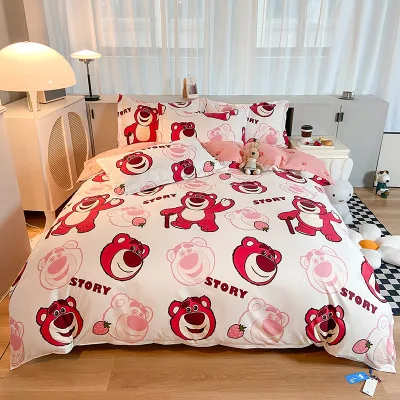


Bed Cover Material Microfiber Custom Cartoon Print 100% Polyester Bedsheet Fabric
$0.40 - $0.80
MOQ: 5000 Meters
Comprehensive Sourcing Guide
Strategic Sourcing Guide for Eco-Friendly Cartoon Bed Sheet Procurement
Procuring eco-friendly cartoon bed sheets requires a nuanced approach that balances aesthetic requirements with rigorous technical verification and supply chain transparency. The term "eco-friendly" in the textile industry often encompasses a spectrum of attributes, ranging from the raw material composition to the chemical treatments applied during manufacturing. For buyers seeking products that combine a cartoon design with sustainable credentials, the primary challenge lies in distinguishing between marketing assertions and verifiable product data. This guide outlines the critical technical specifications, compliance frameworks, and evaluation metrics necessary for sourcing high-quality bed sheet fabrics that meet both functional and environmental expectations.
Technical Specifications and Material Composition
The foundation of any bed sheet procurement lies in the material composition and the physical properties of the fabric. In the current market, bed sheets are frequently categorized by their fiber type and weaving or knitting techniques. While traditional cotton remains a staple, the provided data indicates a significant presence of synthetic options, specifically 100% Polypropylene, which is often utilized in spun-bonded non-woven applications. For a "cartoon" design, the fabric must support high-fidelity printing or embroidery without compromising structural integrity.
Buyers must scrutinize the fiber cross-section and knitting technics. The available data highlights "Filament" fibers and "Weft" knitting as common attributes, alongside "Spun-Bonded" technics. A critical observation from the product data is the variation in physical features, ranging from "Low Strength" to "Medium Strength." This discrepancy suggests that not all products labeled as bed sheet fabric possess the same durability. For a cartoon bed sheet intended for home use, the fabric must exhibit "Medium Strength" to withstand regular washing and usage. Furthermore, the "GOAT" fiber cross-section mentioned in the data is an unusual attribute for standard bed sheets and warrants immediate verification to ensure it does not indicate a mislabeled product or a specific niche material.
The application scope is equally diverse. While the core keyword targets "Bed Sheet," the data also lists applications for "Garment," "Lining," and "Curtain." This overlap indicates that some suppliers may offer multi-purpose fabrics. A buyer must ensure the specific product selected is optimized for bedding, which typically requires a higher thread count or GSM (grams per square meter) for comfort. The observed weight range of 20-150GSM is vast; a lightweight 20GSM fabric is likely unsuitable for a primary bed sheet, whereas a 150GSM fabric may be too heavy. The ideal range for a comfortable, durable bed sheet usually falls in the mid-to-high spectrum of this observed range, depending on the desired seasonality.
Design Execution and Aesthetic Standards
The "cartoon" aspect of the product introduces specific requirements regarding pattern application and color fastness. The design can be achieved through various methods, including "Printed," "Dyed," or "Embroidered" techniques. The data confirms the availability of "Colorful" and "Plain" patterns, as well as "Printed" styles. For a cartoon design, the "Printed" method is the most common, requiring high-quality inks that adhere well to the substrate.
Color fastness is a critical quality metric that cannot be overlooked. The provided facts explicitly mention a "Very Good" color fastness rating for certain products. This is a vital benchmark for buyers to request in their specifications. A cartoon design with poor color fastness will fade rapidly after washing, ruining the aesthetic appeal and potentially releasing dyes into the wash water, which contradicts eco-friendly principles. Additionally, the "Style" attribute includes "Dyed" and "Printed," and the "Pattern" can be "Plain" or "Embroidered." Buyers should verify that the cartoon motifs are applied in a way that does not compromise the fabric's breathability or softness. The "Design" should be vibrant and clear, ensuring the "Colorful" aspect translates well to the final product.
Compliance, Certification, and Environmental Claims
The "eco-friendly" designation is the most scrutinized aspect of this procurement category. While the data mentions "Eco-Friendly" as a feature for certain non-woven materials, it does not provide specific certification details for the bed sheet products. The background information lists "GOTS" (Global Organic Textile Standard) and "Oeko-Tex" as relevant certifications, but these are marked as low-confidence background data. Consequently, buyers must not assume these certifications are present without direct verification from the supplier.
When evaluating suppliers, the buyer must demand proof of certification rather than relying on the supplier's self-declaration. The presence of "SGS" as a standard in the provided data is a positive indicator, as SGS is a recognized third-party inspection and certification body. However, the specific standard listed as "253510cm/254012cm" appears to be a packaging dimension rather than a textile standard, highlighting the need for buyers to distinguish between physical specifications and compliance standards.
To ensure the "eco-friendly" claim is valid, buyers should verify the following:
- Material Origin: Is the fiber organic, recycled, or sustainably sourced? The data mentions "Imported" grade materials, which requires clarification on the country of origin and the sustainability practices of the source.
- Chemical Safety: Does the fabric meet Oeko-Tex Standard 100 limits for harmful substances? This is crucial for bed sheets that come into direct contact with skin.
- Production Processes: Are the dyes and finishes non-toxic? The "Anti-Bacterial" and "Mothproof" features listed in the data often involve chemical treatments that must be verified for environmental safety.
Cost Drivers and Pricing Dynamics
Understanding the cost structure of eco-friendly cartoon bed sheets is essential for budgeting and negotiation. The observed price range in the market is substantial, spanning from $0.20 to $45.00 USD. This wide variance is driven by several factors, including material quality, design complexity, and order volume.
The Minimum Order Quantity (MOQ) is a significant cost driver. The data shows an MOQ range from 10 to 100,000 units, with a specific instance of "1ton" for certain products. For buyers seeking custom cartoon designs, the MOQ may be higher due to the setup costs for printing plates or embroidery machines. The "Cheapest" advantage listed in the data suggests that some suppliers compete primarily on price, which may correlate with lower material quality or less stringent environmental controls.
Buyers should be wary of prices at the lower end of the spectrum ($0.20-$1.00) as these often correspond to low-GSM, non-woven materials or basic printed fabrics that may not meet the durability or comfort expectations of a premium bed sheet. Conversely, prices approaching $45.00 likely reflect high-quality natural fibers, complex embroidery, or certified organic materials. The "Sample: Freely" attribute is a valuable negotiation tool; buyers should utilize free samples to test quality before committing to large orders, thereby mitigating the risk of purchasing low-cost, low-quality inventory.
Supplier Evaluation and Quality Control Protocols
Selecting the right supplier involves a multi-faceted evaluation process that goes beyond price comparison. The data indicates that customization is "Available," which is a positive sign for buyers seeking unique cartoon designs. However, the "Customization" capability must be paired with robust quality control.
Key evaluation criteria include:
- Origin Verification: The data lists origins such as "Changxing, Huzhou" and "Fujian, China." Buyers should verify the specific factory location to assess the local regulatory environment and labor practices.
- Packing Standards: The observed packing methods include "Roll Packing," "Packing with Paper Tube and PE Bag," and "PE Bag and Carton." Proper packing is essential to prevent damage during transit, especially for printed fabrics where the design could be smudged.
- Lead Time and Production Capacity: While specific lead times are not provided in the data, the wide range of MOQs suggests varying production capacities. Buyers should inquire about the supplier's ability to meet delivery deadlines, especially for custom orders.
- Test Results: The "SGS" standard mentioned implies that third-party testing is available. Buyers should request recent test reports for color fastness, tensile strength, and chemical content to ensure the product meets the required specifications.
A comparison of typical product attributes based on the provided data helps in setting clear expectations:
| Attribute | Low-End / Basic | High-End / Premium | Verification Requirement |
|---|---|---|---|
| Material | 100% Polypropylene (Spun-Bonded) | Natural Fibers (Cotton/Linen) | Request fiber composition certificate |
| Strength | Low Strength | Medium Strength | Tensile strength test report |
| Color Fastness | Variable | Very Good | ISO color fastness test |
| Certification | None / Self-declared | GOTS, Oeko-Tex (Verified) | Third-party certification copy |
| Design | Printed (Basic) | Embroidered / Complex Print | Sample inspection for clarity |
| MOQ | 10 units | 1 Ton / High Volume | Negotiate based on sample order |
Long-Term Procurement and Supply Chain Resilience
For long-term success, buyers must consider the scalability and reliability of their supply chain. The "Customization: Available" feature allows for brand differentiation, but it also introduces complexity. Buyers should establish a clear communication channel with suppliers regarding design changes, material substitutions, and quality updates.
The "Application" of the fabric extends beyond just "Bed Sheet" to include "Home Textile," "Dress," and "Lining." This versatility can be an advantage, allowing buyers to diversify their product lines. However, it also means that the supplier may have competing priorities. Buyers should ensure that their specific order for cartoon bed sheets receives adequate attention and resources.
Furthermore, the "Advantage: Cheapest" attribute should be approached with caution. While cost savings are desirable, they should not come at the expense of quality or compliance. A sustainable procurement strategy prioritizes long-term value over short-term savings. This includes investing in suppliers who demonstrate a commitment to environmental stewardship, even if their initial price point is slightly higher.
Finally, buyers should plan for the lifecycle of the product. The "Season: Winter" attribute suggests that some bed sheets are designed for specific climatic conditions. Buyers should ensure that their inventory planning aligns with seasonal demand to avoid overstocking or stockouts. The "Age Group: Adults" specification indicates that the target demographic is clear, but buyers should verify if the design and sizing (e.g., "King" size) align with their specific market needs.
In conclusion, sourcing eco-friendly cartoon bed sheets requires a meticulous approach that balances aesthetic desires with technical rigor. By focusing on material composition, verifying certifications, understanding cost drivers, and implementing strict quality control measures, buyers can secure a supply chain that delivers high-quality, sustainable products. The data provided offers a solid foundation for these decisions, but the ultimate success lies in the buyer's ability to verify claims and maintain high standards throughout the procurement process.
FAQs
What material options exist for eco friendly cartoon bed sheets?
Available materials include 100% Polypropylene spun-bonded fabric and filament fibers. Buyers should verify fiber cross-sections like GOAT or natural options to ensure durability matches the intended home textile application.
Which certifications verify the eco friendly claims for these sheets?
While some products list SGS standards, specific certifications like GOTS or Oeko-Tex are not confirmed in the provided data. Buyers must request third-party test reports to validate chemical safety and organic status claims.
How does the MOQ affect the cost of custom cartoon designs?
Minimum order quantities range from 10 units up to 100,000, with some products requiring 1 ton. Higher customization for cartoon prints often necessitates larger volumes, influencing the unit price significantly across the observed $0.20 to $45 range.
Can I find suppliers offering free samples for quality testing?
Yes, the product data indicates that free samples are available for certain items. This allows buyers to verify physical features like medium strength and color fastness before committing to bulk orders of the bed sheet fabric.
What are the typical physical strength ratings for these fabrics?
Observed physical features range from low strength to medium strength depending on the specific product model. For durable bed sheets, buyers should prioritize items explicitly rated with medium strength to withstand regular washing and usage.
Which locations host factories producing these eco friendly bed sheets?
Products originate from locations such as Changxing, Huzhou, and Fujian, China. Buyers should verify specific factory addresses to assess local regulatory compliance and ensure the supply chain meets their ethical sourcing requirements.
How is the product packed to protect the cartoon design?
Packing methods include roll packing, paper tube with PE bag, or carton with PE bag. Proper packaging is essential to prevent smudging of the printed or embroidered cartoon patterns during transit to the destination.