Source Digital Display Silicone Heating Elements for Ovens, Molds, and Tanks
Explore 30 listings for Digital Display Silicone Heating Elements with customizable dimensions, voltages, and temperatures. Buyers can compare specifications like thermal efficiency, insulation resistance, and packaging options from verified manufacturers in China.
Key considerations
Products List


$10.00 - $200.00
MOQ: 6 Pieces

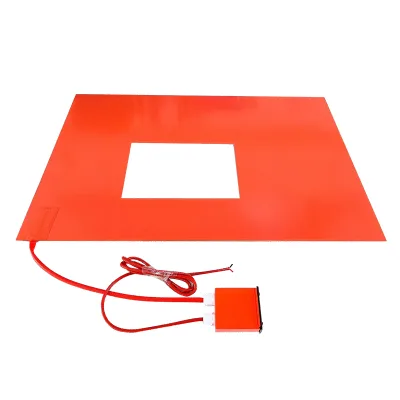


Better Quality Silicon Carbide Heating Elements, Sic Heating Elements, Sic Heater
$35.00 - $300.00
MOQ: 5 Pieces


Comprehensive Sourcing Guide
Strategic Sourcing Guide for Digital Display Silicone Heating Elements
Navigating the procurement landscape for Digital Display Silicone Heating Elements requires a disciplined approach that balances technical precision with supply chain reliability. These components are critical for maintaining thermal stability in electronic interfaces, ensuring that digital displays function correctly across varying environmental conditions. The market offers a diverse array of options, but the buyer must rigorously filter available data to distinguish between standardized products and highly customized solutions. This guide outlines the essential factors for sourcing these heating elements, focusing on verified specifications, compliance requirements, and cost structures derived from current market observations.
Technical Specifications and Customization Parameters
The technical profile of silicone heating elements varies significantly based on the intended application, ranging from general insulation to high-temperature furnace operations. A primary observation in the current market is the prevalence of customization. Buyers should expect that dimensions, voltage, and standard compliance are frequently tailored to specific project needs rather than adhering to a rigid catalog of fixed sizes. For instance, while some listings indicate specific dimensions such as 20*20 mm or a size range of 10-54 mm, the attribute "Customized" appears repeatedly for length, width, and height. This suggests that the core value proposition often lies in the ability to adapt the element's physical footprint to the exact constraints of the digital display assembly.
Voltage requirements also demonstrate a wide spectrum of adaptability. Observed data indicates a range from 12V up to 380V, with "Costomized" (Customized) being a common specification. This variability necessitates that buyers clearly define their power supply constraints before initiating a procurement process. Similarly, the temperature range is a critical performance metric. While some products are rated for a broad operational window of -30°C to 260°C, others may be optimized for specific ranges such as 0°C to 250°C or a maximum temperature of 180°C. The selection of the correct thermal range is vital to prevent element failure or insufficient heating performance.
The physical structure of the element further influences its application. The market includes elements described as "Plate" shaped, with thicknesses typically ranging from 1.5 mm to 4 mm. The material composition is another key differentiator; while silicone is the base for these heating elements, some listings reference "Non-Metallic Material" structures or specific grades like 1700/1800, which may refer to the maximum operating temperature or material grade rather than a specific chemical composition. The wire length is another customizable specification, often listed as 200mm or available in custom lengths. Understanding these parameters is essential for ensuring the heating element integrates seamlessly with the digital display's thermal management system.
Compliance and Certification Verification
In the B2B procurement of electronic components, compliance is not merely a formality but a prerequisite for market access and safety. The supplied data highlights several certifications that buyers should verify during the supplier evaluation phase. The most frequently observed certifications include RoHS and CE, which indicate compliance with environmental restrictions on hazardous substances and European safety standards, respectively. Some listings combine these into a single attribute, noting "CE, ISORoHS," while others mention "ISO9001" or "ISO9001: 2000."
It is important to note that the presence of a certification in a product listing does not guarantee that every unit in a specific order meets that standard. Buyers must treat these attributes as observations of the supplier's general capability or specific product lines rather than universal guarantees. For instance, while "ISO9001" is listed as a standard for some products, other entries mention "costomized" standards. This discrepancy underscores the need for direct verification. Procurement teams should request current, valid certificates from the supplier for the specific batch of goods being purchased.
Furthermore, the origin of the product plays a role in compliance. Many listings indicate the product origin as "Zhejiang" or "Henan, China," with one specific entry noting "Henan, China(Mailand)." While China is a major manufacturing hub, the specific region can sometimes correlate with the type of industrial specialization. Buyers should ensure that the supplier's origin aligns with their internal compliance requirements regarding supply chain transparency and ethical sourcing. The "Insulating Resistance" is another critical safety parameter, with observed values of ≥50mΩ. This figure must be verified against the specific safety standards applicable to the buyer's industry, as electrical insulation is paramount for preventing short circuits in digital display assemblies.
Cost Drivers and Pricing Structures
The pricing of silicone heating elements is influenced by a complex interplay of factors, including customization levels, material quality, and order volume. The observed price range in the market spans from $1 to $300 USD, reflecting the vast difference between off-the-shelf standard components and highly engineered, custom-designed solutions. A unit priced at the lower end of this spectrum is likely a standard size with fixed voltage and minimal customization, whereas a unit at the higher end likely involves complex engineering, specific material grades, or small-batch production runs.
Minimum Order Quantity (MOQ) is another significant cost driver. The observed MOQ range is 1 to 200 units. This wide range indicates that suppliers are flexible, catering to both prototyping needs and mass production. For buyers requiring only a few units for testing or initial deployment, an MOQ of 1 is highly advantageous. However, for large-scale procurement, negotiating an MOQ closer to the lower end of the 200-unit range can often result in better unit economics. The "Power Deviation" is also a factor that can influence cost; a tighter deviation, such as ±5% or 5%, often commands a premium due to the stricter quality control required to maintain such precision.
Packaging requirements can also impact the final cost. Listings show various packaging methods, from simple "Cartons" and "Boxes" to more robust "Wooden Box Wrapped Plastic Foam" or "Wooden Case with Foam Board." For delicate digital display components, the choice of packaging is critical to prevent damage during transit. While standard carton packaging may be sufficient for some applications, the additional cost of wooden cases and foam protection must be factored into the total landed cost, especially for international shipping where handling conditions can be unpredictable.
Typical Applications and Thermal Performance
Silicone heating elements serve a diverse range of applications, extending beyond simple warming to critical thermal management in industrial and consumer electronics. The observed applications include "Heater," "Insulation," "High Temperature Furnace," and "warming." In the context of digital displays, the primary function is often to prevent condensation, maintain liquid crystal viscosity in cold environments, or ensure consistent touch response. The "Thermal Efficiency" of these elements is a key performance indicator, with some products claiming efficiency of "More Than 95%." High thermal efficiency ensures that energy is not wasted as heat loss to the surrounding environment, which is crucial for battery-operated devices or energy-sensitive industrial setups.
The principle of operation for these elements is typically "Resistance Heating," where electrical energy is converted into heat through the resistance of the conductive material. The heat transfer surface may vary, with some designs utilizing "Rods" or flat plate configurations. The specific application dictates the required temperature range; for example, a digital display in a cold storage facility may require an element capable of operating down to -30°C, while a high-temperature furnace application might demand a maximum temperature of 180°C or higher. The "Function" of warming is a broad category that encompasses various specific use cases, from defrosting to maintaining optimal operating temperatures for sensitive electronics.
Supplier Evaluation and Quality Control
Evaluating a supplier for silicone heating elements requires a multi-faceted approach that goes beyond reviewing product listings. Buyers should assess the supplier's ability to handle customization, as the "Customization" attribute is prevalent in the market. A capable supplier should be able to accommodate changes in dimensions, voltage, and wire length without compromising the integrity of the product. The "Structure Material" being "Non-Metallic Material" suggests a focus on flexibility and durability, which are essential for conforming to the contours of digital displays.
Quality control measures should be a central part of the supplier evaluation. The "Power Deviation" of ±5% is a common specification, but buyers should verify how this deviation is achieved and maintained across production batches. Consistency in the "Insulating Resistance" of ≥50mΩ is equally important for safety. Suppliers should provide test reports or quality assurance documentation that confirms these parameters. Additionally, the "prod_packing" method should be evaluated for its ability to protect the product during shipping. The variety of packaging options, from "Cartons" to "Wooden Case Inside with Sponge and Foam," indicates that suppliers have different capabilities in terms of protective packaging, and the buyer should select the option that best matches the fragility of the digital display components.
The "Standard" of the product is another area requiring scrutiny. While some products adhere to "ISO9001" or "ISO9001: 2000," others are listed as "costomized." Buyers should ensure that the supplier has a robust quality management system in place, regardless of the specific standard cited. The "Grade" of the material, such as 1700/1800, should be verified to ensure it meets the thermal and mechanical requirements of the application.
Long-Term Procurement Considerations
Sourcing silicone heating elements is not a one-time transaction but a long-term relationship that impacts the reliability of the final product. Buyers should consider the scalability of the supplier's production capabilities. The observed "MOQ" range of 1-200 suggests flexibility, but the ability to scale up to larger volumes without significant lead time increases is crucial for growing businesses. The "Lead Time" is not explicitly detailed in the provided data, but it is a critical factor that buyers must inquire about directly.
Future-proofing the supply chain involves understanding the customization capabilities of the supplier. As digital display technologies evolve, the thermal requirements of the devices may change. A supplier that offers "Customized" dimensions, voltage, and standards is better positioned to adapt to these changes. The "prod_model" variations, such as "ED shape," "U shape," and "Straight type," indicate that suppliers have a diverse portfolio of designs. Buyers should ensure that the supplier can maintain a consistent supply of these models or transition to new designs as needed.
Finally, the "prod_origin" of the product, whether "Zhejiang," "Henan," or "China," should be considered in the context of supply chain resilience. Diversifying suppliers across different regions can mitigate risks associated with regional disruptions. The "Certification" status, particularly "RoHS" and "CE," should be monitored to ensure ongoing compliance with evolving international regulations. By focusing on these long-term factors, buyers can secure a reliable supply of high-quality silicone heating elements that support the performance and longevity of their digital display products.
FAQs
What certifications do Digital Display Silicone Heating Elements typically have?
Common certifications include RoHS and CE, with some listings also showing ISO9001 or ISORoHS. Buyers should verify specific certificates for the batch as standards may vary between customized and standard products.
Can the dimensions of these heating elements be customized?
Yes, dimensions such as length, width, and height are frequently customized to fit specific project needs. While some standard sizes like 20*20 mm exist, the core value often lies in adapting the physical footprint to exact constraints.
What is the voltage range for these silicone heating elements?
The voltage range spans from 12V up to 380V, with customized options also available. Buyers must clearly define their power supply constraints before procurement since variability is high across different product listings.
How is the thermal efficiency of these elements measured?
Thermal efficiency is a key performance indicator, with some products claiming efficiency of more than 95%. This ensures energy is not wasted as heat loss, which is crucial for battery-operated devices or energy-sensitive setups.
What is the minimum order quantity for these heating elements?
The observed minimum order quantity ranges from 1 to 200 units, offering flexibility for prototyping or mass production. Lower MOQs are advantageous for testing, while larger volumes may yield better unit economics.
Where are these heating elements typically manufactured?
Products originate from regions such as Zhejiang and Henan in China. Buyers should ensure the supplier's origin aligns with their internal compliance requirements regarding supply chain transparency and ethical sourcing.