Source Disposable Cockroach Glue Trap for Home, Hotel, and Warehouse
Find 30 verified options for the Disposable Cockroach Glue Trap designed for indoor pest control. Buyers can compare physical forms, customization levels, and packaging details to select the right solution for home, hotel, or warehouse environments.
Key considerations
Products List


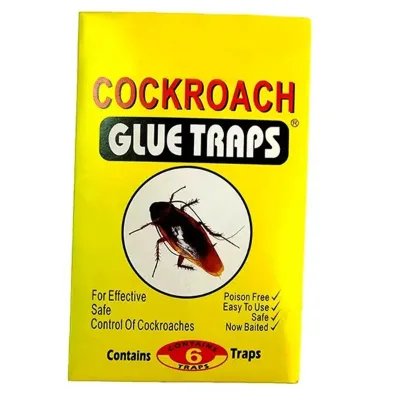
Insect Cockroach Repeller Sticky Glue Board Disposable Cockroach Glue Trap
$0.15 - $0.30
MOQ: 20000 Pieces


Disposable Pest Control Effective Cockroach Glue Trap for Cockroach Killer
$0.25 - $0.35
MOQ: 10000 Pieces

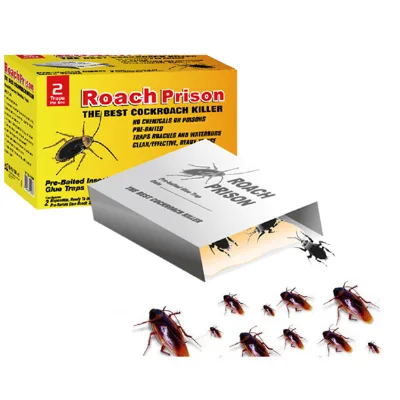
Indoor Kitchen Disposable Anti Cockroach Glue Traps for Cockroach Killer
$0.25 - $0.35
MOQ: 10000 Pieces

Indoor Cockroach Trap Insect Control Cockroach Glue Trap to Kill Cockroaches
$0.25 - $0.35
MOQ: 10000 Pieces


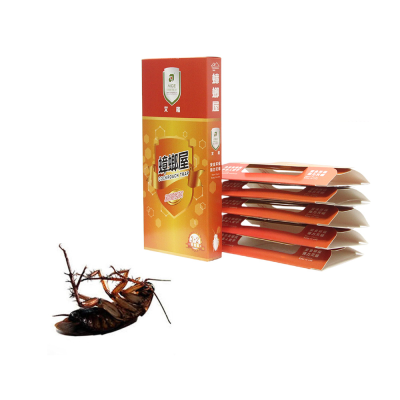
Pest Control Cockroach Killer Sticky Trap Cockroach Bait Trap Catch Glue Traps
$0.41 - $0.61
MOQ: 20000 Pieces


Comprehensive Sourcing Guide
Strategic Sourcing Guide for Disposable Cockroach Glue Traps
Understanding Product Composition and Physical Attributes
The Disposable Cockroach Glue Trap is a specialized pest control device designed to capture insects through adhesive mechanisms rather than chemical poisons or mechanical traps. When evaluating products in this category, buyers must first distinguish between the physical form and the material composition, as these factors directly influence efficacy and safety. Based on observed market data, the primary physical form for these units is a gel, often described as clear to light yellow in appearance. This gel state is critical for the adhesive's performance, requiring high viscosity to ensure that cockroaches cannot escape once they contact the surface.
The material composition typically involves a combination of glue and paper, or a paper box structure that houses the adhesive. Some variations utilize a cardboard box for packaging, while others are presented as standalone traps. The color of the product can vary significantly; observed listings indicate options ranging from standard white and green to fully customizable printing. This customization capability is a key feature for brands seeking to align the trap's appearance with their corporate identity or to use specific colors to deter pests psychologically. The state of the adhesive is generally non-toxic and odorless, a property that is essential for residential and commercial environments where food safety and air quality are paramount.
Buyers should note that while the core function remains consistent, the specific dimensions and standard sizes vary by manufacturer. Observed specifications include standard dimensions such as 25.5 cm by 19 cm, 195 mm by 92 mm by 25 mm, and smaller units measuring 12.8 cm by 7.1 cm by 4.5 cm. The ability to customize sizes is a frequent offering, allowing procurement teams to tailor the product to specific placement requirements. Whether the trap is designed for indoor use or broader perimeter control, the fundamental construction relies on a paper-based substrate coated with a high-viscosity adhesive that is both eco-friendly and disposable.
Technical Specifications and Performance Standards
When sourcing disposable cockroach glue traps, technical specifications serve as the primary benchmark for quality assurance. The product model numbers, such as TLCGT03, TLCGT0101, HPS-2021, and HPS-3048, often correspond to specific dimensional and functional configurations. It is vital for buyers to verify that the stated dimensions match the intended application area. For instance, a trap with a standard size of 25 cm by 19 cm is suitable for general indoor placement, whereas smaller units might be optimized for tight crevices or specific equipment housing.
The performance of these traps is often categorized by their target pest profile. While the core keyword focuses on cockroaches, many products are marketed with a broader target pest range that includes general insects. The effectiveness is frequently described as long-term, suggesting that the adhesive remains viable for extended periods without drying out or losing tackiness. However, the rechargeable status of these units is consistently non-rechargeable, reinforcing their classification as single-use, disposable items. This aligns with the feature set of being eco-friendly and disposable, which simplifies waste management but requires a consistent supply chain to maintain inventory levels.
Compliance with size standards is another critical technical aspect. Some products adhere to rigid standards like 25.5 cm by 19 cm, while others offer fully customizable sizing. Buyers must ensure that the supplier's standard size aligns with their operational needs or that the customization process is robust enough to meet unique requirements. The packaging standard, often listed as 500 pieces per carton or 10 pieces per box, dictates the logistics of storage and distribution. The gross weight of a standard carton is observed to be around 12 kg, a figure that is essential for calculating shipping costs and warehouse capacity.
Cost Drivers and Minimum Order Quantities
The economics of sourcing disposable cockroach glue traps are heavily influenced by Minimum Order Quantities (MOQ) and packaging configurations. Market observations reveal a wide range in MOQs, spanning from as low as 5 units to as high as 20,000 pieces. This variance suggests that the market accommodates both small-scale testers and large-scale distributors. However, specific high-volume listings indicate an MOQ of 10,000 pieces for certain models, while others may require 20,000 pieces. Buyers must carefully align their procurement volume with these thresholds to avoid price penalties or order rejections.
Packaging plays a significant role in cost determination. The standard packing configurations observed include 500 pieces per carton, 10 pieces per box, or 2 pieces per box with 60 boxes per carton. The carton dimensions, such as 40 cm by 27 cm by 38 cm or 40 cm by 36 cm by 35 cm, directly impact freight costs. Larger cartons with higher piece counts reduce the cost per unit but increase the upfront capital outlay and storage requirements. The price range observed in the market is between 0.1 and 1 USD per unit, a narrow band that suggests a highly competitive market with standardized production costs.
Customization is a major cost driver. While the base product is often available in standard colors like white or green, the option for customizable printing and packaging is frequently highlighted. This feature allows brands to create a unique product identity but typically incurs additional setup costs and may require higher MOQs to be economically viable. The "Can Be OEM" attribute confirms that manufacturers are willing to produce under private labels, but this service often comes with specific volume commitments. Buyers should factor in the potential for higher unit costs when requesting custom colors, logos, or non-standard carton sizes.
Compliance, Certification, and Safety Verification
In the realm of pest control products, compliance and safety are non-negotiable. The observed product attributes emphasize that the glue traps are non-toxic and odorless, which is a critical safety feature for indoor environments, especially those involving food handling or residential spaces. The eco-friendly nature of the product is another key selling point, suggesting that the materials used are environmentally conscious. However, buyers must verify these claims against actual certification standards rather than relying solely on marketing descriptions.
While background knowledge suggests that certifications like ROHS, CE, and FSC are relevant to the industry, the specific product data provided does not explicitly confirm that every listed unit possesses these certifications. Therefore, buyers should treat the presence of these certifications as a verification requirement rather than an inherent attribute. It is the responsibility of the procurement team to request valid certificates from the supplier to confirm that the adhesive and paper materials meet international safety and environmental standards. The lack of explicit certification data in the product listing means that due diligence is required to ensure the product complies with local regulations in the destination market.
The "Made in China" and "Fujian" or "Ningbo" origins indicate the primary manufacturing hubs for these products. While these regions are known for their manufacturing capabilities, buyers should ensure that the specific factory adheres to quality management systems that guarantee consistent product safety. The property of being nontoxic and odorless is a functional claim that should be backed by laboratory test results. Buyers should request documentation proving that the adhesive does not release harmful volatile organic compounds (VOCs) and that the paper substrate is free from hazardous substances.
Supplier Evaluation and Operational Capabilities
Evaluating suppliers for disposable cockroach glue traps requires a focus on their customization capabilities, production capacity, and logistical reliability. The availability of customization in terms of color, printing, and packaging is a strong indicator of a supplier's flexibility. Suppliers that offer "Customizable Printing" and "Customized Packaging or OPP Bags" demonstrate an ability to adapt to diverse client needs. This flexibility is particularly valuable for brands that require unique packaging for retail distribution or specific branding for corporate clients.
The origin of the products, whether from Fujian or Ningbo, provides insight into the supply chain dynamics. These regions are established manufacturing centers, but buyers should verify the specific factory's capacity to handle large orders. The observed MOQs of 10,000 to 20,000 pieces suggest that suppliers are geared towards volume production. For buyers with smaller requirements, finding a supplier that can accommodate lower MOQs, potentially down to 5 units, may require negotiation or the use of trading companies.
Lead times and stock availability are also critical factors. Some product listings indicate that items are "Stocked," which implies immediate availability and shorter lead times. This is advantageous for buyers needing to replenish inventory quickly. However, for customized orders, lead times will inevitably be longer due to the setup and production time required for custom printing and packaging. Buyers should clarify the production timeline for both standard and customized orders to ensure alignment with their sales cycles.
Quality Control and Long-Term Procurement Strategy
Implementing a robust quality control (QC) strategy is essential for maintaining the efficacy of disposable cockroach glue traps. The high viscosity of the gel and the non-toxic nature of the adhesive are key quality indicators that must be verified upon receipt. Buyers should establish a sampling protocol to test the adhesive's tackiness and the trap's ability to capture target pests. The "Long-term" effectiveness claim should be validated through real-world testing or third-party verification to ensure that the product does not degrade prematurely.
For long-term procurement, consistency in product specifications is paramount. The variation in product models (e.g., TLCGT03 vs. HPS-2021) and sizes (e.g., 25.5 cm by 19 cm vs. 12.8 cm by 7.1 cm) highlights the need for a clear specification sheet that defines the exact product requirements. Buyers should lock in these specifications in their contracts to prevent suppliers from substituting products with different dimensions or adhesive properties. The "Sizes Can Be Customized" attribute offers flexibility, but it also introduces the risk of specification drift if not managed carefully.
Sustainability is a growing consideration in procurement. The "Eco-Friendly" and "Disposable" features suggest that the product is designed for single-use, which raises questions about waste management. Buyers should evaluate the biodegradability of the paper and adhesive components. While the product is marketed as eco-friendly, the actual environmental impact depends on the specific materials used. Procurement teams should request information on the recyclability or compostability of the waste generated by these traps to align with corporate sustainability goals.
Comparative Analysis of Product Configurations
To facilitate decision-making, the following table summarizes the key variations observed in the market for disposable cockroach glue traps. This comparison highlights the differences in dimensions, packaging, and customization options that buyers must consider.
| Feature | Configuration A | Configuration B | Configuration C |
|---|---|---|---|
| Product Model | TLCGT03 | HPS-2021 | Glue cockroach trap |
| Standard Size | 25.5 cm x 19 cm | 12.8 cm x 7.1 cm x 4.5 cm | Customizable |
| Material | Glue and Paper | Paper Box | Paper Box |
| Color | White, Green | Customizable Printing | Customized Printing |
| MOQ | 10,000 PCS | 20,000 PCS | Variable |
| Packing | 500 PCS/CTN | 2 PCS/Box, 60 Boxes/CTN | Customizable |
| Origin | Fujian | Ningbo, China | Made in China |
| Key Feature | Eco-Friendly, Disposable | Stocked, Disposable | Eco-Friendly |
This table illustrates that while the core function remains the same, the operational details vary significantly. Configuration A offers a standard large format with a moderate MOQ, suitable for general distribution. Configuration B provides a smaller, boxed format with a higher MOQ, potentially targeting specific retail channels. Configuration C represents the highly customizable option, ideal for private label brands with unique requirements. Buyers should select the configuration that best aligns with their volume needs, branding strategy, and logistical capabilities.
In conclusion, sourcing disposable cockroach glue traps requires a balanced approach that considers technical specifications, cost structures, and supplier capabilities. By focusing on the verified attributes of the product and conducting thorough due diligence on compliance and quality, buyers can secure a reliable supply chain for this essential pest control category. The flexibility in customization and the competitive pricing range make this product category attractive, provided that the buyer maintains strict quality control standards throughout the procurement process.
FAQs
What physical form do these traps typically take?
The traps typically come in a gel form that appears clear to light yellow. This gel state requires high viscosity to ensure cockroaches cannot escape once they contact the adhesive surface.
Can I request custom printing on the trap packaging?
Yes, customizable printing is possible for both the trap surface and the packaging. Buyers can often choose from white, green, or fully customized designs to align with their brand identity.
What is the minimum order quantity for these traps?
Minimum order quantities vary significantly, ranging from as low as 5 units up to 20,000 pieces depending on the supplier. Some specific high-volume models may require an MOQ of 10,000 or 20,000 pieces.
Are these traps suitable for indoor use only?
While many units are designed for indoor locations, some are also suitable for animal control and home perimeter use. The product is generally non-toxic and odorless, making it safe for residential environments.
How are these traps packaged for shipping?
Packaging configurations vary, with options including 500 pieces per carton or 10 pieces per box. Standard carton dimensions are often around 40 by 27 by 38 centimeters with a gross weight of approximately 12 kilograms.
Do these traps require any power source to operate?
No, these traps are non-rechargeable and do not require any power source to function. They rely entirely on the adhesive properties of the glue to capture insects without electricity or batteries.
What materials are used to construct the trap?
The traps are constructed using a combination of glue and paper or housed within a paper box. The substrate is often cardboard or paper-based, coated with a high-viscosity adhesive for maximum effectiveness.