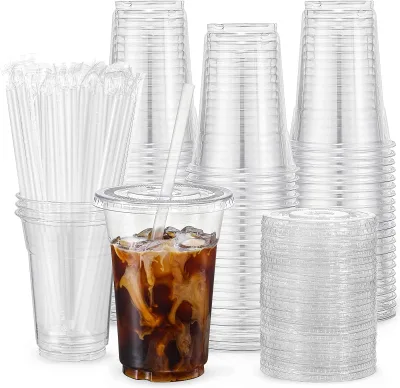
Source Disposable Clear Plastic Cup with Lids for drinking tea and juice
Find 30 options for Disposable Clear Plastic Cup with Lids suitable for hot and cold beverages. Buyers can compare capacities ranging from 8oz to 24oz, materials like PP and PET, and customization features including printed designs and various lid types.
Key considerations
Products List




Comprehensive Sourcing Guide
Strategic Sourcing Guide for Disposable Clear Plastic Cups with Lids
The global market for single-use beverage containers continues to evolve, driven by the demand for convenience, hygiene, and cost-efficiency in the food and beverage sector. For procurement professionals seeking disposable clear plastic cups with lids, the supply landscape offers a diverse array of options ranging from standard injection-molded units to customized solutions. This guide provides a structured approach to evaluating suppliers, verifying technical specifications, and ensuring compliance based on verified product attributes and industry standards. The focus remains on clear, transparent cups designed for hot and cold applications, often featuring lids and optional straws, sourced primarily from manufacturing hubs in China.
Technical Specifications and Material Composition
Understanding the material composition and physical specifications is the first step in defining a viable procurement strategy. The core product category typically utilizes Polypropylene (PP) or Polyethylene Terephthalate (PET) as the primary plastic type. These materials are selected for their clarity, durability, and ability to withstand temperature variations. Product listings indicate that these cups are designed for a wide range of capacities, with specific models available in volumes ranging from 8oz to 24oz. In metric measurements, this corresponds to capacities such as 240ml up to 760ml or 960ml, with some standard models explicitly listed at 360ml to 1000ml.
The manufacturing process often involves plastic injection molding, which ensures consistency in wall thickness and structural integrity. A critical technical attribute is the functional capability of the cup to handle both hot and cold beverages. This dual-temperature resistance is essential for suppliers targeting the coffee, tea, juice, and cola markets. The cups are frequently supplied with accessories, including lids and straws, which can be configured as "with straw" or "without straw" based on the buyer's requirements. The lids are typically designed to fit snugly to prevent leakage, a feature that is standard for the "with lid" product configuration observed in the market.
| Specification Category | Observed Range / Options | Verification Requirement |
|---|---|---|
| Plastic Type | PP, PET | Confirm material grade suitability for intended liquid. |
| Capacity | 8oz to 24oz (240ml-960ml) | Verify exact volume against standard sizes (e.g., 10oz, 16oz). |
| Temperature | Hot & Cold | Ensure material rating matches beverage temperature. |
| Color | Transparent, Multicolor | Specify clarity requirements for branding. |
| Packing | Carton (1000-1080 pcs/CTN) | Confirm carton dimensions and stacking strength. |
| Customization | Available (Printed, Customized) | Define printing limits (e.g., 1-4 colors). |
Buyers must verify that the "transparent" or "clear" attribute meets their visual quality standards, as some listings note "multicolor" or "printed" options which may affect the clarity of the plastic. The "unfolded" state of the cups is standard, as these are rigid injection-molded products rather than collapsible items.
Compliance, Certification, and Safety Standards
Safety and regulatory compliance are paramount when sourcing food-contact plastics. The primary certification observed in the product data is FDA compliance, which indicates that the materials meet United States Food and Drug Administration standards for food safety. This is a critical baseline for any supplier exporting to North American markets. However, buyers should exercise caution and not assume that all listed products automatically possess every certification mentioned in background data, such as FSC or EN13432, unless explicitly confirmed in the specific product listing.
In addition to FDA, other standards may be relevant depending on the destination market. Some product data references SGS standards, which often relates to third-party testing for quality and safety. It is the responsibility of the procurement team to request current test reports and certificates of analysis (CoA) from the supplier to validate that the specific batch of cups meets the required regulatory thresholds. The "Eco-Friendly" attribute listed in some product descriptions should be treated as a marketing claim that requires verification against local recycling or biodegradability standards, as standard PP and PET are recyclable but not necessarily biodegradable in the traditional sense.
Buyers should also verify the "prod_standard" values, which range from specific capacity standards (e.g., 360ml-1000ml) to material standards (e.g., PP). When a supplier lists "Customized" as a standard, it implies flexibility in meeting specific regulatory or dimensional requirements, but this must be documented in the purchase order to ensure the final product adheres to the agreed-upon safety protocols.
Cost Drivers and Pricing Dynamics
The pricing structure for disposable clear plastic cups is influenced by several key variables, including material costs, order volume, and customization levels. The observed price range in the market is approximately $0.01 to $0.12 per unit. This wide variance suggests that price is highly sensitive to the specific plastic type (PP vs. PET), the thickness of the cup, and the complexity of the printing or customization.
Minimum Order Quantity (MOQ) is another significant cost driver. The market data indicates an MOQ range from 100 units to 100,000 units. Smaller orders, such as those starting at 100 units, typically carry a higher unit cost due to the setup costs for injection molding and printing. Conversely, orders approaching 100,000 units benefit from economies of scale, driving the unit price toward the lower end of the observed range. Buyers should note that "Free for You" samples are often available, which can be a strategic tool for validating quality before committing to a large order, though this does not necessarily reflect the bulk pricing structure.
The packing configuration also impacts logistics costs. Listings show variations such as 1000 pieces per carton or 1080 pieces per carton. Standardizing the carton count can optimize container utilization and reduce shipping expenses. Furthermore, the inclusion of accessories like lids and straws adds to the unit cost. A cup sold with a lid and straw will naturally be priced higher than a basic cup, even if the base plastic cost is identical. Buyers must clearly define whether the "with lid" and "with straw" attributes are mandatory to avoid unexpected cost overruns.
Typical Applications and Usage Scenarios
The versatility of disposable clear plastic cups with lids makes them suitable for a broad spectrum of applications. The product attributes explicitly list usage for drinking cups, tea cups, juice cups, and cola cups. This indicates that the cups are designed to handle both carbonated and non-carbonated beverages. The "Hot & Cold" functional attribute expands their utility to include coffee shops, tea houses, and fast-food chains where temperature variation is common.
The target demographic includes both adults and children, with some products specifically marketed for "Every Age." This suggests that the design must balance safety (e.g., leak-proof lids) with ease of use. The "Simple" style and "Printed" fancy options allow for customization that can align with brand identity, making these cups ideal for promotional events, corporate gatherings, and retail environments. The "Coffee Cups Water Drinking" purpose highlights their dual role in serving hot beverages like coffee and cold drinks like water or iced tea.
In the context of the "Eco-Friendly" attribute, buyers should consider the environmental impact of their choice. While the cups are recyclable, the "disposable" nature implies a single-use lifecycle. Applications in high-volume settings, such as stadiums or large conferences, benefit from the convenience and hygiene of these cups, but the environmental footprint must be weighed against the operational benefits.
Supplier Evaluation and Manufacturing Capability
When evaluating potential suppliers, manufacturing experience is a key indicator of reliability. The data highlights suppliers with "Over 20 Years Experience," "Over 25 Years Experience," and "Experience Over 12 Years." These figures suggest a mature industry with established players who have refined their production processes over decades. A supplier with extensive experience is more likely to have robust quality control systems and the capacity to handle large-scale orders consistently.
Geographic origin is another critical factor. The majority of the supply chain is centered in China, with specific mentions of "Wuhan China" as a production hub. Buyers should verify the specific factory location to assess logistics lead times and potential geopolitical risks. The "Customization" attribute being available across the board indicates that most suppliers are flexible in accommodating specific design requests, such as custom logos or unique shapes.
The "Sample" availability is a vital part of the supplier evaluation process. The fact that samples are offered "Free for You" allows buyers to physically inspect the product for clarity, lid fit, and overall build quality. This step is essential before finalizing a contract, as it mitigates the risk of receiving substandard goods. Buyers should also inquire about the supplier's capacity to handle "1-4 Colors" printing, as this is a common customization requirement for branding.
Quality Control and Long-Term Procurement Considerations
Implementing a rigorous quality control (QC) protocol is essential for maintaining product integrity. Given the "Disposable" nature of the product, QC should focus on visual defects, such as scratches, cloudiness, or uneven printing, as well as functional tests like lid leakage and temperature resistance. The "SGS" standard mentioned in the data suggests that third-party inspection is a viable option for buyers who cannot conduct on-site audits.
Long-term procurement considerations involve building a sustainable supply chain. Buyers should prioritize suppliers who demonstrate a commitment to consistent quality over time, as evidenced by their long manufacturing experience. The "Carton Packing" and "1000/Carton" specifications should be standardized to ensure efficient inventory management and storage. Additionally, buyers should monitor the "prod_model" numbers (e.g., Plastic Cup-011, Plastic Cup-024) to ensure that the specific model selected remains available for future reorders, avoiding supply disruptions.
Finally, the "Customized" nature of the product means that any changes in design or material must be carefully documented. Buyers should maintain clear records of the agreed-upon specifications, including the exact plastic type, capacity, and printing details. This documentation serves as a reference point for future orders and helps in resolving any disputes regarding product quality or compliance. By adhering to these guidelines, procurement professionals can secure a reliable supply of high-quality disposable clear plastic cups with lids that meet their operational and regulatory needs.
FAQs
What certifications do these cups have for food safety?
The cups are certified FDA compliant for food safety. This ensures the materials meet United States standards for contact with beverages like coffee, tea, and juice.
Can I order cups with lids and straws included?
Yes, the cups are available with lids and optional straws. Buyers can specify configurations with or without straws to suit different beverage serving needs.
What is the price range for these disposable cups?
The observed price range is between 0.01 and 0.12 USD per unit. Costs vary based on plastic type, capacity, and order volume requirements.
Which capacities are available for these plastic cups?
Capacities range from 8oz to 24oz, including specific models like 10oz and 16oz. Metric equivalents include volumes from 240ml up to 960ml for various uses.
How does customization work for printing on these cups?
Customization is available with printing options ranging from 1 to 4 colors. Buyers can request specific designs while maintaining the clear or multicolor plastic attributes.
What is the minimum order quantity for these products?
The minimum order quantity ranges from 100 to 100,000 units. Lower MOQs may incur higher unit costs compared to large bulk orders.
Where are these cups manufactured and what is the origin?
The products originate from China, with specific manufacturing hubs in Wuhan. Buyers should verify exact factory locations for logistics planning.