Source Disposable Coated Paper Cigarette Box for Food, Cosmetics, and Electronics
Explore 30 listings for Disposable Coated Paper Cigarette Box options tailored for food, cosmetics, and electronics packaging. Compare customization features, material specs, and pricing to find the right supplier for your bulk needs; compare the available evidence and request quotations based on your requirements.
Key considerations
Products List


Cigarette Paper Box Packets Cardboard Durable Tobacco Cigarette Packaging Paper Box
$0.05 - $0.50
MOQ: 100000 Pieces


Printed Paperboard Tobacco Case Packaging Box Disposable Paper Box for Cigarette
$0.05 - $0.50
MOQ: 100000 Pieces


Factory Wholesale Portable Smoking Cardboard Paper Cigarette Case Printing Cigarette Box
$0.01 - $0.02
MOQ: 100000 Pieces

Custom Offset Printing Different Colors Cardboard Paper Tobacco Cigarette Box
$0.01 - $0.02
MOQ: 100000 Pieces

Custom Print Logo Empty Cigarette Case Fold Blank Cardboard Cigarette Boxes
$0.01 - $0.02
MOQ: 100000 Pieces

Printing Packing Smoking Packaging Tobacco Case Paper Custom Cigarette Boxes
$0.22 - $0.38
MOQ: 100 Pieces
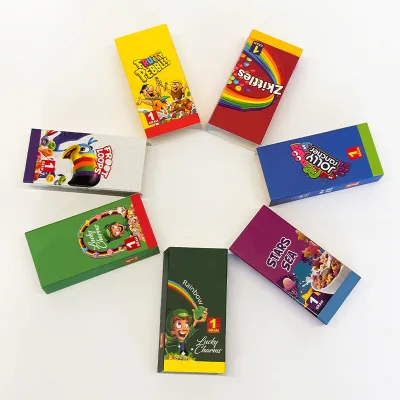


Foldable Clamshell Cardboard Cigarette Box Inner Outer Packing Paper Cigarette Case
$0.01 - $0.02
MOQ: 100000 Pieces

Eco Friendly Custom Cardboard Paper Box for Cigarette Smoking Packing Provide Design
$0.01 - $0.02
MOQ: 100000 Pieces


Comprehensive Sourcing Guide
Disposable Coated Paper Cigarette Box Sourcing Guide
Buyers must first distinguish between rigid paperboard structures and flexible plastic alternatives when sourcing disposable coated paper cigarette boxes. The observed product data indicates a primary material composition of paper, often paired with PE raw materials for specific coating requirements, though some listings reference plastic packaging processes. This distinction is critical because the structural integrity and barrier properties differ significantly between a pure paperboard box and a composite bag. Procurement teams should verify the exact material layering to ensure the packaging meets the intended function for food, electronics, or cosmetics without relying on unverified claims about biodegradability.
The observed listings reveal a wide variance in product models, ranging from specific OEM designs to generic takeaway food containers. While some entries explicitly label the item as a cigarette box packaging, others describe similar dimensions and sealing methods for general food or cosmetic use. This overlap suggests that the core keyword often encompasses a broader category of coated paper containers. Buyers should carefully cross-reference the product model numbers and standard dimensions, such as 9x5.5x2.4cm or 6x4.75x2.5 inches, to confirm the specific application before finalizing a purchase order.
Product Scope and Observed Listing Signals
The market signals indicate that customization is a dominant feature, with suppliers offering tailored logo printing, color schemes, and capacity adjustments. The observed data confirms that offset printing and gravure printing are the standard surface finishing techniques, allowing for high-quality branding on the exterior. Buyers should expect options for matte, lamination, stamping, and embossing finishes, which directly influence the perceived value and tactile experience of the final product. These attributes are essential for brands looking to differentiate their packaging in competitive retail environments.
Packaging configurations vary significantly, with some listings specifying a carton box for bulk shipping while others detail internal counts of 10 or 20 pieces per box. The observed capacity ranges from 20 pieces to 500,000 units, reflecting the diverse scale of potential orders. Additionally, the sealing mechanism is described as fully sealed in some contexts, ensuring product protection during transit. Procurement teams must clarify whether the "fully sealed" attribute applies to the individual unit or the master carton to avoid confusion regarding the level of protection provided for sensitive contents like food or cosmetics.
Technical Specifications to Verify
Dimensional accuracy is a primary verification point, as observed listings provide specific measurements like 7.8x5.5x2.4 inches or 4.3x3.5x2.4 inches. Buyers must confirm that the selected model matches the physical dimensions of the product being packaged, as the "rectangular" shape and "one-piece design" require precise folding and assembly. The thickness is noted as customizable, which allows for adjustments based on the weight and fragility of the contents. However, without a standardized thickness value in the general data, buyers should request specific millimeter or GSM measurements to ensure structural rigidity.
Surface finishing and printing capabilities require strict validation to ensure the final output meets brand standards. The observed data lists "polished" and "brushed" as surface finishes, alongside "two-sided" printing options. It is crucial to verify that the coating process, whether involving PE or other materials, provides the necessary grease-proof and non-leaking properties claimed for food applications. Buyers should also confirm the color options, which range from white and kraft to fully customized colors, ensuring the visual identity aligns with the product's market positioning.
Compliance and Safety Documentation
Food safety compliance is a critical consideration given the observed applications for food, cosmetics, and household items. While the data mentions "grease proof" and "non-leaking" attributes, buyers must request specific migration test results to verify that the coated paper does not transfer harmful substances to food products. The presence of PE raw materials in some listings necessitates a review of food-grade certification for the plastic coating layer. Without explicit documentation of food-contact safety, the packaging should not be used for direct food contact applications.
Environmental claims require careful scrutiny, as the data includes conflicting or unverified statements about recyclability and biodegradability. Some listings mention "eco tube packaging" and "bio-degradable" features, while others describe plastic packaging processes. Buyers should demand third-party verification for any environmental claims, as the combination of paper and PE coatings often complicates recycling streams. Relying on unverified "eco" labels without supporting certification can lead to compliance issues in markets with strict sustainability regulations.
Cost Drivers and Commercial Terms
Pricing is heavily influenced by the level of customization and the volume of the order, with observed MOQs ranging from 100 to 500,000 units. The availability of free samples allows buyers to assess quality before committing to large volumes, but the final unit cost will fluctuate based on the complexity of the printing and the specific material thickness selected. Buyers should anticipate that custom colors, embossing, and specialized sealing mechanisms will increase the base price compared to standard white or kraft options.
Shipping and logistics costs are significant factors, with observed options including sea and air freight. The origin is listed as China, which implies standard international shipping timelines and potential tariff implications depending on the destination country. Buyers must calculate the total landed cost, including the carton packaging for bulk transport and any additional handling fees. The observed capacity of 20 pieces per box or 10 pieces per box affects the number of master cartons required, directly impacting shipping efficiency and cost per unit.
Supplier Qualification and Quality Control
Supplier qualification should focus on their ability to manage the diverse range of observed product models and customization requests. The data indicates that OEM services are accepted, suggesting flexibility in production, but buyers must verify the supplier's capacity to maintain consistency across large orders. The presence of multiple product models, such as YS-B-B001 and various cigarette box designs, requires a robust quality control system to prevent mix-ups during production and packaging.
Quality control protocols must address the specific finishing processes observed, such as offset printing and lamination. Buyers should request a quality assurance plan that includes checks for print alignment, color consistency, and the integrity of the grease-proof coating. The "one-piece design" that requires no assembly simplifies the final product but places a higher burden on the precision of the initial die-cutting and folding processes. Regular on-site audits or third-party inspections are recommended to ensure that the finished goods meet the specified standards for leakage and structural strength.
Long-Term Procurement Checks
Sustainability and supply chain resilience are key factors for long-term procurement success in this category. Buyers should monitor the supplier's ability to source raw materials consistently, particularly given the mix of paper and PE materials observed in the listings. Fluctuations in the availability of food-grade coatings or paperboard can disrupt production schedules, so establishing a reliable supply chain is essential for maintaining consistent product quality.
Future-proofing the procurement strategy involves staying updated on evolving regulations regarding single-use plastics and coated paper products. As environmental standards tighten, the "bio-degradable" claims observed in some listings may face increased scrutiny. Buyers should engage with suppliers who are proactive in adapting their material formulations to meet new compliance requirements. Regular reviews of the product specifications and market trends will ensure that the packaging remains compliant and competitive in the long term.
FAQs
Can I customize the logo and color on the cigarette box packaging?
Yes, customization is available for logos, colors, and packaging designs. The supplier accepts OEM orders and offers offset printing or gravure techniques. You can choose from white, kraft, or colored options. The surface finishing can be polished, and artistic effects like lamination, stamping, or embossing are supported to meet your specific branding requirements.
What materials are used for the Disposable Coated Paper Cigarette Box?
The primary material is paper, often utilizing ivory board or FBB for structure. Some variants may incorporate PE raw materials for specific coating needs. The product is designed to be recyclable and bio-degradable, ensuring environmental compliance. The grease-proof feature makes it suitable for various applications, including food, cosmetics, and household items, while maintaining structural integrity.
What are the standard sizes and capacity options for these boxes?
Standard sizes include dimensions like 6x4.75x2.5 inches and 7.8x5.5x2.4 inches. Capacity options vary, with some boxes holding 20 pieces or 10 pieces per carton. Weight specifications can be customized to 3.5g, 5g, or 10g. The one-piece design requires no assembly, and the boxes are fully sealed to ensure product safety and freshness during storage and transport.
Is the packaging suitable for food and cosmetic applications?
Yes, the packaging is suitable for food, electronics, apparel, cosmetics, and household items. It features a grease-proof coating and is non-leaking, ensuring product safety. The material is recyclable and bio-degradable, meeting eco-friendly standards. The fully sealed design protects contents from moisture and contamination, making it ideal for sensitive products like cosmetics and certain food items.
What are the MOQ and shipping options for bulk orders?
The MOQ ranges from 100 to 500,000 pieces, offering flexibility for different order sizes. Shipping options include sea and air freight, depending on urgency and volume. The packaging is packed in corrugated cartons, which can be customized. Lead times and specific pricing depend on the order quantity and customization requirements, so direct consultation with suppliers is recommended for precise details.
How is the sample process handled for new buyers?
Free samples are available for new buyers to evaluate quality and design. This allows you to check the printing quality, material thickness, and overall finish before committing to a large order. The customization process includes logo printing, color matching, and structural adjustments. Once approved, the production can proceed with the agreed specifications, ensuring the final product meets your expectations.