Source Disposable Dental Wedge for fillings, bonding, and model making
Find 30 listings for Disposable Dental Wedge options suitable for dental fillings, bonding materials, and model making. Buyers can compare specifications, sizes, and pricing from verified suppliers in China.
Key considerations
Products List




Comprehensive Sourcing Guide
Strategic Sourcing Guide for Disposable Dental Wedges
Understanding Product Classification and Core Specifications
When initiating a procurement strategy for disposable dental wedges, the first step is to establish a precise understanding of the product classification and technical specifications. These instruments are categorized as Class I medical devices, indicating they are low-risk items intended for temporary use during dental procedures. The primary function of these wedges is to separate teeth, create space for matrix bands, and ensure the proper contouring of restorative materials. Buyers must recognize that the product is fundamentally a specialized instrument equipment designed for the dental department, specifically for applications such as dental fillings and bonding materials.
The technical attributes of these wedges vary significantly based on the material composition and sizing. The market currently offers two distinct material categories: plastic and wooden variants. Plastic wedges are often manufactured from medical-grade PE (polyethylene) plastic, which is highlighted for being safe, eco-friendly, and non-toxic. In contrast, wooden wedges are also available, serving similar functions but with different tactile properties. The sizing is a critical specification, with standard classifications including Extra Small (XS), Small (S), Medium (M), and Large (L). Some suppliers may also list XL sizes, though the standard range typically covers the four primary dimensions. The physical dimensions for a single unit are generally compact, with single package sizes often recorded around 5x5x2.5 cm, and individual gross weights as low as 0.020 kg per unit.
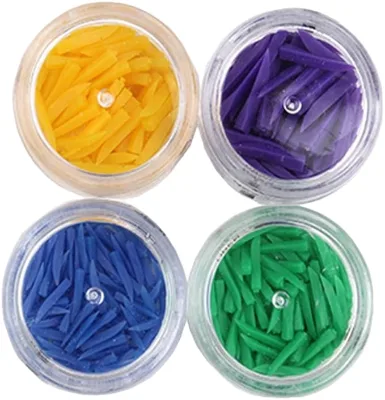
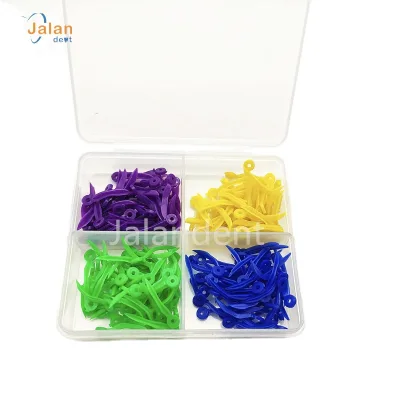
Color coding is another essential specification that aids in quick identification during clinical procedures. The observed color palette for plastic wedges typically includes purple, yellow, green, and blue, which often correspond to specific sizes. For instance, purple may denote the Large size, while blue might indicate the Extra Small size. Wooden wedges may present a different color spectrum, including yellow, pink, orange, and green. It is imperative for buyers to verify the specific color-to-size mapping with their chosen supplier, as this mapping is not universally standardized across all manufacturers. The model numbers associated with these products can vary, with examples including codes like W23.02, W232.006, and PW01, which help in tracking specific product lines.
Compliance, Safety Standards, and Certification Verification
Ensuring compliance with safety standards is a non-negotiable aspect of sourcing medical-grade dental wedges. The supply chain for these instruments must adhere to recognized safety protocols. One specific standard observed in the market is GB15979-2002, which relates to hygiene standards for disposable medical devices. Buyers must verify that any potential supplier explicitly states adherence to this standard or equivalent national and international regulations. While CE certification is frequently mentioned in product listings as a quality assurance marker, it should be treated as a claim that requires validation rather than an automatic guarantee. The presence of a CE mark indicates conformity with health, safety, and environmental protection standards for products sold within the European Economic Area, but the buyer must confirm the validity of this certification for the specific batch of goods being purchased.
In addition to product-specific standards, the origin of the manufacturing facility plays a significant role in compliance. The majority of the observed supply originates from Guangdong, China, with some production also noted in Jiangsu, China. While these regions are major manufacturing hubs, the buyer's responsibility extends to verifying the regulatory environment of the specific factory. The "Place of Origin" is a critical data point that influences shipping logistics and potential tariff implications. Furthermore, the shelf life of these disposable items is a key compliance factor. Products are typically rated for a shelf life of three years, after which the material properties, particularly for plastic wedges, may degrade, affecting their performance and safety.
Buyers should also scrutinize the "Quality Certification" section of supplier documentation. While CE is a common designation, the absence of other specific certifications does not necessarily disqualify a supplier, but the lack of clear documentation regarding material safety is a red flag. The material itself, described as medical-grade PE plastic for the plastic variants, must be non-toxic and suitable for intraoral use. The "Nature" of the product is defined as specialized instrument equipment, which reinforces the need for strict adherence to medical device regulations. When evaluating suppliers, request copies of their quality management system certificates and ensure they align with the claimed safety standards. Do not rely solely on the product page description; demand verifiable documentation that confirms the product meets the required safety thresholds for clinical use.
Cost Drivers, Pricing Structures, and Minimum Order Quantities
The economics of sourcing disposable dental wedges are influenced by several key drivers, including material costs, packaging configurations, and order volume. The observed price range for these products in the market spans from $0.01 to $5.50 USD per unit or package, depending heavily on the specific configuration and quantity ordered. This wide range reflects the difference between single-item purchases and bulk wholesale transactions. The "Selling Units" are often listed as single items, but the actual transaction typically occurs in bulk boxes or cartons.
Minimum Order Quantities (MOQ) are a significant factor in the total cost of ownership. The market exhibits a broad MOQ range, starting from as low as 1 unit up to 100,000 units. For smaller clinics or trial orders, an MOQ of 100 boxes or bottles may be the entry point, while larger distributors or hospital chains may negotiate volumes in the tens of thousands. The "MOQ" of 100 bots (boxes/bottles) is a common threshold observed for certain product lines. Buyers must balance the desire for lower unit costs with the need to manage inventory and storage space.
Packaging plays a substantial role in cost and logistics. Standard packaging configurations include 75 pieces per box for Large sizes, and 100 pieces per box for Medium, Small, and Extra Small sizes. Some suppliers offer bulk cartons containing 100 boxes, which significantly reduces the per-unit shipping cost. The "Single Package Size" of 5x5x2.5 cm allows for efficient stacking and storage, but the "Single Gross Weight" of 0.020 kg per unit means that weight-based shipping costs are generally low. However, the cumulative weight of large orders can still impact freight charges.
Customization is another cost driver. The availability of customization options allows buyers to request specific color schemes, branding, or packaging modifications. While this adds value, it may increase the unit price and extend lead times. Buyers should clarify the cost implications of customization early in the negotiation process. Additionally, the "After-sale Service" provided, such as online technical support, can influence the overall value proposition, though it may not directly impact the unit price.
Typical Clinical Applications and Departmental Usage
Disposable dental wedges are versatile tools with specific applications across various dental departments. The primary use case is for dental fillings, where the wedge is inserted between teeth to separate them slightly. This separation creates the necessary space for the placement of matrix bands, which are essential for restoring the contour and contact points of posterior teeth. The wedges also serve as a barrier to protect the gingival tissue from restorative materials, preventing the bonding agent or composite from adhering to the gum line.
The "Application" field for these products explicitly mentions "Dental Areal" and "Clinic, Dentist, Hospital," indicating their suitability for a wide range of clinical settings. In addition to fillings, these wedges are used in bonding material procedures, ensuring that the adhesive is applied precisely without interference from adjacent teeth. Some product descriptions also note their utility in "Model Making" and as a "Dental Plastic Barrier Film," suggesting broader applications in laboratory and clinical workflows. The "Applicable Departments" are consistently listed as the Dental Department or Oral Health Department, reinforcing their specialized nature.
The "Usage Times" attribute is critical for procurement planning. These wedges are designed for single-use or disposable applications. This disposable nature is a key hygiene factor, eliminating the risk of cross-contamination between patients. The "Feature" of being made from medical-grade plastic ensures that the wedge can be safely discarded after a single procedure without posing a biohazard risk. For wooden wedges, the material properties may differ, but the disposable intent remains the same. Understanding the specific workflow requirements of the dental practice is essential; for instance, a high-volume clinic may require a steady supply of XS and S sizes for anterior teeth, while a restorative-focused practice may stock more L and M sizes for posterior work.
Supplier Evaluation and Quality Control Protocols
Evaluating suppliers for disposable dental wedges requires a systematic approach to ensure reliability and product consistency. The "Customization" availability is a positive indicator of a supplier's flexibility, but it should be accompanied by a robust quality control (QC) process. Buyers should verify the supplier's ability to maintain consistent color coding and sizing across different production batches. The "Product Name" variations, such as "Wholesale Dental Wooden Wedges Dental Poly Wood We," suggest that some suppliers may have multiple product lines, and the buyer must ensure they are sourcing from the correct line.
Quality control should focus on the material integrity and packaging standards. The "Material" must be confirmed as medical-grade PE plastic or high-quality wood, free from defects such as cracks, splinters, or chemical residues. The "Shelf Life" of 3 years must be respected, and buyers should check the production date on received shipments to ensure sufficient remaining usability. Packaging integrity is also vital; the "Package" specifications, such as 100 pcs/box, must be accurate to prevent shortages or overstocking.
When assessing suppliers, consider the "After-sale Service" options. Online technical support can be valuable for resolving issues related to product usage or quality discrepancies. However, the supplier's location, whether in Guangdong or Jiangsu, China, will impact communication time zones and shipping logistics. Buyers should also verify the "Place of Origin" to ensure it aligns with their procurement preferences regarding trade agreements or ethical sourcing policies.
A comparison of key supplier attributes can help in the decision-making process. The following table outlines the typical variations found in the market:
| Attribute | Plastic Wedge Variant | Wooden Wedge Variant |
|---|---|---|
| Material | Medical Grade PE Plastic | Wood |
| Color Options | Purple, Yellow, Green, Blue | Yellow, Pink, Purple, Orange, Green |
| Standard Sizes | XS, S, M, L | XS, S, M, L, XL |
| Typical MOQ | 100 boxes/bottles | Varies, often 100+ |
| Shelf Life | 3 Years | 3 Years |
| Safety Standard | GB15979-2002 | GB15979-2002 |
| Certification | CE (Verify) | CE (Verify) |
| Application | Fillings, Bonding | Fillings, Model Making |
This comparison highlights the need for buyers to specify their material preference clearly, as the color and size mappings differ between the two types.
Long-Term Procurement Considerations and Inventory Management
Sourcing disposable dental wedges is not merely a one-time transaction but an ongoing operational requirement. Long-term procurement considerations include inventory management, supply chain resilience, and the potential for volume-based cost reductions. Given the "Usage Times" as disposable, the consumption rate is directly tied to the volume of dental procedures performed. Buyers should analyze their historical usage data to forecast future needs accurately, avoiding both stockouts and overstocking.
The "Warranty" of 1 year and the "Shelf Life" of 3 years provide a window for inventory rotation. However, since these are consumable medical devices, the warranty typically covers manufacturing defects rather than expiration. Buyers must implement a "First-In, First-Out" (FIFO) inventory system to ensure that older stock is used before it approaches its expiration date. The "Single Package Size" and "Single Gross Weight" facilitate efficient storage, but the total volume of cartons must be managed to optimize warehouse space.
As procurement volumes increase, buyers may negotiate better pricing and more favorable MOQ terms. The observed price range of $0.01 to $5.50 suggests significant economies of scale. For large-scale operations, establishing a long-term contract with a reliable supplier can stabilize costs and ensure consistent supply. Additionally, the "Customization" option allows for branding and specific packaging needs, which can be integrated into long-term agreements to streamline operations.
Finally, buyers should remain vigilant about changes in regulations and standards. The "Safety Standard" GB15979-2002 is current, but future updates or new international standards may emerge. Maintaining open communication with suppliers regarding regulatory changes ensures that the procurement strategy remains compliant. By focusing on these long-term factors, dental practices and distributors can build a resilient supply chain that supports high-quality patient care while optimizing operational efficiency.
FAQs
What material are disposable dental wedges made from?
They are made from medical-grade PE plastic or wood. The plastic variants are non-toxic, eco-friendly, and safe for intraoral use during dental procedures.
Which safety standard do these wedges comply with?
They comply with the GB15979-2002 safety standard for disposable medical devices. This ensures hygiene and safety requirements are met for clinical applications.
Can buyers request customization for these wedges?
Yes, customization is available for these products. Buyers can often request specific packaging or branding options, though this may affect lead times and unit costs.
What is the typical shelf life of these wedges?
The shelf life is typically three years. Buyers should check production dates to ensure the material properties remain stable and safe for clinical use.
How are these wedges packaged for bulk orders?
They are packaged in boxes containing 75 to 100 pieces depending on the size. Large sizes often come in 75-piece boxes while smaller sizes come in 100-piece boxes.
What is the minimum order quantity for these wedges?
The minimum order quantity ranges from 1 to 100,000 units depending on the supplier. Some specific product lines may require a minimum of 100 boxes.