Source Intelligent Driving Rear Door for Garage, Hotel, and Warehouse
Find 30 verified options for the Intelligent Driving Rear Door suitable for community, hotel, and warehouse applications. Buyers can compare specifications, certifications, and pricing from multiple suppliers to select the best fit for their needs; compare the available evidence and request quotations based on your requirements.
Key considerations
Products List




Elegant Intelligent Electric Gate Modern Smart Door with Remote and Voice Control Function
$103.25 - $153.32
MOQ: 1 Square Meters


Front Doors for Homesinterior Doorinterior Doorsinterior Exterior Doors
$44.00 - $50.00
MOQ: 100 Pieces


Smart Automatic Electric Garage Door with Safety Obstacle Detection
$100.00 - $160.00
MOQ: 7 Square Meters
Hunan Lianxin Chi Tai Intelligent Doors And Windows Co., Ltd.
Comprehensive Sourcing Guide
Intelligent Driving Rear Door Sourcing Guide
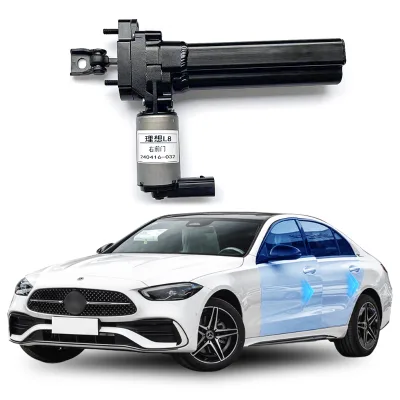
The Intelligent Driving Rear Door market encompasses advanced access systems designed for modern vehicles and secure facilities, integrating electronic controls with automated movement. Buyers must distinguish between general electric bolt mechanisms and specialized automotive applications, as the supplied data indicates products serving both community access and specific vehicle models like the LIXIANG series. Understanding this duality is critical for aligning procurement with either facility security needs or automotive replacement requirements.
Sourcing strategies should prioritize verifying the specific working principle, which is often electronically controlled, to ensure compatibility with existing vehicle architectures or building management systems. The observed product range includes fully automatic doors suitable for various environments, from garages to hospitals, alongside specialized units for car models L6 through L9. Procurement teams must carefully map these functional attributes to their operational context to avoid selecting a generic electric bolt for a specialized automotive integration task.
Product Scope and Observed Listing Signals
Market listings reveal a diverse array of automated door solutions, ranging from standard electric bolts to complex systems featuring invisible, heat-insulating, and soundproof capabilities. The observed data highlights products with specific applications in communities, hotels, and warehouses, as well as specialized automotive parts designed for replacement or repair of LIXIANG vehicle models. Buyers should scrutinize the product name and application fields to confirm whether the item is intended for building infrastructure or specific vehicle maintenance, as the functional requirements differ significantly between these sectors.
Listing signals also indicate variations in customization availability and material composition, with some units offering aluminum alloy frames and nylon screen netting for enhanced durability. The presence of multiple origin locations, including Fujian and Guangdong, suggests a competitive supply base, yet buyers must verify the specific product model and standard against their technical requirements. Observing the selling units as single items and the condition as new helps establish baseline expectations for inventory management and immediate deployment readiness.
Technical Specifications to Verify
Technical due diligence requires confirming the working principle and opening patterns, as the data specifies electronically controlled locks and horizontal opening styles for various applications. Buyers must verify the frame material thickness, with observed specifications noting 2.2mm aluminum alloy, and ensure the surface treatment matches environmental demands, such as anodizing or power coating. The IP rating and security rating of A are critical metrics for outdoor or high-traffic installations, necessitating a direct check of the specific product listing to confirm these values apply to the exact unit being purchased.
For automotive applications, the OE number and car model compatibility are paramount, with listings explicitly mentioning suitability for LIXIANG L6, L7, L8, and L9 models. Procurement teams should validate the product model number, such as 6005-T5 or 2064.234, against the vehicle's service manual to ensure mechanical fit and electronic integration. Additionally, verifying the sound insulation rating of 45 and the specific function of being airproof or dust-proof is essential for meeting performance standards in both residential and commercial vehicle contexts.
Compliance and Safety Documentation
Compliance verification is essential given the mix of certifications observed, including CE, RoHS, and CCC, which indicate adherence to specific regional safety and environmental standards. Buyers must request current certification documents for the specific batch being ordered, as the presence of these marks in general listings does not guarantee every unit meets the latest regulatory requirements. The distinction between plastic and metal material IP ratings further underscores the need for precise documentation to ensure the product can withstand the intended environmental conditions without failure.
Safety documentation should also address the warranty terms, with a standard two-year warranty observed in the market data, which serves as a baseline for supplier accountability. Procurement teams must ensure that the warranty covers both the electronic control mechanisms and the mechanical components, particularly for high-stress applications like garage or hospital entrances. Verifying the standard of 30X14X20 cm for packaging and the SGS standard for product quality helps establish a framework for accepting shipments that meet defined safety and dimensional criteria.
Cost Drivers and Commercial Terms
Cost structures are influenced by the level of customization, material quality, and the specific application, with prices observed ranging from 15 to 1580 USD. Buyers should analyze the MOQ range of 1 to 1000 units to determine the most economical order quantity, balancing inventory costs against the need for immediate availability. The monthly production capability of 4000 tons suggests a robust supply chain, yet the lead time of 15-20 days must be factored into the total cost of ownership, especially for urgent replacement needs in automotive or facility management scenarios.
Commercial terms must clearly define the packing specifications, which include PE film, PVC film, and carton boxes, to prevent damage during transit and ensure the product arrives in new condition. The selling unit being a single item indicates that pricing may be per piece rather than per set, requiring careful calculation of total project costs. Buyers should negotiate based on the observed standard export packing and the specific surface finishing options, as these factors directly impact the final delivered price and the long-term maintenance costs of the installed system.
Supplier Qualification and Quality Control
Supplier qualification should focus on verifying the place of origin, with data pointing to Fujian and Guangdong as key manufacturing hubs in China. Buyers must assess the supplier's ability to provide consistent quality, evidenced by the "High-Quality" attribute and the specific surface finishing processes like wooden finish or anodizing. It is crucial to confirm that the supplier can maintain the observed production capabilities and lead times, ensuring that the supply chain remains stable for both small-scale replacements and large-scale facility deployments.
Quality control protocols must include checks on the product condition, ensuring all items are new and free from defects before shipment. The presence of specific product models and standards like SGS indicates a structured approach to manufacturing, but buyers should implement their own inspection criteria to verify the aluminum material thickness and the integrity of the electronic controls. Establishing a clear communication channel for addressing any discrepancies in the product name or function is vital for maintaining the high standards expected in intelligent driving and security applications.
Long-Term Procurement Checks
Long-term procurement strategies should prioritize the availability of spare parts and the continuity of the product line, given the specific compatibility requirements for LIXIANG models and various building types. Buyers must verify that the supplier can support the product over its lifecycle, particularly regarding the two-year warranty and the potential need for future replacements or repairs. The specific application in communities, hotels, and enterprises suggests a need for durable, low-maintenance solutions that can withstand heavy usage over extended periods.
Regular audits of the supplier's production standards and certification status are necessary to ensure ongoing compliance with CE, RoHS, and CCC requirements. Buyers should monitor changes in the product specifications, such as updates to the working principle or material thickness, to ensure that future orders remain compatible with existing systems. Establishing a relationship based on transparent communication regarding lead times and production capabilities will help mitigate risks associated with supply chain disruptions and ensure a steady flow of high-quality intelligent driving rear doors.
FAQs
What is the working principle of the Intelligent Driving Rear Door?
The working principle relies on an electronically controlled lock system for operation. This mechanism ensures fully automatic door functionality suitable for various applications like communities, garages, and hotels. The system integrates with specific vehicle models to provide secure and seamless access control.
Which certifications do these electric bolt locks hold?
These products hold CE and RoHS certifications to ensure safety and environmental compliance. Some variants also meet CCC standards for specific regional requirements. These certifications verify that the electronic locking mechanisms adhere to international quality and safety benchmarks for reliable performance.
Can the product be customized for specific vehicle models?
Yes, customization is available for specific vehicle models like LIXIANG L6, L7, L8, and L9. The product is designed to replace or repair existing systems while maintaining high quality. Buyers can select options tailored to their exact automotive needs without compromising on functionality.
What is the lead time for ordering these automatic doors?
The standard lead time for these products ranges from 15 to 20 days. This duration accounts for production and preparation for shipment from the origin locations in China. Buyers should plan their procurement schedules accordingly to ensure timely delivery for their projects.
How is the product packed for export shipping?
The product uses standard export packing including PE film, PVC film, and carton boxes. Additional protection layers like PE foam and craft paper are often included to prevent damage during transit. This robust packaging ensures the electric bolts arrive in new condition ready for installation.
What materials are used for the door frame construction?
The frame is constructed from high-quality aluminum alloy with a thickness of 2.2mm. Surface finishing options include anodized, power coating, or wooden finishes to suit different aesthetic requirements. This material choice provides durability while maintaining a modern style for various building applications.
What is the warranty period for these electric locks?
The warranty period for these high-quality products is two years. This coverage ensures protection against defects and supports long-term reliability for users. Buyers can rely on this warranty when investing in fully automatic door systems for commercial or residential use.