Source Disposable Food Contact Chef Apron for Kitchen Cleaning and Salon Use
Find 30 verified listings for Disposable Food Contact Chef Apron designed for kitchen, salon, and outdoor cleaning tasks. Buyers can compare materials like LDPE and cotton, check certifications including En13432 and ISO13485, and review customizable options for specific sanitary needs.
Key considerations
Products List


Disposable Apron Plastic Disposable Apron for Restaurants or Food Industry
$0.01 - $0.02
MOQ: 50000 Pieces

Waterproof Food Cooking Poly Apron Individual Wrapped Disposable PE Apron
$0.01 - $0.02
MOQ: 5000 Pieces


Biodegradable Kitchen & Cooking Aprons Compostable Disposable Medical Apron
$3680.00 - $4306.50
MOQ: 1 Tons




Comprehensive Sourcing Guide
Strategic Sourcing Guide for Disposable Food Contact Chef Aprons
Understanding Product Specifications and Material Composition
When sourcing disposable food contact chef aprons, the primary objective is to identify products that balance hygiene, durability, and cost-efficiency for commercial environments. The market offers a diverse array of specifications, ranging from standard dimensions to highly customized orders. Based on available product data, the core material composition typically involves polyethylene variants, specifically Low-Density Polyethylene (LDPE), High-Density Polyethylene (HDPE), and Linear Low-Density Polyethylene (LLDPE). These materials are selected for their inherent waterproof and anti-fouling properties, which are critical for maintaining sanitary conditions in kitchen and food service settings.
The physical dimensions of these aprons vary significantly to accommodate different operational needs. Standard models are frequently observed with specifications such as 60x120cm, 75x120cm, 80x120cm, 90x115cm, and 120x160cm. Some specific product lines reference a regular size of 700x1200mm, while others may adhere to a standard of 85x70cm. Buyers must verify that the selected dimensions align with the intended user's height and the specific tasks performed, such as heavy-duty cleaning or light food preparation. The surface finish is another critical technical attribute, available in smooth or embossed textures. Embossed surfaces often provide enhanced grip and texture, which can be beneficial when handling wet or slippery items, whereas smooth surfaces may offer easier cleaning or a more professional aesthetic.
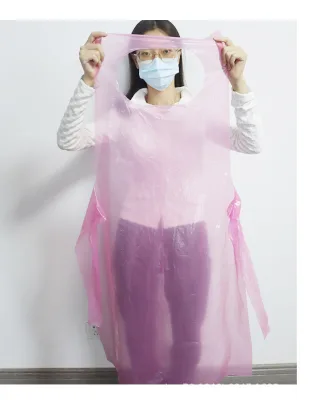
Packaging and presentation also play a role in the product's utility. Products are commonly supplied in rolls or flat packs, with carton packaging being the standard for bulk shipments. The visual appearance is highly customizable, with options for transparent, blue, or white colors, or specific requirements dictated by the customer. The style of the apron generally falls into two categories: those with sleeves and those without sleeves, with the "sleeveless" or "without sleeves" configuration being a common variant for ease of movement. The product is designed to be folded for compact storage and distribution, and the customization options extend to printing and branding, allowing businesses to incorporate logos or specific instructions directly onto the garment.
Compliance, Certification, and Safety Standards
Ensuring that disposable aprons meet rigorous safety and environmental standards is paramount for any procurement decision involving food contact. The supply chain for these products often references specific certifications that validate their suitability for use in sensitive environments. Key certifications observed in the market include EN13432 and FDA compliance. EN13432 is a European standard for packaging, indicating that the product is compostable and biodegradable, which aligns with the growing demand for eco-friendly disposable products. FDA compliance ensures that the materials used are safe for contact with food, a non-negotiable requirement for kitchen and food service applications.
In addition to food safety, manufacturers may hold ISO13485 certification, which pertains to quality management systems for medical devices. While this certification is primarily associated with medical equipment, its presence in the supply chain for disposable sanitary products suggests a high level of quality control and adherence to strict manufacturing protocols. It is important for buyers to verify that the specific batch of aprons intended for food contact carries the relevant FDA or local food safety approvals, as not all disposable garments may be certified for direct food interaction.
Environmental compliance is another significant factor. Many suppliers highlight features such as "Eco-Friendly" and "Biodegradable" as core product attributes. This suggests that the materials used, likely the polyethylene blends mentioned earlier, are engineered to break down under specific conditions. However, buyers should exercise caution and request documentation to confirm the biodegradability claims, as the term can be applied loosely in some contexts. The presence of "Customer Order" standards for GSM (grams per square meter) indicates that the weight and thickness of the material can be tailored to meet specific environmental or performance requirements, allowing buyers to optimize the balance between sustainability and durability.
Cost Drivers and Pricing Variables
The pricing structure for disposable chef aprons is influenced by a complex interplay of material costs, customization levels, and order volume. The observed price range in the market is extensive, spanning from $0.01 to $4,306.50 per unit or batch, depending on the specific configuration and quantity. This wide variance underscores the importance of defining clear procurement parameters before engaging with suppliers. The minimum order quantity (MOQ) is another critical cost driver, with observed ranges stretching from 1 unit to 1,000,000 units. A typical MOQ for bulk orders is often cited around 500kg, which suggests that pricing is heavily tiered based on weight rather than just piece count.
Material selection is a primary determinant of cost. While LDPE, HDPE, and LLDPE are standard, the specific blend and the inclusion of additives for biodegradability can significantly impact the unit price. Customization adds another layer of cost; features such as printed logos, specific color requirements (e.g., blue or white), and unique dimensions (e.g., 120x160cm) will incur additional charges compared to standard, unbranded, transparent models. The "Customer Order" designation for GSM and standard sizes implies that bespoke specifications will generally command a premium over off-the-shelf items.
Lead times also factor into the total cost of ownership. A typical delivery window is estimated between 10 to 25 days, but this can fluctuate based on the complexity of the order and the supplier's current capacity. Buyers should consider that expedited shipping or rush orders may carry a surcharge. Furthermore, the availability of free samples is a common practice, which allows buyers to test the product quality before committing to a large order, thereby mitigating the risk of costly mistakes. However, while samples are free, shipping costs may apply, and the "Only Y" notation in sample policies suggests there may be specific conditions or limitations on sample availability that buyers need to clarify.
Typical Applications and Functional Requirements
Disposable chef aprons are designed for a wide spectrum of applications, extending beyond traditional kitchen environments. The primary use case is in food preparation and service, where the apron serves as a barrier against contamination. The product attributes explicitly list "Kitchen," "Dining Room," and "Indoor and Outdoor" as suitable room spaces. This versatility makes them ideal for catering events, food trucks, and temporary food service setups where laundering reusable aprons is impractical.
Beyond food service, these aprons are utilized in various other sectors. The "Safety & Protective" and "Advertising" tags indicate their use in industrial settings, promotional events, and marketing campaigns where a branded barrier is needed. The "Maternity Apron" and "Garden" categories suggest applications in healthcare, home care, and landscaping, where protection from dirt and fluids is essential. The "Salon" and "Home" designations further expand the market to beauty services and domestic cleaning tasks.
Functionally, the aprons are engineered to be waterproof, anti-fouling, and sanitary. The "Anti-dirty" and "Waterproof" features ensure that liquids and debris do not penetrate the material, protecting the wearer's clothing and maintaining a clean workspace. The "Sanitary and Convenient" attribute highlights the ease of disposal after a single use, which is crucial for maintaining hygiene standards in high-volume environments. The "Waist" style and "Unisex" gender classification indicate that the design is adaptable for various body types and roles, making it a versatile tool for staff in diverse settings. The "Simple" style and "Plain" pattern suggest a focus on functionality over aesthetics, though customization options allow for branding when required.
Supplier Evaluation and Quality Assurance
Selecting the right supplier requires a rigorous evaluation process that goes beyond price comparison. Buyers should prioritize suppliers who demonstrate transparency in their manufacturing processes and provide verifiable documentation for their certifications. The origin of the products is a key factor, with "Shandong China" and general "China" origins being common sources. While the region is known for its manufacturing capabilities, buyers should verify the specific factory's reputation and capacity to ensure consistent quality.
Quality control measures should be a central part of the supplier selection criteria. Buyers should request evidence of the "Eco-Friendly" and "Biodegradable" claims, as well as confirmation of FDA and EN13432 compliance for the specific product batches. The availability of free samples is a positive indicator of supplier confidence, allowing buyers to physically inspect the GSM, surface texture (smooth or embossed), and overall construction. The "Folded" nature of the product should be checked to ensure it meets the specified dimensions and packaging requirements.
When evaluating suppliers, buyers should also consider their flexibility regarding customization. The ability to accommodate "Customer Order" specifications for GSM, dimensions, and printing is a sign of a responsive manufacturing partner. The "OEM" (Original Equipment Manufacturer) acceptance indicates that the supplier is willing to produce goods under the buyer's brand, which is essential for businesses looking to create a unified brand identity. The "Customized" attribute further reinforces the need for a supplier who can adapt to specific client needs rather than offering a rigid, one-size-fits-all solution.
Long-Term Procurement and Sustainability Considerations
Sourcing disposable aprons is not merely a transactional decision but a strategic choice that impacts long-term operational efficiency and sustainability goals. The trend toward "Eco-Friendly" and "Biodegradable" products suggests a shift in market expectations, where buyers are increasingly pressured to reduce their environmental footprint. Procuring aprons that meet EN13432 standards ensures that the waste generated from these products can be managed responsibly, aligning with corporate sustainability initiatives.
However, buyers must balance environmental concerns with performance requirements. The "Disposable" nature of the product means that frequent replenishment is necessary, which can lead to significant cumulative costs and waste generation. To mitigate this, buyers should optimize the order frequency and volume to minimize storage space and shipping costs. The "Carton" packaging and "Rolls Pack or Flat Pack" options offer flexibility in logistics, but buyers should ensure that the packaging is robust enough to protect the product during transit and storage.
Long-term procurement also involves managing the relationship with suppliers to ensure consistent supply chain stability. The "10-25 Days" delivery time provides a reasonable window for planning, but buyers should establish contingency plans for potential delays. Building a partnership with a supplier who offers "Free" samples and accepts "OEM" orders can facilitate a smoother transition to new product lines or branding strategies. Ultimately, the goal is to secure a reliable source of high-quality, compliant, and sustainable disposable aprons that support the operational needs of the business while adhering to environmental and safety standards.
FAQs
What materials are used for disposable food contact chef aprons?
These aprons are typically made from LDPE, HDPE, or LLDPE plastic materials. These polymers provide necessary waterproof and anti-fouling properties for kitchen safety and hygiene.
Which certifications ensure the aprons are safe for food contact?
Products often carry EN13432 and FDA certifications to validate food safety and compostability. Some suppliers also hold ISO13485 for quality management in sanitary product manufacturing.
Can buyers customize the size and printing on these aprons?
Yes, customization is available for dimensions like 60x120cm or 120x160cm and printing designs. Buyers can request specific colors such as transparent, blue, or white to match their branding needs.
How long does it take to receive an order of these aprons?
The standard delivery time ranges from 10 to 25 days after order confirmation. This lead time may vary depending on the order volume and specific customization requirements.
What is the minimum order quantity for purchasing these aprons?
The typical minimum order quantity is 500kg, though some listings show ranges from 1 to 1,000,000 units. Buyers should confirm the specific MOQ with the manufacturer before placing an order.
Are free samples available for testing the apron quality?
Free samples can be provided by the supplier, but specific conditions may apply. Buyers should verify if shipping costs are covered or if there are limits on sample availability.
What are the common packaging options for these disposable aprons?
Aprons are commonly packed in rolls or flat packs and shipped in cartons. The packaging can be customized with printed designs to meet specific customer requirements.