Source Disposable Round Baking Paper for baking, steaming, and cooking
Find 30 suppliers of Disposable Round Baking Paper suitable for baking, steaming, and cooking applications. Buyers can compare specifications, certifications, and pricing for wood pulp-based options with silicone coating.
Key considerations
Products List


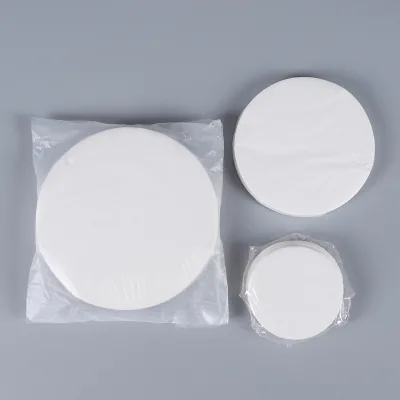


Customized Disposable Non-Stick Greaseproof Baking Paper for Cakes Bread
$0.10 - $5.00
MOQ: 1000 Rolls



Comprehensive Sourcing Guide
Strategic Sourcing Guide for Disposable Round Baking Paper
Understanding Product Specifications and Material Composition
When sourcing Disposable Round Baking Paper, buyers must first distinguish between the general category of greaseproof paper and the specific functional requirements of parchment or baking paper. The core material for these products is consistently identified as wood pulp, which provides the necessary structural integrity for food contact applications. A critical technical differentiator is the coating applied to the base paper. While standard greaseproof paper relies on the density of the pulp, high-performance baking paper utilizes a silicone coating to achieve non-stick properties. This silicone layer is essential for withstanding the thermal stresses of baking, steaming, and cooking without degrading or transferring unwanted substances to food.
The physical dimensions of the product vary significantly based on the intended use case. While some specifications list standard widths of 16cm, 20cm, 30cm, 38cm, and 45cm, the "round" format implies a specific cutting or rolling configuration often derived from these standard widths. Thickness is another vital parameter, with common standards ranging from 35g to 40g, and specific best-selling variants often falling between 38g and 45g GSM. In terms of linear measurement, lengths are frequently offered in 5m, 10m, or 15m increments, though custom dimensions are widely available to suit industrial or commercial needs. The color profile typically presents as white or natural brown, with some suppliers offering printing capabilities for branding purposes. The paper is opaque and generally soft to the touch, ensuring it conforms well to various baking pans and molds without tearing.
Compliance and Certification Verification
In the food packaging sector, regulatory compliance is not merely a preference but a mandatory requirement for market access. Buyers must rigorously verify that the supplier holds certifications relevant to the target market. The most frequently cited certifications in the industry include FDA (United States), LFGB (Germany), BRC (British Retail Consortium), and ISO 9001 for quality management. Additionally, certifications such as SGS, FSC (Forest Stewardship Council), MSDS (Material Safety Data Sheet), QS, and Kosher are often present in the supply chain documentation. These certifications validate that the raw materials, specifically the wood pulp and silicone coating, are safe for direct food contact and meet international safety standards.
For buyers targeting the European market, compliance with EU regulations is paramount. The presence of BSCI certification indicates adherence to social compliance standards, which is increasingly important for corporate social responsibility (CSR) goals. It is crucial to understand that while a supplier may list these certifications, the specific batch of goods must be traceable to these standards. The certifications listed, such as FDA and LFGB, specifically address the migration of substances from the paper to food, ensuring that the silicone coating does not release harmful chemicals at high temperatures. Buyers should request current, valid certificates for the specific product model, as "Greaseproof paper" and "Baking paper" may have different compliance thresholds depending on the intended temperature exposure.
Cost Drivers and Pricing Dynamics
The pricing structure for Disposable Round Baking Paper is influenced by several interconnected factors, primarily raw material costs, coating technology, and order volume. The base cost is driven by the price of wood pulp, which fluctuates with global commodity markets. The application of a silicone coating adds a significant layer of processing cost, distinguishing premium baking paper from standard greaseproof paper. Furthermore, the thickness of the paper, measured in GSM, directly impacts the material usage per unit; thicker papers (e.g., 45g vs. 35g) will naturally command a higher price point.
Order volume plays a decisive role in the final unit price. The Minimum Order Quantity (MOQ) for these products typically ranges from 3,000 boxes to 10,000 units, depending on the supplier's capacity and the level of customization required. Suppliers with an annual production capacity of 25,000 tons can often offer more competitive pricing for larger orders due to economies of scale. Customization, such as specific dimensions, custom printing, or unique packaging (e.g., blister boxes or color boxes), introduces additional setup costs that may increase the unit price. While observed price ranges in the market can vary widely from $0.01 to $1,800, this variance often reflects the difference between small sample orders and bulk container shipments. Buyers should expect that custom-made specifications will incur higher costs than standard off-the-shelf items.
Typical Applications and Performance Requirements
The primary application for Disposable Round Baking Paper is in the culinary industry, specifically for making, steaming, and baking. The product's heat resistance is a critical performance metric, with high-quality variants capable of withstanding temperatures up to 220°C (450°F). This thermal stability ensures that the paper does not burn, melt, or release fumes during standard baking processes. The non-stick nature of the silicone coating eliminates the need for additional greasing of pans, which simplifies the baking process and reduces cleanup time.
Beyond standard baking, the industrial use of this paper extends to agriculture, apparel, and pharmaceutical sectors, though the food application remains the dominant use case. In commercial kitchens and bakeries, the paper is used to line trays, prevent sticking on rotary ovens, and facilitate the easy removal of delicate pastries. The "round" format is particularly useful for baking cakes, muffins, and cookies, where the circular shape matches the geometry of the baking molds. The paper's ability to be customized in length and width allows for versatile applications, from small-scale home baking to large-scale industrial food processing lines. The functional layer provided by the coating ensures that the paper remains intact even when exposed to moisture and fats, making it suitable for a wide range of food types.
Supplier Evaluation and Capacity Assessment
Evaluating a potential supplier requires a deep dive into their operational capacity and geographic location. The majority of suppliers for this product are located in China, with specific manufacturing hubs in Shandong Province and Guangdong Province. These regions have established supply chains for wood pulp and silicone processing, offering logistical advantages. A key indicator of a supplier's reliability is their stated production capacity. Suppliers claiming an annual capacity of 25,000 tons are generally capable of handling large-scale orders and maintaining consistent quality over time.
Buyers should also assess the supplier's flexibility regarding customization. The ability to offer custom-made widths, lengths, and thicknesses indicates a mature manufacturing process capable of adjusting machinery for specific client needs. Packaging options, such as standard packaging, blister boxes, or color boxes, should be evaluated based on the buyer's retail or distribution requirements. The availability of free samples is a strong positive signal, allowing buyers to physically test the product's heat resistance, non-stick properties, and overall quality before committing to a large order. Furthermore, the supplier's ability to provide a clear lead time, typically 30-45 days for a 40HQ container, is essential for supply chain planning. Buyers must verify that the supplier can meet these timelines consistently, as delays can disrupt production schedules in the food industry.
Quality Control and Long-Term Procurement Strategy
Implementing a robust quality control (QC) strategy is vital for maintaining product consistency. Buyers should establish clear acceptance criteria based on the observed specifications, such as GSM weight, heat resistance limits, and coating uniformity. Regular testing of the silicone coating's adhesion and the paper's tensile strength can prevent issues like tearing or peeling during use. Since the product is used for food contact, periodic audits of the supplier's production line to ensure adherence to hygiene standards and certification requirements are necessary.
For long-term procurement, building a strategic partnership with a reliable supplier is more beneficial than constantly switching vendors. A supplier with a proven track record in certifications like FDA, BRC, and ISO 9001 offers greater security against regulatory changes. Buyers should consider the total cost of ownership, which includes not just the unit price but also shipping, lead times, and the cost of potential quality failures. Customization capabilities allow buyers to differentiate their products in the market, but this requires close collaboration with the supplier to ensure that design changes do not compromise the functional integrity of the paper. By focusing on suppliers with high production capacity and comprehensive certification portfolios, buyers can secure a stable supply of high-quality Disposable Round Baking Paper that meets both operational and regulatory demands.
FAQs
What certifications are required for food contact baking paper?
High-quality baking paper typically holds FDA, LFGB, BRC, and ISO 9001 certifications. These standards ensure the wood pulp and silicone coating are safe for direct food contact and meet international safety requirements for heat resistance.
How much heat can silicone-coated baking paper withstand?
Silicone-coated baking paper is heat resistant up to 220°C or 450°F. This thermal stability allows it to be used safely for making, steaming, and baking without burning or releasing harmful substances during the process.
What are the standard thickness and weight specifications?
Standard thickness ranges from 35g to 40g, with best-selling variants often falling between 38g and 45g. The paper is usually opaque, soft, and available in custom widths like 16cm, 20cm, or 30cm.
Can I order custom dimensions for my baking needs?
Yes, customization is available for width, length, and thickness to suit specific industrial or commercial needs. Suppliers offer lengths of 5m, 10m, or 15m, along with custom-made options for unique baking applications.
What is the typical minimum order quantity for this product?
The minimum order quantity typically starts at 3,000 boxes, though some suppliers may accept orders as low as 1 unit for samples. Bulk orders often benefit from competitive pricing due to the supplier's annual capacity of 25,000 tons.
Where are the primary manufacturing locations for this paper?
Manufacturing is concentrated in China, specifically in Shandong Province and Guangdong Province. These regions provide established supply chains for wood pulp and silicone processing to ensure consistent quality and logistical efficiency.