Source Disposable Transparent Plastic Bathtub Cover for Hotel, Salon, and Home
Compare 30 listings for the Disposable Transparent Plastic Bathtub Cover suitable for hotels, salons, and household use. Buyers can evaluate material types like PE and LDPE, sizes, and customization options from verified Chinese manufacturers.
Key considerations
Products List


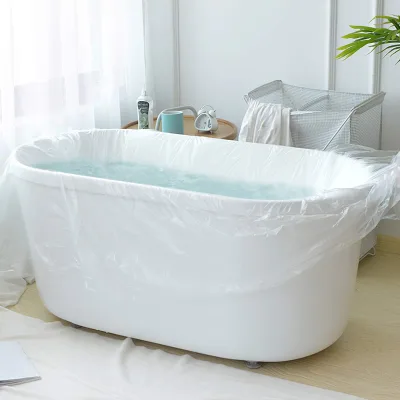


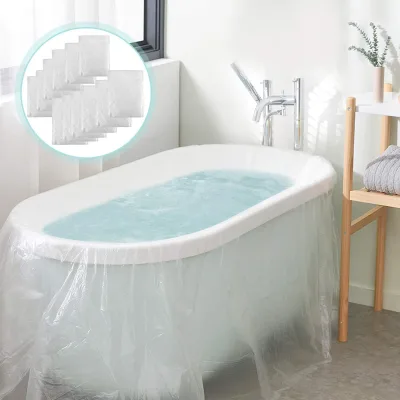


Custom Waterproof Clear Bathing Hotel Travel Disposable Plastic PE Shower Cap
$0.04 - $0.05
MOQ: 5000 Pieces


OEM Freshness Film Cover, Disposable Fresh-Keeping Cover, Bath Cap, Elastic Bowl Cover
$0.30 - $0.40
MOQ: 100 Bags




Comprehensive Sourcing Guide
Strategic Sourcing Guide for Disposable Transparent Plastic Bathtub Covers
Understanding Product Specifications and Material Composition
The Disposable Transparent Plastic Bathtub Cover is a specialized hygiene product designed to line bathtubs in various settings, ensuring a sanitary barrier between the user and the fixture. When evaluating this product category, buyers must first scrutinize the fundamental material composition and physical attributes. The supplied market data indicates that the primary material used is plastic, with specific references to Polyethylene (PE), Low-Density Polyethylene (LDPE), and general PE plastic. These materials are selected for their flexibility, cost-effectiveness, and ability to form a waterproof seal.
A critical technical specification for this product is thickness, which directly correlates to durability and leak resistance. Observed data points to a thickness range of 0.015mm to 0.03mm, with specific listings citing 0.018mm as a standard benchmark. Buyers should verify that the selected supplier provides consistent thickness across the batch, as variations can lead to tearing during installation or failure to contain water. The form factor is typically described as a "Bathtub Cover Bag," available in styles that are either round or pleated. The pleated design often allows for better expansion and fit within the tub, while the round style offers a simpler, streamlined profile.
Size and dimension are paramount for compatibility. The product standards observed include a wide array of diameters, ranging from 17 inches to 24 inches, with specific models listed as 18, 19, 21, and 24 inches. Some specifications also denote metric dimensions, such as 120*260cm, suggesting that sizing can vary significantly based on the intended bathtub geometry. The color profile is predominantly transparent, which allows for visual inspection of the tub's cleanliness, though options for white, blue, green, red, yellow, pink, and printed designs are also available in the market. The product is generally folded for storage and transport, with some listings noting a "Folded" attribute, which impacts packaging density and shipping costs.
Compliance, Standards, and Certification Verification
In the B2B procurement of hygiene products, verifying compliance with industry standards is essential to mitigate liability and ensure product safety. The provided data suggests that product standards are often flexible, listed as "as customers' requirement" or adhering to "export standard." This indicates that many manufacturers operate on a custom basis rather than adhering to a single rigid international standard for all units. Consequently, buyers must explicitly define their required compliance framework during the inquiry phase.
While the data does not list specific third-party certifications (such as ISO or FDA) for every listing, the "Eco-Friendly" feature is a recurring attribute. This implies that the manufacturing process or the material formulation may aim to reduce environmental impact, though the specific nature of this claim requires verification. Buyers should request documentation proving the eco-friendly status, such as material safety data sheets (MSDS) or specific biodegradability test results if the product claims to be biodegradable.
Furthermore, the "Workmanship" attribute notes a mix of "Handmade/Machine Made" production methods. This distinction is crucial for quality control. Machine-made products typically offer higher consistency in thickness and sealing, whereas handmade items may have more variability. Buyers should inquire about the quality assurance protocols in place for both production methods. The "Standard" attribute also lists specific sizes (17'' to 24''), which serves as a dimensional standard. However, for chemical safety, particularly regarding the plastic materials used (PE, LDPE), buyers should verify that the materials do not contain harmful phthalates or heavy metals, especially if the product is intended for use by children or in sensitive environments like baby swimming pools.
Cost Drivers and Pricing Dynamics
The pricing structure for disposable bathtub covers is influenced by several variables, including material costs, order volume, and customization requirements. The observed price range in the market spans from $0.01 to $216. This wide disparity suggests that the lower end of the spectrum likely represents bulk wholesale pricing for standard, non-customized items, while the higher end may reflect specialized custom orders, premium materials, or small-batch retail pricing.
The Minimum Order Quantity (MOQ) is a significant cost driver, with observed ranges from 8 to 100,000 units. Suppliers with lower MOQs (e.g., 100 pieces) may charge a higher unit price to cover setup and administrative costs. Conversely, suppliers requiring high MOQs (up to 100,000) typically offer more competitive per-unit pricing. Buyers must balance their inventory needs with cash flow constraints. For instance, a supplier listing an MOQ of 100 pieces with a sample time of 2-3 days is suitable for testing or small-scale operations, whereas a supplier with an MOQ of 10,000 is better suited for large-scale distribution.
Packaging also impacts the final cost. The data indicates various packing configurations, such as "100PCS/Bag, 20bags/CTN" or "100PCS/Bag, 10bags/CTN." The density of the packaging affects shipping volume and freight costs. A more compact packing method (e.g., 10 bags per carton) reduces the cubic volume per unit, potentially lowering logistics expenses. Additionally, customization features, such as printing logos or specific colors, will incur additional setup fees and higher unit costs compared to standard transparent or white options. Buyers should request a detailed breakdown of costs, separating material, labor, packaging, and shipping, to understand the true cost drivers.
Typical Applications and Usage Scenarios
The versatility of the Disposable Transparent Plastic Bathtub Cover makes it suitable for a diverse range of applications. The primary usage categories identified include Household, Salon, Hotel, Swimming, and Baby Swimming. In the hospitality sector, such as hotels and spas, these covers are essential for maintaining hygiene standards between guest uses. They prevent cross-contamination and reduce the cleaning time required for the bathtub, as the liner can be removed and discarded after use.
For the beauty and personal care industry, including hairdressing salons and beauty parlors, the product serves as a protective barrier against hair dye, shampoo, and other chemicals. The "Waterproof," "Oil-Proof," and "Dust Proof" features are particularly valuable in these settings. The "Light Weight" attribute ensures ease of handling for staff members who may need to install and remove the covers multiple times a day.
In the context of swimming, specifically for baby swimming or family pools, the product offers a sanitary solution for parents concerned about water quality. The "Eco-Friendly" and "Disposable" attributes align with the needs of parents who prioritize hygiene and convenience. The product is also applicable in general bathroom settings for household use, providing a temporary sanitary solution for guests or during maintenance periods. The "Age Group" is listed as both "Adult" and "All Age," indicating that the product is safe for use across different demographics, provided the material is non-toxic.
Supplier Evaluation and Geographic Sourcing
When evaluating potential suppliers, geographic origin plays a significant role in logistics and supply chain reliability. The data indicates that manufacturers are primarily located in China, with specific hubs in Rizhao City (Shandong), Hubei, Anhui, and Jiangsu. These regions are known for their manufacturing capabilities in plastics and packaging. Buyers should consider the proximity of the supplier to major shipping ports to minimize lead times and freight costs.
Supplier evaluation should also focus on their customization capabilities. The "Customization" and "Customized" attributes are frequently mentioned, suggesting that many suppliers are willing to tailor products to specific client needs. This includes custom sizes, colors, and branding. However, buyers must verify the supplier's capacity to handle these customizations without compromising quality. The "Workmanship" attribute, which includes both handmade and machine-made options, requires a clear understanding of the supplier's production mix.
Additionally, the "Stocked" attribute indicates that some suppliers maintain inventory of standard products, allowing for faster delivery times compared to those that only produce on demand. Buyers should prioritize suppliers who can demonstrate a track record of meeting "export standard" requirements and who have a clear process for handling sample requests, with some listing a sample time of 2-3 days. It is crucial to avoid suppliers who cannot provide clear information about their production capacity or who lack transparency regarding their origin and quality control processes.
Quality Control and Long-Term Procurement Considerations
Ensuring consistent quality is paramount for long-term procurement success. The "Disposable" nature of the product means that failure rates, such as tearing or leaking, can directly impact customer satisfaction and brand reputation. Buyers should implement a rigorous quality control (QC) process that includes sampling at the factory level and inspection upon receipt. Key QC checkpoints should include verifying the thickness (0.015mm-0.03mm), checking for defects in the sealing, and ensuring the transparency and color accuracy match the ordered specifications.
The "prod_packing" details, such as "100PCS/Bag, 1000PCS/Carton," highlight the importance of packaging integrity. Damaged packaging during transit can lead to product contamination or loss. Buyers should specify packaging requirements that protect the folded covers from moisture and physical damage. Furthermore, the "Standard" attribute often lists specific sizes (18", 19", 21", 24"), and buyers must ensure that the supplier adheres strictly to these dimensions to avoid fitment issues.
For long-term procurement, buyers should consider the sustainability of the supply chain. While the product is disposable, the "Eco-Friendly" feature suggests a potential for more sustainable material sourcing. Buyers should explore suppliers who are committed to reducing plastic waste or using recycled materials. Additionally, establishing a long-term relationship with a supplier who offers flexible MOQs and reliable lead times can help mitigate supply chain disruptions. The "Sample time" of 2-3 days is a positive indicator of a responsive supply chain, but buyers should also verify the lead time for bulk orders to ensure timely delivery.
Comparative Analysis of Product Variants
To assist buyers in making informed decisions, the following table summarizes key product variants based on the observed data. This comparison highlights differences in material, size, and packaging that may influence the final selection.
| Feature | Variant A (Standard) | Variant B (Custom/High-Volume) | Variant C (Specialized) |
|---|---|---|---|
| Material | PE / LDPE | PE Plastic | PE / LDPE |
| Thickness | 0.018mm | 0.015mm - 0.03mm | 0.018mm |
| Size Range | 18", 19", 21", 24" | 17" - 24" (Custom) | 20" (Fixed) |
| Color | Transparent, White | Transparent, Blue, Green, etc. | Transparent |
| Packaging | 100PCS/Bag, 10/20 bags/CTN | 100PCS/Bag, 1000PCS/Carton | 100PCS/Bag, 1000PCS/Carton |
| MOQ | 100 pcs | 10,000+ pcs | 100 pcs |
| Origin | Hubei, Jiangsu | Shandong, Hubei, Anhui | Hubei/Anhui |
| Style | Round or Pleated | Round or Pleated | Round or Pleated |
This table illustrates that while the core material and function remain consistent, the specific configuration of size, packaging, and MOQ varies significantly. Buyers should use this framework to align their procurement strategy with their specific operational needs, whether they require small-batch testing or large-scale distribution. By carefully analyzing these variables, buyers can optimize their sourcing strategy for the Disposable Transparent Plastic Bathtub Cover market.
FAQs
What materials are used for disposable transparent plastic bathtub covers?
These covers are primarily made from plastic, specifically Polyethylene (PE) and Low-Density Polyethylene (LDPE). Some listings specify PE plastic as the core material to ensure flexibility and waterproof performance for various hygiene applications.
How thick are the standard disposable bathtub cover bags?
The observed thickness ranges from 0.015mm to 0.03mm, with 0.018mm cited as a common standard benchmark. Buyers should verify specific thickness requirements to ensure durability and leak resistance during use in hotels or salons.
Which sizes are available for these plastic bathtub liners?
Available sizes include diameters ranging from 17 inches to 24 inches, with specific models like 18, 19, 21, and 24 inches. Some specifications also offer metric dimensions such as 120 by 260 cm to fit different tub geometries.
Can suppliers customize the size and color of these covers?
Yes, customization is available for size, color, and branding, including options like white, blue, green, or printed designs. Standards are often flexible to meet customer requirements, allowing for tailored dimensions and specific color profiles.
What is the typical minimum order quantity for these products?
The minimum order quantity ranges from 8 to 100,000 units depending on the supplier and customization level. Some vendors offer low MOQs of 100 pieces for sampling, while bulk orders may require quantities up to 100,000 units.
Where are these plastic bathtub covers typically manufactured?
Manufacturers are primarily located in China, with specific hubs in Rizhao City, Hubei, Anhui, and Jiangsu provinces. These regions offer established supply chains for plastic packaging and hygiene products intended for export.
How are these disposable covers packaged for shipping?
Products are typically packed as 100 pieces per bag, with 10 to 20 bags per carton. Some listings specify 1000 pieces per carton, ensuring compact storage and protection during transit for bulk buyers.