Source Double Faced Stretch Satin Fabric for dresses, lingerie, and home textile
Explore 30 listings for Double Faced Stretch Satin Fabric suitable for dresses, lingerie, and home textile applications. Buyers can compare features like soft handfeel, stretch, and certifications including OEKO-TEX STANDARD 100 and GRS across various suppliers.
Key considerations
Products List
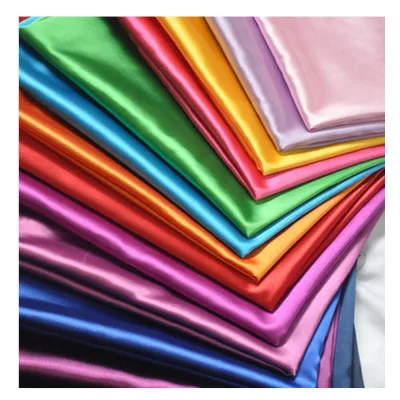
Spandex Stretch Fabric Printing Spandex Fabric Polyester Stretch Satin Fabric
$1.40 - $1.50
MOQ: 1000 meters


95% Cotton 5% Spandex Organic Cotton Stretch Satin Fabric for Trousers and Clothing
$0.98 - $1.66
MOQ: 1000 Meters


$0.30 - $0.60
MOQ: 5000 Meters


Customized Color Stretch Silk Satin Fabric for Fashionable Dress Making
$1.12 - $1.33
MOQ: 2000 Meters


Polyester Spandex Fabrics 4 Way Stretch Spandex Fabric Printing for Lady Dress
$0.91 - $0.95
MOQ: 1000 Meters
Comprehensive Sourcing Guide
Strategic Sourcing Guide for Double Faced Stretch Satin Fabric
Understanding Technical Specifications and Material Composition
When sourcing double-faced stretch satin fabric, buyers must first establish a clear understanding of the material composition and technical parameters that define the product's performance. The core material for this category is predominantly polyester, often blended with spandex to achieve the necessary elasticity. In the observed market data, specific product listings indicate a composition of "Polyester spandex," which is critical for creating the dual functionality of a smooth, lustrous surface and significant stretch recovery. The yarn count is another vital specification; for instance, a common configuration observed in the supply chain is 75D*150D+40D, where the denier values dictate the fabric's density, weight, and drape.
The physical structure of the fabric is defined by its weave and finish. While the general category often utilizes woven techniques, specific variations like "Sateen Fabric" or "Satin stretch fabric" are noted. The "double-faced" characteristic implies a construction where both sides possess a desirable finish, often achieved through specific weaving patterns that hide the technical backside. The weight of the fabric is a primary differentiator, with observed ranges spanning from "Lightweight" to "Heavyweight" and "Medium weight." A specific listing highlights a weight of 145GSM, which serves as a benchmark for medium-weight applications. Buyers should verify the width, as standard offerings often fall within the 57/58" range, though custom widths are frequently available. The thickness is generally categorized as "Medium Weight," but the perception of thickness can vary based on the GSM and the tightness of the weave.
The surface finish is equally important. The "Satin" keyword is frequently associated with a "soft handfeel" and "Comfortable Touch," which are essential for garments that come into direct contact with the skin. The fabric may also be described as having a "satin face," indicating a specific sheen on one or both sides. The "Stretch" feature is a non-negotiable attribute for this category, often enhanced by the inclusion of spandex. This elasticity allows the fabric to conform to body shapes, making it suitable for fitted designs. Additionally, the fabric may possess functional attributes such as "Anti-static," "Wicking," "Quick-dry," and "Tear resistant," which expand its utility beyond simple aesthetics into performance wear.
Compliance, Certification, and Regulatory Standards
Navigating the compliance landscape is a critical step in sourcing double-faced stretch satin fabric, particularly for international buyers targeting markets with strict textile regulations. The supply chain for this material often includes products that have undergone rigorous testing and certification processes. High-confidence data indicates that manufacturers may hold "OEKO-TEX STANDARD 100" certification, which verifies that the fabric is free from harmful substances and safe for human skin contact. This is particularly relevant for applications involving "Lingerie," "Underwear," and "Sleepwear," where skin sensitivity is a primary concern.
Beyond product-specific certifications, management certifications play a significant role in supplier reliability. Listings frequently mention "ISO" certification, indicating adherence to international quality management standards. Furthermore, "GRS" (Global Recycled Standard) and "RCS" (Recycled Claim Standard) are observed, suggesting that some suppliers offer sustainable options made from recycled polyester. This is increasingly important for brands aiming to meet environmental, social, and governance (ESG) goals. Other certifications such as "CE," "CPC," and "SA8000" (Social Accountability) may also be present, covering safety, chemical compliance, and labor standards respectively.
Buyers must verify the specific scope of these certifications. For example, while "OEKO-TEX STANDARD 100" applies to the final product, "OEKO-TEX STEP" relates to the management system of the production facility. Similarly, "FSC" (Forest Stewardship Council) is occasionally listed, though it is more commonly associated with paper and wood products; its presence here may indicate a broader commitment to sustainable sourcing practices within the supplier's ecosystem. It is essential to request valid certificates and cross-reference them with the issuing bodies to ensure authenticity. The presence of "CE" and "CPC" suggests compliance with specific regional safety requirements, which is vital for products intended for the European and North American markets.
Cost Drivers and Pricing Dynamics
The pricing of double-faced stretch satin fabric is influenced by a complex interplay of material costs, production complexity, and order volume. The base cost is driven by the price of raw materials, specifically polyester and spandex. The inclusion of spandex generally increases the cost compared to 100% polyester fabrics due to the elasticity and recovery properties it provides. The yarn count, such as the 75D*150D+40D configuration, also impacts the price; finer yarns or more complex blends typically command a premium.
Order volume is a significant factor in determining the final unit price. The observed Minimum Order Quantity (MOQ) ranges from 10 to 5000 units, indicating a flexible supply chain that accommodates both small startups and large manufacturers. However, the "Small Orders: Accepted" attribute suggests that buyers can access the market with lower initial commitments, though this may come with a higher per-unit cost. The "Make-to-order" supply type further influences pricing, as custom production runs often incur setup costs that are amortized over the order quantity.
Additional cost drivers include the complexity of the finish and the customization level. Fabrics with "Digital printed," "Embroidered," or "Coated" patterns require additional processing steps, which increase the overall cost. The "Design: Customer Designs Workable" attribute implies that custom colorways or patterns are possible, but these will likely involve minimum run requirements and higher setup fees. The "Selling Units" being listed as "Single item" in some contexts may refer to sample availability, which is crucial for quality verification but comes at a premium compared to bulk pricing. Buyers should anticipate a price range that reflects these variables, with the observed market data suggesting a wide spectrum from $0.30 to $15.00 per unit, depending on the specific combination of features, certifications, and volume.
Typical Applications and End-Use Scenarios
Double-faced stretch satin fabric is highly versatile, finding applications across a diverse range of industries and product categories. The primary use cases include "Garment," "Dress," "Skirt," and "Trouser," where the fabric's drape and stretch are essential for creating flattering silhouettes. The "Soft handfeel" and "Comfortable Touch" make it particularly suitable for "Lingerie," "Underwear," and "Sleepwear," where tactile comfort is paramount. The fabric's ability to stretch and recover ensures that these intimate apparel items maintain their shape and fit over time.
Beyond apparel, the fabric is widely used in "Home textile" applications, such as "Curtain" and "Lining." The "Tear resistant" and "Abrasion-resistant" properties make it durable enough for heavy-use environments, while the "Quick-dry" and "Wicking" features are beneficial for "Sportswear" and "Outdoor" gear. The "Coated" or "Printed" variations are often utilized for "Costumes," "Wedding" attire, and "Jacket" linings, where aesthetic appeal and specific functional properties are required. The "Bag" and "Toy" applications also leverage the fabric's durability and visual appeal.
The "Double-faced" nature of the fabric is particularly advantageous for items where both sides may be visible, such as reversible garments or high-end linings. The "Luxury" and "Fashion" styles associated with this fabric make it a preferred choice for "Suit" and "Coat and jacket" applications, where a premium look and feel are expected. The "Colorful" and "Multi-colored" options allow for creative design expression, while the "Plain Dyed" and "Printed" patterns offer versatility for different market segments. The "Applicable to the Crowd" includes "Women, Men, Girls, Boys," indicating that the fabric is suitable for a broad demographic, from children's wear to adult fashion.
Supplier Evaluation and Sourcing Strategy
Evaluating suppliers for double-faced stretch satin fabric requires a multi-faceted approach that considers technical capability, reliability, and compliance. The "Place of Origin" is consistently listed as "China," with specific regions like "Jiangsu" emerging as key manufacturing hubs. This concentration of production suggests a mature supply chain with established infrastructure for textile processing. Buyers should prioritize suppliers who demonstrate transparency in their "Model Number" systems, such as "XR-PS-014" or "HMS-SP75150," as these codes often reflect specific product lines or technical configurations.
The "Supply Type" being "Make-to-order" indicates that suppliers are capable of customization, but buyers must assess their lead times and flexibility. The "Design: Customer Designs Workable" attribute suggests a willingness to collaborate, but the "Small Orders: Accepted" policy should be balanced against the potential for higher costs or longer lead times for smaller batches. Buyers should verify the supplier's ability to meet the "Model Number" specifications consistently, ensuring that the "Yarn Count," "Weight," and "Width" match the required standards.
Certification status is a key differentiator in supplier selection. Suppliers holding "OEKO-TEX STANDARD 100," "ISO," and "GRS" certifications are likely to have robust quality management systems and ethical production practices. The presence of "SA8000" certification further indicates a commitment to social accountability, which is increasingly important for global brands. Buyers should request proof of these certifications and verify their validity before proceeding with large orders. Additionally, the "Brand Name" and "Product Certification" details should be cross-referenced to ensure the supplier is legitimate and not merely reselling products from other sources.
Quality Control and Performance Verification
Quality control for double-faced stretch satin fabric involves rigorous testing of physical and chemical properties to ensure the product meets the specified requirements. The "Feature" list, including "Anti-static," "Memory," "Tear resistant," and "Stretch," provides a checklist for performance verification. Buyers should request test reports that confirm the fabric's ability to recover after stretching, its resistance to tearing, and its static dissipation capabilities. The "Handfeel" attribute, described as "Comfortable Touch," should be verified through physical inspection to ensure the fabric does not feel rough or uncomfortable against the skin.
The "Pattern" and "Color" consistency are also critical quality indicators. The observed patterns, such as "Digital printed," "Floral," and "Striped," require precise color matching and registration. Buyers should check for color fastness, ensuring that the "Dyed" or "Printed" colors do not bleed or fade during washing or exposure to light. The "Thickness" and "Weight" should be measured to ensure they align with the "Medium weight" or "Lightweight" specifications. Any deviation from the stated "GSM" or "Width" could indicate production inconsistencies.
Chemical compliance is another area of focus. The "OEKO-TEX STANDARD 100" certification implies that the fabric has been tested for harmful substances, but buyers should still request specific test results for the batch they are purchasing. The "Product Certification" and "Management Certification" lists provide a framework for this verification, but the actual test data must be reviewed to ensure compliance with the buyer's specific market requirements. The "Single package size" and "Single gross weight" are also important for logistics and inventory management, ensuring that the packaging is robust enough to protect the fabric during transit.
Long-Term Procurement Considerations and Market Trends
Sourcing double-faced stretch satin fabric is not just a one-time transaction but a long-term strategic decision that requires consideration of market trends and supply chain resilience. The "Make-to-order" nature of the supply suggests that buyers should build strong relationships with suppliers to ensure consistent quality and timely delivery. The "Small Orders: Accepted" policy offers flexibility for testing new designs, but buyers should plan for larger volume orders to achieve cost efficiencies. The "Design: Customer Designs Workable" attribute indicates that suppliers are open to innovation, which is crucial for staying ahead of fashion trends.
Sustainability is a growing trend in the textile industry, and the presence of "GRS" and "RCS" certifications suggests that the market is moving towards more eco-friendly options. Buyers should consider the environmental impact of their sourcing decisions and prioritize suppliers who demonstrate a commitment to sustainability. The "OEKO-TEX STEP" and "SA8000" certifications further highlight the importance of ethical production practices. As consumer awareness of environmental and social issues increases, suppliers who can provide transparent and sustainable products will have a competitive advantage.
The "Model Number" system used by suppliers, such as "XR-PS-014" and "HMS-SP75150," provides a standardized way to track products, but buyers should ensure that these codes are clearly documented in their procurement records. This will facilitate easier reordering and quality control in the future. The "Place of Origin" being "China" and "Jiangsu" specifically suggests a mature supply chain, but buyers should also consider diversifying their supplier base to mitigate risks associated with geopolitical or logistical disruptions. By focusing on technical specifications, compliance, and long-term relationships, buyers can secure a reliable supply of high-quality double-faced stretch satin fabric that meets their evolving needs.
FAQs
What certifications are available for Double Faced Stretch Satin Fabric?
Products often carry OEKO-TEX STANDARD 100, GRS, and ISO certifications. Some listings also include CE, CPC, and SA8000 for safety and social accountability. Buyers should verify specific certificates to ensure compliance with international standards for textile safety and management.
How is the material composition defined for this fabric?
The core material is predominantly polyester, frequently blended with spandex to achieve elasticity. Specific configurations like 75D*150D+40D yarn counts are common to balance density and drape. This composition ensures the fabric offers a soft handfeel while maintaining significant stretch recovery for fitted garments.
Which applications are suitable for Double Faced Stretch Satin Fabric?
This fabric is ideal for lingerie, underwear, dresses, and sportswear due to its comfort and stretch. It is also used for home textiles, curtains, and costumes requiring a luxurious finish. The tear-resistant and quick-dry features make it versatile for outdoor gear and heavy-use applications.
Can buyers place small orders for this fabric?
Yes, small orders are accepted with Minimum Order Quantities ranging from 10 to 5000 units. The supply type is often make-to-order, allowing for customization but potentially affecting unit costs. Buyers can access the market with lower initial commitments while still obtaining high-quality materials.
What thickness options are available for Double Faced Stretch Satin Fabric?
Thickness varies from lightweight to heavyweight, with medium weight being a common specification. A specific listing notes a weight of 145GSM, which serves as a benchmark for standard applications. Buyers should verify the GSM and weave tightness to ensure the fabric meets their specific drape requirements.
Where are the manufacturers of this fabric located?
Manufacturers are primarily located in China, with specific hubs identified in Jiangsu. This concentration suggests a mature supply chain with established infrastructure for textile processing. Buyers can expect consistent model numbers and technical configurations from these regional sources.