Source Drilling Rig Mud Pump Liner for Oil, Gas, and Mining
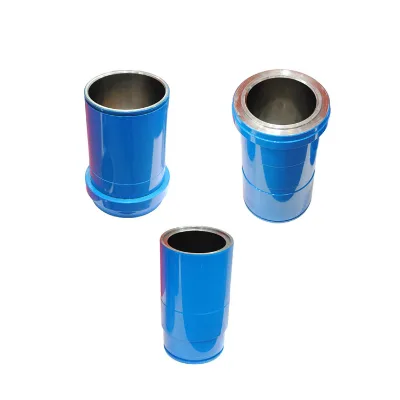
Compare 30 available Drilling Rig Mud Pump Liner options made from alloy, ceramic, or bi-metal materials. These components support crude oil, natural gas, and water applications in energy and mining sectors.
Key considerations
Products List


Comprehensive Sourcing Guide
Strategic Sourcing Guide for Drilling Rig Mud Pump Liners
The global energy sector relies heavily on the integrity of drilling rig components, with the mud pump liner serving as a critical element in the circulation system. These components are responsible for maintaining the high-pressure flow of drilling fluid, which is essential for cooling the drill bit, removing cuttings, and stabilizing the wellbore. For procurement professionals, sourcing these parts requires a nuanced understanding of material science, operational pressures, and supply chain logistics. The market offers a diverse array of options, ranging from alloy-based solutions to advanced ceramic and bi-metal configurations, each tailored to specific drilling environments. This guide provides a comprehensive framework for evaluating suppliers and specifications without relying on unverified claims or specific vendor recommendations.
Technical Specifications and Material Composition
The primary differentiator in mud pump liners is the material composition, which directly dictates performance under abrasive conditions. The supplied data indicates a clear divergence in material types available in the market. Buyers must distinguish between liners constructed from Alloy, Ceramic, and Bi-Metal composites. Alloy liners are often selected for their general durability, while ceramic liners are specifically noted for their superior resistance to wear and corrosion in highly abrasive environments. The product listings explicitly mention "Cer Cylinder Liner" and "Ceramic or Bi-Metal" as distinct categories, suggesting that the choice depends heavily on the specific fluid properties being pumped.
Furthermore, the operational parameters are critical. The observed data points to an Operation Pressure of Atmospheric Pressure in certain contexts, yet the application is clearly for high-pressure pumping systems like the F Series, Pz Series, and Gd Series. This apparent discrepancy requires careful verification by the buyer; the liner must be rated to withstand the actual differential pressure generated by the pump, not just the static atmospheric pressure of the surrounding environment. The Applicable Medium is listed as Crude Oil, Natural Gas, Water, and Mud, indicating that the liner material must be chemically compatible with a wide range of drilling fluids.
Dimensional specifications vary significantly across the supply base. The data references a wide range of models, including F-1300, 12T-1600, and specific sizes from 4-1/2" to 7-1/2". Compatibility with existing pump models such as Bomco F1300/1600, F800/1000, and 435 FMC is essential. Procurement teams must verify that the prod_model matches the exact pump series in their inventory, as a mismatch can lead to catastrophic failure during operation. The HS Code 84314310 is the standard classification for parts suitable for use with these machinery, which is vital for customs clearance and tariff calculations.
Compliance, Standards, and Certification Verification
In the drilling industry, adherence to international standards is non-negotiable. The provided facts highlight API Spec 7-2 and API standards as key benchmarks. These standards govern the dimensional tolerances, material properties, and performance testing of drill pipe and related components. Buyers must ensure that any supplier claims compliance with API Spec 7-2, as this is the industry baseline for interoperability and safety. Additionally, the data mentions FMC as a standard, which refers to specific dimensional and performance criteria associated with FMC Corporation pump designs.
Beyond industry-specific standards, general quality management certifications are prevalent. The supply chain includes suppliers with ISO 9001 certification, which validates their quality management systems. Environmental and safety compliance is also indicated through RoHS and CE certifications. While these are standard for many industrial components, their presence confirms that the manufacturer adheres to European and global environmental directives. It is crucial for buyers to request current, valid certificates rather than relying on marketing claims. The "All Models" designation for standards suggests that some suppliers offer a broad range, but the buyer must confirm that the specific liner model they require carries the necessary certification for their specific jurisdiction and project requirements.
Cost Drivers and Pricing Dynamics
The pricing for mud pump liners is influenced by a complex interplay of material costs, manufacturing processes, and order volume. The observed price range in the market spans from 0.4 USD to 4000 USD, a variance that reflects the difference between small components, single liners, and complete sets or high-specification ceramic units. The MOQ (Minimum Order Quantity) ranges from 1 to 200, offering flexibility for both emergency replacements and large-scale fleet replenishment.
Several factors drive the cost of these components. The Surface Treatment process, such as Sand Blast or Polishing, adds value by improving surface finish and reducing friction, which can extend service life. The Manufacturing Process, specifically Forging, is a labor-intensive method that generally results in higher strength and durability compared to casting, thereby influencing the final price. The choice of material is the most significant cost driver; Ceramic liners typically command a premium over Alloy or Plastic alternatives due to the raw material costs and the specialized manufacturing techniques required.
Buyers should also consider the Packing costs. Options range from Standard Export Packages and Wooden Boxes to Plywood Pallets and Wooden Cases. For international shipping, especially via Sea, robust packaging is essential to prevent damage during transit. The "Export Worthy Packing" and "Pallat" (Pallet) options suggest that logistics costs are often bundled or standardized. The Customization availability allows for tailored solutions, which may incur additional setup fees but can reduce long-term operational costs by optimizing fit and performance.
Typical Applications and Operational Environments
Mud pump liners are integral to the Energy & Mining/Petroleum Machinery Parts sector. Their primary function is to handle the circulation of drilling fluids in rigs operating in diverse environments. The Applicable Medium list—Crude Oil, Natural Gas, Water, Mud—confirms their versatility across different drilling phases and fluid types. In Crude Oil and Natural Gas operations, the liners must resist corrosion and high temperatures. In Mud applications, particularly in deep drilling, the abrasive nature of the fluid necessitates high-wear materials like Ceramic or hardened Alloy.
The Machine Type is explicitly identified as Mud Pump Liner, and the Engine Model is often associated with Mud Pump systems. The Marketing Type designation of "Hot Product 2019" suggests that these components have been in high demand for several years, indicating a mature and stable market. However, buyers should verify that the "Hot Product" status reflects current inventory availability and not just historical data. The Place of Origin is predominantly China, with specific mentions of Shandong, Dongying, and Shangdong. These regions are known for their heavy machinery manufacturing hubs, which can influence lead times and shipping logistics.
Supplier Evaluation and Geographic Considerations
When evaluating suppliers, the geographic origin plays a significant role in logistics and communication. The majority of the supplied data points to Shandong, China, and specifically Dongying, a city renowned for its petroleum equipment industry. Sourcing from this region can offer competitive pricing due to the concentration of specialized manufacturers. However, buyers must be vigilant about the specific location details, as "Shangdong" and "Shandong" are often used interchangeably but represent the same province.
Supplier reliability is often signaled by the Certification status and the Manufacturing Process transparency. Suppliers offering Forging processes and Sand Blast treatments demonstrate a commitment to quality. The availability of Customization is a strong indicator of a flexible and capable supplier who can adapt to unique pump requirements. Buyers should also assess the Delivery terms; the data mentions "Shipping" and "by Sea," which are standard for heavy industrial components. It is essential to clarify the Lead Time and MOQ directly with the supplier, as the observed ranges (1-200 units) suggest that small orders are possible but may have different pricing structures than bulk purchases.
Quality Control and Long-Term Procurement Strategy
Ensuring the quality of mud pump liners requires a rigorous Quality Control protocol. Buyers should verify that the Surface Treatment meets specific roughness and hardness standards, as these factors directly impact the liner's lifespan. The Standard compliance, particularly API Spec 7-2, should be validated through third-party testing reports rather than self-declaration. The Product Name and Model must match the technical drawings of the existing pump to ensure a perfect fit.
For long-term procurement, establishing a relationship with suppliers who offer Customization and Export Worthy Packing is advantageous. The ability to source All Models or specific series like F-1300 from a single supplier can streamline inventory management. Buyers should also consider the Color customization options, which, while seemingly cosmetic, can sometimes indicate a supplier's ability to apply specific coatings or treatments. The HS Code 84314310 should be consistently used in all documentation to ensure smooth customs clearance.
Finally, the Material choice should be aligned with the specific operational challenges of the drilling site. If the site deals with highly abrasive mud, Ceramic or Bi-Metal liners are likely the superior choice despite the higher initial cost. Conversely, for less abrasive environments, Alloy liners may offer a more cost-effective solution. By focusing on these technical and logistical factors, procurement teams can build a resilient supply chain that ensures the continuous and safe operation of drilling rigs.
| Feature | Alloy Liner | Ceramic Liner | Bi-Metal Liner |
|---|---|---|---|
| Primary Material | Alloy | Ceramic | Ceramic + Metal |
| Key Application | General Drilling | Abrasive Mud | High Wear/Corrosion |
| Surface Treatment | Sand Blast, Polishing | Polishing | Polishing |
| Manufacturing | Forging | Forging/Manufacturing | Forging |
| Typical Standard | API Spec 7-2 | API | API |
| Cost Driver | Material Volume | Material Complexity | Dual Material Process |
In conclusion, sourcing drilling rig mud pump liners requires a meticulous approach that balances technical specifications, regulatory compliance, and logistical efficiency. By leveraging the available data on materials, standards, and manufacturing processes, buyers can make informed decisions that enhance operational reliability and reduce downtime. The focus must remain on verifying claims against the provided facts and ensuring that every component meets the rigorous demands of the petroleum and mining industries.
FAQs
What materials are available for drilling rig mud pump liners?
Available materials include Alloy, Ceramic, and Bi-Metal composites. Buyers must select based on fluid abrasiveness, as Ceramic offers superior wear resistance while Alloy provides general durability for various drilling environments.
Which standards do these liners typically meet?
Many products comply with API Spec 7-2 and API standards. Some listings also reference FMC specifications, ensuring dimensional and performance compatibility with major pump series like F-1300 and 435 FMC.
Can I find suppliers offering customization for these liners?
Yes, customization is available for specific pump requirements. Buyers can request tailored dimensions or surface treatments like sand blasting and polishing to ensure optimal fit and performance for their specific machinery.
What is the minimum order quantity for these parts?
The minimum order quantity ranges from 1 to 200 units. This flexibility allows buyers to source single replacements or bulk orders depending on their immediate operational needs and inventory replenishment schedules.
How are these liners typically packed for export?
Packaging options include Standard Export Packages, Wooden Boxes, and Plywood Pallets. Robust packing like Wooden Cases is used to ensure the components remain undamaged during sea shipping and international transit.
Where are these mud pump liners manufactured?
Most products originate from Shandong, China, with specific hubs in Dongying. This region is a known center for petroleum machinery parts, offering competitive pricing and established logistics for global delivery.