Source Drilling Rig Power Head for Water Wells, Mining, and Construction
Find 30 verified Drilling Rig Power Head units with diesel or hydraulic motor options. Buyers can compare specifications like drilling depth, torque, and weight to select suitable industrial equipment for water wells, mining, and construction projects.
Key considerations
Products List


Spindle Adjustable Multi Spindle Head Drill Head Multi Spindle Drill Head
$500.00 - $2000.00
MOQ: 1 Pieces

Multiple Spindle Drilling Tapping Head Adjustable Multi Spindle Drill Head
$500.00 - $1000.00
MOQ: 1 Pieces


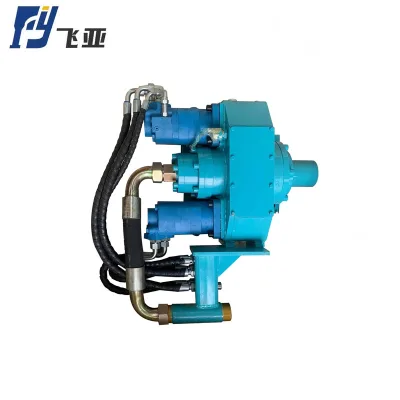
Comprehensive Sourcing Guide
Strategic Sourcing Guide for Rotary Drilling Rig Power Heads
The global market for heavy machinery relies heavily on the reliability of core components, with the rotary head for drilling rigs serving as a critical determinant of operational efficiency. For procurement professionals, sourcing a Drilling Rig Power Head requires a disciplined approach that balances technical specifications with supply chain resilience. The following guide outlines the essential factors for evaluating these components, drawing from observed market data and established industry practices to ensure informed decision-making.
Technical Specifications and Performance Parameters
When evaluating a rotary head, buyers must first scrutinize the fundamental performance metrics that dictate the machine's capability in the field. The observed market data indicates a significant variance in maximum drilling depth, ranging from 200 meters to 400 meters depending on the specific model configuration. A unit rated for 200 meters may be suitable for standard water well applications, whereas projects requiring deeper boreholes necessitate models explicitly rated for depths up to 400 meters. Procurement teams should verify the specific depth rating against the geological requirements of the intended site to avoid under-specification.
Power transmission is another critical technical domain. The available units in the current market spectrum utilize Diesel power types, with rated power outputs spanning from 5 kW to 200 kW. This wide range suggests that the selection process must align the power head's output with the rig's overall torque requirements. The rated torque for these units typically falls between 300 kN·m and 550 kN·m. This torque capacity is directly linked to the drilling diameter, which is observed to range from 140 mm to 325 mm. Buyers must ensure that the selected power head can sustain the required torque at the target diameter without stalling or overheating.
The structural design also plays a pivotal role in longevity and performance. The prevailing design philosophy in the current supply pool favors a compact design, which facilitates easier transport and installation in confined industrial environments. Furthermore, the operating mode is consistently described as continuous operation, indicating that these units are engineered for sustained duty cycles rather than intermittent use. The control method is predominantly automatic, which reduces operator fatigue and enhances precision during the drilling process.
Compliance, Certification, and Material Standards
In the B2B procurement of industrial equipment, compliance with international standards is non-negotiable. The observed product listings frequently cite CE and ISO 9001 certifications. These certifications are not merely marketing labels but serve as evidence that the manufacturing process adheres to specific quality management systems and safety directives. Buyers should request valid certification documents to verify that the specific batch of equipment being purchased maintains these standards. The presence of ISO 9001 suggests a commitment to consistent quality control, while CE marking indicates compliance with European health, safety, and environmental protection standards, which is often a prerequisite for export to regulated markets.
Material composition is equally vital for durability. The primary material observed for these components is stainless steel, which offers superior resistance to corrosion compared to standard carbon steel. This is particularly important for drilling rigs that may operate in wet or chemically aggressive environments. The manufacturing process typically involves casting, followed by a surface treatment of spray-paint to provide an additional layer of protection against the elements.
Regarding industry standards, the data points to compliance with BS (British Standards) and AISI (American Iron and Steel Institute) standards. However, buyers must exercise caution, as some listings also mention customizable standards. This implies that while standard configurations exist, there is flexibility for bespoke requirements. Procurement teams should explicitly confirm which specific standard version applies to the unit being purchased, as standards evolve over time. The standard dimensions observed vary, with some units adhering to specific footprint measurements like 800600600mm or 950720290mm, while others are defined by their model type, such as "type 400" or "type 200."
Cost Drivers and Pricing Dynamics
Understanding the cost structure of a rotary power head is essential for budgeting and total cost of ownership (TCO) analysis. The observed price range in the market is vast, extending from $1 to $19,999 USD. This extreme variance is not indicative of a single product category but rather reflects the diversity in specifications, power ratings, and customization levels. A unit priced at the lower end of this spectrum likely represents a smaller, lower-torque model or a basic configuration, whereas the higher price points correspond to high-power, high-torque units with advanced features.
Several factors drive these costs. First, the rated power and torque capacity are primary cost drivers; a 200 kW unit with 550 kN·m of torque will inherently cost more than a 5 kW unit. Second, the material quality, specifically the grade of stainless steel used, influences the price. Third, the level of customization plays a significant role. While many units are available with standard specifications, the option for custom models, including specific drilling diameters or depth ratings, often incurs additional engineering and manufacturing costs.
The minimum order quantity (MOQ) observed in the current market is consistently 1 unit. This low barrier to entry suggests a flexible supply chain that can accommodate single-unit purchases, which is beneficial for small contractors or replacement part acquisitions. However, buyers should be aware that while the MOQ is low, the lead time and shipping costs for a single heavy unit can be substantial. The packaging method, typically a wooden crate or wooden box, adds to the logistical cost and must be factored into the overall budget.
Typical Applications and Operational Environments
The versatility of the rotary Drilling Rig Power Head allows it to serve a broad spectrum of industrial applications. The primary usage identified is for water well drilling, where the precision and depth capabilities are crucial for accessing groundwater resources. Beyond water wells, these units are extensively used in construction works, where they facilitate foundation drilling and soil sampling. The energy and mining sectors also rely on these power heads for exploration drilling and resource extraction, while the quarry industry utilizes them for site preparation and aggregate extraction.
The operating environment is generally classified as an industrial environment, which implies exposure to dust, vibration, and varying weather conditions. The units are designed for fixed installation, meaning they are typically mounted onto a larger rig chassis rather than being portable standalone units. This fixed installation method requires careful site preparation to ensure stability during operation. The work status is described as stable operation, indicating that the units are engineered to maintain consistent performance even under heavy loads.
The core components of these systems, such as the engine and hydraulic motor, are critical for their operation. The hydraulic motor configuration is noted in several listings, suggesting a preference for hydraulic power transmission in modern designs due to its efficiency and control capabilities. The weight of the units varies, with observations ranging from 220 kg to 330 kg. This weight factor is crucial for logistics planning, as it determines the type of lifting equipment and transport vehicles required for delivery and installation.
Supplier Evaluation and Quality Assurance
Selecting a reliable supplier is as important as selecting the right product. The origin of the products observed is predominantly China, specifically from the Hebei region. While this region is a known hub for heavy machinery manufacturing, buyers must conduct rigorous due diligence to ensure the supplier's capability to meet specific quality requirements. The presence of a "High Quality" attribute in product descriptions is a common claim, but it should be treated as an observation rather than a guaranteed fact. Buyers must verify this claim through third-party testing or by reviewing the supplier's track record.
Quality control should be integrated into the procurement process. Given that the manufacturing process involves casting and spray-painting, buyers should inquire about the quality control measures taken during these stages. For instance, non-destructive testing (NDT) should be performed on cast components to detect internal flaws. Additionally, the surface treatment process should be verified to ensure the paint adhesion and thickness meet the required specifications for corrosion resistance.
The maintenance method is listed as "easy to maintain," which is a significant advantage for long-term operations. However, buyers should confirm the availability of spare parts and the clarity of maintenance manuals. A supplier that offers comprehensive after-sales support, including technical assistance and readily available spare parts, adds significant value to the procurement. The customization availability is another positive indicator, suggesting that the supplier has the engineering capacity to adapt the product to specific client needs.
Long-Term Procurement and Lifecycle Management
Long-term procurement considerations extend beyond the initial purchase price to include maintenance, operational efficiency, and end-of-life disposal. The "easy to maintain" attribute suggests that these units are designed with serviceability in mind, but buyers should still plan for regular maintenance schedules. The continuous operation mode implies that the components will undergo significant wear and tear, necessitating a proactive maintenance strategy to prevent downtime.
The structural form, described as a compact design, offers advantages in terms of space utilization but may require specialized handling during maintenance. Buyers should ensure that their maintenance teams are trained to handle these specific units. Furthermore, the customization options allow for future-proofing; if a project's requirements change, the ability to customize the power head can extend the lifecycle of the equipment.
In conclusion, sourcing a Drilling Rig Power Head requires a meticulous evaluation of technical specifications, compliance standards, and supplier capabilities. By focusing on the observed data regarding power ratings, drilling depths, and material standards, buyers can make informed decisions that align with their operational needs. The wide price range and low MOQ offer flexibility, but the complexity of the equipment demands a strategic approach to ensure long-term reliability and cost-effectiveness.
FAQs
What is the maximum drilling depth for this rotary head?
The maximum drilling depth ranges from 200 meters to 400 meters depending on the specific model configuration. Buyers must verify the exact depth rating against their geological requirements to ensure the unit meets project specifications without under-specification.
Which certifications do these drilling rig power heads hold?
These units typically hold CE and ISO 9001 certifications to ensure compliance with safety and quality management standards. Buyers should request valid documentation to verify that the specific batch adheres to these international directives before purchase.
How is the power type and rated power defined?
The power type is diesel with rated power outputs spanning from 5 kW to 200 kW. This wide range requires alignment with the rig's torque needs, where torque capacity typically falls between 300 kN·m and 550 kN·m.
Can the product specifications be customized for specific needs?
Yes, customization is available for models, standards, and drilling diameters ranging from 140 mm to 325 mm. Procurement teams should explicitly confirm which specific standard version applies to the unit being purchased as standards may vary.
What material is used for the construction of the head?
The primary material observed is stainless steel, offering superior resistance to corrosion in wet or aggressive environments. The manufacturing process involves casting followed by spray-paint surface treatment to provide additional protection against the elements.
What is the minimum order quantity for these units?
The minimum order quantity is consistently one unit, allowing for flexible supply chain accommodation. While the barrier to entry is low, buyers should consider that shipping costs for a single heavy unit can be substantial.
Where are these drilling rig power heads manufactured?
The products originate from China, specifically the Hebei region, which is a known hub for heavy machinery. Buyers must conduct due diligence to ensure the supplier meets specific quality requirements despite the regional concentration.