Source drop-forged bearing puller for Metallurgy Construction Petroleum
Find and compare 30 drop-forged bearing puller options from verified suppliers. Buyers can review specifications like capacity, spread, and material grades for industrial applications in metallurgy, construction, and petroleum sectors.
Key considerations
Products List
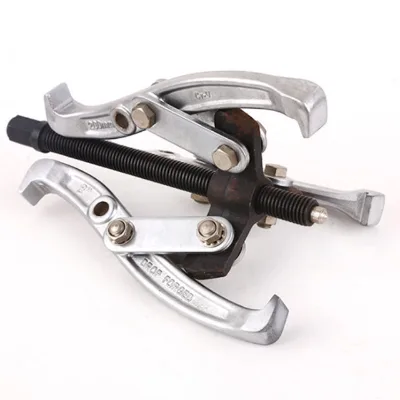


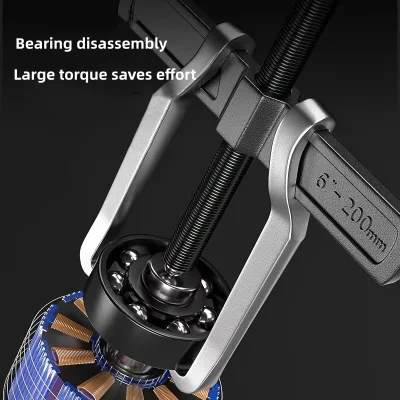


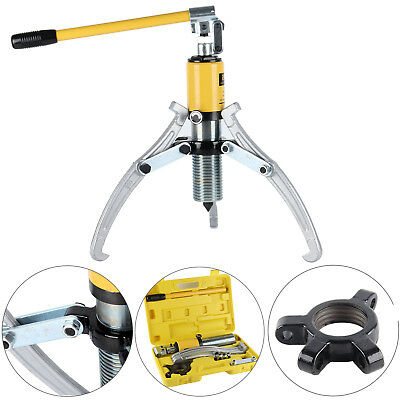


Cone Bearing Injector Remover Pullers Hydraulic Bearing Puller Tool Set
$623.00 - $906.00
MOQ: 1 Pieces


Comprehensive Sourcing Guide
Strategic Sourcing Guide for Drop-Forged Bearing Pullers
Understanding Product Categories and Core Specifications
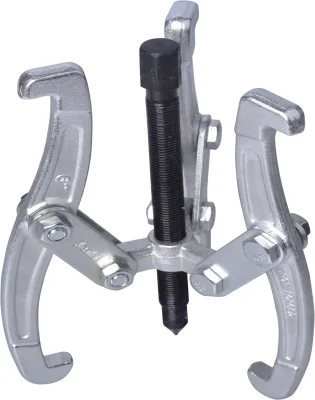
When sourcing a drop-forged bearing puller, buyers must first navigate the diverse landscape of mechanical extraction tools available in the global market. The core keyword often leads to a variety of product configurations, ranging from manual three-claw pullers to high-capacity hydraulic systems. Based on observed market data, the terminology "Three claw puller" frequently appears alongside specific application descriptors such as "Oil Pressure Pull Wheel" and "bearing disassembly." These tools are engineered for critical tasks in metallurgy, construction, and petroleum sectors, where reliability is paramount.
The physical specifications of these tools vary significantly depending on the intended load and access constraints. Observed product attributes indicate a wide range of sizes, with common configurations listed as 3/4/6/8/12/24/28 inch. This dimensional variance suggests that a single procurement strategy rarely fits all needs; instead, buyers must match the tool's spread and reach to the specific bearing geometry. For instance, certain models feature a "mini spread" of 3 inches or 4 inches, while others offer a "Max Spread" of 4 1/2 inches. The maximum reach is another critical dimension, with some units specified at 2 3/4 inches. Understanding these mechanical limits is essential before engaging with suppliers, as an undersized puller cannot safely extract a bearing, while an oversized unit may be inefficient for tight spaces.
Furthermore, the classification of the puller type is a primary decision point. The market distinguishes between standard mechanical pullers and "Hydraulic Pullers," the latter often associated with higher output capacities. Data indicates that hydraulic variants can deliver outputs ranging from 5T to 50T, with some heavy-duty industrial models reaching capacities of 60 to 300 tons. The holding capacity of specific units is also noted, with some models rated for 3 tons. Buyers must verify whether the "drop-forged" attribute applies to the entire assembly or just the jaws, as this affects the tool's durability under high stress. The material composition is another key differentiator, with some advanced models utilizing "Al-Ti Alloy Material" with an integrated design, while others rely on traditional steel grades suitable for industrial applications.
Technical Performance and Operational Capabilities
The operational performance of a bearing puller is defined by its ability to generate sufficient force without slipping or deforming the component being removed. For hydraulic systems, the maximum pressure rating is a vital technical specification. Observed data points to a maximum pressure of 70MPa for certain hydraulic models, which directly correlates to the force output. In torque-driven applications, accuracy is equally critical; specific tools are rated with a torque accuracy of 3%, ensuring precise application of force. The torque range for these systems can be extensive, spanning from 185 N.m to 140,585 N.m, highlighting the vast difference between light-duty and heavy-duty industrial requirements.
The automation level of the tool also influences its operational profile. While some industrial-grade equipment is classified under "Automatic Grade," many standard bearing pullers operate on a "Manual" basis. This distinction affects the workflow in a maintenance bay or construction site. Manual tools require physical effort and operator skill, whereas automatic or hydraulic systems reduce physical strain and increase consistency. The ability to adjust tool positions is a significant feature for complex extraction tasks, with some models explicitly offering "Adjust Tool Position: Yes." This flexibility allows the operator to adapt the puller to bearings that are not perfectly centered or are located in awkward positions.
The condition of the product upon delivery is another technical consideration. The market standard for new industrial tools is "New," ensuring that the drop-forged components have not been previously stressed or worn. However, buyers should be aware that "Automatic Grade" and "Manual Grade" classifications often dictate the internal complexity of the mechanism. For instance, a hydraulic puller with an integrated design may offer superior longevity compared to a standard bolted assembly. The "Industrial" grade designation implies that the tool is built to withstand harsh environments, which is a necessary attribute for applications in the petroleum and construction industries.
Compliance, Certification, and Safety Standards
In the B2B procurement of industrial machinery, compliance with international safety and environmental standards is non-negotiable. Buyers must verify that the drop-forged bearing pullers they source carry recognized certifications. Observed product listings frequently mention "CE" and "RoHS" certifications. The CE mark indicates conformity with health, safety, and environmental protection standards for products sold within the European Economic Area, while RoHS (Restriction of Hazardous Substances) ensures that the materials used in the puller do not contain specific hazardous elements. Some listings also specify "CE" certification independently, suggesting that compliance may vary by model or manufacturer.
Beyond specific certifications, the "prod_standard" is often listed as "as per product," which requires the buyer to request detailed documentation from the supplier. This phrase implies that the manufacturing process adheres to specific industry norms, but it does not guarantee a universal standard without further inquiry. For heavy-duty applications, particularly those involving high torque or hydraulic pressure, verifying that the tool meets specific pressure vessel or mechanical safety standards is crucial. The "Industrial" grade classification suggests adherence to rigorous manufacturing protocols, but explicit references to standards like ISO or ANSI should be confirmed during the supplier evaluation phase.
Safety in operation is also linked to the tool's design integrity. Drop-forging is a manufacturing process that aligns the grain structure of the metal, enhancing strength and toughness. However, the presence of certifications like CE and RoHS provides a baseline assurance that the product has undergone testing for material safety and operational reliability. Buyers should not assume that all "drop-forged" pullers automatically meet these standards; rather, they must treat certifications as specific attributes of the listed products and request proof of compliance for the exact model being purchased.
Cost Drivers and Procurement Economics
The cost of a drop-forged bearing puller is influenced by a complex interplay of factors, including material composition, capacity, and customization options. The observed price range in the market spans from 1 USD to 6,000 USD, reflecting the vast difference between a basic manual three-claw puller and a high-capacity hydraulic system. This wide variance underscores the importance of defining precise requirements before soliciting quotes. A tool with a 5T output will naturally cost less than one with a 300-ton capacity, and the inclusion of hydraulic systems or advanced alloy materials will further drive up the price.
Minimum Order Quantity (MOQ) is another significant economic factor. While some suppliers offer an MOQ of just 1 piece, facilitating small-scale procurement, others set a standard MOQ of 100 units. This discrepancy can impact the total cost of ownership, especially for small businesses or maintenance teams that require only a few units. The "Small Orders: Accepted" attribute indicates that flexibility exists in the market, but buyers must verify this on a per-supplier basis. Additionally, the "Selling Units" are often listed as "Single item," which simplifies the purchasing process for individual tools but may affect shipping costs if multiple items are ordered separately.
Customization is a major cost driver. The "OEM" (Original Equipment Manufacturer) support and "Customized" logo availability suggest that buyers can tailor the product to their brand or specific operational needs. However, customization often incurs additional costs and may extend lead times. The "prod_packing" options, ranging from "Plastic Box" to "Carton&Pallet," also influence the final price, as specialized packaging for heavy or high-value items adds to the logistics cost. Buyers should weigh the benefits of customization against the budget constraints, ensuring that the added value justifies the expense.
Supplier Evaluation and Operational Logistics
Evaluating suppliers for drop-forged bearing pullers requires a focus on reliability, origin, and logistical capabilities. The "place of origin" for the majority of these products is China, with specific mentions of "Zhejiang Province" as a manufacturing hub. This geographic concentration suggests a mature supply chain with specialized expertise in tool manufacturing. However, buyers must conduct due diligence to ensure that the supplier's location aligns with their logistical needs and quality expectations. The "Delivery Time" is a critical metric, with observed ranges of 5-10 days for certain models. This lead time can vary significantly based on the complexity of the order and the supplier's current production load.
The "Condition" of the product, typically listed as "New," is a baseline expectation, but buyers should also inquire about the supplier's quality control processes. The "Automatic Grade" and "Manual Grade" distinctions may reflect different production lines, and understanding the supplier's capacity to meet these specifications is essential. The "prod_model" numbers, such as "HCP," "YL-30," or "LB06-tension lever-9101," serve as unique identifiers that buyers should use to track inventory and verify compatibility.
Supplier reliability is further assessed through their warranty offerings. A "1 year" warranty is a common attribute observed in the market, providing a safety net for buyers against manufacturing defects. However, the scope of this warranty should be clearly defined, covering only specific components or the entire assembly. The "Customization: Available" attribute indicates that suppliers are willing to adapt their products, but this flexibility should be balanced against the risk of delays or quality inconsistencies. Buyers should prioritize suppliers who demonstrate a track record of meeting delivery times and maintaining product standards.
Long-Term Procurement and Maintenance Considerations
Sourcing drop-forged bearing pullers is not merely a transactional event but a strategic decision that impacts long-term operational efficiency. The "Usage" of these tools in sectors like metallurgy, construction, and petroleum implies a high frequency of use and exposure to demanding conditions. Therefore, the durability of the tool is a primary concern. The "Industrial" grade and "drop-forged" construction are key indicators of longevity, but buyers should also consider the maintenance requirements of the specific model. Hydraulic systems, for instance, may require regular fluid checks and seal replacements, while manual pullers may need periodic lubrication and inspection for wear on the claws.
The "Application Field" diversity suggests that a single tool may not suffice for all tasks. Buyers should consider a modular approach to procurement, acquiring a range of pullers with different capacities and spreads to cover various scenarios. The "Max Spread" and "Max Reach" specifications should be matched to the most common bearing types encountered in their operations. Additionally, the "Adjust Tool Position" feature can extend the utility of a single tool, reducing the need for multiple specialized units.
Finally, the "prod_packing" and logistics considerations play a role in long-term storage and transport. "Carton Box" or "Carton&Pallet" packaging ensures that the tools are protected during transit and storage, maintaining their condition until deployment. Buyers should also consider the "Selling Units" and "MOQ" flexibility when planning future procurement cycles. A supplier that accepts small orders and offers customization can be a valuable partner for scaling operations, while a supplier with high MOQs may be better suited for large-scale industrial projects. By focusing on these long-term factors, buyers can ensure a sustainable and efficient procurement strategy for their bearing puller needs.
FAQs
What certifications do drop-forged bearing pullers have?
Many models carry CE and RoHS certifications to ensure safety and environmental compliance. Some listings specify CE independently, while others include RoHS for hazardous substance restrictions. Buyers should verify specific certifications for the exact model before purchase.
What is the minimum order quantity for these tools?
Minimum order quantities vary significantly, ranging from 1 piece to 100 units depending on the supplier. Some vendors accept small orders, while others enforce a standard MOQ of 100. Buyers must check individual supplier terms to confirm the required quantity.
Which specifications are available for three claw pullers?
Common sizes include 3, 4, 6, 8, 12, 24, and 28 inches to fit various bearing geometries. Specific models offer a mini spread of 3 or 4 inches and a maximum spread of 4.5 inches. Maximum reach can be up to 2.75 inches for certain configurations.
Can I customize the logo and packaging for these pullers?
Yes, OEM support and customized logos are available for many industrial-grade pullers. Packaging options range from plastic boxes to cartons and pallets depending on the order size. Buyers should confirm customization details with the supplier to ensure brand alignment.
What is the delivery time for these products from China?
Delivery times typically range from 5 to 10 days for standard orders originating from China. Specific models may have different lead times based on production load and customization needs. Buyers should verify the exact delivery window with the supplier before finalizing the order.
How much load capacity do hydraulic bearing pullers offer?
Hydraulic pullers can deliver outputs ranging from 5 tons to 50 tons, with heavy-duty models reaching 300 tons. Some specific units have a holding capacity of 3 tons. The maximum pressure for certain hydraulic systems is rated at 70MPa.
What warranty is provided for new industrial pullers?
A standard warranty of 1 year is commonly offered for new industrial-grade pullers. This coverage typically protects against manufacturing defects but may not cover wear and tear. Buyers should review the specific warranty terms to understand the scope of protection.