Source Drone Payload Gimbal for Inspection, Surveillance, and Mapping
Source a Drone Payload Gimbal from 30 verified listings. Compare key specs like 40x optical zoom, AI tracking, and dual visible/thermal sensors. Evaluate options for UAV inspection, surveillance, and mapping applications with detailed technical data; compare the available evidence and request quotations based on your requirements.
Key considerations
Products List


Reliable Customized Single-Axis Long Range Drone Payload Gimbal for Aerial Photography
$1462.00 - $1550.00
MOQ: 1 Pieces


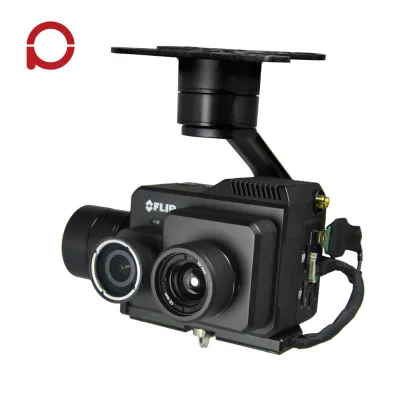


Fpv Drone Load 2kg Flight Distance 7km- 10km Quadcopter Support Fpv Drones
$7000.00 - $13000.00
MOQ: 1 Pieces


$1000.00 - $200000.00
MOQ: 1 Pieces


Drone Control Device, Uav Defense System, Uav Fighter, Drone Defense
$15000.00 - $18500.00
MOQ: 1 Pieces

$25000.00 - $31000.00
MOQ: 50 Pieces


Comprehensive Sourcing Guide
Drone Payload Gimbal Sourcing Guide
Procurement professionals must first distinguish between general camera gimbals and specialized unmanned rotorcraft payloads designed for heavy-duty inspection. The observed market data indicates a clear segmentation where products are explicitly categorized as "Unmanned Rotorcraft" with specific applications in UAV, drone, and inspection sectors. Buyers should verify that the listed product structure matches their operational needs, as generic stabilization units often lack the ruggedized interfaces required for aerial deployment.
A critical initial step involves confirming the specific payload type, such as the "Eo Gimbal Camera" or "Drone Pod" variants observed in current listings. These units frequently integrate dual sensors for visible and thermal imaging, which is essential for search and rescue or infrastructure monitoring. Sourcing teams must ensure the selected gimbal supports the required tracking modes, including AI tracking and multi-target follow capabilities, to guarantee effective performance in dynamic field environments.
Product Scope and Observed Listing Signals
The current market listings reveal a wide price spectrum ranging from $155 to $200,000, reflecting significant variations in sensor resolution and optical capabilities. Buyers should note that lower-cost units may offer basic stabilization, while premium models feature 40x optical zoom and high-resolution thermal sensors. It is vital to correlate the listed price with the specific sensor resolution, such as the 640x512 thermal or 1920x1080 visible formats, to avoid under-specifying critical mission requirements.
Minimum Order Quantities (MOQ) in the observed data vary from 1 to 50 units, suggesting flexibility for both prototype testing and bulk deployment. Procurement teams must carefully review the packaging specifications, as some units require non-fumigated wooden boxes while others utilize standard electrostatic packaging. Understanding these logistical constraints early prevents unexpected shipping delays and ensures the payload arrives in a condition suitable for immediate integration into existing drone fleets.
Technical Specifications to Verify
Verification of the gimbal's physical dimensions and weight is paramount for ensuring compatibility with the target drone's lift capacity. Observed specifications include weights as low as 390g and larger units reaching 545g, with dimensions varying from compact 22cmx17.5cmx5.3cm packages to larger 160mmx127mm enclosures. Buyers must calculate the total payload weight against the drone's maximum lift rating, accounting for the battery capacity and motor specifications required to sustain flight time.
The communication interface and stabilization mechanics are equally critical for operational reliability. Sourcing teams should confirm support for standard interfaces like TTL, Ethernet, and Sbus to ensure seamless integration with flight controllers. Additionally, the gimbal must provide 3-axis gyro stabilization with a pan range of 360° continuous and a pitch range of -120° to 40°. These mechanical limits directly impact the operator's ability to track moving targets effectively across various flight angles.
Compliance and Safety Documentation
Environmental protection ratings are a primary compliance factor for aerial payloads operating in diverse weather conditions. The observed data highlights protection levels ranging from IP54 as a standard to IP66 as an optional upgrade, indicating varying degrees of dust and water resistance. Procurement teams must verify the specific IP rating required for their operational environment, as units with lower ratings may fail during rain or dusty inspections, leading to costly downtime.
Thermal and operational temperature ranges further dictate the suitability of a payload for specific geographic regions. Listings indicate an operating temperature range of -20°C to +50°C, which is essential for missions in extreme climates. Buyers should request test reports confirming that the internal electronics and battery systems, such as the 7.2V 3400mAh or 33.6V 2200mAh options, maintain performance within these thermal boundaries without degradation.
Cost Drivers and Commercial Terms
The primary cost drivers for drone payload gimbals include the complexity of the sensor array, the optical zoom range, and the integration of AI tracking algorithms. Units featuring dual sensors with 40x optical zoom and advanced target recognition for persons, vehicles, and aircraft command a premium over basic visible-light cameras. Buyers should analyze the total cost of ownership, considering that higher initial investment often correlates with longer service life and reduced maintenance frequency in demanding inspection scenarios.
Commercial terms regarding customization and packaging also influence the final procurement cost. Many suppliers offer customization options for control types, such as 915MHz or 2.4GHz wireless, which can add value but may increase the unit price. Additionally, the choice between standard box packaging and specialized non-fumigated wooden crates affects shipping costs and insurance requirements. Procurement teams must negotiate these variables to align with their specific budget constraints and logistical capabilities.
Supplier Qualification and Quality Control
Supplier qualification requires a rigorous review of the product origin and manufacturing standards to ensure consistent quality. The observed data points to origins in Hubei, China, where manufacturers produce a variety of electronic accessories and drone pods. Buyers should verify that the supplier adheres to recognized standards, such as the ISO certifications noted in some listings, to ensure that the production processes meet international quality benchmarks.
Quality control protocols must extend beyond the final product to include the materials and assembly processes used. The use of metal materials for the gimbal structure is a common observation, providing necessary durability against vibration and impact. Procurement teams should request evidence of material testing and assembly line inspections to confirm that the final product meets the specified weight, dimensions, and protection levels before accepting delivery.
Long-Term Procurement Checks
Sustainability and long-term support are critical considerations for maintaining operational readiness over the lifecycle of the drone fleet. Buyers should establish clear agreements regarding the availability of spare parts, such as motors, ESCs, and battery packs, which are essential for maintaining the gimbal's functionality. The observed specifications for components like the FC 175 8s motor and FC 80 L32 ESC indicate that specific replacements may be required, necessitating a reliable supply chain for these parts.
Data output capabilities and video storage formats also require long-term verification to ensure compatibility with evolving software ecosystems. The ability to output track ID, target type, and distance information in formats like MP4 and Ts is vital for post-mission analysis and reporting. Procurement teams must ensure that the supplier provides firmware updates and technical support to maintain the AI tracking and multi-target recognition features as operational requirements evolve.
FAQs
What are the key specifications of the L40 Drone Payload Gimbal?
The L40 model features a dual sensor system with 40x optical zoom and 640x512 thermal resolution. It weighs 545g and supports 3-axis gyro stabilization. The device offers IP54 protection as standard, with optional IP66 ratings. It includes AI tracking for up to 20 targets and connects via TTL or Ethernet interfaces for seamless integration.
Can the Drone Payload Gimbal track multiple targets simultaneously?
Yes, the system supports AI tracking for up to 20 objects simultaneously. It recognizes persons, vehicles, ships, and aircraft. The gimbal provides multiple tracking modes including manual, scan, and follow. This capability ensures reliable target acquisition and sustained tracking during complex inspection or surveillance missions without losing visual contact.
What is the operating temperature range for this drone pod?
The drone pod operates reliably between -20°C and +50°C. This wide temperature range ensures consistent performance in diverse environmental conditions. The robust design supports continuous operation in extreme heat or cold. Users can deploy the equipment for outdoor inspections or surveillance tasks without worrying about thermal shutdowns or performance degradation.
Which communication interfaces are supported by the L40T gimbal?
The L40T gimbal supports TTL, Ethernet, and Sbus communication interfaces. These options allow flexible integration with various flight controllers and ground stations. The system also provides data output including track ID, target type, and distance information. This versatility ensures compatibility with standard UAV platforms and custom mission control architectures.
Is customization available for the Drone Payload Gimbal structure?
Customization is available for the unmanned rotorcraft structure and control types. Buyers can specify wireless control frequencies such as 915MHz or 2.4GHz. The product origin is Hubei, China, with non-fumigated wooden box or electrostatic packaging options. This flexibility allows tailored solutions for specific inspection or camera gimbal applications.
What video storage formats does the drone payload support?
The system supports MP4 and Ts video storage formats. These formats ensure compatibility with standard playback and analysis software. The dual sensor captures visible 1920x1080 and thermal 640x512 resolutions. H.265 encoding is available for efficient data handling. This setup facilitates easy post-mission review and long-term archival of inspection footage.