Source Drug Stability Chamber for Pharma Testing, Storage, and Research
Find 30 Drug Stability Chamber units with customizable temperature and humidity ranges for pharmaceutical testing, storage, and environmental simulation. Compare specifications from verified Chinese manufacturers offering OEM support and warranty coverage.
Key considerations
Products List

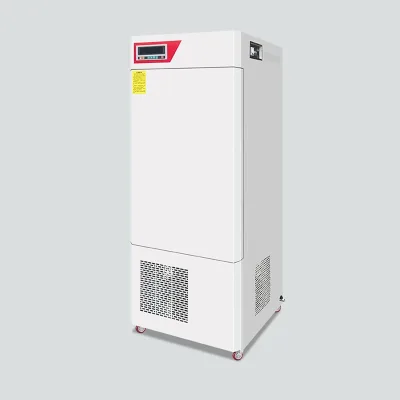
Drug Test Chamber/Stability Chamber Pharmaceutical Stability Chamber
$6999.00 - $9999.00
MOQ: 1 Pieces


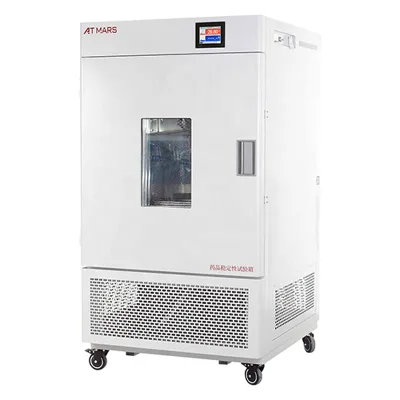


Walk-in Stability Chamber Drug Testing Room Constant Temperature Humidity Test Chamber
$5000.00 - $20000.00
MOQ: 1 Pieces

Industrial Walk-in Stability Room Constant Condition Chamber for Drug Testing
$5000.00 - $20000.00
MOQ: 1 Pieces

Climate Controlled Walk-in Room Professional Drug Stability Test Chamber
$5000.00 - $20000.00
MOQ: 1 Pieces


Large Walk-in Stability Room Professional Drug Testing Environmental Chamber
$5000.00 - $20000.00
MOQ: 1 Pieces

Walk-in Type Stability Test Chamber Drug Inspection Environmental Testing Room
$5000.00 - $20000.00
MOQ: 1 Pieces




Comprehensive Sourcing Guide
Strategic Sourcing Guide for Drug Stability Chambers
Procuring a Drug Stability Chamber is a critical decision for pharmaceutical manufacturers, contract research organizations, and quality assurance laboratories. These specialized environmental test chambers are designed to simulate specific temperature and humidity conditions required to assess the stability of pharmaceutical products over time. The selection process demands a rigorous evaluation of technical capabilities, regulatory compliance, and supplier reliability. Buyers must navigate a market where product attributes vary significantly, requiring a disciplined approach to ensure that the acquired equipment meets the stringent demands of drug testing and storage.
Technical Specifications and Environmental Control
The core functionality of a Drug Stability Chamber lies in its ability to maintain precise environmental conditions. When evaluating potential units, buyers should prioritize the temperature and humidity control ranges. Based on observed market data, many units offer a temperature controlling range from 0℃ to 65℃, with specific models supporting ranges up to +65℃. It is essential to verify that the selected chamber covers the full spectrum of conditions required for your specific stability protocols, which often include accelerated testing at higher temperatures and long-term storage at controlled ambient conditions.
Precision is equally vital. High-performance units typically demonstrate a temperature resolution of 0.1℃ and a humidity resolution of 1% Rh. However, resolution is distinct from fluctuation. Buyers must scrutinize the fluctuation specifications, as uniformity across the chamber volume is often more critical than the setpoint accuracy. Observed specifications indicate temperature fluctuations of ±0.5℃ and humidity fluctuations of ±3% Rh. These values represent the variance within the chamber during operation. If your stability protocols require tighter tolerances, you must explicitly request data on uniformity maps rather than relying on general fluctuation claims.
Physical dimensions and capacity are also primary considerations. Chambers vary from compact benchtop models to large walk-in units. For instance, specific models have dimensions around 76011601200mm, while others may be defined by volume, such as 220L or 1000L configurations. The internal volume dictates the number of product batches that can be tested simultaneously. Additionally, the power supply requirements, typically 220 V, must align with the facility's electrical infrastructure. The protection class, often rated IP66 for dust and water resistance, ensures the integrity of the electrical components against the humid environment inside the chamber.
Compliance, Certification, and Regulatory Standards
In the pharmaceutical industry, compliance is not optional; it is a prerequisite for data validity. When sourcing a Drug Stability Chamber, buyers must verify that the equipment and the manufacturing process adhere to recognized international standards. The supply chain often cites certifications such as ISO, TUV, and CE. These certifications indicate that the manufacturer has undergone third-party audits for quality management systems and product safety. However, buyers should not assume that every listed product automatically satisfies all certification requirements. It is necessary to request valid, current certificates for the specific model being purchased.
Beyond general certifications, the chamber must support the regulatory frameworks governing drug stability testing, such as ICH Q1A guidelines. While the chamber itself does not generate the data, its calibration and validation capabilities are foundational to the data's acceptance by regulatory bodies. The accuracy class of the unit is another critical metric. Some suppliers list an accuracy of 99% or a "High Accuracy" classification. These terms are descriptive but lack the precision required for procurement. Buyers should demand a detailed calibration certificate traceable to national standards, specifying the uncertainty of measurement at various points within the chamber.
Furthermore, the origin of the product plays a role in compliance logistics. Many units originate from manufacturing hubs in Guangdong, China. While this location offers competitive pricing and a mature supply chain, it necessitates a thorough review of the supplier's export compliance and the destination country's import regulations regarding medical testing equipment. The standard of the product should be explicitly defined; while some units are "Customized" to meet specific client needs, others follow standard industrial specifications. Ensuring that the customization does not compromise the chamber's ability to meet regulatory validation requirements is a key step in the evaluation process.
Cost Drivers and Pricing Structures
Understanding the cost structure of drug stability chambers is essential for budgeting and total cost of ownership analysis. The observed price range in the market spans from 1,500 to 150,000 USD. This vast disparity is driven by several factors, including chamber volume, control precision, brand reputation, and the level of customization. A basic unit with standard temperature ranges will occupy the lower end of the spectrum, while a high-precision, large-volume chamber with advanced data logging and validation features will command a premium price.
The Minimum Order Quantity (MOQ) is another significant cost driver. In the current market, many suppliers offer an MOQ of 1 set, allowing for single-unit procurement. This flexibility is beneficial for laboratories testing a limited number of products or for pilot studies. However, buyers should be aware that the "Selling Units" are often listed as "Single item," which may imply that bulk discounts are not automatically applied. When negotiating, the customization options, such as OEM, OBM, or ODM support, can significantly impact the final price. Custom branding or specific internal configurations often incur additional engineering and setup costs.
Other cost factors include the packaging and shipping logistics. Products are typically packed in strong wooden cases or wooden boxes to ensure safe transit. The weight of the unit, which can be around 200kg, affects freight costs, particularly for international shipments. Buyers should also consider the warranty terms, which range from 1 year to 2 years. A longer warranty period may indicate higher confidence in the product's durability but could also reflect a higher initial purchase price. The color and finish, often customizable to "Customer Required," are minor cost factors but can be relevant for laboratory aesthetics and branding.
Typical Applications and Operational Scope
Drug stability chambers serve a diverse range of applications within the pharmaceutical and biotechnology sectors. The primary function is product testing, specifically to determine the shelf life and storage conditions of drugs. These chambers are widely used for stability testing of new drug formulations, generic drugs, and biologics. The application scope extends to industrial product testing and environmental simulation, ensuring that products remain stable under various stress conditions.
The versatility of these units allows them to be used for drug storage and testing in different contexts. Some models are designed for specific uses such as pharmaceutical stability chambers, while others are categorized broadly for "Other" applications. The keyword "Lab Test Serve" highlights their role in supporting laboratory research and development. The ability to control temperature and humidity precisely makes them suitable for simulating real-world storage conditions, including extreme heat, cold, and humidity, which are critical for understanding how a drug degrades over time.
Furthermore, the application is not limited to finished products. These chambers are also used for raw material testing and packaging stability studies. The wide application range ensures that a single unit can support multiple stages of the product lifecycle, from development to commercial release. Buyers should ensure that the chamber's internal volume and shelf configuration can accommodate the specific packaging types they intend to test, whether they are bottles, blister packs, or bulk containers.
Supplier Evaluation and Vendor Selection
Selecting the right supplier is as important as selecting the right equipment. Buyers should evaluate suppliers based on their ability to provide customized support, including OEM, ODM, and OBM services. This flexibility indicates a supplier's capacity to tailor the equipment to specific laboratory needs. The brand name, such as Derui or ATMARS, can be a factor, but it should not be the sole determinant of quality. Instead, focus on the supplier's track record in the pharmaceutical sector and their willingness to provide references from similar clients.
The place of origin, specifically Guangdong, China, suggests a concentration of manufacturing expertise, but buyers must verify the supplier's specific location and facility capabilities. A supplier with a dedicated R&D department is more likely to offer innovative solutions and responsive after-sales support. The warranty period, ranging from 12 months to 2 years, is a tangible indicator of the supplier's confidence in their product. A longer warranty often correlates with better quality control and more robust customer service.
Additionally, the supplier's ability to provide comprehensive documentation is crucial. This includes user manuals, calibration procedures, and validation protocols. The supplier should be willing to assist in the validation process, providing necessary documentation to support the installation and qualification of the chamber. The customization of the product standard, whether "Customized" or standard, should be clearly defined in the contract to avoid ambiguity.
Quality Control and Validation Protocols
Quality control is the backbone of reliable stability testing. Buyers must implement a rigorous quality control plan that includes incoming inspection, installation qualification, operational qualification, and performance qualification. The chamber's accuracy class and fluctuation specifications must be verified through independent testing before acceptance. The observed accuracy of 99% or high accuracy claims must be validated against the specific requirements of your stability protocols.
The temperature and humidity resolution and fluctuation are critical parameters for quality control. Buyers should verify that the chamber maintains the specified ranges (0℃65℃ for temperature and 2095% Rh for humidity) with the claimed resolution (0.1℃ and 1% Rh) and fluctuation (±0.5℃ and ±3% Rh). This verification should be conducted using calibrated data loggers placed at multiple points within the chamber to ensure uniformity. The protection class IP66 should be verified to ensure the chamber's electrical safety in high-humidity environments.
Furthermore, the warranty terms should be clearly understood in the context of quality control. A 1-year or 2-year warranty covers manufacturing defects, but it does not replace the need for regular maintenance and calibration. Buyers should establish a schedule for routine checks and recalibration to ensure the chamber continues to meet the required specifications over its lifespan. The packaging, typically a strong wooden case or wooden box, should be inspected upon delivery to ensure the unit has not sustained damage during transit.
Long-Term Procurement and Lifecycle Management
Long-term procurement considerations extend beyond the initial purchase price. Buyers should plan for the total cost of ownership, including energy consumption, maintenance, and potential upgrades. The power rating of the unit, typically electronic, will influence ongoing operational costs. Energy-efficient models can significantly reduce electricity bills over the life of the equipment. The customization options, such as color and specific configurations, should be chosen with future adaptability in mind.
The lead time for delivery and the availability of spare parts are also critical factors. While specific lead times are not universally standardized, buyers should negotiate clear delivery schedules in the contract. The availability of spare parts, such as sensors, controllers, and compressors, ensures that the chamber can be repaired quickly in the event of a failure. The supplier's location and support network should be evaluated to ensure timely assistance.
Finally, the scalability of the procurement strategy is important. As the laboratory's needs grow, the ability to expand the testing capacity or upgrade existing units becomes relevant. Suppliers that offer modular solutions or upgrade paths can provide long-term value. The warranty extension options and service contracts should be explored to mitigate the risks of equipment downtime. By planning for the entire lifecycle, buyers can ensure that their drug stability chambers continue to support their quality assurance programs effectively for years to come.
FAQs
What certifications do drug stability chambers typically have?
Many units carry ISO, TUV, and CE certifications to ensure quality and safety. Buyers should verify that specific models hold valid certificates rather than assuming all listed products satisfy every requirement.
How precise is the temperature control in these chambers?
Units often provide a temperature resolution of 0.1℃ with a fluctuation of ±0.5℃. This precision supports strict stability protocols, though uniformity maps may be needed for tighter tolerances.
What is the minimum order quantity for purchasing a chamber?
The market frequently lists a minimum order quantity of 1 set for single-item sales. This allows laboratories to procure a single unit for pilot studies or limited product testing without bulk commitments.
Can manufacturers provide customization for these environmental chambers?
Customization is available with support for OEM, OBM, and ODM services. Buyers can request specific configurations, though customization may impact the final price and lead time for delivery.
What is the typical warranty period for this equipment?
Warranty terms generally range from 1 year to 2 years depending on the supplier. A longer warranty often indicates higher confidence in durability but may correlate with a higher initial purchase price.
Which humidity control range is standard for these units?
Standard humidity controlling ranges span from 20% to 95% Rh with a resolution of 1% Rh. Fluctuation is typically maintained within ±3% Rh to ensure stable testing environments.
Where are these drug stability chambers primarily manufactured?
Many units originate from manufacturing hubs in Guangdong, China. Buyers must review export compliance and import regulations for medical testing equipment when sourcing from this specific location.