Source ISO CE Tablet Hardness Tester for Pharma QC and Lab Testing
Compare 30 ISO CE Tablet Hardness Tester models from Chinese manufacturers for pharmaceutical quality control, laboratory analysis, and production line testing. These devices support automatic measurement of hardness, diameter, and thickness with digital displays and standard calibration methods.
Key considerations
Products List


Smart Tablet Hardness Tester for Pharmaceutical Measure Tablet Hardness
$1000.00 - $3000.00
MOQ: 1 Pieces


Tablet Hardness Tester Measuring Crushing Hardness of Pharmaceutical Tablets
$1000.00 - $3000.00
MOQ: 1 Pieces


Yd-50e Tablet Hardness Tester for Testing Tablet Hardness Diameter Thickness
$2300.00 - $2500.00
MOQ: 1 Pieces


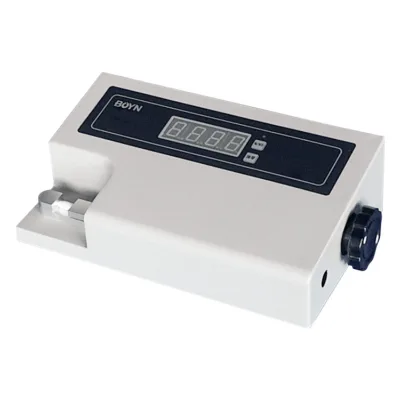

$500.00 - $610.00
MOQ: 1 Pieces


Tablet Hardness Tester/Intelligent 1-500n Lab Physical Machine Tablet Hardness Tester
$3000.00 - $4000.00
MOQ: 1 Pieces

Pharmaceutical Tablet Hardness Tester Equipment Manual Potable Lab Tablet Hardness Tester
$2000.00 - $5500.00
MOQ: 1 Pieces

Digital Tablet Hardness Tester Physical Hardness Measuring Instrument Pill Test Machine
$1000.00 - $3000.00
MOQ: 1 Pieces


Easy Operation Auto Non-Coating Tablet Hardness Tester with Self Calibration
$1166.00 - $1378.00
MOQ: 1 Pieces


Comprehensive Sourcing Guide
Strategic Sourcing Guide for ISO and CE Tablet Hardness Testers
The pharmaceutical and nutraceutical industries rely heavily on precise quality control metrics to ensure product integrity, with tablet hardness serving as a critical parameter for stability, dissolution rates, and packaging safety. When sourcing equipment labeled as an "ISO CE Tablet Hardness Tester," buyers must navigate a complex landscape of technical specifications, regulatory compliance, and supplier capabilities. The market offers a variety of models, ranging from desktop units to automated systems, each designed to meet specific production needs. This guide provides a disciplined approach to evaluating these instruments, focusing on the intersection of technical performance and regulatory adherence without relying on unverified marketing claims.
Technical Specifications and Performance Metrics
Understanding the core technical capabilities of a tablet hardness tester is the first step in the procurement process. The observed product data indicates a diverse range of models, including the YD-3, ZYYD-01, ZHIYI-203, YPD-350N, and YD-50E. These units generally share a common architecture but differ in their specific measurement ranges and operational modes. A primary observation is the variability in hardness measurement ranges; some units are specified with a range of 2-199.99N, while others extend to 10-350N or even 10-500N. This discrepancy highlights the necessity for buyers to verify the specific load capacity required for their tablet formulations before placing an order.
The resolution of these devices is another critical factor. High-precision models offer a resolution of 0.01N, which is essential for detecting minute variations in tablet compression that could affect drug release profiles. Furthermore, the measurement method varies between mechanical load and dynamic load systems. Some units support automatic single testing, while others allow for continuous multiple testing, with test periods noted as approximately 20 seconds per piece in specific configurations. The physical dimensions of the machines also vary significantly, with standard dimensions ranging from compact units like 320 * 200 * 100mm to larger desktop setups measuring 625x430x900mm. Buyers must ensure that the physical footprint of the equipment aligns with their laboratory or production floor space constraints.
Compliance and Certification Verification
The core keyword "ISO CE" suggests a dual requirement for international standardization and European conformity. However, the supplied product facts present a nuanced picture regarding certifications. While "CE" appears in the low-confidence background section, it is not listed as a high-confidence fact for any specific model. Similarly, while "ISO" is frequently cited in the high-confidence facts, the specific standard varies; some entries list "ISO" generally, while others reference "ASTM" or specific dimensional standards. This distinction is vital for procurement officers. A buyer cannot assume that every listed "ISO tablet hardness tester" automatically possesses ISO 9001:2015 or ISO 13485 certification unless explicitly documented in the supplier's current quality manual.
The presence of "ASTM" in the high-confidence facts alongside "ISO" indicates that some units may be calibrated or tested against American Society for Testing and Materials standards, which is common for hardness testing. Buyers should verify if the specific model they are considering is calibrated using standard hardness test blocks, as noted in the product attributes. The warranty periods observed range from 1 year to 14 months, suggesting that the manufacturer's confidence in their product durability varies. When evaluating compliance, the buyer must request specific certification documents rather than relying on general product descriptions. The "place of origin" is consistently listed as China, specifically Zhejiang, which is a major manufacturing hub, but this does not inherently guarantee compliance with European CE directives without third-party verification.
Cost Drivers and Pricing Structures
The financial aspect of sourcing tablet hardness testers is influenced by several variables, including the complexity of the measurement system, the accuracy of the display, and the packaging requirements. The observed price range for these units spans from $200 to $6,000 USD. This wide disparity reflects the difference between basic mechanical testers and advanced digital units with LCD screens and automated data logging capabilities. The lower end of the spectrum likely corresponds to simpler models with manual readouts or limited measurement ranges, while the higher end encompasses units with digital displays, higher resolution (0.01N), and extended hardness ranges (up to 500N).
Another significant cost driver is the customization level. The product data indicates that customization is available, with some units listed as "Non-Customized" while others support OEM, ODM, and OBM services. Customization often involves branding, specific software interfaces, or tailored mechanical components, which can increase the unit price. Additionally, the packaging method affects the final cost; options include wooden cases, carton cases, and export standard packing cases. The weight of the units, ranging from 0 to 100kg, also impacts shipping costs, particularly for heavier desktop models. Buyers should request a detailed breakdown of costs to understand how much of the price is attributed to the hardware, the software, and the logistics of export packaging.
Typical Applications and Operational Use Cases
The primary application for these devices is the measurement of tablet hardness, diameter, and thickness, which is essential for the pharmaceutical industry. The product attributes explicitly state that these testers are "To Be Used in The Pharmaceu[tical] Industry." The ability to measure tablet diameter (ranging from 2-25mm or 3-20mm depending on the model) and thickness (0.5-15mm) makes these units versatile for various tablet sizes. The measuring range for hardness is particularly important; a unit capable of measuring up to 500N is suitable for hard, compressed tablets, whereas a range of 2-199.99N might be better suited for softer formulations or specific quality control checks.
The operational environment also dictates the choice of equipment. Units with an electrical supply of AC 220V 50Hz or dual voltage support (110V/220V) offer flexibility for international operations. The display type, whether LCD or digital, impacts the ease of reading results in different lighting conditions. For high-volume production lines, the "Test Period" of 20 seconds per piece becomes a critical efficiency metric. In contrast, for research and development labs where precision is paramount over speed, a unit with higher resolution and a wider hardness range may be preferred. The "Load Way," whether mechanical or dynamic, also influences the type of tablets that can be tested, with dynamic loads potentially offering more consistent results for brittle formulations.
Supplier Evaluation and Capability Assessment
When evaluating potential suppliers, buyers must look beyond the basic product listing. The data indicates that the "brand name" is often listed as "OEM," suggesting that many suppliers manufacture generic equipment that is then rebranded. This is common in the manufacturing sector but requires careful vetting. The "customized support" for OEM, ODM, and OBM indicates that suppliers are willing to adapt products, but the buyer must assess the supplier's engineering capability to support these requests. The "Support Language" is listed as English, which is a baseline requirement for international trade, but the depth of technical support should be verified.
The "Warranty" period is a key indicator of supplier confidence. While most units offer a 1-year warranty, some list 14 months. This variation suggests that warranty terms are negotiable or model-specific. Buyers should inquire about the scope of the warranty, including whether it covers labor, parts, and calibration services. The "prod_packing" details, such as "Wooden Case" or "Carton Case," also reflect the supplier's attention to logistics and product protection during transit. A supplier that invests in robust export packaging is more likely to provide a reliable after-sales service. Additionally, the "Standard" compliance, such as ASTM or ISO, should be verified against the specific needs of the buyer's regulatory environment.
Quality Control and Long-Term Procurement Considerations
Ensuring long-term reliability requires a robust quality control strategy. The "Calibrating Method" using standard hardness test blocks is a standard practice, but buyers must verify the frequency of calibration and the availability of certified blocks. The "Accuracy" specification, noted as "Max.*(±0.05%)" in some contexts, requires validation through independent testing. Buyers should consider the total cost of ownership, including the cost of consumables, calibration services, and potential downtime. The "Resolution" of 0.01N is a high standard, but maintaining this level of precision over time depends on the stability of the mechanical components and the quality of the electronic sensors.
For long-term procurement, the "Production Model" consistency is crucial. The list includes multiple models (YD-1, YD-2, YD-3, ZYYD-01, etc.), and buyers should ensure that the chosen model is not a discontinued item. The "Place of Origin" being Zhejiang, China, is a significant factor for supply chain logistics, but buyers should also consider the lead time and the supplier's ability to scale production. The "Test Period" and "Measurement Method" should be evaluated for their impact on daily workflow. Finally, the "Standard" compliance should be re-verified periodically to ensure that the equipment continues to meet evolving regulatory requirements, especially in the pharmaceutical sector where standards are frequently updated.
Comparative Analysis of Key Model Attributes
To facilitate a clearer decision-making process, the following table summarizes the key attributes observed across the different product models. This comparison highlights the diversity in specifications and helps buyers identify the most suitable unit for their specific needs.
| Attribute | Model YD-3 | Model ZYYD-01 | Model ZHIYI-203 | Model YPD-350N | Model YD-50E |
|---|---|---|---|---|---|
| Hardness Range | 2-199.99N | 10-350N | 10-500N | 10-350N | Not Specified |
| Resolution | Not Specified | 0.01N | Not Specified | Not Specified | Not Specified |
| Display Type | LCD Screen | Digital | Not Specified | Not Specified | Not Specified |
| Power Source | AC220V | AC220V | 220V or 110V | Not Specified | AC 220V 50HZ |
| Packing | Wooden Case | Export Standard | Standard Export | Not Specified | Carton Case |
| Dimensions | 625x430x900mm | Not Specified | Not Specified | 320 * 200 * 100mm | 507308208 |
| Warranty | 1 Year | Not Specified | Not Specified | 14 Months | Not Specified |
| Origin | China | China | China | China | China |
This table illustrates that while the core function remains consistent, the specific capabilities vary significantly. Buyers must align these attributes with their operational requirements, ensuring that the selected model meets the necessary hardness range, resolution, and power requirements. The variation in dimensions and packing also underscores the importance of logistical planning. By carefully analyzing these factors, procurement teams can make informed decisions that balance technical performance with cost efficiency and regulatory compliance.
FAQs
What is the hardness measurement range for these testers?
The hardness range varies by model, spanning from 2 to 199.99N up to 10 to 500N. Buyers must verify the specific load capacity required for their tablet formulations before ordering to ensure compatibility with their production needs.
How is the accuracy specified for these devices?
Accuracy is specified as Max.*(±0.05%) for certain configurations. This high precision is essential for detecting minute variations in tablet compression that could affect drug release profiles and overall product stability.
Which power sources are supported by the equipment?
Most units support AC 220V 50Hz, while some models offer dual voltage support for 110V or 220V. This flexibility allows for international operations and ensures the device fits the electrical standards of different regions.
Can these testers measure tablet diameter and thickness?
Yes, the devices measure tablet hardness, diameter, and thickness simultaneously. The diameter range typically spans 2 to 25mm or 3 to 20mm, and thickness ranges from 0.5 to 15mm depending on the specific model selected.
What warranty periods are available for these units?
Warranty periods range from 1 year to 14 months across different models. Buyers should inquire about the specific scope of the warranty, including whether it covers labor, parts, and calibration services for long-term reliability.
How is the calibration method performed on these testers?
Calibration is performed using standard hardness test blocks as the primary method. Buyers must verify the frequency of calibration and the availability of certified blocks to maintain the required precision over time.
What customization options are available for these machines?
Customization is available with support for OEM, ODM, and OBM services. This allows buyers to request specific branding, software interfaces, or tailored mechanical components, which may influence the final unit price and lead time.