Source Dry Fuel Filter for Oil-Water Separation, Air Filtration, and Liquid Processing
Explore 30 available options for Dry Fuel Filter products sourced from China. Buyers can compare specifications including filtration accuracy, material composition, and customization services to find suitable units for oil, air, and liquid applications.
Key considerations
Products List

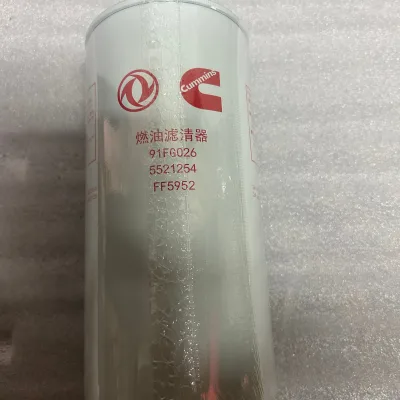


Comprehensive Sourcing Guide
Strategic Sourcing Guide for Dry Fuel Filters
Understanding Product Specifications and Technical Variability
When initiating a procurement strategy for dry fuel filters, buyers must first navigate a landscape defined by significant technical diversity. The term "Dry Fuel Filter" encompasses a broad spectrum of filtration technologies, each tailored to specific mechanical principles and application environments. Based on observed market data, the core mechanical principles driving these products vary between adsorption and pressure filtration. Adsorption-based units often rely on specific material properties to capture contaminants, while pressure filtration models utilize mechanical force to separate solids and liquids from the fuel stream.
The physical construction of these filters is equally varied. Observed product attributes indicate a prevalence of fixed structures, though cartridge filter designs are also available in the market. The body material is predominantly steel, often paired with filter paper or paper cores to achieve the necessary filtration grade. In some specialized configurations, the filtration grade is identified as HEPA, suggesting a capability to capture extremely fine particulates, which is critical for high-precision fuel systems. The classification of these items ranges from general oil filters to specific cabin filters, air filters, and fuel filters, indicating that a single SKU may serve multiple separation functions, including solid-liquid separation, oil impurity removal, and oil-water separation.
Buyers should be aware that the "dry" designation often refers to the filtration pattern or the state of the medium during operation, distinct from wet or oil-immersed systems. The application scope is broad, covering liquid and air applications, with a specific focus on oil and gas separation. The performance characteristics listed in the market range from "automatic" operation to "sophisticated filters," implying that some units are designed for high-end, automated industrial processes while others serve more basic separation needs. Understanding these distinctions is vital before requesting quotes, as a mismatch between the required mechanical principle and the supplier's offering can lead to system failure.
Compliance, Certification, and Quality Standards
Navigating the regulatory and quality landscape is a critical step in sourcing dry fuel filters. The market data indicates that while some suppliers offer products certified under IATF 16949 and ISO 9001, these certifications are not universal across all listed items. IATF 16949 is particularly significant for automotive applications, ensuring that the manufacturing process meets the rigorous quality management standards of the automotive industry. ISO 9001 provides a baseline for quality assurance systems. However, buyers must verify the specific validity and scope of these certificates for the exact model being procured, as the presence of a certification label does not guarantee that every unit in a batch adheres to the same standard.
The filtration accuracy is another critical compliance metric. Some observed products claim a filtration accuracy of 99.9%, a figure that should be treated as a specific observation rather than a universal standard for all dry fuel filters. Buyers must request test reports or third-party verification to confirm this accuracy for their specific application, as the required filtration grade can vary drastically depending on the fuel type and engine sensitivity. Furthermore, while CE certification is mentioned in background contexts, it should not be assumed as a standard feature without explicit confirmation from the supplier.
Quality claims such as "OEM Quality" are common in the marketplace. This designation suggests that the product meets the original equipment manufacturer's specifications, but it is an attribute that requires validation. Buyers should inquire about the specific OEM standards the product aligns with and whether the supplier has a history of supplying to recognized brands. The "Standard Box and Export Carton Packing" or "Rdc Carton" options indicate that packaging standards vary, which can impact the protection of the filter during international transit. Ensuring that the packaging meets the requirements for ocean freight is essential to prevent damage before the product reaches the facility.
Cost Drivers and Pricing Structures
The pricing structure for dry fuel filters is influenced by a complex array of factors, resulting in a wide observed price range from 1 to 9000 USD. This variance is not merely a reflection of brand prestige but is driven by the technical specifications, material costs, and the level of customization required. The base cost is heavily influenced by the material composition; units constructed with steel bodies and specialized filter paper cores will generally command a higher price than those with simpler constructions. Additionally, the inclusion of advanced features, such as automatic performance capabilities or sophisticated filtration mechanisms, acts as a significant cost driver.
Customization is a major factor in the final price. The market data confirms that customization is available, allowing buyers to tailor the product to specific needs. However, this flexibility comes with a premium. Products with "By The Customer Needs" standards or those requiring specific packing configurations like "According to Customer's Requirement" often incur higher costs due to the non-standardized production processes involved. The minimum order quantity (MOQ) also plays a pivotal role in cost efficiency. While some suppliers offer an MOQ of 1, allowing for single-item purchases, others require a minimum of 1000 pieces. Buying in larger volumes typically reduces the unit cost, but it requires a higher upfront capital investment and storage capacity.
Payment terms and Incoterms further influence the total cost of ownership. Suppliers often offer a range of payment methods, including T/T (Telegraphic Transfer) or L/C (Letter of Credit), and pricing is available under various Incoterms such as EXW, FOB, CFR, CNF, and CIF. The choice of Incoterm determines who bears the cost and risk of shipping. For instance, an EXW (Ex Works) price might appear lower but excludes all transportation and insurance costs, whereas a CIF (Cost, Insurance, and Freight) price includes these elements up to the destination port. Buyers must calculate the total landed cost, including duties and inland freight, rather than focusing solely on the unit price listed on the product page.
Typical Applications and Operational Environments
Dry fuel filters are deployed across a diverse range of industrial and mechanical applications, driven by the specific needs of the fluid or gas being processed. The primary application observed is the separation of oil and water, a critical process in maintaining the integrity of fuel systems and preventing corrosion or engine damage. These filters are also utilized for solid-liquid separation, removing particulate matter that could clog injectors or damage pumps. The versatility of the product is highlighted by its classification as an oil filter, air filter, and cabin filter, suggesting that the same filtration technology can be adapted for different media.
The mechanical principle of the filter dictates its suitability for specific environments. Pressure filtration units are ideal for applications requiring the removal of fine particulates under high pressure, making them suitable for heavy-duty machinery and automotive fuel systems. Conversely, adsorption-based filters may be preferred in scenarios where chemical contaminants or specific gases need to be neutralized. The "dry" pattern indicates that the filter operates without a continuous liquid bath, which is advantageous in environments where moisture accumulation is a concern or where the filter media must remain dry to function correctly.
In terms of the applicable object, these filters are designed primarily for oil, but their utility extends to air and gas separation. This makes them essential in industries such as automotive manufacturing, heavy equipment operation, and chemical processing. The structure of the filter, whether fixed or cartridge-based, also influences its application. Fixed structures are often used in permanent installations where space is limited and the filter is designed for long-term service, while cartridge filters offer modularity and ease of replacement in systems that require frequent maintenance. Buyers must match the filter's application profile with their operational requirements to ensure optimal performance and longevity.
Supplier Evaluation and Service Capabilities
Evaluating potential suppliers requires a thorough assessment of their service capabilities, production flexibility, and logistical reliability. The market data indicates that many suppliers offer OEM (Original Equipment Manufacturer) and ODM (Original Design Manufacturer) services, allowing buyers to brand the product or customize its design. This level of service is crucial for companies looking to integrate the filters into their own product lines or to meet specific regulatory requirements. However, the availability of these services should be verified on a case-by-case basis, as not all suppliers may offer the same level of customization.
The production origin is another key factor in supplier evaluation. The majority of the observed products originate from China, with specific mentions of Henan as a place of origin. This regional concentration can offer benefits in terms of supply chain efficiency and cost competitiveness, but it also necessitates a careful review of the supplier's logistics capabilities. The delivery time is a critical metric, with observed ranges spanning from 30 days to 45 days after receiving the deposit. Buyers must account for these lead times in their production planning and ensure that the supplier has a track record of meeting these deadlines consistently.
Quality control during the production process is equally important. Some suppliers offer video outgoing-inspection services, while others do not. The absence of this service does not necessarily indicate poor quality, but it does mean that buyers must rely on other methods of verification, such as third-party inspection reports or sample testing. The warranty status is also a factor; while some products are listed as having no warranty, others may offer coverage depending on the specific agreement. Buyers should clarify the warranty terms and the process for handling defective units before finalizing a contract.
Quality Control and Long-Term Procurement Considerations
Implementing a robust quality control (QC) strategy is essential for mitigating risks associated with sourcing dry fuel filters. Given the variability in product attributes, such as filtration accuracy and material composition, buyers should establish clear acceptance criteria before production begins. This includes defining the required filtration grade, mechanical principles, and structural integrity. Regular sampling and testing should be conducted to ensure that the delivered products meet these specifications. The use of standardized testing protocols, aligned with the supplier's claimed certifications like IATF 16949, can help validate the quality of the filters.
Long-term procurement considerations extend beyond the initial purchase to include supply chain resilience and total cost of ownership. Buyers should assess the supplier's ability to scale production in response to demand fluctuations. The observed MOQ of 1000 pieces for some suppliers may limit flexibility for smaller orders, so buyers should negotiate terms that allow for variable order sizes without compromising unit pricing. Additionally, the availability of spare parts and the ease of replacement are critical for maintaining operational continuity. Filters with a fixed structure may require different maintenance procedures compared to cartridge filters, and this should be factored into the long-term operational plan.
The payment terms and logistics also play a role in long-term procurement success. Suppliers offering flexible payment methods like T/T or L/C can help manage cash flow, while those providing various Incoterms allow buyers to optimize shipping costs. The loading port, such as Tianjing Port, China, should be considered in the context of the buyer's location and shipping preferences. Establishing a strong relationship with a reliable supplier can lead to better pricing, priority production slots, and improved support for technical issues. Ultimately, the goal is to build a supply chain that is both cost-effective and resilient, ensuring a steady supply of high-quality dry fuel filters for ongoing operations.
Comparative Analysis of Filter Attributes
To facilitate informed decision-making, the following table summarizes the key attributes observed in the market for dry fuel filters. This comparison highlights the variability in specifications, materials, and service options available to buyers.
| Attribute Category | Observed Options | Key Considerations for Buyers |
|---|---|---|
| Material | Steel, Filter Paper, Paper Core | Verify compatibility with fuel type; steel offers durability, paper offers filtration efficiency. |
| Mechanical Principle | Adsorption, Pressure Filtration | Match principle to application; pressure filtration for high particulate loads, adsorption for chemical removal. |
| Structure | Fixed, Cartridge Filter | Fixed for permanent installs; cartridge for modularity and ease of replacement. |
| Filtration Accuracy | 99.9% (Specific models) | Request test data; accuracy requirements vary by application (e.g., automotive vs. industrial). |
| Certification | IATF 16949, ISO 9001 | Verify validity; crucial for automotive and high-reliability industries. |
| Customization | Available (By Customer Needs) | Confirm scope of customization; may impact lead time and cost. |
| Delivery Time | 30 Days, 30-45 Days | Plan production schedules accordingly; verify deposit requirements. |
| MOQ | 1, 1000 PCS | Assess inventory needs; higher MOQs may reduce unit cost but increase capital tie-up. |
| Origin | China (Henan) | Consider logistics and lead times; verify supplier's export experience. |
| Warranty | Unavailable (Some models) | Clarify warranty terms; some suppliers may offer limited coverage upon negotiation. |
This table serves as a reference point for buyers to compare different offerings and identify the specific attributes that align with their procurement requirements. By systematically evaluating these factors, buyers can make data-driven decisions that optimize performance, cost, and reliability in their fuel filtration systems.
FAQs
What certifications do dry fuel filters typically have?
Some products carry IATF 16949 and ISO 9001 certifications, but these are not universal across all listed items. Buyers must verify the specific validity and scope for the exact model being procured to ensure compliance with automotive or industrial standards.
How long is the delivery time for these filters?
Delivery times typically range from 30 to 45 days after receiving the deposit, depending on the order quantity. Some suppliers specify a fixed 30-day window, while others indicate a variable period based on production capacity and order size.
Can I customize the packaging for dry fuel filters?
Yes, customization is available, with options ranging from standard export cartons to specific customer requirements. The packaging may include standard boxes, Rdc cartons, or custom configurations designed to meet specific shipping and protection needs.
What is the minimum order quantity for these filters?
The minimum order quantity varies significantly, ranging from a single item to 1000 pieces depending on the supplier. Buyers should check specific listings as some vendors allow single-item purchases while others enforce higher volume thresholds.
Which materials are used to construct dry fuel filters?
Common materials include steel bodies paired with filter paper or paper cores to achieve the necessary filtration grade. Some specialized configurations may also utilize HEPA filtration grades for capturing extremely fine particulates in high-precision systems.
What mechanical principles do these filters utilize?
The filters operate on different principles, primarily adsorption or pressure filtration, depending on the specific model. Adsorption units capture contaminants through material properties, while pressure filtration models use mechanical force to separate solids and liquids from the fuel stream.
Where are these dry fuel filters manufactured?
The majority of observed products originate from China, with specific mentions of Henan as a place of origin. This regional concentration offers supply chain efficiency but requires careful review of the supplier's logistics capabilities for international shipping.