Source Dual Fuel Iridium Spark Plug for Cars, Engines, Generators
Compare 30 listings for the Dual Fuel Iridium Spark Plug suitable for cars, engines, and generators. Buyers can evaluate specifications, certifications, and pricing from verified manufacturers in China.
Key considerations
Products List


Double Iridium Spark Plugs, High Quality and Stable, Customized Packaging
$0.50 - $1.30
MOQ: 2000 Pieces


Premium Pointed Iridium Spark Plug for Optimized Fuel Combustion and Power
$0.50 - $1.30
MOQ: 2000 Pieces


Premium Iridium Spark Plugs for Enhanced Engine Performance and Efficiency
$0.50 - $1.30
MOQ: 2000 Pieces
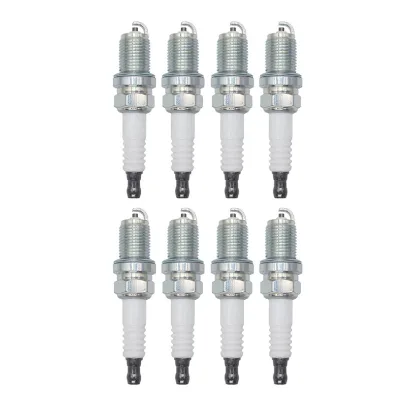

Iridium Spark Plug 90919-01247 Auto Parts Double Iridium Factory Supply
$0.75 - $0.80
MOQ: 1000 Pieces


Original Quality Double Iridium Spark Plug 12122158253 12122158252 Auto Parts
$0.88 - $1.76
MOQ: 5 Pieces


Comprehensive Sourcing Guide
Strategic Sourcing Guide for Dual Fuel Iridium Spark Plugs
Navigating the global market for dual fuel iridium spark plugs requires a disciplined approach that balances technical precision with rigorous supplier validation. The core keyword "Dual Fuel Iridium Spark Plug" points to a specialized component designed for engines capable of operating on multiple fuel types, such as gasoline and compressed natural gas (CNG), or diesel and biogas. These components are critical for maintaining ignition stability across varying combustion conditions. Buyers must understand that the term "dual fuel" in this context often refers to the engine's operational capability rather than a single universal spark plug design, necessitating careful verification of compatibility. The sourcing landscape is populated by manufacturers primarily located in industrial hubs like Shenzhen, Guangdong, and Xingtai, Hebei, China, offering a wide range of customization options and varying production capacities.
Technical Specifications and Material Composition
The performance of a spark plug in a dual fuel environment is heavily dependent on its material composition and physical specifications. Iridium is a premium material chosen for its high melting point and exceptional durability, allowing for thinner center electrodes that concentrate the spark energy. This is particularly vital for dual fuel engines, which may experience different combustion pressures and temperatures compared to single-fuel systems. The supplied data indicates that available materials include Iridium, Platinum, Double Iridium, and Iridium Platinum, alongside standard metals like Copper, Steel, and Stainless Steel. For dual fuel applications, the presence of Iridium or Platinum is a primary indicator of a high-performance unit capable of withstanding the thermal stress of alternative fuels.
Physical dimensions are equally critical. The standard specifications observed in the market include thread sizes such as S16M14x19, S16M14x26.5, and S14*M12x26.5. These variations correspond to specific engine block requirements. A mismatch in thread pitch or reach can lead to catastrophic engine failure. Furthermore, the electrode configuration must align with the engine's cylinder count, which is listed as 1, 2, or 4 cylinders in the available product data. The "Type" of ignition system is also a key specification, with "Distributorless Ignition System" being a common configuration. Buyers must verify that the spark plug's heat range and gap are compatible with the specific dual fuel engine's tuning, as these parameters directly influence combustion efficiency and emissions.
Compliance and Certification Verification
In the B2B procurement of automotive components, certification is not merely a formality but a fundamental requirement for market access and liability protection. The supplied product facts reveal a robust array of certifications that buyers should expect to see on compliant products. These include CE, ROHS, CCC, FCC, and E/E-MARK, which are essential for selling in various international markets. Additionally, management certifications such as ISO, IATF 16949, and BSCI indicate a supplier's commitment to quality management systems and ethical labor practices. The IATF 16949 standard is particularly significant as it is the global technical standard for automotive quality management.
Specific product certifications like TSISO9001 are noted for components such as spark plugs, suggesting a traceable quality assurance process. Buyers must request documentation proving that the specific batch of iridium spark plugs holds these certifications. It is important to distinguish between general company certifications and product-specific approvals. For instance, while a supplier may hold an ISO 9001 certificate, the spark plugs themselves must meet the specific E/E-MARK requirements for vehicle safety. The presence of a "Machinery test report" provided by the supplier is another strong indicator of due diligence, offering empirical evidence of the product's performance under controlled conditions.
Cost Drivers and Pricing Dynamics
Understanding the cost structure of dual fuel iridium spark plugs is essential for budgeting and negotiation. The observed price range in the market spans from $0.09 to $60.00 USD. This wide variance is driven by several factors, including the complexity of the iridium alloy, the precision of the manufacturing process, and the volume of the order. The lower end of the spectrum likely represents standard production runs or bulk orders of basic models, while the higher end may reflect specialized dual-fuel configurations, custom branding, or smaller batch sizes with higher overheads.
The Minimum Order Quantity (MOQ) is a significant cost driver. The data shows an MOQ range from 1 to 5000 units, with specific listings indicating MOQs of 3000 PCS and 2000 PCS. High MOQs can reduce the unit cost significantly but increase the initial capital outlay and inventory risk for the buyer. Conversely, suppliers accepting small orders may charge a premium per unit to cover setup and handling costs. Buyers should also consider the "Customization" factor; while customization is available for OEM, ODM, and OBM support, it often incurs additional tooling fees and higher per-unit costs. Packaging, listed as "Carton," is a standard factor, but specialized packaging for export or specific retail requirements can also influence the final landed cost.
Typical Applications and Engine Compatibility
Dual fuel iridium spark plugs are engineered for a diverse range of applications, from light-duty vehicles to heavy industrial machinery. The "Fuel Type" attribute lists a comprehensive array of options including Battery, CNG, Diesel, Dual Fuel, Electric, Gasoline, LPG, and Bioethanol. This confirms that the spark plugs are designed to handle the unique ignition requirements of engines running on alternative fuels. The "Suitable for Car Brands" data explicitly mentions Nissan and Volkswagen, indicating that these components are compatible with major automotive manufacturers' fleets.
The "Purpose" of these spark plugs is categorized as "For replace/repair," "For retrofit/upgrade," and "For manufacturing." This versatility makes them suitable for both the aftermarket repair sector and original equipment manufacturing (OEM) lines. In retrofit scenarios, where an existing gasoline engine is converted to run on CNG or LPG, the spark plug must be upgraded to an iridium variant to ensure reliable ignition under the new fuel's combustion characteristics. The "Engine" size attributes, ranging from 1.4 to 3.5 liters, further narrow down the specific vehicle classes these plugs serve. Buyers must cross-reference the spark plug's model number, such as FCX80WYPB34-1 or EIX-BKR5, with the vehicle's service manual to ensure exact fitment.
Supplier Evaluation and Operational Capabilities
Selecting the right supplier involves more than just comparing price lists; it requires a deep dive into their operational capabilities and reliability. The "Condition" of the products is consistently listed as "New," which is a baseline expectation. However, buyers should verify the supplier's production capacity and lead times. The "Delivery Time" is noted as "About 3-10 Working Days," which suggests a relatively agile supply chain, though this can vary based on order volume and customization needs.
The "Origin" of the products is primarily China, with specific locations in Shenzhen, Guangdong, and Xingtai, Hebei. These regions are known for their automotive parts manufacturing clusters. A supplier's location can impact shipping costs and lead times, especially for buyers in different time zones or regions. The "Small Orders: Accepted" attribute indicates flexibility, which is beneficial for buyers testing the market or managing just-in-time inventory. However, the presence of high MOQs (2000-3000 PCS) for certain models suggests that volume is a key factor in securing the best terms. Buyers should also assess the supplier's "Customized support" capabilities, ensuring they can handle OEM or ODM requests if branding or specific engineering changes are required.
Quality Control and Long-Term Procurement Strategy
Quality control is paramount when sourcing spark plugs, as a single failure can lead to engine misfires or damage. The "Quality" attribute is described as "100% Professional Test," implying a rigorous in-house testing protocol. Buyers should request detailed test reports, including the "Machinery test report" mentioned in the data, to verify that the spark plugs have undergone stress testing for heat resistance, waterproofing, and durability. The "Feature" list highlights attributes like "High temperature," "Heat resistant," "Waterproof," and "Eco-friendly," which are critical for long-term reliability in dual fuel applications.
For long-term procurement, buyers should establish a relationship with suppliers who offer a "Warranty" ranging from 3 months to 3 years. A longer warranty period often reflects the supplier's confidence in their product's longevity. The "Standard" and "prod_standard" attributes, such as CE and S16*M14x19, serve as benchmarks for consistency. Buyers should ensure that the supplier adheres to these standards consistently across all batches. Finally, the "Output Type" of AC Three Phase suggests that the manufacturing process involves sophisticated machinery, which can be a proxy for the supplier's overall technological maturity. By focusing on these quality and operational metrics, buyers can build a resilient supply chain that ensures consistent performance for their dual fuel engine applications.
FAQs
What certifications do dual fuel iridium spark plugs typically have?
These spark plugs commonly carry CE, ROHS, CCC, FCC, and E/E-MARK certifications. Suppliers also provide management certifications like ISO and IATF 16949 to ensure quality standards are met for automotive applications.
Which materials are used for dual fuel iridium spark plugs?
Premium models utilize Iridium, Platinum, Double Iridium, or Iridium Platinum for durability. Standard options may include Copper, Steel, Stainless Steel, or Ceramic to meet varying performance and cost requirements.
Can I find spark plugs with specific thread specifications like S16?
Yes, available specifications include thread sizes such as S16*M14x19 and S16*M14x26.5. Buyers must verify these dimensions against their engine block to ensure proper fitment and prevent mechanical failure.
What is the typical delivery time for these spark plugs?
The standard delivery time is about 3 to 10 working days. This timeline may vary depending on order volume, customization needs, and the specific supplier location within China.
Which car brands are compatible with these dual fuel spark plugs?
Products are explicitly suitable for major brands like Nissan and Volkswagen. Compatibility also extends to engines with 1, 2, or 4 cylinders running on various fuel types including CNG and Diesel.
How does the minimum order quantity affect pricing?
MOQs range from 1 to 5000 units, with specific models requiring 2000 or 3000 pieces. Higher volumes generally reduce unit costs, while smaller orders may incur higher per-unit pricing due to setup fees.
Are customization options available for these spark plugs?
Customization is available for OEM, ODM, and OBM support. Buyers can request specific branding or engineering changes, though this may involve additional tooling fees and affect the final unit price.