Source Dual Lens 4K Dash Camera for Fleet, Ride-Sharing, and Personal Use
Explore 17 verified options for the Dual Lens 4K Dash Camera, comparing features like 4K resolution, wide viewing angles, and loop recording capabilities. Buyers can evaluate specifications from multiple manufacturers to find the right solution for fleet management, ride-sharing services, or personal vehicle protection.
Key considerations
Products List


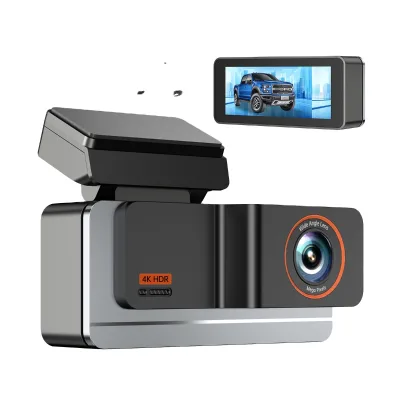
Comprehensive Sourcing Guide
Dual Lens 4K Dash Camera Sourcing Guide
Procuring dual lens 4K dash cameras requires distinguishing between generic data recorders and specialized units capable of simultaneous front and rear recording. The observed market includes models explicitly labeled as "Dual Lens Dash Cam" and "Loop Recording 4K Dash Cam," indicating a clear segment focused on comprehensive vehicle monitoring. Buyers must verify that the specific unit selected supports the required video resolution, such as the observed 4K+4K or 4K+2K configurations, to ensure the hardware meets fleet safety standards.
The functional scope extends beyond simple video capture to include critical safety features like over-speed warnings and fatigue driving alerts. These devices often integrate driving data recording and accident analysis capabilities, transforming raw footage into actionable intelligence for fleet management. When sourcing, it is essential to confirm that the selected model supports data communication and input, ensuring seamless integration with existing fleet management software or cloud-based analytics platforms.
Product Scope and Observed Listing Signals
The current market listings reveal a diverse range of product names, from "Dash Camera" to "Bulk 4K Dash Cam," suggesting varying levels of customization and packaging options. Buyers should note that while some units feature a 170° shooting angle, others are specified with 150° or 120° angles, directly impacting the field of view and coverage area. This variation necessitates a careful review of the shooting angle specifications to match the specific vehicle type and mounting requirements of the intended application.
Listing signals also indicate significant differences in sensor technology and processing power, with some models utilizing dual sensors like Gc4653 paired with Gc2083 or Sc2336. The presence of specific CPU models, such as the Eeasy SA230 or SA830, serves as a key indicator of the device's ability to handle high-resolution video processing without lag. Procurement teams must cross-reference these internal component lists with the advertised resolution to ensure the hardware can sustain the claimed 4K performance under real-world driving conditions.
Technical Specifications to Verify
Verification of the video resolution is paramount, as the market offers distinct configurations ranging from Full HD to complex 4K+1K or 4K+4K setups at 25fps. Buyers must confirm that the selected unit supports the specific codec requirements, such as Ts or H.264, to ensure compatibility with storage media and playback systems. The aperture value, observed at F1.8 in some listings, is another critical metric that influences low-light performance and overall image clarity during night driving scenarios.
Screen size and memory capacity are equally vital for immediate data review and long-term storage retention. While some models feature a 4.3-inch display, others are equipped with smaller 3.2-inch LCD screens, affecting the user's ability to review footage on the device itself. Additionally, the standard 32G SD card memory size observed in listings may be insufficient for high-bitrate 4K recording; buyers should verify if the device supports expandable storage or if the included memory is adequate for the intended loop recording duration.
Compliance and Safety Documentation
Safety documentation for dash cameras often centers on the device's ability to record accident data and provide warnings for driver fatigue or speeding. The observed functions include accident recording and analyzing, which implies a need for reliable G-sensor calibration and data integrity during impact events. Procurement teams should request evidence that the device's firmware correctly triggers and locks video files during sudden deceleration or collision to prevent data loss.
While specific certification standards are not universally listed in the provided facts, buyers must verify that the product meets general electronic safety standards for automotive use. The origin of the product is noted as China, and while the standard is listed as "Standard," this generic term requires clarification against international automotive safety regulations. Ensuring the device complies with local traffic laws regarding video recording and data privacy is a critical step before deploying these units in a commercial fleet.
Cost Drivers and Commercial Terms
The observed price range of 5 to 72 USD indicates a wide disparity in value, driven primarily by sensor quality, resolution capabilities, and processing power. Higher-priced units typically feature dual 4K recording capabilities and advanced CPUs like the Eeasy Nt96560, whereas lower-cost options may offer single-lens Full HD recording with basic functionality. Buyers must align their budget with the specific technical requirements, avoiding the trap of purchasing low-cost units that fail to deliver the necessary 4K clarity for accident evidence.
Minimum Order Quantity (MOQ) values observed between 2 and 100 units suggest flexibility for both small pilot programs and large fleet deployments. Customization is available for many models, which can influence the final unit cost and lead time depending on the extent of branding or firmware modifications required. Procurement strategies should account for these variable costs, negotiating bulk pricing tiers that reflect the specific model selection and the desired level of product customization.
Supplier Qualification and Quality Control
Quality control for dash cameras must focus on the consistency of the lens assembly and the durability of the internal components. The observed lens specifications, such as 2g4p construction, indicate a multi-element design that should be verified for optical clarity and resistance to vibration. Suppliers should provide test data demonstrating that the device maintains focus and image stability under the high-vibration conditions typical of heavy-duty truck or bus operations.
Supplier qualification should also include an assessment of their ability to provide consistent packaging and standard compliance. The listings mention both "Standard" and "Neutral Package" options, which can impact the unboxing experience and the protection of the device during transit. Buyers should verify that the supplier has a robust process for handling returns and replacements, particularly for units that may suffer from sensor failures or screen defects upon arrival.
Long-Term Procurement Checks
Long-term procurement success depends on the availability of firmware updates and the longevity of the storage media compatibility. As video codecs and resolution standards evolve, the device's CPU and software must be capable of receiving updates to maintain security and functionality. Buyers should establish a protocol for regularly checking the manufacturer's support channels to ensure the dash cameras remain compatible with evolving fleet management systems.
Monitoring the performance of the loop recording feature is essential for preventing data corruption and ensuring continuous operation. The observed 32G memory size may fill quickly with high-resolution footage, requiring frequent overwriting of older files. Procurement teams should implement a schedule to test the loop recording mechanism and verify that the device correctly manages storage space without losing critical incident data, ensuring the system remains reliable over years of continuous use.
FAQs
How does a Dual Lens 4K Dash Camera record front and rear views together?
It records simultaneously through a 2-way camera setup, capturing the road ahead and the interior or rear area on separate channels. Front channels can reach 4K resolution at 25fps, with paired rear channels at resolutions such as 2K or 4K depending on the model. Footage is stored on a 32G SD card and supports loop recording.
What shooting angles are available on listed dual lens 4K dash cameras?
Listed models offer wide-angle lenses ranging from 120 degrees to 170 degrees, so you can choose coverage that fits your vehicle. A 170-degree angle captures more of the roadside and intersections, while 120-degree options reduce edge distortion. Check the specific model specification before ordering, since the angle varies by product.
Can the dash cameras support customization for fleet or brand requirements?
Yes, customization is available for the dash cameras listed on this page. Buyers can discuss packaging options, including neutral packaging for the MXC-861 model, and configuration details before ordering. Because customization scope and minimum order quantities vary, confirm your exact requirements with the supplier during the inquiry stage.
What functions do the dual lens 4K dash cameras provide beyond recording?
Beyond driving data recording, supported functions include self-checking, identity recognition, over-speed warning, fatigue driving warning, accident recording and analyzing, display and print, data communication, data input, and video storing. Not every function applies to every model, so review each product's function list and confirm the features you need with the supplier.
Which display and connectivity features do these dash camera models include?
Models differ in screen and connectivity. Some units have a 4.3-inch display, while the MXC-861 uses a 3.2-inch LCD and supports WiFi for wireless access to footage. Video is encoded in TS or H.264 with an F1.8 aperture lens. Compare model specifications such as screen size and WiFi support before selecting.
How do the MXC-861, MXC-836, MXC-864, and MXC-862 models differ in resolution?
The MXC-861 records 4K plus 1K at 25fps with a Gc4653 plus Gc2083 sensor, while the MXC-836 records 4K plus 2K at 25fps with a Gc4653 plus Sc2336 sensor. The MXC-862 reaches 4K plus 4K at 25fps using an Eeasy Nt96560 CPU. All use Eeasy platform CPUs, so choose based on rear-channel resolution needs.
What are the typical order terms when sourcing these dash cameras in bulk?
Observed minimum order quantities on the page range from 2 to 100 units, so both sample orders and bulk purchases are possible. Prices span roughly 5 to 72 US dollars depending on the model and configuration. Packing is standard or neutral, and goods originate from China. Confirm current pricing and MOQ directly with each supplier.