Source Dual Lens 4K Dash Camera with GPS for fleet, rideshare, and personal use
Explore 30 options for a Dual Lens 4K Dash Camera with GPS, comparing features like night vision, parking monitoring, and app control across various models. Buyers can evaluate specifications including screen types, resolution, and connectivity to find suitable solutions.
Key considerations
Products List


Comprehensive Sourcing Guide
Strategic Sourcing Guide for Dual Lens 4K Dash Cameras with GPS
The global demand for advanced vehicle safety technology has elevated the Dual Lens 4K Dash Camera with GPS to a critical category for B2B procurement. These devices serve as essential data collection tools for fleet management, insurance risk assessment, and personal vehicle security. When sourcing these units, buyers must navigate a complex landscape of technical specifications, connectivity standards, and compliance requirements. The following guide outlines the critical factors for evaluating suppliers and products, ensuring that procurement decisions are grounded in verified data and industry best practices rather than marketing assertions.
Technical Architecture and Optical Performance
The core of a high-performance dash camera lies in its dual-lens configuration and resolution capabilities. In the current market, a "dual lens" system typically implies a front-facing camera paired with an interior or rear-facing unit, allowing for comprehensive coverage of the driving environment and cabin activity. The "4K" designation refers to the primary recording resolution, which offers significantly higher detail than standard 1080p or 2K units, crucial for identifying license plates and facial features in legal disputes.
Based on observed product attributes, the resolution spectrum for these devices often includes 4K combined with 1080p for the secondary lens. This configuration balances high-definition front recording with efficient storage usage for interior monitoring. The sensor technology is equally vital; units frequently utilize CMOS sensors to ensure low-light performance and accurate color reproduction. The viewing angle is a primary differentiator, with observed ranges spanning from 120 to 170 degrees. A wider angle, such as 135 or 140 degrees, reduces blind spots, though buyers must verify that the optical distortion at the edges does not compromise the clarity of critical data points.
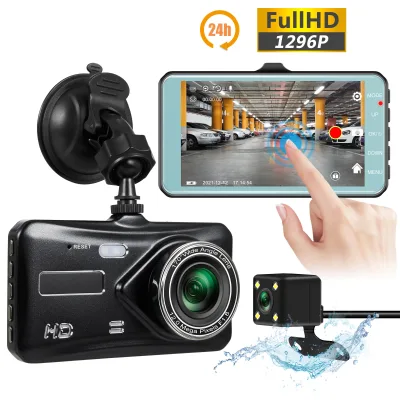
Connectivity is another pillar of the technical architecture. Modern units integrate Wi-Fi and GPS modules as standard features. The built-in GPS allows for the overlay of speed, location, and time data onto video footage, while Wi-Fi facilitates immediate file transfer to mobile devices via dedicated applications. Some advanced models also support 4G live streaming, enabling real-time fleet monitoring. The interface display, often a 3-inch IPS or LCD screen, provides immediate playback and settings adjustment, though the "Two Images" display mode allows for simultaneous viewing of front and rear feeds, which is essential for parking mode monitoring.
Connectivity, Smart Features, and Interface Capabilities
The integration of smart features transforms a simple recording device into an intelligent safety system. The functional scope of these cameras extends beyond basic recording to include loop recording, G-sensor activation, and parking mode monitoring. The G-sensor is a critical component that detects sudden impacts or hard braking, automatically locking the relevant video segment to prevent it from being overwritten by the loop recording function. This feature is indispensable for accident reconstruction.
Parking mode support allows the camera to remain active while the vehicle is off, utilizing motion detection or impact sensors to trigger recording. This capability is particularly valuable for commercial fleets parked in high-risk areas. Furthermore, the inclusion of App control enables users to manage settings, view live feeds, and download footage remotely. Advanced models may incorporate Voice interaction, Bluetooth connectivity, and even Driver Monitoring Systems (DMS) or Advanced Driver Assistance Systems (ADAS) to alert drivers of lane departures or collisions.
The display interface plays a significant role in user experience. While some units feature a 3-inch IPS screen for superior viewing angles and color accuracy, others utilize standard LCD matrices. The "Two Images" interface capability is a specific observation in the market, allowing for split-screen monitoring. Buyers should verify that the screen type supports the intended viewing conditions, as IPS panels generally offer better performance in direct sunlight compared to standard LCDs. The interface must also support the specific video quality formats, such as 4K+1080P or 2K+1080P, ensuring that the hardware can process and display the high-resolution data without lag.
Compliance, Certification, and Regulatory Standards
Navigating the regulatory landscape is a non-negotiable aspect of B2B procurement. Products in this category must adhere to international safety and electromagnetic compatibility standards. The CE certification is a prominent requirement for products entering the European market, indicating compliance with health, safety, and environmental protection standards. While CE is a common observation in the product data, buyers must treat this as a verification point rather than an automatic guarantee. It is essential to request valid certification documentation from the supplier to ensure the specific batch of goods meets current regulatory requirements.
Beyond CE, the origin of the product is a key factor in supply chain transparency. Most observed units originate from China, a major hub for electronics manufacturing. Buyers should verify the specific manufacturing location and ensure that the supplier can provide traceability for the components used, particularly the CMOS sensors and memory cards. The use of OEM branding is also common, meaning the hardware is manufactured by a third party and branded by the purchaser. This requires rigorous quality control to ensure that the OEM product meets the buyer's specific performance criteria.
Cost Drivers and Procurement Economics
The pricing structure for dual lens 4K dash cameras is influenced by several variables, including resolution, sensor quality, and the complexity of the smart features. The observed price range in the market spans from $5 to $425, reflecting a wide spectrum of product tiers. Lower-cost units may offer basic 1080p recording with limited features, while premium models command higher prices due to 4K resolution, advanced ADAS, and robust build quality.
Minimum Order Quantity (MOQ) is another critical economic factor. The observed MOQ range varies from 1 to 200 units, offering flexibility for different procurement strategies. Small orders are accepted by many suppliers, facilitating market testing and pilot programs. However, larger volume orders often unlock better pricing tiers. Buyers should also consider the cost of ancillary components, such as high-endurance TF cards required for continuous loop recording, and the potential costs associated with firmware updates or cloud storage subscriptions for 4G-enabled models.
Supplier Evaluation and Quality Assurance
Selecting the right supplier requires a multi-faceted evaluation process. Buyers should prioritize suppliers who demonstrate transparency regarding their model numbers and technical specifications. The market features various model identifiers, such as X20, X30, P85, G3, F9, V6, and K08, each with distinct feature sets. A reliable supplier will provide detailed datasheets that clearly map these model numbers to their specific capabilities, including resolution, angle, and connectivity options.
Quality control measures are paramount to ensure product reliability. The presence of features like file repair, regular formatting, and time-lapse recording indicates a sophisticated firmware architecture. Buyers should request sample units to test the durability of the G-sensor, the accuracy of the GPS tracking, and the stability of the Wi-Fi connection. Additionally, the physical build quality, including the placement of the device on the windshield and the durability of the screen, must be assessed. The "Black" color is a standard observation, but the material quality and heat resistance of the casing are critical for long-term performance in varying climates.
Typical Applications and Use Cases
Dual lens 4K dash cameras with GPS are versatile tools applicable across various sectors. In the personal vehicle market, they provide peace of mind against insurance fraud and road rage incidents. For commercial fleets, these devices are essential for driver behavior monitoring, route verification, and liability protection. The dual-lens setup is particularly useful for ride-sharing services and delivery companies, where both the road ahead and the interior of the vehicle need to be monitored.
The parking mode and motion detection features make these cameras ideal for vehicles that are stationary for extended periods. The ability to record 4K video ensures that high-quality evidence is available for legal proceedings. Furthermore, the integration of GPS and speed data allows fleet managers to analyze driving patterns and optimize routes. The "Two Images" display capability is particularly valuable for rear-view monitoring in logistics, ensuring that cargo is secure and the vehicle is operated safely.
Long-Term Procurement Considerations
Sourcing these devices is not a one-time transaction but a long-term partnership. Buyers must consider the lifecycle of the product, including firmware support and component availability. The rapid evolution of technology means that older models may become obsolete quickly. Therefore, selecting a supplier who offers regular firmware updates and supports the latest connectivity standards, such as 4G live streaming and Android 10 integration, is crucial.
The environmental impact and disposal of electronic waste should also be factored into the procurement strategy. Ensuring that the supplier adheres to environmental standards and provides recycling options for end-of-life devices can enhance the buyer's corporate social responsibility profile. Finally, the scalability of the solution is important; the ability to manage hundreds or thousands of units through a centralized app or cloud platform is a key differentiator for large-scale deployments.
Comparative Analysis of Key Specifications
To assist in the decision-making process, the following table summarizes the key technical attributes observed in the market for dual lens 4K dash cameras with GPS. This comparison highlights the variability in specifications and the importance of matching product features to specific procurement needs.
| Feature Category | Observed Attribute Range | Critical Verification Point |
|---|---|---|
| Resolution | 4K, 1080p, 2K | Verify actual sensor output vs. marketing claims |
| Viewing Angle | 120° - 170° | Check for edge distortion in wide-angle shots |
| Connectivity | Wi-Fi, GPS, 4G, Bluetooth | Test connection stability in real-world conditions |
| Screen Type | IPS, LCD, 3-inch | Assess visibility in direct sunlight |
| Functionality | Loop, G-sensor, Parking, DMS | Confirm G-sensor sensitivity and parking mode logic |
| Certification | CE | Request valid certificate documentation |
| Origin | China | Verify supply chain transparency and traceability |
Conclusion
Procuring dual lens 4K dash cameras with GPS requires a meticulous approach that balances technical performance, regulatory compliance, and economic efficiency. By focusing on verified specifications such as resolution, viewing angle, and connectivity, and by rigorously evaluating supplier credentials and quality control measures, buyers can secure reliable products that meet their operational needs. The market offers a diverse range of options, from basic recording units to advanced smart systems with ADAS capabilities. Success in this category depends on the buyer's ability to navigate the nuances of the supply chain, ensuring that the selected products deliver the promised performance and safety benefits over the long term.
FAQs
What resolutions do dual lens 4k dash cameras support?
These devices typically support 4K combined with 1080p or 2K resolutions for front and interior recording. The specific output depends on the model, with some units offering 4K+1080P while others provide 2K+1080P configurations.
Which connectivity features are standard in these cameras?
Built-in Wi-Fi and GPS modules are standard features found across most models in this category. Advanced units may also include 4G live streaming, Bluetooth, and app control for remote monitoring and file transfer.
Can these cameras record in parking mode?
Yes, parking monitoring is supported by many units to capture activity while the vehicle is off. This function often utilizes motion detection or G-sensor triggers to activate recording and protect footage from being overwritten.
What screen types are available for display?
The market offers both IPS and LCD screen types, with 3-inch displays being a common specification. IPS screens generally provide better viewing angles and color accuracy compared to standard LCD matrices for split-screen viewing.
How wide is the viewing angle for these devices?
Viewing angles typically range from 120 to 170 degrees, with specific models offering 120, 130, 135, or 140 degrees. A wider angle helps reduce blind spots but requires verification for edge distortion in the footage.
What certifications are commonly observed for these products?
CE certification is a prominent requirement for products entering the European market and is frequently observed in product data. Buyers should verify valid documentation for specific batches to ensure compliance with safety standards.
Which model numbers are available in the current supply?
Common model identifiers include X20, X30, P85, G3, F9, V6, and K08, each with distinct feature sets. Reliable suppliers provide datasheets mapping these numbers to specific capabilities like resolution, angle, and connectivity options.