Source Duplex Paper Board Making Machine for Kraft, Liner, Corrugated
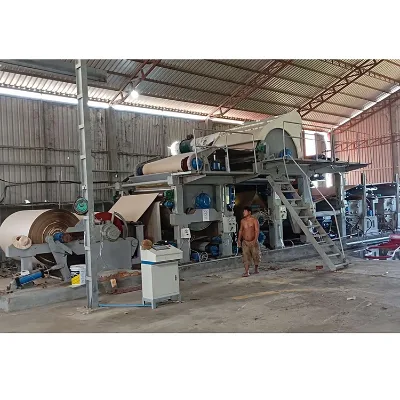
Find 18 duplex paper board making machines from verified Chinese manufacturers. Buyers can compare specifications including output capacity, raw material compatibility, and automation levels for producing coated duplex board and kraft paper.
Key considerations
Products List


Good Price Duplex Board Machine Duplex Grey Board Paper Making Machine
$80000.00 - $5000000.00
MOQ: 1 Pieces

Coated Duplex Board with Grey Back Paperboard Paper Making Machine
$80000.00 - $7000000.00
MOQ: 1 Pieces


Low Price 1 Year Production Line Duplex Board Corrugated Paper Making Machine
$200000.00 - $5000000.00
MOQ: 1 Sets

Custom Made Duplex Board Paper Production Line/Paper Making Machine
$50000.00 - $80000.00
MOQ: 1 Pieces


Comprehensive Sourcing Guide
Strategic Sourcing Guide for Duplex Paper Board Making Machines
Procuring industrial machinery for the production of duplex paper board requires a rigorous approach that balances technical capability with supply chain reliability. The market for these machines is characterized by significant variation in raw material compatibility, output capacity, and automation levels. Buyers must navigate a landscape where specifications often overlap, and the distinction between different machine types can be subtle yet critical for operational success. This guide outlines the essential factors for evaluating duplex paper board making machines, focusing on verified technical attributes, compliance frameworks, and procurement strategies derived from current market observations.
Technical Specifications and Production Capabilities
The core of any Duplex Paper Board Making Machine selection lies in its technical specifications, which dictate the quality of the final product and the efficiency of the production line. A primary observation in the current market is the diversity in paper thickness capabilities. Machines are frequently categorized by their ability to handle thick paper, thin paper, or normal specification paper. Buyers must verify the specific thickness range their target product requires, as a machine optimized for thick kraft paper may struggle with the precision needed for thinner coated duplex boards.
Output capacity is another critical metric that varies significantly across available units. Market data indicates a wide range of daily production capabilities, from 10 tons per day to as high as 60 tons per day, with some units specifically rated at 50 tons per day. The selection of capacity must align with the buyer's projected demand and the scale of their existing operations. Furthermore, the design and working speeds of these machines are vital for throughput. Specifications show design speeds reaching up to 100 meters per minute, with working speeds typically ranging between 60 and 100 meters per minute. Understanding the difference between these two metrics is essential; the design speed represents the theoretical maximum, while the working speed reflects the sustainable operational pace under normal conditions.
The raw material input is a defining characteristic of these machines. While some units are designed to process virgin materials like white shavings and wood pulp, others are specifically engineered for recycled content. Common inputs observed include waste paper, waste cartons, newspaper, and used boxes. The machine's ability to handle a mix of recycled paper, wood pulp, and carton paper determines its versatility. Additionally, the paper weight specifications are crucial for product definition. Buyers should look for machines capable of producing paper weights ranging from 60-90 g/m² up to 110-240 g/m², depending on the specific application of the duplex board.
Automation and Operational Control
Modern duplex paper board making machines are predominantly automatic, a feature that significantly reduces labor costs and enhances consistency. The automation level is a key differentiator, with most high-capacity units featuring advanced control systems. A notable technical attribute is the drive system, which often utilizes AC inverter speed control and section drive mechanisms. This technology allows for precise speed adjustments and smooth operation, ensuring that the paper web maintains uniform tension throughout the manufacturing process.
The sheet former type is another critical component of the machine's architecture. The cylinder mould is a standard configuration observed in these units, essential for forming the paper web with the desired texture and density. The customization of the machine is also a vital consideration. Many suppliers offer customized solutions, including factory layouts that depend entirely on customer needs. This flexibility allows buyers to integrate the machine into existing facilities without major structural modifications. Furthermore, the boiler system choice offers operational flexibility, with options for gas, coal, or diesel boilers, allowing buyers to select the fuel source that best fits their local infrastructure and cost structure.
Compliance, Certification, and Standards
Navigating the compliance landscape is essential for international procurement. While specific certification statuses can vary by supplier, the market frequently references ISO 9001 as a standard for quality management systems. Buyers should verify if a specific machine or supplier holds this certification, as it indicates a commitment to consistent quality control processes. Other standards observed include the China light industry standard and general ISO standards for product specifications.
It is important to distinguish between product certifications and general company certifications. Some listings mention CE certification, which is a common requirement for machinery sold within certain international markets, particularly Europe. However, buyers must treat these claims as observations to be verified rather than guaranteed attributes for every unit. Similarly, while FSC (Forest Stewardship Council) is often discussed in the context of paper sourcing, its direct application to the machinery itself is less common and should be scrutinized. Buyers should request official documentation for any claimed certifications rather than relying on marketing descriptions. The product origin is also a factor in compliance, with many units originating from Qinyang City in Henan Province, China, or other regions within China. Understanding the regulatory environment of the country of origin can help anticipate export documentation requirements.
Cost Drivers and Economic Considerations
The pricing structure for duplex paper board making machines is complex and influenced by multiple factors. Observed price ranges in the market are substantial, spanning from 50,000 USD to 7,000,000 USD. This vast range reflects differences in capacity, automation levels, raw material versatility, and the extent of customization. High-capacity machines capable of producing 60 tons per day with advanced automation will naturally command a higher price point compared to smaller units with a 10-ton daily capacity.
The minimum order quantity (MOQ) is another economic factor to consider. In the current market, many suppliers list an MOQ of 1, indicating that these machines are often treated as individual capital investments rather than bulk commodity purchases. This flexibility allows buyers to acquire a single unit tailored to their specific needs without the pressure of purchasing multiple machines. However, the total cost of ownership extends beyond the initial purchase price. Buyers must factor in the cost of the boiler system, which can be gas, coal, or diesel, as this impacts long-term operational expenses. Additionally, the cost of technical training and installation services should be included in the budget. Many suppliers offer support for technical training and send engineers to install the machine, which can be a significant value-add but may also carry associated costs.
Typical Applications and Product Versatility
Duplex paper board making machines are designed for a wide array of applications, making them versatile assets for various industries. The primary output fields include the production of virgin craft paper and kraft bag paper. These machines are also capable of producing coated duplex board, which is essential for packaging applications requiring a smooth, printable surface. The ability to produce kraft paper, liner paper, and corrugated paper further expands the utility of these machines.
The suitability of the machine for different paper types is a key determinant of its market value. Machines are often marketed as suitable for paper, wood, and recycled materials, indicating a broad processing capability. This versatility allows manufacturers to pivot their production based on market demand, switching between different grades of paper without significant downtime or equipment changes. The output paper types, such as virgin kraft paper and corrugated paper, are critical for industries ranging from packaging to construction. Buyers should ensure that the machine's specifications align with the specific end-use of the paper they intend to produce, whether it is for heavy-duty packaging or lighter consumer goods.
Supplier Evaluation and Quality Assurance
Evaluating suppliers requires a focus on their track record and the specific attributes they offer. Key attributes to verify include the condition of the machine, which is typically listed as "New," and the availability of customization. Buyers should also assess the supplier's commitment to quality through their testing protocols. A "Free Test Run" is a common offering, allowing buyers to verify the machine's performance before finalizing the purchase. This step is crucial for ensuring that the machine meets the expected output specifications and quality standards.
Installation and after-sales support are equally important. Suppliers that offer to send engineers to install the machine provide a significant advantage, reducing the risk of installation errors and ensuring the machine is set up correctly from the start. The factory layout support, which depends on customer needs, further demonstrates the supplier's willingness to accommodate the buyer's specific operational environment. When evaluating suppliers, buyers should also look for standardized packaging, such as national standard or standardized export packages, to ensure the machine arrives in good condition. The main market reach of the supplier, often including regions like Egypt, Iran, Turkey, Russia, India, Syria, and Pakistan, can also serve as an indicator of their experience in diverse regulatory and logistical environments.
Long-Term Procurement and Maintenance Strategy
Sourcing a Duplex Paper Board Making Machine is a long-term investment that requires careful planning for maintenance and future scalability. The technical training support offered by suppliers is a critical component of long-term success, ensuring that the buyer's staff can operate and maintain the machine effectively. The choice of boiler system also has long-term implications, as the availability and cost of fuel sources can fluctuate. Buyers should consider the flexibility of the boiler system to switch between gas, coal, or diesel based on local market conditions.
Quality control should be an ongoing process, not just a pre-purchase check. Buyers should establish clear protocols for monitoring the machine's output, focusing on paper thickness, weight, and speed consistency. The ability to customize the machine for future needs, such as changing the paper thickness or output capacity, adds value to the initial investment. Finally, buyers should maintain a clear understanding of the product standards, whether they are ISO, China light industry standards, or other specific requirements, to ensure that the final product meets the expectations of their customers. By focusing on these long-term considerations, buyers can ensure that their investment in a Duplex Paper Board Making Machine yields sustainable returns and operational efficiency.
FAQs
What raw materials can the machine process?
The machine processes waste paper, waste cartons, newspaper, used boxes, white shavings, and wood pulp. It is designed to handle recycled materials and virgin pulp for producing kraft and corrugated paper.
How much paper can the machine produce daily?
Daily output capacity ranges from 10 tons to 60 tons, with specific units rated at 50 tons per day. Buyers must select a capacity that aligns with their projected production demand and operational scale.
What is the working speed of the machine?
The working speed typically ranges between 60 and 100 meters per minute. The design speed can reach up to 100 meters per minute, representing the theoretical maximum under optimal conditions.
Can the machine be customized for specific needs?
Yes, customization is available including factory layouts that depend on customer needs. Buyers can request tailored solutions to integrate the machine into existing facilities without major structural modifications.
What certifications do these machines typically hold?
Machines often carry ISO 9001 certification for quality management and CE certification for market compliance. Some listings also reference ISO standards and China light industry standards for product specifications.
Where are these machines manufactured?
Many units originate from Qinyang City in Henan Province, China, or other regions within China. The location impacts export documentation and regulatory compliance for international buyers.