Source Durable Outdoor Aluminum Carport for Garages Canopies Carports
Find 30 Durable Outdoor Aluminum Carport options with customizable sizes and materials. Compare features like wind resistance, waterproof indices, and control methods from verified suppliers in Zhejiang and Shandong.
Key considerations
Products List


$360.00 - $380.00
MOQ: 10 Pieces

$500.00 - $1000.00
MOQ: 100 Pieces
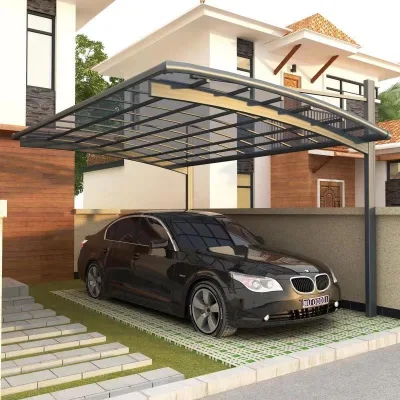

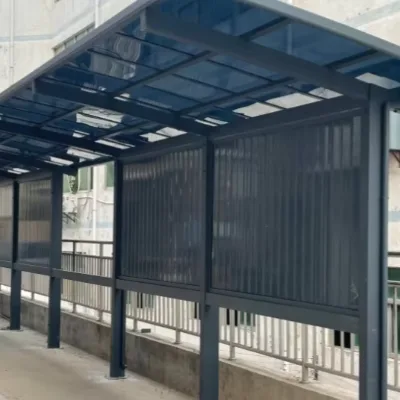


Prima Customized Easy Installation Outdoor Aluminum Pergola Carport
$1042.00 - $1346.00
MOQ: 1 Square Meters
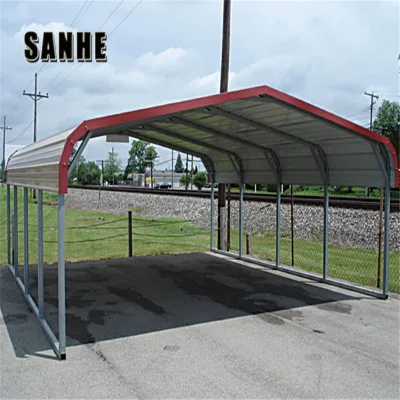


Solar Carport Aluminum Canopy Frame Carport for Cars Outdoor Car Garages Parking
$0.12 - $0.16
MOQ: 1000 watts

Aluminum Profile Solar Carport Solar Carport System Parking Solar Carport
$0.12 - $0.16
MOQ: 1000 watts


Comprehensive Sourcing Guide
Strategic Sourcing Guide for Durable Outdoor Aluminum Carports
Procuring a Durable Outdoor Aluminum Carport requires a rigorous approach that balances structural integrity, environmental resilience, and supply chain reliability. The market offers a wide array of configurations, from simple single-car shelters to complex multi-unit structures designed for public or commercial use. Buyers must navigate a landscape where material grades, finishing processes, and certification standards vary significantly between suppliers. This guide outlines the critical factors for evaluating potential vendors and ensuring the selected product meets long-term performance requirements without relying on unverified marketing claims.
Technical Specifications and Material Integrity
The foundation of any durable carport lies in its frame material and structural design. In the current market, aluminum is the preferred choice due to its high strength-to-weight ratio and natural corrosion resistance. Specific product data indicates that high-quality units often utilize Aluminum Alloy frames, with some specifications citing 6063/T5 as a standard grade. This alloy is particularly valued for its extrudability and ability to withstand significant mechanical stress without compromising the aesthetic finish.
The structural configuration of the carport is equally critical. Buyers should look for designs that offer flexibility in shape, such as Single, Double, M Shape, or Y Shape configurations. These variations allow for adaptation to specific site constraints and parking requirements. The frame finish is another technical consideration; a PU Coated sail or canopy material is frequently observed in high-performance units. This coating serves a dual purpose: it enhances the visual appeal of the structure and provides a protective barrier against environmental degradation.
The canopy material itself, often described as Poly in technical sheets, must be evaluated for its tensile strength and UV resistance. A key performance metric for these materials is the Effect of Anti-UV, with top-tier products claiming a resistance level of 98%. This metric is essential for preventing the fabric from becoming brittle or fading under prolonged sun exposure. Furthermore, the waterproofing capability of the outer tent is a non-negotiable specification. Reliable units typically feature an Outer Tent Waterproof Index ranging from 2000mm to 3000mm, with premium options exceeding 3000mm. This ensures that the structure provides adequate protection against heavy rainfall and snow accumulation.
Environmental Resilience and Structural Performance
Durability is not merely about the materials used but how the structure withstands specific environmental forces. Wind and snow loads are the primary stressors for outdoor carports. High-performance models are engineered to resist wind speeds up to 42m/S, a specification that indicates a robust engineering design capable of withstanding severe storm conditions. Similarly, snow resistance is a critical factor for regions with heavy winter precipitation. Some documented specifications indicate a Snow Resistance capability of 20m, which likely refers to the load-bearing capacity or the depth of snow the structure can support without structural failure.
The operational mechanism of the carport also plays a role in its longevity and usability. Buyers must decide between Manual Control systems and Remote Control Switch options. While manual systems offer simplicity and lower maintenance costs, remote-controlled units provide greater convenience, particularly for larger or frequently used structures. The downcomer components, which manage water drainage, are often constructed from ABS Engineering Plastics. This material choice is deliberate, as ABS offers excellent impact resistance and durability against weathering, ensuring that the drainage system remains functional over time.
Compliance, Certification, and Quality Standards
In the B2B procurement of construction-related products, verifying compliance with international standards is paramount. Buyers should demand evidence of CE and SGS certifications, which are frequently cited in product documentation. These certifications indicate that the product has undergone testing for safety and quality. Additionally, some suppliers provide ISO9001: 2008, ISO14001: 2004, and ISO10012 certifications. While these standards relate to quality management, environmental management, and measurement control respectively, their presence suggests a mature manufacturing process.
However, buyers must exercise caution when interpreting these certifications. The presence of a certification label does not automatically guarantee that every unit in a specific order meets the standard. It is essential to verify that the specific batch of products being ordered carries the relevant test reports. The product standard CE/SGS is often listed alongside the material standard 6063/T5, creating a comprehensive compliance profile. Buyers should request copies of the actual test certificates rather than relying solely on the supplier's marketing materials.
Cost Drivers and Procurement Economics
Understanding the cost drivers for aluminum carports is essential for budgeting and negotiation. The primary cost factors include the grade of aluminum alloy, the thickness of the frame components, the quality of the PU coating, and the complexity of the design (e.g., M Shape vs. Single). Customization is a significant variable; while Customized Size and Color options are widely available, they often incur additional costs and may affect the lead time.
The Minimum Order Quantity (MOQ) is another critical economic factor. Market data shows a wide range, from 1 unit to 1000 units, with some suppliers requiring a full 20FT Container as a baseline. This variation allows buyers to scale their orders based on their specific needs, whether for a single private residence or a large commercial parking facility. The MOQ of 100 Sets is also observed for certain bulk procurement scenarios, which can significantly reduce the unit price.
Lead times are directly influenced by the level of customization and the current production capacity of the supplier. Typical delivery windows range from 15-20 Days for standard orders to 30-40 Days after deposit payment for customized or larger orders. Buyers should factor in these timelines when planning project schedules. Additionally, the Supply Ability of the supplier, often cited as 5000 Sets Per Month, is a key indicator of their capacity to handle large orders without significant delays.
Supplier Evaluation and Geographic Considerations
When evaluating potential suppliers, geographic origin can provide insights into manufacturing capabilities and logistics. The supplied data indicates that manufacturers are located in regions such as Zhejiang and Shandong in China. These regions are known for their robust aluminum processing industries and established export infrastructure. Buyers should verify the specific location of the factory to assess shipping costs and potential logistical challenges.
Supplier reputation is another vital metric. Some manufacturers highlight awards such as China Famous Brand or Top 30 Assured Quality Supplier status. While these accolades can be indicative of market standing, they should be cross-referenced with independent reviews and client testimonials. The Quality standard of AA Grade Standardize Corporate suggests a commitment to high-quality output, but buyers must ensure this translates to their specific order through rigorous quality control measures.
Quality Control and Long-Term Procurement
Effective quality control is the final safeguard against product failure. Buyers should insist on a comprehensive inspection protocol that covers frame dimensions, coating thickness, and waterproofing integrity. The Warranty Period is a strong indicator of a supplier's confidence in their product; a 5 Years warranty is a common benchmark for durable aluminum carports. This warranty should clearly cover structural defects and material failures, providing financial protection for the buyer.
Packaging is often overlooked but is critical for preventing damage during transit. Standard practices include Knocked Down & Export Carton packaging or Standard Packaging by Protective Bags. For customized orders, Customized packing solutions may be available. The Special Service of offering >500sets Customized Logo Service indicates that the supplier is capable of handling branding requirements for large-scale projects.
Comparative Analysis of Product Attributes
To facilitate decision-making, the following table summarizes key technical and commercial attributes observed in the market. This comparison highlights the variability in specifications and helps buyers identify the features most relevant to their specific application.
| Attribute Category | Standard / Common Specification | High-Performance / Premium Specification | Notes for Verification |
|---|---|---|---|
| Frame Material | Aluminum | Aluminum Alloy (6063/T5) | Verify alloy grade and temper. |
| Sail Finishing | PU Coated | PU Coated with Anti-UV | Check UV resistance percentage. |
| Waterproof Index | 2000mm - 3000mm | >3000mm | Higher index indicates better rain protection. |
| Wind Resistance | Standard | 42m/S | Critical for coastal or storm-prone areas. |
| Snow Resistance | Standard | 20m | Verify load capacity for local climate. |
| Control Method | Manual | Remote Control Switch | Consider convenience vs. cost. |
| Certification | CE, SGS | CE, SGS, ISO9001, ISO14001 | Request physical test certificates. |
| Warranty | Standard | 5 Years | Review terms for structural vs. cosmetic. |
| MOQ | 1 Unit | 100 Sets or 20FT Container | Align with project scale and budget. |
| Lead Time | 15-20 Days | 30-40 Days | Factor in customization and shipping. |
Application Scenarios and Usage Context
The versatility of aluminum carports allows them to be deployed in a wide range of settings. Common applications include Car Parking, Shed Car storage, and Public Carport installations. The design can be adapted for Outside Carport use, providing protection for vehicles in open environments. Specific models, such as those with the prod_model identifiers B800, V005, or V010, may be tailored for specific size requirements like 3X3m, 3X4m, or 3X5m.
For commercial or municipal projects, the ability to customize the Size & Color is often a requirement. Buyers should ensure that the supplier can accommodate Chosen by Customer specifications without compromising structural integrity. The Type of carport, whether Single, Double, M Shape, or Y Shape, should be selected based on the available footprint and the number of vehicles to be parked. The Feature of being Easily Assembled is particularly valuable for projects requiring rapid deployment or future relocation.
Final Procurement Considerations
Sourcing a Durable Outdoor Aluminum Carport is a complex process that demands attention to detail at every stage. From verifying the Aluminum Alloy grade to confirming the CE and SGS certifications, buyers must remain vigilant. The Effect of Anti-UV and Waterproof Index are not mere marketing buzzwords but critical performance indicators that determine the lifespan of the structure. By carefully evaluating the Lead Time, MOQ, and Supply Ability, buyers can ensure a smooth procurement process that aligns with their project timelines.
Ultimately, the goal is to secure a product that offers Preservative qualities and Durable performance, backed by a solid Warranty Period. Whether for a private garage or a large public facility, the right aluminum carport provides long-term value and protection. Buyers should prioritize suppliers who demonstrate transparency in their specifications and a commitment to quality standards, ensuring that the final installation meets all functional and aesthetic requirements.
FAQs
What frame materials are used for durable outdoor aluminum carports?
Durable outdoor aluminum carports typically use Aluminum Alloy frames, often specified as grade 6063/T5. This material offers high strength and corrosion resistance, ensuring structural integrity against environmental stressors like wind and snow.
How much wind and snow resistance do these carports offer?
High-performance models can withstand wind speeds up to 42m/S and support snow loads equivalent to 20m depth. These specifications ensure the structure remains stable during severe storms and heavy winter precipitation in various climates.
What certifications should I verify for quality and safety compliance?
Buyers should verify CE and SGS certifications, which indicate safety and quality testing. Some suppliers also provide ISO9001, ISO14001, and ISO10012 certifications, suggesting mature manufacturing processes and adherence to international management standards.
Can I customize the size and color of the carport?
Yes, customization is available for both size and color, with options like 3x3m, 3x4m, or 3x5m. Buyers can choose specific dimensions and colors, though this may affect the lead time and minimum order quantity requirements.
What is the typical lead time for delivery after payment?
Lead times typically range from 15 to 20 days for standard orders, extending to 30-40 days for customized units. This duration depends on the level of customization and the supplier's current production capacity and supply ability.
Which waterproof index levels are recommended for heavy rain?
Recommended waterproof indices range from 2000mm to 3000mm, with premium options exceeding 3000mm. This metric ensures adequate protection against heavy rainfall and prevents water infiltration into the sheltered area below the canopy.
What are the minimum order quantity requirements for purchasing?
Minimum order quantities vary from 1 unit to 1000 units, with some suppliers requiring a full 20FT container. Bulk procurement scenarios may have an MOQ of 100 sets, allowing buyers to scale orders based on their specific project needs.