Source Durable Parking Crash Barrier for Gates, Fences, and Barriers
Explore 30 options for a Durable Parking Crash Barrier designed for vehicle fences and obstruction control. Buyers can compare models with rigid or flexible barriers, varying materials like steel and plastic, and integration with parking management systems.
Key considerations
Products List




Comprehensive Sourcing Guide
Strategic Sourcing Guide for Durable Parking Crash Barriers
Selecting the right parking crash barrier requires a rigorous evaluation of structural integrity, material composition, and integration capabilities. The market offers a diverse range of solutions, from rigid steel bollards designed for high-impact vehicle fence applications to flexible plastic barriers intended for separation and obstruction. Buyers must navigate a complex landscape where product attributes vary significantly based on the intended function, such as warning, separation, or obstruction. This guide provides a structured approach to evaluating durable parking crash barriers, focusing on technical specifications, compliance verification, and long-term procurement strategies derived from verified product data and industry standards.
Technical Specifications and Material Composition
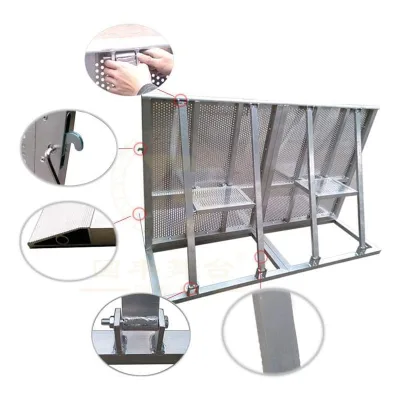
The foundation of any durable crash barrier lies in its material composition and physical dimensions. When sourcing these assets, buyers must distinguish between rigid and flexible barrier types, as each serves a distinct operational purpose. Rigid barriers, often constructed from steel or aluminum alloy, are designed to act as a vehicle fence with a rigid distortion degree. These units typically feature a rated current of 8A and an output power of 120W, indicating they may incorporate active electronic components for integration with parking management systems. The insulation grade for such units is often rated at B, ensuring safety against electrical hazards in outdoor environments.
In contrast, flexible barriers are frequently manufactured from plastic materials. These are characterized by a flexible distortion degree, making them suitable for separation functions where minor impacts should not cause permanent deformation. The physical specifications for these units can vary; for instance, some models have a body size of 100038550mm, while others may have specific end cap dimensions of 270270385*50mm. The gross weight of a single unit can range up to 22kg, and tip weights may be around 4.80kg, factors that are critical for installation stability.
Integration capabilities are equally vital. Modern barriers often support proximity detection and biometric authentication, allowing them to function as part of a broader security ecosystem. The user interface is frequently managed via a mobile app, and access methods may include QR codes, mobile phones, or card swipes. For barriers utilizing license plate recognition technology, the rated motor speed is typically 1500r/Min, with a performance time adjustable between 0.6 and 2 seconds. The protection grade is a crucial metric for outdoor durability, with IP44 being a common standard for resistance against water and solid objects. Buyers should verify that the specific model, such as the KPS-DZ-8003 or PWL10116, aligns with these technical requirements before proceeding.
Compliance and Certification Verification
Ensuring that parking crash barriers meet international and regional safety standards is a non-negotiable aspect of the procurement process. While specific certification statuses must be verified on a per-supplier basis, certain standards serve as benchmarks for quality. For example, some products in the market are manufactured in compliance with CE standards, indicating adherence to European health, safety, and environmental protection standards. Additionally, ASTM F2656 is a recognized standard for vehicle crash testing of barriers, though buyers must confirm that any specific unit they consider has been tested against this or equivalent criteria.
When evaluating compliance, buyers should look for explicit documentation regarding the product standard. Dimensions are often cited as standards in themselves, such as 3502801020mm or 430x350x1050mm, which must be cross-referenced with the physical product to ensure accuracy. The origin of the product also plays a role in compliance; many durable barriers originate from manufacturing hubs in China, specifically regions like Zhejiang, where supply chains are robust. However, origin alone does not guarantee compliance. Buyers must request test reports that verify the insulation grade, protection grade (IP44), and material strength claims.
It is essential to understand that not all listed products satisfy every standard simultaneously. A barrier designed for warning functions may have different certification requirements than one designed for obstruction. Therefore, the procurement strategy should involve a detailed audit of the supplier's quality management system and their ability to provide third-party verification for the specific models under consideration.
Cost Drivers and Pricing Structures
The pricing of parking crash barriers is influenced by a complex interplay of factors, including material costs, customization levels, and the complexity of the integrated technology. The observed price range in the market spans from 1 to 25,000 USD, reflecting the vast difference between simple passive barriers and advanced active systems with biometric authentication and mobile app integration.
Material costs are a primary driver. Aluminum alloy and steel barriers generally command higher prices than plastic alternatives due to the raw material costs and the manufacturing processes involved, such as cold-rolling steel. Customization is another significant cost factor; while customization is available for many products, the degree of modification required will directly impact the unit price. For instance, a barrier with a specific color, such as regular yellow, may be standard, but custom finishes or unique dimensions will incur additional charges.
The Minimum Order Quantity (MOQ) also affects the effective cost per unit. MOQs can range from 1 to 500 units, with some specific models requiring a minimum of 150 pieces. Buyers purchasing in smaller quantities may face higher per-unit costs, whereas bulk orders can leverage economies of scale. Additionally, the supply capacity of the manufacturer, which can be as high as 10,000 units per month, influences pricing stability. Buyers should be aware that lead times, which can vary from 10-15 days to 1-15 days depending on quantity, may also impact the total cost of ownership if urgent delivery is required.
Typical Applications and Functional Requirements
Understanding the specific application environment is crucial for selecting the correct type of crash barrier. The market offers barriers categorized by their primary function: warning, separation, and obstruction.
Warning barriers are often used to alert drivers to potential hazards or restricted zones. These units may feature visual alerts and audible alarms, integrating with the parking management system to enhance safety. Separation barriers are designed to create a physical divide between different zones, such as pedestrian walkways and vehicle lanes. Flexible plastic barriers are particularly effective here, as they can absorb minor impacts without causing damage to vehicles or the barrier itself. Obstruction barriers, typically rigid and made of steel, are used to prevent unauthorized vehicle access entirely. These are often installed as vehicle fences and are designed to withstand high-impact collisions.
The installation method is another critical consideration. Most barriers utilize a pole mount installation, which requires a secure foundation. The post fixation method, such as a polymer base, is essential for ensuring the barrier remains stable under load. The position of the barrier, whether it serves as a vehicle fence or a general obstruction, dictates the required strength and mounting depth. Buyers must assess the traffic volume and vehicle types in the target area to determine the appropriate level of rigidity. For example, a high-traffic commercial parking lot may require rigid steel barriers with a high distortion resistance, whereas a low-traffic residential area might suffice with flexible plastic separation barriers.
Supplier Evaluation and Quality Control
Evaluating suppliers requires a focus on their production capabilities, quality control processes, and track record. A reliable supplier should demonstrate a clear understanding of the product specifications, including the model numbers, dimensions, and material properties. For instance, a supplier offering the BG Series or TIB80122 models should be able to provide detailed technical drawings and material certificates.
Quality control is paramount, especially for products intended for safety-critical applications. Buyers should verify that the supplier adheres to strict quality assurance protocols, including regular testing of the insulation grade, protection grade, and structural integrity. The packaging method, whether it be a carton box, woven bag, or wooden pallet, is an indicator of the supplier's attention to detail during the shipping process. Proper packaging ensures that the barriers arrive in pristine condition, free from damage that could compromise their performance.
Furthermore, the supplier's ability to handle customization requests is a key differentiator. Suppliers who offer customization should have a streamlined process for managing design changes without compromising quality. The delivery time, which can vary based on quantity, is another metric for supplier reliability. A supplier that consistently meets delivery windows, such as the 10-15 day window for certain models, demonstrates operational efficiency. Buyers should also consider the supplier's supply capacity, ensuring they can meet demand during peak periods without delays.
Long-Term Procurement Considerations
Sourcing durable parking crash barriers is not just a one-time transaction but a long-term investment. Buyers must consider the lifecycle costs, including maintenance, replacement, and potential upgrades. The choice of material significantly impacts longevity; aluminum alloy and steel barriers generally offer superior durability compared to plastic, though they may require more maintenance to prevent corrosion.
Integration with existing systems is another long-term factor. As parking management systems evolve, barriers with mobile app interfaces and biometric authentication capabilities offer greater flexibility for future upgrades. Buyers should ensure that the selected barriers are compatible with current and future technology standards to avoid obsolescence.
The supply chain resilience is also critical. Suppliers with a high supply capacity, such as 10,000 units per month, are better positioned to handle unexpected demand surges or replacement needs. Additionally, the availability of spare parts and the ease of repair should be evaluated. A barrier that is difficult to repair or replace can lead to significant downtime and increased costs over time.
In conclusion, sourcing durable parking crash barriers requires a comprehensive approach that balances technical specifications, compliance, cost, and long-term value. By carefully evaluating the material composition, functional requirements, and supplier capabilities, buyers can select solutions that enhance safety and efficiency in parking environments. The key is to maintain a disciplined focus on verified facts and to avoid making assumptions about product performance without concrete evidence. Through rigorous due diligence and a clear understanding of the market landscape, buyers can secure high-quality barriers that meet their specific operational needs.
Comparison of Barrier Types
| Feature | Rigid Steel/Aluminum | Flexible Plastic | Active Electronic |
|---|---|---|---|
| Primary Function | Obstruction, Vehicle Fence | Separation, Warning | Warning, Access Control |
| Distortion Degree | Rigid Barrier | Flexible Barrier | N/A (Depends on structure) |
| Material | Steel, Aluminum Alloy | Plastic | Aluminum Alloy, Steel |
| Protection Grade | IP44 | Varies | IP44 |
| Installation | Pole Mount, Polymer Base | Pole Mount | Pole Mount |
| Integration | Parking Management System | N/A | Mobile App, Biometric |
| Typical Weight | Up to 22kg/PC | Varies | Varies |
| MOQ Range | 1-500 | 150PCS | 1-500 |
This table highlights the distinct characteristics of different barrier types, aiding buyers in making informed decisions based on their specific site requirements. The choice between rigid, flexible, and active systems depends heavily on the intended function and the level of integration required with existing parking infrastructure.
FAQs
What authentication methods do durable parking crash barriers support?
These barriers support proximity detection and biometric authentication. They also integrate with parking management systems using mobile apps, QR codes, card swipes, and license plate recognition technology for secure access control.
Which materials are used for rigid versus flexible barrier types?
Rigid barriers typically use steel or aluminum alloy for vehicle fence applications. Flexible barriers are often made from plastic to allow for separation functions while absorbing minor impacts without permanent deformation.
How are these barriers installed and fixed to the ground?
Most units utilize a pole mount installation method with a polymer base for post fixation. This ensures stability, with specific models featuring tip weights around 4.80kg and gross weights up to 22kg per piece.
What are the standard protection and insulation grades for outdoor use?
Outdoor units often carry an IP44 protection grade for resistance against water and solids. The insulation grade is typically rated at B to ensure safety against electrical hazards in varying environmental conditions.
Can buyers customize the color and dimensions of these barriers?
Customization is available for many products, allowing for specific color choices like regular yellow. Buyers can also request modifications to dimensions, though this may affect the unit price and lead time.
What is the typical lead time for delivery based on quantity?
Delivery times vary from 10 to 15 days for standard orders. Some suppliers offer a range of 1 to 15 days depending on the specific quantity ordered and current supply capacity constraints.
Which certifications are commonly associated with these parking barriers?
Some products are manufactured in compliance with CE standards for safety. While ASTM F2656 is a recognized testing benchmark, buyers must verify specific test reports for each model to confirm compliance.