Source Durable Moisture Proof Garment Bag for Storage, Shopping, Advertising
Compare 30 options for Durable Moisture Proof Garment Bag featuring non-woven materials and zipper closures. Buyers can evaluate customization, printing, and packaging details from verified suppliers in China.
Key considerations
Products List




Comprehensive Sourcing Guide
Strategic Sourcing Guide for Durable Moisture Proof Garment Bags
Understanding Material Composition and Moisture Resistance
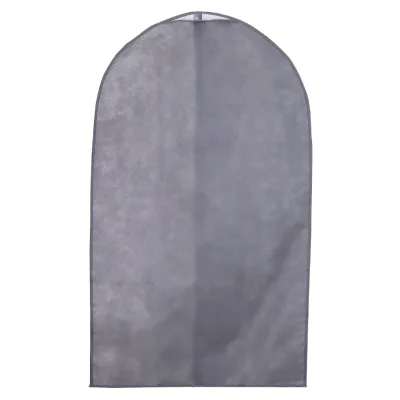
When sourcing a durable moisture-proof garment bag, the primary focus must be on the material composition that dictates both longevity and protective capabilities. Based on the available market data, the predominant material identified is non-woven fabric. Specifically, listings indicate the use of 80g non-woven material, which serves as a foundational layer for many garment protection solutions. While non-woven materials are often associated with single-use applications, the designation of "durable" in this context implies a specific density and weave structure that resists tearing and degradation during storage or transit.
A critical attribute for moisture resistance is the explicit "Waterproof" feature observed in product specifications. Buyers must verify that the non-woven material is treated or laminated to achieve this waterproof status, as standard non-woven fabrics can be permeable to humidity. The presence of eco-friendly material options suggests that manufacturers are increasingly offering sustainable alternatives that do not compromise on moisture barrier performance. When evaluating potential suppliers, procurement teams should request physical samples to test the water resistance directly, rather than relying solely on the "Waterproof" label. The material hardness is another variable; products are described as ranging from "Soft" to "Medium Soft," which influences how the bag conforms to the garment and how well it seals against moisture ingress. A bag that is too soft may lack the structural integrity to protect against crushing, while one that is too rigid may crack at the seams when folded.
Technical Specifications and Structural Design
The technical architecture of a garment bag is defined by its closure mechanisms, dimensions, and structural reinforcements. The most common closure method identified in the current market data is the zipper. This "Closed Way" is essential for creating a continuous seal that prevents dust and moisture from entering the bag. However, the effectiveness of the zipper depends heavily on the quality of the teeth and the slider mechanism. Buyers should inspect the zipper track for smooth operation and ensure it can be fully closed without gaps.
Structural variations exist regarding the bottom and side construction. Some product models are listed with a "Bottom" configuration, providing a flat base that allows the bag to stand upright, which is beneficial for storage in closets or shipping containers. Conversely, other models are specified as "Without Bottom & Side," which typically indicates a hanging design where the bag is suspended from a hanger. The choice between these two designs depends on the intended storage environment. For long-term storage where the bag might be stacked, a bottom-supported design is superior. For active wardrobe use, a hanging design is more practical.
Size specifications are another critical technical parameter. The market data references specific model numbers such as KQ-GB-051, KQ-GB-050, and ZH0725, which correspond to different dimensions. While exact measurements vary, some standards mention dimensions like 3020 + 8, 3525 + 10, and up to 50* in various configurations. These numbers likely represent width, height, and depth in centimeters. Procurement teams must match these dimensions to the specific garments being protected, whether they are short dresses, long gowns, or heavy coats. The "Middle" size category is explicitly mentioned, suggesting a standard fit for average-length garments. Additionally, the "Load-Bearing" capacity is noted as greater than 6 kg, which is a vital specification for ensuring the bag can support heavy winter coats or multiple garments without the handles or seams failing.
Cost Drivers and Minimum Order Quantities
The economics of sourcing durable garment bags are influenced by several variables, including material costs, customization requirements, and order volume. The observed price range in the market spans from $0.03 to $15.59 USD. This wide disparity is not indicative of a single product type but rather reflects differences in material quality, size, and the extent of customization. The lower end of the price spectrum likely corresponds to basic, non-customized non-woven bags, while the higher end includes specialized models with waterproof treatments, custom printing, and reinforced structures.
Minimum Order Quantity (MOQ) is a significant factor in the total cost of ownership. The data shows an MOQ range from 100 to 50,000 pieces, with specific instances of 200, 300, and 50000 PCS. A lower MOQ, such as 100 or 200 pieces, allows for smaller buyers to test the market or fulfill immediate needs without tying up excessive capital. However, larger orders often benefit from economies of scale, reducing the unit cost significantly. Buyers must balance the need for inventory flexibility with the cost efficiency of bulk purchasing.
Customization is a major cost driver. The availability of "Custom" printing and "Logo Printing" services adds value but increases the unit price. The complexity of the print, such as "One Color Silk Screen Printing" versus multi-color processes, also affects the cost. Furthermore, the "Custom" standard mentioned in the specifications implies that dimensions and features can be tailored, which often incurs additional tooling or setup fees. Payment terms typically require a 30% deposit and a 70% balance before shipping, which is a standard industry practice but requires careful cash flow management.
Compliance, Certification, and Verification Protocols
While the market data includes a low-confidence reference to CE certification, it is crucial to approach certification claims with caution. The provided context does not confirm that all listed products possess CE status or any other specific regulatory approval. Therefore, buyers cannot assume compliance based on the general product listing. Instead, the procurement strategy must involve active verification of compliance with relevant standards for the target market.
For garment bags intended for export, particularly to the European Union or North America, specific material safety and environmental standards may apply. The mention of "Eco-friendly" material suggests that some suppliers are aligning with environmental regulations, but this should be substantiated with third-party test reports. Buyers should request documentation proving that the non-woven material meets specific flammability, chemical, or biodegradability standards relevant to their region.
The "Custom" standard noted in the product data indicates that many bags are made to order rather than adhering to a rigid, pre-existing industry standard. This flexibility is beneficial for unique requirements but places the burden of quality assurance on the buyer. It is essential to define clear technical specifications in the purchase order, including the exact GSM (grams per square meter) of the non-woven fabric, the type of zipper used, and the specific waterproofing treatment applied. Without these defined parameters, the "Custom" nature of the product can lead to inconsistencies in quality.
Typical Applications and Usage Scenarios
The versatility of durable moisture-proof garment bags makes them suitable for a wide range of applications. The primary usage identified is "Storage," which encompasses both residential and commercial contexts. In a residential setting, these bags protect clothing from dust, moisture, and pests during seasonal changes or long-term storage. The "Waterproof" feature is particularly valuable in humid climates where mold and mildew are common concerns.
Commercial applications are equally diverse. The data lists usage for "Shopping," "Garment," and "Advertising." Retailers often use these bags to present high-end clothing items, enhancing the perceived value of the product. The "With Pattern" and "With Logo Printing" attributes make these bags ideal for branding purposes, allowing companies to display their logo on the bag as a form of mobile advertising. The "Hand-Held" type and specific handle dimensions (2.5x45cm Non Woven Webbing) facilitate easy carrying, making them suitable for retail environments where customers may carry multiple items.
Additionally, the "Unisex" gender specification and the "Pink Non Woven Garment Bag" example indicate that these products cater to a broad demographic. The ability to support a load of over 6 kg ensures that the bags can be used for heavy-duty storage, such as moving houses or storing bulky winter apparel. The "For Advertising" usage suggests that promotional events and trade shows are a significant market segment, where durable, branded bags serve as practical giveaways that retain utility for the recipient.
Supplier Evaluation and Quality Control Measures
Selecting the right supplier requires a rigorous evaluation process that goes beyond the initial product listing. The observed lead times, with sample times of 7 days and bulk production times of 15-20 days, provide a baseline for planning. However, these timelines can vary based on order complexity and supplier capacity. Buyers should verify the supplier's ability to meet these deadlines consistently, especially for large orders where production bottlenecks are common.
Quality control is paramount when sourcing non-woven garment bags. The "Hardness" and "Load-Bearing" specifications must be validated through physical testing. A sample batch should be subjected to stress tests to ensure the handles do not tear and the seams do not split under the 6 kg load. The waterproofing claim should be tested by exposing the bag to moisture and checking for any seepage. Furthermore, the zipper mechanism must be cycled multiple times to ensure it remains functional and does not jam.
The "Carton" packing method mentioned in the data is a standard practice for bulk shipping, but buyers should specify the packing density and protection measures to prevent damage during transit. The origin of the products, primarily from China and specifically Shenyang, indicates a concentration of manufacturing in this region. While this offers access to a robust supply chain, buyers should conduct on-site audits or hire third-party inspection agencies to verify production facilities and quality control processes.
Long-Term Procurement Considerations and Sustainability
Sourcing durable garment bags is not just a one-time transaction but a long-term procurement strategy. The availability of "Eco-friendly" materials aligns with growing global sustainability trends. Buyers should prioritize suppliers who can demonstrate a commitment to environmental responsibility, such as using recycled non-woven materials or biodegradable components. This not only reduces the environmental impact but also enhances the brand image of the buyer's company.
The "Small Orders: Accepted" attribute indicates that many suppliers are flexible, which is beneficial for startups or businesses testing new product lines. However, as the business scales, the ability to maintain consistent quality and pricing becomes critical. Establishing a long-term partnership with a supplier who understands the specific requirements of the durable moisture-proof garment bag market can lead to better pricing, priority production slots, and improved communication.
Finally, buyers should consider the lifecycle of the product. A durable bag should be reusable, reducing the need for frequent replacement. The "Customization" options allow for branding that remains relevant over time, ensuring the bag continues to serve its purpose as a marketing tool or storage solution. By focusing on high-quality materials, robust construction, and sustainable practices, buyers can secure a supply of garment bags that meet their operational needs while adhering to modern environmental and quality standards.
FAQs
What material is used for durable moisture proof garment bags?
These bags typically use 80g non-woven material, which can be treated for waterproof performance. Some options are also available in eco-friendly variants to meet sustainability goals while maintaining structural integrity for storage needs.
How much is the minimum order quantity for these bags?
The minimum order quantity ranges from 100 to 50,000 pieces depending on the specific model and customization. Common entry points include orders of 100, 200, or 300 pieces, allowing flexibility for small buyers testing the market.
Can these bags be customized with logos and patterns?
Yes, custom printing and logo printing services are available for these garment bags. Buyers can request one-color silk screen printing or other patterns, with production times typically taking 15 to 20 days for bulk orders.
What is the lead time for sample and bulk production?
Sample production usually takes 7 days, while bulk manufacturing requires 15 to 20 days. These timelines allow buyers to verify quality before committing to larger orders, though actual times may vary based on order complexity.
Which closure mechanism is standard for these garment bags?
The standard closure mechanism is a zipper, which creates a seal against dust and moisture. This design ensures the bag remains secure during storage or transit, protecting garments from humidity and environmental contaminants effectively.
What is the load-bearing capacity of these non-woven bags?
These bags are designed to support a load greater than 6 kg without failure. This capacity ensures they can hold heavy winter coats or multiple garments securely, making them suitable for both retail and long-term storage applications.