Source Durable Non-Toxic Dog Chew Toy for Training, Teething, and Play
Find a Durable Non-Toxic Dog Chew Toy from 30 verified listings. Compare specifications like material, size, and certification to select the right option for your inventory needs. Explore various models including plastic options with CE and ISO certifications. Evaluate customization availability and MOQs to ensure the product fits your specific business requirements and customer expectations effectively.
Key considerations
Products List


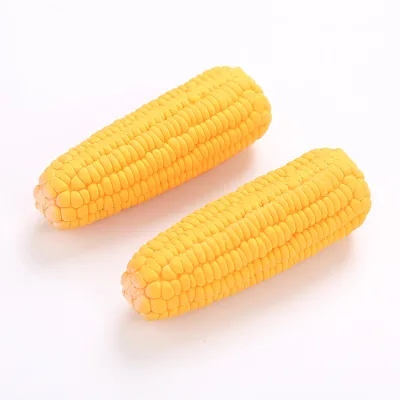
Comprehensive Sourcing Guide
Durable Non-Toxic Dog Chew Toy Sourcing Guide
Sourcing durable non-toxic dog chew toys requires balancing material integrity with safety certifications to ensure pet welfare. The available market data indicates a product range that includes specific models like YT104293 and ZXY-0215, often originating from manufacturing hubs in China's Mainland, Zhejiang, and Ningbo. Buyers must recognize that while some listings explicitly state "Not Electric," the primary focus remains on physical durability and material composition suitable for aggressive chewing behaviors.
Procurement decisions should account for the variability in customization options, where some suppliers offer logo printing and custom designs while others provide standard non-customized units. The observed minimum order quantities (MOQ) fluctuate significantly, ranging from small batches of 10 pieces to large industrial orders of 1440 units. This variance necessitates a clear assessment of inventory needs before engaging with suppliers, as the ability to customize packaging or branding often correlates with higher volume commitments.
Product Scope and Observed Listing Signals
The product scope encompasses a variety of chew toys designed specifically for dogs, with usage categories explicitly defined as "Dog Playing Chewing" and "Dog." Listings reveal diverse physical dimensions, such as models measuring 25x3cm or 21x9x5cm, indicating that size is a critical variable for matching toy durability to specific dog breeds. Buyers should verify that the "All-Season" designation applies to the intended usage environment, ensuring the material remains stable and safe regardless of temperature fluctuations during play.
Listing signals also highlight the availability of specific packaging formats, ranging from standard cartons to individual box packaging for single units. While some products are marked as "In Stock," others operate on a lead time of approximately 20 to 40 days, which impacts immediate inventory replenishment strategies. The presence of "OEM/ODM" capabilities suggests that buyers can request tailored solutions, but this often requires navigating different production timelines and potentially higher minimum order thresholds compared to off-the-shelf inventory.
Technical Specifications to Verify
Technical verification must begin with material composition, as the supplied facts identify "Plastic" as a primary material for several models. Buyers should confirm the specific polymer grade used to ensure it meets the "durable" and "non-toxic" criteria, as generic plastic listings do not guarantee resistance to breakage or chemical leaching. The physical dimensions provided, such as 11x5x16cm or 28x16x8cm, serve as baseline specifications, but actual product weight, like the 0.195kg noted for one model, is equally critical for assessing the toy's density and chew resistance.
Dimensional consistency is another vital technical parameter, with standards citing specific measurements like 21x8x21cm for certain SKUs. Procurement teams must ensure that the listed standard dimensions match the physical samples received, as discrepancies can affect the toy's suitability for different dog sizes. Additionally, the "Not Electric" attribute simplifies the technical scope by removing battery safety concerns, allowing the buyer to focus entirely on mechanical durability and the structural integrity of the chew surfaces.
Compliance and Safety Documentation
Compliance documentation is a non-negotiable aspect of sourcing, with observed certifications including ISO, CE, and RoHS. These certifications indicate that the manufacturing processes and materials adhere to specific international standards for quality management and hazardous substance restrictions. Buyers must request valid certificates for each production batch, ensuring that the "CE" and "RoHS" marks are not merely marketing claims but are backed by verifiable test reports from accredited laboratories.
The standard documentation also references BSCI and ISO9001, which speak to the supplier's social responsibility and quality management systems. While EN71 is mentioned in background contexts, buyers should explicitly verify if the specific toy models meet this European toy safety standard, as it is a critical benchmark for non-toxic materials. Relying solely on the presence of a certification label without reviewing the associated test data can lead to compliance gaps, particularly regarding heavy metals and phthalates in plastic components.
Cost Drivers and Commercial Terms
Cost drivers in this category are heavily influenced by customization levels and order volume, with MOQs ranging from 10 to 1440 units. Higher customization, such as logo printing or specific packaging requests, typically increases the unit cost and may require a larger minimum order to amortize setup fees. Buyers should analyze the price range of 0.2 to 8.1 USD per unit against the specific model features, understanding that lower prices often correlate with standard, non-customized items, while premium pricing reflects tailored designs or specialized durable materials.
Commercial terms also include payment methods like T/T and L/C, which offer different levels of financial security for both parties. The delivery time of 20 to 40 days is a significant factor in total landed cost, as longer lead times may necessitate higher safety stock levels and increased working capital. Negotiating favorable payment terms and clarifying who bears the cost of "on Your Request" packaging can significantly impact the overall profitability of the procurement cycle.
Supplier Qualification and Quality Control
Supplier qualification should prioritize those with established origins in Zhejiang and Ningbo, regions known for their manufacturing capabilities in pet products. The presence of "OEM/ODM" acceptance indicates a supplier's flexibility, but buyers must verify their capacity to maintain consistent quality across large batches. It is essential to audit the supplier's production lines to ensure that the "Customized" and "Non-Customized" options are managed with distinct quality control protocols to prevent cross-contamination or specification errors.
Quality control measures must extend beyond the final inspection to include raw material verification, especially given the "Plastic" material composition. Buyers should implement a rigorous sampling plan that tests for durability and non-toxicity, ensuring that the "Durable Chewing Toy" claims hold up under actual use conditions. Regular factory audits and third-party inspections are recommended to validate that the supplier's internal standards align with the external certifications like ISO and CE claimed in the product listings.
Long-Term Procurement Checks
Long-term procurement success depends on establishing a feedback loop for product performance and safety. Buyers should track return rates and customer complaints related to breakage or toxicity to identify potential quality drifts in the supply chain. Since the product is designed for "Dog Playing Chewing," monitoring how the toys perform over time in real-world scenarios is crucial for maintaining brand reputation and ensuring pet safety.
Continuous verification of supplier compliance is also necessary, as certifications like ISO and CE require periodic renewal and re-auditing. Buyers should schedule regular reviews of the supplier's documentation to ensure that the "About 20-40 days" lead times remain consistent and that the "Standard" packaging does not degrade in quality. Building a long-term relationship with a qualified supplier allows for better negotiation of terms and ensures a steady supply of safe, durable toys that meet evolving market expectations.
FAQs
What certifications do these durable non toxic dog chew toys have?
These durable non toxic dog chew toys typically hold ISO and CE certifications. Some specific models also feature RoHS compliance. These standards ensure the products meet international safety and quality requirements for manufacturing and material usage.
Can I customize the logo on these durable non toxic dog chew toys?
Yes, logo printing is available for many of these durable non toxic dog chew toys. Customization options allow you to add your brand identity. Some items are fully customized, while others may offer standard packaging without logo printing depending on the supplier.
What is the typical delivery time for these durable non toxic dog chew toys?
The typical delivery time for these durable non toxic dog chew toys is about 20 to 40 days. This timeframe applies to standard production runs. Buyers should confirm specific lead times with suppliers, as production schedules can vary based on order volume and customization needs.
Which materials are used to make these durable non toxic dog chew toys?
These durable non toxic dog chew toys are primarily made from plastic. This material choice supports durability and safety for pet use. The specific plastic composition is designed to withstand chewing while remaining non-toxic, ensuring the toy is safe for dogs during play and interaction.
What is the minimum order quantity for these durable non toxic dog chew toys?
The minimum order quantity for these durable non toxic dog chew toys varies significantly. Some items require an MOQ of 1440 pieces, while others accept as low as 10 pieces. Buyers should check specific product models to determine the exact MOQ applicable to their sourcing needs.
Where are these durable non toxic dog chew toys manufactured?
These durable non toxic dog chew toys are manufactured in China, specifically in regions like Zhejiang and Ningbo. This location indicates a strong supply chain presence for pet accessories. Buyers can source directly from these areas to leverage established manufacturing capabilities and logistics networks.