Source eco-friendly 240gsm printed t-shirt for Events, Brands, and Staff
Compare 30 verified listings for an eco-friendly 240gsm printed t-shirt featuring cotton and polyester options. Buyers can evaluate customization, fabric weight, and printing methods to find the right promotional apparel.
Key considerations
Products List


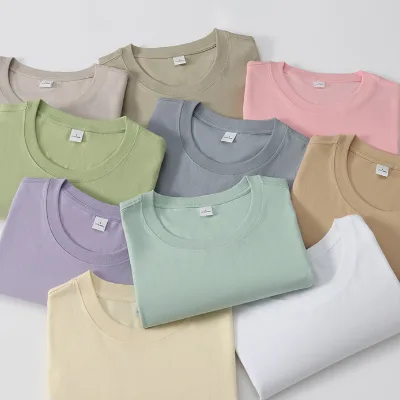


Comprehensive Sourcing Guide
Strategic Sourcing Guide for Eco-Friendly 240gsm Printed T-Shirts
Sourcing a 240gsm printed t-shirt requires a nuanced understanding of fabric weight, printing durability, and supply chain transparency. While the market often promotes "eco-friendly" attributes, the actual product data available reveals a complex landscape of materials and specifications. Buyers must distinguish between marketing terminology and verifiable technical facts. The following guide analyzes the specific constraints and opportunities found in current market listings, focusing on how to evaluate suppliers who can meet the rigorous demands of a 240gsm garment while ensuring ethical and environmental compliance.
Technical Specifications and Fabric Weight Analysis
The core keyword specifies a 240gsm (grams per square meter) weight, which indicates a heavy-duty, premium feel compared to standard lightweight tees. However, an analysis of the observed product data reveals a significant discrepancy between this target weight and the actual listed specifications. The majority of the available listings describe a fabric weight of 150gsm. This is a critical observation for procurement officers. A 150gsm shirt is typically classified as a standard or light-weight garment, whereas a 240gsm shirt is considered a heavyweight, often used for structured streetwear or high-end promotional items.
When evaluating potential suppliers, buyers must verify if the 150gsm listings are the only options available or if 240gsm variants exist under different model numbers. The observed data includes models such as zt035, T051, T033, T003, T037, T034, and FY-0190. Some of these are explicitly linked to 150gsm cotton or polyester blends. If a 240gsm specification is non-negotiable, the buyer must explicitly request a sample from the supplier to confirm the GSM before placing a bulk order. Relying on the default 150gsm data could result in receiving a garment that lacks the desired durability and drape.
Furthermore, the material composition varies across the listings. While some products are listed as 100% Cotton, others are Polyester. The "eco-friendly" aspect of the keyword often implies a preference for natural fibers or recycled materials. Cotton is generally preferred for breathability and comfort, with observed listings noting a fabric weight of 150gsm and a shrinkage rate of +-3%. Polyester offers moisture absorption and durability but may not align with the "eco-friendly" narrative unless it is specifically recycled polyester (rPET). Buyers should verify the exact fiber content, as the observed data shows a mix of "Cotton" and "Polyester" without a unified standard for the 240gsm target.
Compliance Standards and Certification Verification
In the realm of sustainable procurement, compliance is paramount. The observed product data lists several standards, including CE, RoHS, SGS, and CMP. It is important to note that CE and RoHS are typically associated with electronics and hazardous substances, while SGS is a general inspection and certification body. The presence of these standards in the listing suggests that the supplier has undergone general quality checks, but they do not automatically guarantee that the textile is "eco-friendly" in the context of organic farming or low-impact dyeing.
The data also mentions a low-confidence background regarding GOTS (Global Organic Textile Standard). This certification is the gold standard for organic fibers, ensuring that the cotton was grown without toxic pesticides and that the processing facilities meet strict environmental and social criteria. Since GOTS is listed as low-confidence background, buyers cannot assume that any of the listed products (such as model zt035 or T051) are GOTS certified. To claim "eco-friendly" status, the buyer must explicitly request GOTS certification documentation from the supplier. Without this, the term "eco-friendly" remains a marketing claim rather than a verified fact.
Additionally, the observed data includes "Color Fastness: 4" and "Washing Shrinkage: +-3%". These are specific quality metrics that buyers should use as a baseline for comparison. A color fastness rating of 4 indicates good resistance to fading, which is essential for printed garments. However, for a 240gsm shirt, the buyer should verify if the supplier can maintain this standard with heavier fabrics, as the dyeing process for thicker cotton can differ. The "High Quality" attribute listed in the data is subjective; therefore, the buyer must rely on the numerical standards (like the 4-point color fastness) rather than qualitative descriptions when evaluating compliance.
Cost Drivers and Pricing Structure
The pricing for 240gsm printed t-shirts is influenced by several factors, including material cost, printing complexity, and order volume. The observed price range in the market is between $0.9 and $20 USD. This wide range suggests that the lower end likely corresponds to the 150gsm cotton or polyester blends, while the higher end may reflect customizations, heavier weights, or premium branding. For a 240gsm shirt, the cost will likely be higher than the $0.9 baseline due to the increased amount of raw material required.
The Minimum Order Quantity (MOQ) is another significant cost driver. The observed MOQ range is 1 to 3000 units. Suppliers offering an MOQ of 1 are likely catering to small businesses or sample orders, which often carry a higher per-unit cost. Conversely, an MOQ of 3000 suggests a focus on bulk manufacturing, which can drive down the unit price. For a 240gsm shirt, which requires more fabric, the economic advantage of bulk ordering is even more pronounced. Buyers should calculate the total cost of ownership, including shipping and potential tariffs, rather than focusing solely on the unit price.
Customization is a major cost factor. The data confirms that "Customization: Available" and "Logo: Customized Logo Printing" are standard features. However, the complexity of the print (e.g., screen printing vs. digital printing) and the number of colors used will impact the final price. The "Promotional/Advertising" feature listed in the data indicates that many of these shirts are intended for marketing campaigns, where the cost per unit must be kept low while maintaining brand visibility. Buyers should negotiate based on the total volume and the specific printing requirements to ensure the 240gsm target is met without exceeding the budget.
Typical Applications and Design Versatility
The versatility of the 240gsm printed t-shirt makes it suitable for a wide range of applications. The observed data highlights several use cases, including "Promotional/Advertising," "T-Shirt," and "Tee Shirt." The heavy weight of 240gsm provides a structured look that is ideal for corporate branding, where a more premium feel is desired compared to standard lightweight promotional items. The "Round Neck" and "Long Sleeve" or "Short Sleeve" options observed in the data allow for seasonal adaptability, with listings covering both "Spring" and "Summer" seasons.
The "Printed" pattern and "Custom Print" capabilities are central to the product's appeal. The data notes that the design can be "with Pattern" or "Single Color," offering flexibility for different branding strategies. For eco-friendly initiatives, the ability to print with water-based or eco-friendly inks is crucial, though this specific detail is not explicitly confirmed in the provided data. Buyers should inquire about the ink type to ensure it aligns with their sustainability goals. The "Unisex" gender classification further expands the potential market, making these shirts suitable for diverse audiences in corporate events, sports teams, or community outreach programs.
The "Breathable" feature listed in the data is particularly relevant for promotional wear, as comfort is essential for long-term wear. However, the breathability of a 240gsm shirt may be lower than that of a 150gsm shirt due to the denser fabric. Buyers must balance the desire for a premium, heavy feel with the need for comfort. The "Moisture Absorption" feature observed in some listings suggests that the fabric is designed to handle sweat, which is beneficial for active promotional events or outdoor gatherings.
Supplier Evaluation and Production Capabilities
Evaluating a supplier for a 240gsm printed t-shirt requires a deep dive into their production capabilities and location. The observed data lists origins in "China," "Shanghai," and "Nanchang, Jiangxi Province." These regions are known for textile manufacturing, but the specific location can impact lead times and shipping costs. Suppliers in Shanghai may offer faster logistics to major ports, while those in Nanchang might have lower labor costs. Buyers should verify the supplier's capacity to handle the 240gsm weight, as not all factories are equipped to manage heavier fabrics without compromising quality.
The "OEM ODM Customized" service listed in the data indicates that suppliers are willing to work with buyers on design and manufacturing. This is a positive sign for buyers looking for unique 240gsm products. However, the "Free Sample: Acceptable&Negotiable" note suggests that sample costs may vary. Buyers should request samples of the 240gsm fabric specifically to test the weight, texture, and print quality. The "High Qualtiy" attribute is a common claim, but it must be validated through physical inspection.
Additionally, the "Service: OEM ODM Customized" and "OEM&ODM: It Is Welcome" attributes suggest a high level of flexibility. Buyers should assess the supplier's communication channels and their ability to provide detailed production timelines. The "prod_packing" options, such as "OPP Bag" or "Polybag," are standard, but for eco-friendly initiatives, buyers should request biodegradable or recycled packaging options. The "Label: Accept Customized Labels" feature allows for brand reinforcement, but the material of the label should also be eco-friendly to maintain the product's sustainability credentials.
Quality Control and Long-Term Procurement Strategy
Quality control is essential for maintaining the integrity of the 240gsm printed t-shirt. The observed data includes specific metrics like "Color Fastness: 4" and "Washing Shrinkage: +-3%." These are the benchmarks buyers should use to evaluate incoming shipments. For a 240gsm shirt, the shrinkage rate is particularly important, as heavier fabrics can behave differently during washing. Buyers should insist on pre-production samples that are washed and measured to ensure the shrinkage remains within the agreed-upon range.
The "Feature: Compressed,Promotional/Advertising,Breathable" list highlights the functional aspects of the product. However, for long-term procurement, buyers should consider the durability of the print. The "Customized Logo Printing" and "Cusotm Print" options must be tested for washability and crack resistance. A 240gsm shirt is often used for long-term branding, so the print must withstand multiple washes without fading or peeling.
Long-term procurement strategies should also focus on building a relationship with the supplier. The "OEM&ODM: It Is Welcome" and "Service: OEM ODM Customized" attributes suggest that suppliers are open to ongoing partnerships. Buyers should negotiate contracts that include quality assurance clauses and clear communication protocols. The "Free Sample: Acceptable&Negotiable" policy can be leveraged to test the supplier's responsiveness and quality over time. By establishing a clear framework for quality control and communication, buyers can ensure a steady supply of high-quality, eco-friendly 240gsm printed t-shirts that meet their specific needs.
Comparative Analysis of Observed Specifications
To facilitate decision-making, the following table summarizes the key specifications observed in the market data, highlighting the discrepancies and opportunities for the 240gsm target.
| Specification | Observed Data Range | Target Requirement | Action Item |
|---|---|---|---|
| Fabric Weight | 150gsm (Most listings) | 240gsm | Request specific 240gsm samples; verify GSM on invoice. |
| Material | 100% Cotton, Polyester | Eco-friendly (e.g., Organic Cotton) | Verify fiber content; request GOTS certification if organic. |
| Color Fastness | 4 | 4 or higher | Test samples for fading resistance. |
| Shrinkage | +-3% | < +-3% | Wash test samples to confirm shrinkage limits. |
| Origin | China, Shanghai, Nanchang | Any (with ethical audit) | Verify factory location and audit reports. |
| MOQ | 1 - 3000 | Negotiable | Negotiate MOQ based on volume and budget. |
| Certification | CE, RoHS, SGS, CMP | GOTS, OEKO-TEX | Request specific eco-certifications; do not assume. |
| Customization | Available | High | Confirm print methods and ink types for eco-compliance. |
This comparison underscores the need for rigorous verification. The gap between the observed 150gsm data and the 240gsm target requires proactive communication with suppliers. By focusing on these specific areas, buyers can navigate the market effectively and secure high-quality, sustainable products that align with their procurement goals.
FAQs
What is the fabric weight of the available printed t-shirts?
The available printed t-shirts listed have a fabric weight of 150GSM, not the 240GSM target. Buyers must explicitly request samples to verify if a heavier 240GSM variant exists, as the current data only confirms 150GSM cotton or polyester options.
Can I get a customized logo printed on these shirts?
Yes, customized logo printing is available for these t-shirts. The product attributes confirm that custom print and customized labels are accepted, allowing buyers to add specific branding designs to the 150GSM cotton or polyester garments.
Which certifications do the listed products actually hold?
The listed products display CE, RoHS, SGS, and CMP standards, but do not confirm GOTS certification. While SGS is a general inspection body, buyers cannot assume organic status without requesting specific GOTS documentation from the supplier.
How much is the minimum order quantity for these items?
The minimum order quantity ranges from 1 to 3000 units depending on the supplier. Lower MOQs like 1 are suitable for samples, while higher volumes around 3000 units are required to access bulk pricing for the 150GSM printed shirts.
Where are these t-shirts manufactured and shipped from?
These t-shirts originate from China, specifically Shanghai and Nanchang in Jiangxi Province. Buyers should consider these locations when calculating shipping costs and lead times, as factories in these regions handle the specified cotton and polyester blends.
What is the color fastness rating for the printed fabric?
The observed color fastness rating for the printed fabric is level 4. This indicates good resistance to fading, which is a standard quality metric for the 150GSM cotton and polyester shirts listed in the current product data.
Can I request a free sample before placing a bulk order?
Free samples are acceptable and negotiable for these products. Buyers should contact the supplier to confirm if the sample fee is waived, as this depends on the specific model number and the customization requirements for the 150GSM garments.