Source Eco Friendly Aluminum Aerosol Can for Cosmetics Food Chemical
Find 30 verified options for the Eco Friendly Aluminum Aerosol Can suitable for cosmetics, food, and chemical applications. Buyers can compare customization, printing, and pressure ratings from Chinese manufacturers offering ISO and CE certifications.
Key considerations
Products List


Aluminum Aerosol Can Manufacturers Aluminum Aerosol Monobloc Spray Can
$0.10 - $0.29
MOQ: 20000 Pieces

Factory Hot Sale Empty Aerosol Cans 75ml 100ml 500ml Aluminum Aerosol Packaging
$0.10 - $2.00
MOQ: 20000 Pieces


Manufacturers Aerosol Aluminum Can Cosmetic Aluminum Can with Aerosol Valve
$0.11 - $0.25
MOQ: 5000 Pieces

Wholesale Durable Aerosol Aluminum Aerosol Can with Customized Logo From China Factory
$0.05 - $0.06
MOQ: 20000 Pieces


Metal White Aluminum Aerosol Spray Can Medical Use Aerosol Bottle Packaging
$0.19 - $0.50
MOQ: 20000 Pieces

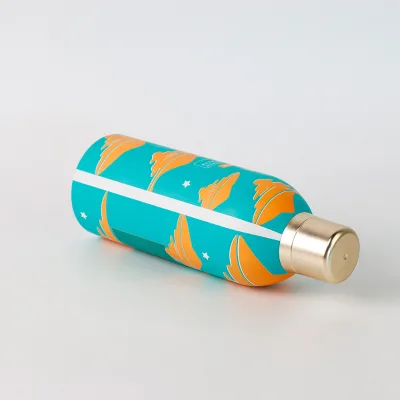

Comprehensive Sourcing Guide
Strategic Sourcing Guide for Eco-Friendly Aluminum Aerosol Cans
Understanding Material Composition and Structural Integrity
When sourcing eco-friendly aluminum aerosol cans, the primary focus must be on the inherent properties of the raw material and the structural engineering that ensures safety and sustainability. Aluminum is selected for its high recyclability, which aligns directly with the "Eco-Friendly" attribute observed in current market listings. Unlike plastic alternatives, aluminum cans can be recycled indefinitely without loss of quality, making them a superior choice for brands prioritizing circular economy goals. The product data indicates that the material composition is strictly defined as either Tin or Aluminum, with a specific emphasis on Aluminum for the eco-friendly segment.
The structural integrity of these cans is governed by rigorous pressure testing standards. Buyers must verify that the selected can meets specific burst and deformation pressure requirements to ensure product safety during transport and storage. Observed specifications indicate that a high-performance can should withstand a burst pressure of no less than 1.5MPa and a deformation pressure of no less than 1.3MPa. These numerical thresholds are critical for maintaining the can's shape under internal pressure variations caused by temperature changes or propellant volatility. The "Small Package Tank" classification suggests these units are designed for efficient logistics and retail display, often adhering to standard volume capacities ranging from 20ml up to 1000ml, with common sizes including 400ml and 500ml variants.
The surface treatment process is equally vital for both aesthetics and functionality. The standard process involves offset printing, which allows for high-fidelity branding with up to 9 colors of ink. This capability supports complex marketing campaigns while maintaining the can's structural integrity. Furthermore, the hardness of the surface coating is a key performance indicator, with observed standards requiring a hardness of no less than 2h. This ensures the printed graphics resist scratching and abrasion during handling. The inner coating is another critical component; for applications involving food, cosmetics, or pharmaceuticals, the inner lining must be food-grade to prevent chemical interactions between the product and the metal.
Compliance Framework and Certification Verification
Navigating the regulatory landscape is a fundamental step in sourcing aluminum aerosol cans, particularly when the product is marketed as eco-friendly. The supply chain must demonstrate adherence to international quality and safety standards. The available data highlights several key certifications that buyers should request as proof of compliance. ISO certification is a recurring standard, indicating that the manufacturer operates under a quality management system that ensures consistent production. Additionally, CE marking is frequently cited, which is essential for products entering the European market, signifying conformity with health, safety, and environmental protection standards.
Beyond general quality management, specific environmental and safety certifications add value to the procurement decision. The FSC (Forest Stewardship Council) certification appears in the data, which, while often associated with paper packaging, may indicate a broader commitment to sustainable sourcing practices within the supplier's ecosystem. For chemical and food-grade applications, the SGS certificate is a crucial verification tool. This third-party inspection confirms that the materials and manufacturing processes meet specific safety and quality benchmarks. Buyers should not assume these certifications are present on all listings; instead, they must explicitly request current certificates for the specific batch or model being ordered.
The "Eco-Friendly" attribute is not merely a marketing term but a functional requirement that must be backed by evidence. While the product data lists "recyclable" as a feature, buyers should verify the specific recycling infrastructure requirements in their target markets. Aluminum is universally recyclable, but the presence of certain coatings or valves can complicate the recycling process. Therefore, the supplier should provide documentation detailing the separability of the can components and the compatibility of the inks and coatings with standard recycling streams. The absence of a specific standard like ISO9001 in the high-confidence list does not negate its importance; rather, it underscores the need for buyers to verify that the supplier holds valid, up-to-date ISO certification rather than relying on generic claims.
Cost Drivers and Economic Considerations
The pricing structure for aluminum aerosol cans is influenced by a complex interplay of material costs, production volume, and customization requirements. The observed price range in the market spans from $0.05 to $2.00 USD per unit, a wide variance that reflects differences in can size, wall thickness, decoration complexity, and order volume. The minimum order quantity (MOQ) is a significant cost driver, with observed ranges extending from 20 pieces to 20,000 pieces. This disparity allows for flexibility in procurement strategies, enabling small businesses to test the market with low-volume orders while larger enterprises can leverage economies of scale.
Customization is a primary factor affecting the unit price. The data confirms that customization is available, including options for specific shapes, colors, and printing configurations. The "Round" shape is standard, but any deviation or specialized valve compatibility, such as the "1 Inch" suitable valve mentioned, may incur additional tooling costs. The printing process is another variable; while standard offset printing supports up to 9 colors, the actual number of colors used in a design directly impacts the setup and run costs. Buyers should note that "8 Color Printing" is a specific capability listed, suggesting that multi-color designs are feasible but may require a higher price point than single-color or black-and-white options.
Lead times also play a role in the total cost of ownership. The observed order lead time is approximately 25 days, which is standard for manufacturing runs involving custom printing and assembly. However, sample lead times are significantly shorter, often available within 1 day, and samples may be offered for free. This rapid sampling capability allows buyers to validate quality and design before committing to a large production run, mitigating the financial risk of bulk orders. The packaging method, typically "Standard Carton" or "Standard Export Carton," adds to the logistics cost, especially for international shipments where volume and weight are optimized to reduce freight expenses.
Typical Applications and Market Segmentation
The versatility of aluminum aerosol cans makes them suitable for a diverse array of industries, each with unique requirements for safety, branding, and product compatibility. The product data identifies several key usage categories, including Tea, Food, Aerosol, Chemical, Cosmetics, Medicine, Toothpaste, Deodorant, and Perfume. This broad applicability stems from the material's inertness and the availability of food-grade inner coatings, which prevent contamination and preserve product integrity.
In the food and beverage sector, aluminum cans are preferred for their ability to protect contents from light and oxygen, extending shelf life. The "Tea" and "Food" applications highlight the need for strict hygiene standards, which are supported by the ISO and SGS certifications. For the cosmetics and personal care industry, the aesthetic appeal of the can is paramount. The ability to apply up to 9 colors of offset printing allows brands to create eye-catching designs that stand out on retail shelves. The "Round" shape and "Standard 25.4mm" mouth diameter are standard specifications that facilitate the use of various valve types, ensuring a consistent user experience for products like deodorants and perfumes.
The pharmaceutical and chemical sectors demand the highest level of safety and compliance. The "Medicine" and "Chemical" usage categories require cans that can withstand high pressures and resist corrosion. The burst pressure of 1.5MPa and deformation pressure of 1.3MPa are critical metrics here, ensuring that the can will not fail under stress. The "Eco-Friendly" aspect is particularly relevant in this sector, as many pharmaceutical companies are under pressure to reduce their environmental footprint. The recyclability of aluminum supports these sustainability goals, making it an ideal choice for green packaging initiatives.
Supplier Evaluation and Selection Criteria
Selecting the right supplier is a critical decision that impacts product quality, delivery reliability, and long-term partnership success. Buyers should evaluate potential suppliers based on a comprehensive set of criteria derived from the available product data. First and foremost, the supplier must demonstrate a proven track record of holding the necessary certifications, including ISO, CE, and SGS. These certifications are not optional; they are indicators of a supplier's commitment to quality and safety. Buyers should request copies of these certificates and verify their validity with the issuing bodies.
The supplier's production capacity and flexibility are also essential factors. The wide range of MOQs, from 20 to 20,000 pieces, suggests that the supplier can accommodate both small and large orders. However, buyers should confirm the supplier's ability to scale production up or down based on demand fluctuations. The availability of free samples and a short sample lead time of 1 day indicates a responsive and customer-focused operation. This agility is crucial for testing new designs and ensuring that the final product meets the buyer's expectations before mass production begins.
Customization capabilities are another key evaluation point. The supplier should offer a range of customization options, including specific models like ME-C064, ME-C011, and ME-C043, as well as standard sizes like 400ml and 500ml. The ability to produce cans with specific mouth diameters and valve compatibilities is essential for ensuring that the final product functions correctly. Buyers should also assess the supplier's quality control processes, looking for evidence of rigorous testing for burst pressure, deformation pressure, and surface hardness. A supplier that proactively provides test results and adheres to strict quality standards is more likely to deliver consistent, high-quality products.
Quality Control and Long-Term Procurement Strategy
Implementing a robust quality control (QC) strategy is essential for maintaining product integrity and brand reputation. Buyers should establish clear QC protocols that align with the technical specifications observed in the market. This includes verifying the burst pressure of no less than 1.5MPa and the deformation pressure of no less than 1.3MPa for every batch. Surface hardness testing, ensuring a rating of no less than 2h, should be conducted to guarantee that the printed graphics remain intact during handling and transport. The inner coating must be tested for food-grade compliance to prevent any chemical reactions with the product contents.
Long-term procurement considerations involve building a sustainable supply chain that can adapt to changing market demands and regulatory requirements. Buyers should prioritize suppliers who demonstrate a commitment to sustainability, as evidenced by the "Eco-Friendly" and "recyclable" attributes. This includes verifying that the supplier uses environmentally friendly inks and coatings that do not hinder the recycling process. The standard export carton packaging should be evaluated for its durability and efficiency, ensuring that it protects the cans during transit while minimizing waste.
Furthermore, buyers should consider the total cost of ownership, not just the unit price. Factors such as lead times, sample availability, and customization costs should be factored into the decision-making process. A supplier that offers a short lead time and flexible MOQs can help buyers manage inventory more effectively and respond quickly to market changes. By establishing a long-term relationship with a reliable supplier, buyers can secure better pricing, prioritize production slots, and ensure a steady supply of high-quality aluminum aerosol cans.
Final Recommendations for Procurement Success
Sourcing eco-friendly aluminum aerosol cans requires a balanced approach that combines technical due diligence, regulatory compliance, and strategic supplier evaluation. Buyers must prioritize suppliers who can provide verifiable evidence of their certifications, including ISO, CE, and SGS, and who demonstrate a commitment to sustainability through recyclable materials and eco-friendly production processes. The technical specifications, such as burst pressure, deformation pressure, and surface hardness, must be rigorously tested and verified to ensure product safety and performance.
By understanding the cost drivers, such as material costs, customization requirements, and order volume, buyers can make informed decisions that optimize their procurement strategy. The wide range of applications, from food and cosmetics to pharmaceuticals and chemicals, highlights the versatility of aluminum cans, making them a valuable asset for diverse industries. Finally, implementing a robust quality control strategy and fostering long-term relationships with reliable suppliers will ensure a steady supply of high-quality, eco-friendly packaging that meets the evolving needs of the market.
FAQs
What certifications do eco friendly aluminum aerosol cans have?
These cans typically hold ISO and CE certifications to ensure quality and safety standards. Some listings also include FSC and SGS certificates for specific batches. Buyers should request current certificates for the exact model to verify compliance with international regulations.
How much is the minimum order quantity for these cans?
The minimum order quantity ranges from 20 pieces to 20,000 pieces depending on the supplier and customization level. Small batches can start at 20 units, while larger production runs often require 20,000 units. This flexibility supports both testing and bulk procurement strategies.
Can I customize the printing and shape of the cans?
Yes, customization is available for shape, color, and printing configurations. The standard shape is round, and offset printing supports up to nine colors. Buyers can specify unique designs while ensuring the surface coating hardness meets the no less than 2h requirement.
What are the pressure safety standards for these aerosol cans?
High-performance cans must withstand a burst pressure of no less than 1.5MPa and a deformation pressure of no less than 1.3MPa. These thresholds ensure structural integrity during transport and storage under varying temperatures. Verification of these metrics is critical for chemical and food applications.
What is the lead time for samples and bulk orders?
Sample lead time is typically one day, and samples may be provided for free. Bulk order lead time is approximately 25 days for manufacturing and shipping. This timeline allows for design validation before committing to large-scale production runs.
Which industries use eco friendly aluminum aerosol cans?
These cans are used for tea, food, cosmetics, medicine, toothpaste, and chemical products. The inner coating is food-grade to prevent contamination in sensitive applications. Their recyclability makes them suitable for brands prioritizing sustainability across diverse market sectors.