Source Eco Friendly Bone China Dinnerware for Hotels, Restaurants, Catering
Compare 30 listings of Eco Friendly Bone China Dinnerware from verified Chinese manufacturers. Buyers can evaluate certifications, customization options, and pricing for serving food, daily use, and promotional events; compare the available evidence and request quotations based on your requirements.
Key considerations
Products List


Affordable Bone China Dinnerware Luxury Restaurant Plates China Dinner Set
$3.22 - $6.25
MOQ: 100 Pieces


Hotel Antique Dinner Ware Set Bone China Dinner Sets Complete Dinnerware
$2.90 - $6.87
MOQ: 100 Pieces


New Design Chinese Dinnerware Luxury Ceramic Tableware Custom Porcelain Dinnerware
$1.00 - $15.00
MOQ: 5000 Pieces


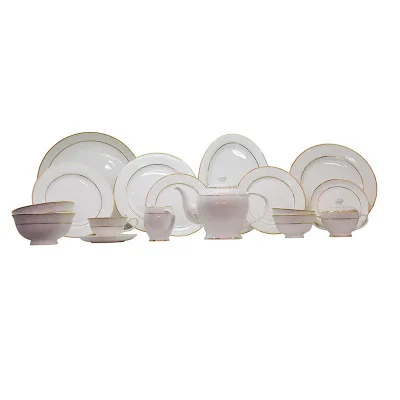


Comprehensive Sourcing Guide
Eco Friendly Bone China Dinnerware Sourcing Guide
Sourcing eco-friendly bone china dinnerware requires balancing aesthetic quality with sustainable manufacturing practices. The available market data indicates a strong presence of products labeled as eco-friendly, often featuring unicolor or multicolor finishes in sets ranging from 11 to 30 pieces. Buyers should prioritize suppliers who explicitly offer customization options, as this allows for tailored designs that align with specific brand sustainability narratives without compromising the structural integrity of the porcelain.
Procurement strategies must account for the diverse material compositions observed, including new bone china, stoneware, and standard porcelain. While the core keyword emphasizes bone china, the supply base frequently offers these alternatives, which may provide different durability profiles or environmental footprints. It is essential to verify the specific material grade, such as A or B grade, to ensure the final product meets the rigorous quality expectations required for high-end hospitality or retail distribution channels.
Product Scope and Observed Listing Signals
The observed product listings reveal a wide spectrum of configurations, from single items to complete dinner sets with specific piece counts like 21-30 or 11-20. Many suppliers offer sets designed for serving food, with standard configurations including 8-inch plates, 7-inch plates, and 3-piece dinner plate sets. This variety suggests that buyers can source complete tableware solutions or specific components, provided they clearly define their required piece count and set composition during the initial inquiry phase.
Packaging and presentation are critical signals of product value, with options ranging from bulk shipping to color boxes and gift boxes. The data shows that products are often described as non-disposable, emphasizing their reusability and long-term utility. Buyers should carefully review the packaging specifications, as the choice between bulk and customized gift packaging can significantly impact the final retail presentation and the perceived value of the eco-friendly dinnerware in the target market.
Technical Specifications to Verify
Technical verification must begin with precise dimensional and capacity specifications, as listings show sizes ranging from 240ml to 400ml for cups and various plate dimensions. Buyers need to confirm the exact model numbers, such as 136, 4264, or 4229, to ensure consistency across orders, as these identifiers often correlate with specific mold designs and firing temperatures. Understanding the standard set configurations, such as the 30-piece set or specific inch measurements, is vital for inventory planning and menu compatibility.
Material properties and physical attributes require close scrutiny to validate the "eco-friendly" claims. While the listings mention new bone china and stoneware, the actual density and thermal shock resistance depend on the specific firing process used by the manufacturer. Buyers should request detailed specifications regarding the handle design for cups and the thickness of the plates to ensure the items are durable enough for daily use and commercial dishwashing cycles without chipping or cracking.
Compliance and Safety Documentation
Compliance documentation is a non-negotiable aspect of sourcing, with the observed data highlighting certifications such as CE/EU, FDA, CIQ, LFGB, and EEC. These certifications indicate that the products meet specific safety standards for food contact materials in major global markets. Buyers must ensure that the supplier provides valid, up-to-date certificates for every batch, as these documents are essential for customs clearance and regulatory compliance in the destination country.
Safety verification extends beyond basic certifications to include specific testing for lead and cadmium leaching, which is critical for bone china products. Although the provided facts list general certifications, buyers should explicitly request test reports that confirm the absence of harmful substances in the glaze and the body of the porcelain. This step ensures that the eco-friendly dinnerware is safe for consumer use and aligns with the strict safety regulations governing food service equipment in international trade.
Cost Drivers and Commercial Terms
Cost drivers in this category are heavily influenced by the level of customization, material quality, and order volume. The observed MOQ ranges from 20 to 5000 pieces, with specific listings noting a 3000-piece threshold for certain customized designs. Buyers must balance the desire for unique branding with the economic reality of higher minimums, as custom logos and specific color requests often require larger production runs to be cost-effective.
Commercial terms and payment structures vary significantly among suppliers, with options including TT, DP at sight, LC at sight, and Western Union. The availability of OEM samples is a key factor in cost management, allowing buyers to validate quality before committing to large orders. Understanding the payment terms and sample policies is crucial for managing cash flow and mitigating financial risk, especially when dealing with international suppliers from regions like Liling, Hunan, China.
Supplier Qualification and Quality Control
Supplier qualification should focus on their manufacturing capabilities and their ability to deliver consistent quality across large batches. The data indicates that suppliers offer OEM and ODM services, suggesting a capacity for custom production, but buyers must verify their quality control processes to ensure that A-grade products are consistently delivered. It is important to assess whether the supplier has a dedicated quality assurance team that inspects products for defects before packaging.
Quality control measures must include rigorous checks on the physical integrity of the dinnerware, such as checking for cracks, glaze imperfections, and color consistency. Since the listings mention both A and B grades, buyers should explicitly define the acceptable quality threshold in their contracts to avoid receiving substandard goods. Establishing a clear inspection protocol, potentially involving third-party inspections, is essential to maintain the brand reputation associated with eco-friendly and high-quality bone china.
Long-Term Procurement Checks
Long-term procurement success depends on establishing a reliable supply chain that can adapt to changing market demands and regulatory updates. Buyers should maintain open communication channels with suppliers to stay informed about any changes in material sourcing or manufacturing standards that could affect the eco-friendly status of the products. Regular audits and performance reviews help ensure that the supplier continues to meet the agreed-upon quality and compliance standards over time.
Sustainability verification should be an ongoing process, requiring suppliers to provide evidence of their environmental practices beyond the initial product specifications. Buyers must monitor the supply chain for any shifts in material sourcing or production methods that could compromise the eco-friendly claims. By maintaining a proactive approach to supplier management, buyers can ensure a steady supply of high-quality, compliant dinnerware that aligns with their long-term corporate sustainability goals.
FAQs
What certifications do the Eco Friendly Bone China Dinnerware products have?
The products hold CE/EU, FDA, CIQ, LFGB, and EEC certifications. These standards ensure safety and compliance for international markets. Buyers can verify these documents before placing orders to meet local regulatory requirements for food contact materials.
Can I request a customized logo on the ceramic dinnerware sets?
Yes, customized logos are available for these ceramic and porcelain items. The supplier accepts OEM and ODM requests to tailor designs. Buyers should confirm specific customization details and minimum order quantities before finalizing the production plan.
Which product models are available for the bone china dinnerware collection?
Available models include 136, 4264, 4229, 4204, 120, 4263, HA7689/314831-1/314831, 610445, and 315788. Each model offers different specifications like plate sizes or cup capacities. Buyers can select based on their specific serving needs and set configurations.
How is the Eco Friendly Bone China Dinnerware packaged for shipping?
Packaging options include color boxes, cartons, bulk, or gift boxes depending on the order. The standard packing ensures safe transport of fragile ceramic items. Buyers can choose bulk or customized packaging to optimize logistics costs and presentation for retail.
What is the minimum order quantity for these ceramic dinnerware sets?
The minimum order quantity ranges from 20 to 5000 pieces depending on the specific product. Some items require 3000 pieces as a standard MOQ. Buyers should check the specific model requirements to ensure their order meets the supplier's production thresholds.
Where are the Eco Friendly Bone China Dinnerware products manufactured?
Products originate from China, specifically Liling, Hunan. This region is known for its ceramic manufacturing capabilities. Buyers can expect high-quality production standards associated with this established industrial hub for porcelain and bone china goods.
Are samples available for the stock design of the dinnerware?
Samples are available for stock designs upon request. The supplier offers OEM samples to help buyers evaluate quality before bulk production. This allows purchasers to verify material quality and finish before committing to a larger order volume.