Source eco-friendly durable rectangle tissue box for hotels, offices, and kitchens
Explore 30 listings for an eco-friendly durable rectangle tissue box suitable for hotel rooms, office desks, and kitchen counters. Buyers can compare stainless steel and wood options with custom logos and waterproof features from verified Chinese manufacturers.
Key considerations
Products List




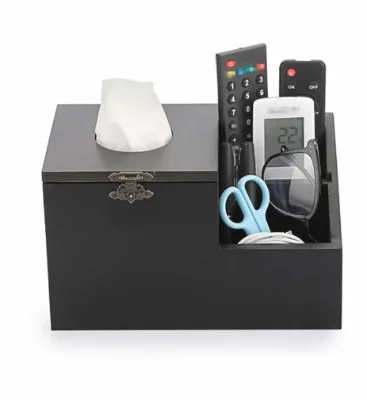
Customizable Logo Mobile Charging Function Creative Tissue Box for Business Gift
$42.90 - $45.20
MOQ: 50 Pieces


Comprehensive Sourcing Guide
Strategic Sourcing Guide for Eco-Friendly Durable Rectangle Tissue Boxes
Understanding Material Composition and Durability Standards
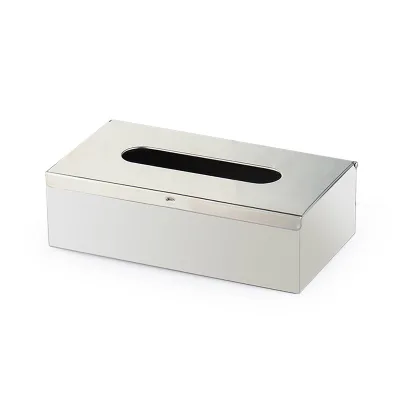
When sourcing a rectangle tissue box, the primary determinant of durability and environmental impact lies in the material selection. Based on available market data, the two dominant material categories for this product class are stainless steel and wood. Stainless steel variants, such as those identified by model numbers like ES9422 and ES9421, offer a robust solution characterized by high resistance to corrosion and physical wear. These units often feature a polished finish, which not only enhances aesthetic appeal but also facilitates easy cleaning, a critical factor for high-traffic commercial environments. The structural integrity of stainless steel ensures that the tissue box maintains its shape and function over extended periods, reducing the frequency of replacement.
Conversely, wood-based tissue boxes, including models like ES8097 and ES7306, provide a distinct aesthetic profile often associated with warmth and natural texture. The wood category is frequently marketed with a mahogany finish, offering a rich, dark tone that complements traditional or luxury interior designs. While wood offers a natural aesthetic, buyers must verify the specific treatment and finish applied to the wood to ensure it meets "eco-friendly" criteria. This involves confirming that the wood is sourced from sustainable forests and that any adhesives or varnishes used are low-VOC or non-toxic. The durability of wood units depends heavily on the density of the timber and the quality of the sealant, which protects against moisture and daily handling.
The rectangular shape is a standard specification across both material types, with dimensions typically ranging between 240mm and 250mm in length, 125mm to 135mm in width, and 70mm to 74mm in height. This standardized footprint allows for consistent storage and display arrangements. Buyers should note that while the shape is consistent, the internal volume and tissue capacity may vary slightly based on wall thickness and design. For applications requiring high durability, such as hotel lobbies or public restrooms, stainless steel is often the preferred choice due to its resistance to vandalism and harsh cleaning chemicals. For residential or boutique hotel settings, wood offers a softer, more inviting appearance, provided the finish is maintained.
Technical Specifications and Functional Attributes
Beyond material, the technical specifications of a rectangle tissue box dictate its suitability for specific environments. A key functional attribute observed in the market is the waterproof capability, which is essential for products intended for bathrooms or outdoor areas. This feature ensures that the tissue box remains protected from humidity and accidental water exposure, preventing mold growth or material degradation. The dimensions provided in the market data, such as L246 X W135 X H74mm for the stainless steel models and L240 X W125 X H70mm for wood variants, indicate a compact design optimized for wall mounting or countertop placement.
Customization is a significant technical factor for B2B buyers. The market data confirms that customization is available, allowing for the integration of logos and branding. This is particularly relevant for hospitality and corporate clients who require branded amenities to reinforce their identity. The acceptance of custom logos can range from simple etching on metal to printed decals on wood. Additionally, the design aspect is often flexible, with some suppliers offering free design services to assist buyers in creating unique shapes or finishes that align with their interior design themes. The "Hotel standard" designation found in product descriptions suggests that these items are engineered to meet the rigorous demands of the hospitality industry, including ease of access for guests and durability under constant use.
Packaging details also play a role in the technical logistics of the supply chain. Standard packaging often involves carton packs containing 10 pieces per carton, or polybag packaging for individual units. The single package size for some models is recorded as 271616cm, with a gross weight of 3.3kg. Understanding these metrics is crucial for calculating shipping costs and warehouse storage requirements. Buyers should verify the exact packaging configuration for their specific order, as variations exist between different model numbers, such as the 90015R3 model which may utilize different packing densities.
Compliance, Certification, and Environmental Verification
In the context of "eco-friendly" claims, verifying compliance and certification is a critical step that cannot be overlooked. The market data indicates that reputable manufacturers often hold certifications such as BSCI, Sedex, ISO9001, and Reach. These certifications provide a framework for assessing the supplier's commitment to social responsibility, supply chain transparency, and product safety. ISO9001 ensures that the manufacturer has a robust quality management system in place, which is essential for maintaining consistent product quality. BSCI and Sedex certifications highlight the supplier's adherence to ethical labor practices, which is a growing priority for global procurement teams.
The Reach certification is particularly relevant for products containing materials that may come into contact with humans, ensuring that the chemical composition of the tissue box does not contain restricted substances. While background knowledge often references FSC (Forest Stewardship Council) and OEKO-TEX standards, these specific certifications are not explicitly confirmed in the provided product data. Therefore, buyers must actively request proof of FSC certification if they are sourcing wood-based tissue boxes to ensure the timber is legally and sustainably harvested. Similarly, for any claims regarding low-emission finishes, buyers should ask for specific test reports or OEKO-TEX certificates rather than relying on general marketing statements.
Compliance also extends to the commercial terms and trade standards. Suppliers operating in the European, North American, and Australian markets must adhere to local regulations regarding product safety and labeling. The presence of certifications like ISO9001 and Reach suggests that the manufacturer is already aligned with international standards, but buyers should verify that the specific batch of products being ordered meets the current regulatory requirements of the destination country. This due diligence protects the buyer from potential legal liabilities and ensures that the "eco-friendly" label is substantiated by verifiable data rather than vague assertions.
Cost Drivers and Pricing Structure Analysis
The pricing of rectangle tissue boxes is influenced by a complex interplay of material costs, customization requirements, and order volume. The observed price range in the market spans from $0.01 to $45.20, a wide spectrum that reflects the diversity of product quality and material composition. Stainless steel units, particularly those with polished finishes and custom branding, tend to occupy the higher end of this price range due to the cost of raw materials and the labor-intensive finishing processes. Wood-based units, while potentially cheaper in raw material costs, can also command higher prices if they feature high-quality mahogany finishes or intricate custom designs.
Minimum Order Quantity (MOQ) is a significant cost driver. The data shows MOQs ranging from 1 piece to 90,000 pieces, with a common baseline of 100 pieces for many standard models. However, some suppliers may require an MOQ of 1,000 pieces for custom orders or specific material types. Higher order volumes typically result in a lower unit price, making it essential for buyers to balance their immediate needs with long-term inventory planning. The payment terms, which include T/T, Western Union, L/C, and increasingly digital options like PayPal and Alipay, also affect the financial logistics of the transaction. Buyers should negotiate terms that align with their cash flow, especially for large orders where the total value is substantial.
Additional cost factors include the lead time and shipping method. The standard delivery time is reported as 30-40 days or 4-5 weeks, which can impact the overall cost if expedited shipping is required. Commercial terms such as EXW, FOB, CNF, and CIF determine who bears the cost of transportation and insurance. For buyers located far from the manufacturing origin in China, choosing a CIF (Cost, Insurance, and Freight) term might simplify logistics but could result in a higher base price compared to EXW (Ex Works). Understanding these variables allows buyers to construct a total cost of ownership model that goes beyond the unit price, ensuring accurate budgeting for the procurement project.
Supplier Evaluation and Operational Capabilities
Evaluating a supplier for rectangle tissue boxes requires a holistic view of their operational capabilities and market reputation. The market data identifies suppliers as "20 Years Manufacturer & Exporter," indicating a level of experience and stability that is valuable for long-term partnerships. These established manufacturers typically have the infrastructure to handle large-scale production and export logistics efficiently. The main markets served include Europe, North America, Australia, Asia, the UAE, and Russia, suggesting that these suppliers have experience navigating diverse regulatory environments and cultural expectations.
Service offerings such as OEM (Original Equipment Manufacturer) and ODM (Original Design Manufacturer) are critical for buyers seeking customized solutions. The ability to accept acceptable custom logos and designs allows buyers to create a unique product identity. Buyers should assess the supplier's sample time, which is typically 5-7 days, to ensure they can meet project deadlines. A short sample time indicates an agile production process, but buyers must also verify the quality of the samples before committing to a full order. The availability of multiple payment methods, including L/C and T/T, demonstrates financial flexibility and trustworthiness.
When evaluating suppliers, buyers should also consider the packaging and logistics capabilities. The standard packaging of 10 pieces per carton or 8 pieces per carton for specific models must be compatible with the buyer's storage and distribution needs. Suppliers who offer door-to-door shipping services can simplify the procurement process, reducing the administrative burden on the buyer. However, buyers must verify the reliability of these logistics partners to ensure that products arrive in perfect condition. A supplier with a strong track record in the hotel industry, as indicated by product descriptions mentioning "Hotel Kitchen Supplies" and "Hotel Bedding," is likely to understand the specific durability and aesthetic requirements of hospitality clients.
Quality Control and Long-Term Procurement Strategy
Implementing a robust quality control (QC) strategy is essential for ensuring that the rectangle tissue boxes meet the expected standards of durability and finish. Given the variation in materials and finishes, buyers should establish clear acceptance criteria before production begins. This includes verifying the dimensions, weight, and finish quality of the stainless steel or wood units. For wood products, checking for warping, cracks, or uneven finishes is crucial. For stainless steel, inspecting the polished finish for scratches or imperfections is necessary. The "Hotel standard" designation implies a high level of quality, but buyers should not assume this without verification.
Long-term procurement considerations involve building a sustainable supply chain that can adapt to changing market demands. This includes securing a reliable source of raw materials, particularly for wood-based products where sustainability is a key concern. Buyers should work with suppliers who can provide traceability for their materials and who are committed to continuous improvement in their manufacturing processes. Regular audits and quality checks during production can help identify and rectify issues before they affect the final product. Additionally, maintaining a relationship with a supplier who offers flexible customization options allows buyers to respond quickly to design trends or branding changes.
The lead time of 30-40 days should be factored into the procurement timeline to avoid stockouts. Buyers should plan their orders well in advance, especially for custom designs that may require additional time for sample approval and production setup. The ability to order small quantities (MOQ of 1) allows for testing and prototyping, while larger orders (up to 90,000 pieces) enable economies of scale. By balancing these factors, buyers can optimize their inventory levels and reduce the risk of supply chain disruptions. Ultimately, a successful procurement strategy for eco-friendly durable rectangle tissue boxes relies on a combination of rigorous supplier evaluation, clear quality standards, and strategic planning for long-term growth.
FAQs
What materials are available for eco-friendly durable rectangle tissue boxes?
Stainless steel and wood are the primary materials used for these tissue boxes. Stainless steel models like ES9422 offer high corrosion resistance, while wood variants such as ES8097 provide a mahogany finish suitable for luxury interiors.
Can buyers request custom logos on these tissue boxes?
Yes, customization is available including acceptable custom logos for branding. Suppliers offer OEM and ODM services to integrate logos onto the polished stainless steel or wood surfaces according to specific design requirements.
What is the typical minimum order quantity for these products?
The minimum order quantity typically starts at 100 pieces for standard models. However, some specific configurations or custom orders may require a minimum of 1000 pieces depending on the supplier and material type selected.
How long does delivery take for bulk orders of these boxes?
The standard delivery time ranges from 30 to 40 days or 4 to 5 weeks. This lead time accounts for production and packaging, which often involves carton packs containing 10 pieces per unit.
Which certifications do manufacturers of these boxes typically hold?
Reputable manufacturers often hold BSCI, Sedex, ISO9001, and Reach certifications. These credentials verify quality management systems and supply chain transparency, ensuring compliance with international safety and ethical labor standards.
What are the standard dimensions for these rectangle tissue boxes?
Standard dimensions generally range from 240mm to 250mm in length and 125mm to 135mm in width. Specific models like ES9422 measure 246mm by 135mm by 74mm, while wood variants may differ slightly.