Source Eco Friendly Durable Golf Tees for Racing, Entertainment, Gift
Compare 30 listings of Eco Friendly Durable Golf Tees made from bamboo, wood, or plastic. Buyers can evaluate customization options, packaging types, and production times for racing, entertainment, and gift applications.
Key considerations
Products List


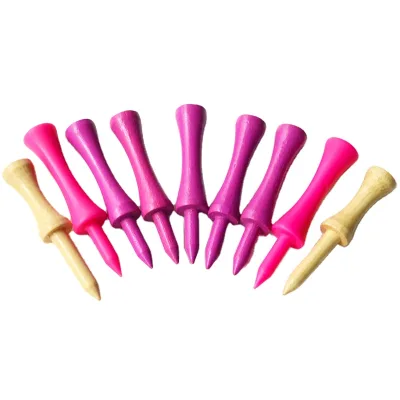


Biodegradable Golf Tees More Durable and Sustainable Eco-Friendly Bamboo Tees
$0.02 - $0.03
MOQ: 5000 Pieces


Premium Quality Natural Bamboo Biodegradable Environmentally Friendly Golf Tees
$0.01 - $0.04
MOQ: 20000 Pieces


Professional Custom Eco-Friendly Golf Tees Durable Tees with Printed Logo
$0.20 - $1.50
MOQ: 1000 Pieces


Comprehensive Sourcing Guide
Strategic Sourcing Guide for Eco-Friendly Durable Golf Tees
The global golf industry is increasingly prioritizing sustainability, driving demand for eco-friendly durable golf tees that balance environmental responsibility with on-course performance. For procurement professionals, sourcing these specialized components requires a nuanced understanding of material science, manufacturing capabilities, and supply chain logistics. This guide synthesizes verified product attributes and industry standards to provide a robust framework for evaluating suppliers and securing high-quality inventory. The focus remains on identifying products that meet the dual criteria of ecological stewardship and mechanical durability, ensuring that the final procurement decision supports both brand values and operational requirements.
Material Composition and Performance Characteristics
The foundation of any eco-friendly golf tee lies in its material composition. Current market offerings primarily utilize renewable resources such as bamboo and wood, alongside engineered plastics designed for longevity. Bamboo stands out as a premier choice due to its rapid regeneration cycle and inherent strength-to-weight ratio. Products sourced from this category often feature a "Bamboo/Wooden" designation, indicating a composite or natural material blend that offers superior structural integrity compared to standard wood. The observed product attributes confirm that bamboo is a distinct material option, often highlighted for its "Environmentally Friendly" characteristics.
In addition to natural fibers, some suppliers offer tees constructed from plastic or rubber composites. While plastic is a common material, the "eco-friendly" designation in this context often implies the use of recycled polymers or biodegradable formulations. The product data indicates a "Metrial" (Material) range including Wooden, Bamboo, Plastic, and Rubber, suggesting a diverse supply landscape. For buyers seeking durability, the selection of rubber components, such as those described in "Golf Tees Rubber" designs, can provide enhanced flexibility and resistance to breakage during high-impact swings. However, the environmental trade-off of synthetic materials must be carefully weighed against the performance benefits. The "Customized" nature of these products allows for material blending, enabling buyers to specify exact ratios of natural to synthetic components to meet specific sustainability targets.
Technical Specifications and Customization Options
Technical specifications for golf tees are critical for ensuring compatibility with various club types and player preferences. The product data reveals a wide range of model numbers, such as OH9089, DR00142, DR125, and DW-GT250501, each potentially representing different dimensional profiles. Length is a primary specification, with observed standards including "2-3/4''" and "3-1/4''". These measurements are essential for matching tee height to driver loft and swing mechanics. Buyers must verify that the selected model aligns with the specific length requirements of their target demographic, as the "Size" attribute is listed as "M" in some contexts, implying a standard medium dimension that may vary by manufacturer.
Customization is a dominant feature in this sector, with "Customization: Available" and "Custom: Logo/Color/Size" being high-confidence attributes. This flexibility allows brands to create unique product identities. Color options are extensive, ranging from standard "Yellow", "Pink", and "White" to fully "Custom" or "Any Colors Are Available" specifications. The ability to print logos is confirmed by attributes such as "Logo: Accept", "Logo: Yes", and "Logo: Printed". This is particularly valuable for corporate gifting or promotional campaigns where brand visibility is paramount. Furthermore, the "Condition: New" and "Design" attributes indicate that suppliers are prepared to deliver finished goods ready for immediate distribution, eliminating the need for secondary processing.
Compliance, Standards, and Environmental Verification
Navigating the regulatory landscape for eco-friendly products requires rigorous verification of standards and certifications. While the product data lists "prod_standard" as "Custom" or "EU standard" in specific instances, buyers must not assume automatic compliance with international environmental regulations without direct confirmation. The observed mention of "EN13432" in background notes suggests a potential relevance to compostability standards, but this should be treated as a verification point rather than a guaranteed attribute for every listed product.
Procurement teams should explicitly request documentation regarding the "Environmentally Friendly" claims. This includes verifying if the bamboo or wood is sourced from certified sustainable forests (such as FSC) and if the manufacturing process adheres to specific environmental management systems. For plastic-based tees, buyers must inquire about the percentage of recycled content and the biodegradability profile. The "Standard" attribute in the data is often listed as "Custom," which places the burden of specification on the buyer to define acceptable thresholds. It is crucial to establish clear acceptance criteria for chemical content, such as the absence of harmful heavy metals or volatile organic compounds (VOCs), to ensure the product meets both local and international safety regulations.
Cost Drivers and Pricing Dynamics
Understanding the cost structure of eco-friendly golf tees is essential for budget planning and margin analysis. The observed price range in the market spans from $0.01 to $2.52 USD, a significant variance that reflects differences in material quality, customization complexity, and order volume. The lower end of this spectrum likely corresponds to basic, unbranded wooden or bamboo tees with minimal processing, while the higher end encompasses premium models with custom molds, specialized rubber inserts, and complex logo printing.
Minimum Order Quantity (MOQ) is another critical cost driver, with observed ranges between 100 and 20,000 units. Suppliers with lower MOQs (e.g., 100 units) may charge a premium per unit to cover setup costs, whereas high-volume orders (e.g., 20,000 units) benefit from economies of scale. The "Production Time" of around 25-30 days and "Shipping Time" of 10-15 days also impact the total cost of ownership, as longer lead times may necessitate higher safety stock levels. Buyers should consider the "Sample Time" of 7-10 days when planning product launches, as this can delay the finalization of specifications. Additionally, packaging choices, such as "OPP Bag", "PE", or "Carton", influence the final unit cost, with bulk packing generally being more cost-effective than individual retail packaging.
Supplier Evaluation and Logistics Management
Selecting the right supplier involves a comprehensive evaluation of their operational capabilities and logistical reliability. The product data indicates that the primary origin for these goods is China, with specific mentions of Jiangxi as a production hub. This regional concentration suggests a mature supply chain with established infrastructure for bamboo and wood processing. When evaluating suppliers, buyers should verify the "prod_packing" methods, which range from "OPP Bag" and "PE" to "Carton" and "1000PCS/Carton". The choice of packaging affects both product protection during transit and the sustainability profile of the shipment.
Logistics planning must account for the "Shipping Time" of 10-15 days and the various shipping modes available, including "Sea/Express/Air". Sea freight is typically the most cost-effective for large volumes, while air express may be necessary for urgent restocking or sample delivery. The "Sample Available" attribute is a vital tool for quality assurance, allowing buyers to physically inspect the product before committing to a large order. Suppliers should also demonstrate flexibility in "OEM: Acceptable" and "Customization" services, ensuring they can adapt to changing market demands. Buyers should prioritize suppliers who provide transparent communication regarding production status and potential delays, as the "Production Time" can vary based on order complexity and raw material availability.
Quality Control and Long-Term Procurement Strategy
Implementing a robust quality control (QC) protocol is essential for maintaining the integrity of eco-friendly golf tees. Given the natural variability of bamboo and wood, buyers must establish clear tolerances for dimensions, finish, and structural strength. The "Condition: New" attribute implies that products should be free from defects, but proactive QC measures are necessary to prevent issues such as splitting, warping, or inconsistent coloring. Testing should include drop tests to assess durability and visual inspections for logo alignment and color consistency.
For long-term procurement, building a strategic partnership with suppliers is more beneficial than transactional buying. The ability to customize "Logo/Color/Size" and the availability of "Customized" standards suggest that suppliers are capable of evolving with the buyer's brand. Buyers should consider the "Usage" categories of "Racing, Entertainment, Gift" to align product specifications with specific market segments. For instance, tees intended for corporate gifts may require higher-end packaging and more intricate logo printing, while those for entertainment or racing events might prioritize durability and cost-efficiency. By maintaining a flexible approach to specifications and fostering open communication, buyers can ensure a steady supply of high-quality, eco-friendly golf tees that meet both current needs and future sustainability goals.
Comparative Analysis of Product Attributes
To facilitate decision-making, the following table summarizes key attributes observed across the product spectrum, highlighting the variations buyers may encounter.
| Attribute Category | Observed Options | Strategic Implication |
|---|---|---|
| Material | Bamboo, Wooden, Plastic, Rubber | Bamboo/Wood offers high eco-credibility; Rubber/Plastic offers durability. |
| Standard Length | 2-3/4'', 3-1/4'', Custom | Must match club head type; Custom allows niche targeting. |
| Color Options | Yellow, Pink, White, Custom | Standard colors reduce cost; Custom supports branding. |
| Packaging | OPP Bag, PE, Carton, Bulk | Bulk reduces cost; Carton/Box adds retail value. |
| MOQ Range | 100 - 20,000 Units | Lower MOQ for testing; Higher MOQ for margin optimization. |
| Lead Time | 25-30 Days (Production) + 10-15 Days (Shipping) | Plan inventory 45+ days in advance for standard orders. |
| Customization | Logo, Color, Size, Design | High flexibility enables unique product differentiation. |
This structured approach to sourcing ensures that buyers can navigate the complexities of the eco-friendly golf tee market with confidence, leveraging verified data to make informed decisions that align with their business objectives and sustainability commitments.
FAQs
What materials are used for Eco Friendly Durable Golf Tees?
Products primarily use bamboo, wood, plastic, or rubber. Bamboo and wood options are highlighted as environmentally friendly, while plastic and rubber variants offer enhanced durability for high-impact swings.
Can I customize the logo and color of these golf tees?
Yes, customization for logo, color, and size is available. Buyers can select from standard colors like yellow, pink, or white, or request custom colors and printed logos for branding purposes.
What are the typical lead times for production and shipping?
Production typically takes around 25 to 30 days, with shipping requiring 10 to 15 days. Sample availability is confirmed with a lead time of 7 to 10 days for quality verification before bulk orders.
What is the minimum order quantity for these golf tees?
The minimum order quantity ranges from 100 to 20,000 units depending on the supplier and customization level. Lower MOQs allow for testing, while higher volumes benefit from economies of scale.
Where are these golf tees manufactured and what is the origin?
The products originate from China, with specific production hubs noted in Jiangxi. This regional concentration supports a mature supply chain for processing bamboo and wood materials efficiently.
How are these golf tees packaged for shipment?
Packaging options include OPP bags, PE bags, cartons, or bulk packing. Specific configurations like 1000 pieces per carton are available, allowing buyers to choose between cost-effective bulk or retail-ready packaging.
What standard lengths are available for these golf tees?
Standard lengths observed include 2-3/4 inches and 3-1/4 inches to match different club types. Custom specifications are also accepted to meet specific player preferences or club head requirements.