Source eco-friendly durable indoor playground for schools, malls, and community centers
Find 30 listings for eco-friendly durable indoor playgrounds suitable for various commercial and public spaces. Buyers can compare specifications, sizes, and customization options to select the best fit for their facility needs.
Key considerations
Products List


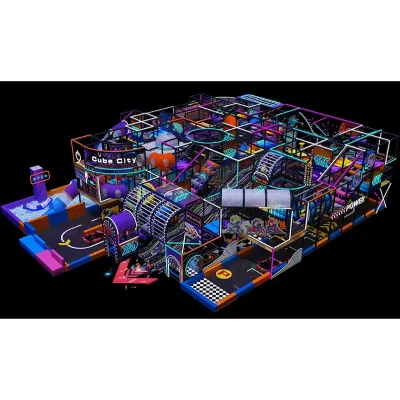


Ultimate Indoor Sports Playground for Endless Fun and Activity
$150.00 - $300.00
MOQ: 10 Square Meters

Ultimate Multi-Activity Indoor Playground for Family Fun Experiences
$150.00 - $300.00
MOQ: 10 Square Meters


Comprehensive Sourcing Guide
Strategic Sourcing Guide for Eco-Friendly Durable Indoor Playgrounds
Procuring an indoor playground requires a rigorous approach that balances safety, durability, and environmental responsibility. The market for these facilities is vast, with products ranging from small modular units to massive custom-built complexes. Buyers must navigate a landscape where "eco-friendly" and "durable" are often marketing terms that require verification against tangible product attributes. This guide provides a structured framework for evaluating suppliers and products, ensuring that the final installation meets the specific needs of children, operators, and environmental standards without relying on unverified claims.
Understanding Product Specifications and Customization
The foundation of a successful procurement project lies in the precise definition of technical specifications. Indoor playgrounds are not off-the-shelf commodities; they are highly customizable structures designed to fit specific spatial constraints and user demographics. When sourcing, buyers must scrutinize the dimensional data provided by suppliers. Observed market data indicates that standard dimensions can vary significantly, with some units measuring approximately 1100380280 cm while others reach sizes like 26002750450 cm. The ability to customize these dimensions is a critical attribute, as the physical footprint of the playground must align with the available indoor space.
Capacity is another pivotal specification. Different units are engineered to accommodate varying numbers of children simultaneously. Some models are designed for smaller groups, supporting 10 to 25 kids, whereas larger installations can handle capacities ranging from 25 to 60 children. This variance directly impacts the throughput and revenue potential of the facility. Furthermore, the age range of the intended users dictates the design complexity and safety features. Most products in the current market are tailored for children between 3 and 12 years old, though some units extend this range up to 14 years. Ensuring the selected model matches the target demographic is essential for both safety and engagement.
The structural composition also plays a vital role in durability. While some playgrounds utilize wooden materials, others employ advanced manufacturing processes such as rotational molding. The choice of material affects the longevity and maintenance requirements of the equipment. Buyers should verify the specific material composition of the product to ensure it aligns with the "durable" criteria required for high-traffic commercial environments. Additionally, the enclosure height is a key safety metric, with some specifications noting heights greater than 2.5 meters to prevent falls and ensure adequate play volume.
Compliance, Certification, and Safety Standards
Safety compliance is the non-negotiable pillar of indoor playground procurement. In the absence of a universal global standard, buyers must verify that products meet recognized international certifications. The market data highlights several key certifications that serve as indicators of quality and safety. These include CE, ISO9001:2000, TUV, and GS. The presence of these marks suggests that the product has undergone specific testing protocols regarding structural integrity, material safety, and electrical compliance (if applicable).
When evaluating a supplier, it is imperative to request documentation proving these certifications. Relying on a supplier's verbal assurance is insufficient. Buyers should look for specific mentions of standards such as EN 1176-10, which relates to safety requirements for playground equipment, although the exact applicability should be confirmed against the product's intended use. The "Allowable Passenger" rating is another critical safety metric. Some products specify a maximum jumping weight of 100 kg or more, which is essential for ensuring the equipment can withstand the dynamic loads generated by active children.
Furthermore, the condition of the product must be verified as "New." The procurement of used or refurbished equipment introduces significant liability risks and potential safety hazards. A new product ensures that all components are free from wear, tear, and previous stress fractures. The packaging method also offers clues about the product's condition and the supplier's attention to detail. High-quality packaging, such as cotton inside with PVC film outside or plastic film combined with cotton and foam membrane, indicates a commitment to protecting the product during transit. This level of care often correlates with the overall quality control standards of the manufacturer.
Cost Drivers and Pricing Structures
The pricing of indoor playgrounds is influenced by a complex array of factors, resulting in a wide observed range from $30 to $230,000 USD. This variance is not arbitrary but is driven by the scale of the project, the complexity of the design, and the materials used. Small, modular units with standard dimensions will naturally fall at the lower end of the price spectrum, while large, fully custom-designed complexes with specialized features will command premium prices.
Volume is a significant cost driver. Products with a large volume, such as those measuring 70 cubic meters, require more raw materials and more extensive labor for assembly, directly impacting the final cost. The level of customization also plays a major role. While many suppliers offer "Can Design" options where colors and shapes can be changed according to the client's request, the engineering effort required to create a unique design adds to the overall expense.
Minimum Order Quantity (MOQ) is another factor that affects the total cost of acquisition. The market shows an MOQ range from 1 to 1000 units. For a single large installation, the MOQ may be one unit, but for smaller components or accessories, the MOQ might be higher. Buyers must understand the pricing structure relative to the MOQ to avoid unexpected costs. Additionally, the lead time, which typically ranges from 15 to 20 days, can influence the overall project budget if expedited shipping or rush fees are required.
Typical Applications and Operational Context
Indoor playgrounds are versatile installations designed for a variety of commercial and public applications. The most common use case is within dedicated amusement parks, where they serve as a primary attraction for families. However, their utility extends to shopping malls, hotels, educational institutions, and community centers. The specific application dictates the design requirements. For instance, a playground in a high-traffic amusement park may require higher durability and larger capacity compared to one in a hotel lobby.
The "Suitable for" attribute often lists "Amusement Park," but the design flexibility allows for adaptation to other environments. The shape of the playground, whether square or custom, should be chosen to maximize the utility of the available floor space. In commercial settings, the ability to customize the color scheme is crucial for branding and aesthetic integration. The "Can Be Changed According to Your Request" feature allows operators to align the playground's appearance with their corporate identity or the thematic design of the venue.
The target age group is a primary determinant of the application. A facility designed for children aged 3 to 12 years old will have different equipment configurations than one catering to a broader range up to 14 years. Understanding the specific needs of the target demographic ensures that the playground provides an engaging and safe experience. The installation method, typically provided with an installation manual, also influences the operational context. Facilities with limited technical staff may prefer models that are easier to assemble and maintain.
Supplier Evaluation and Quality Control
Evaluating a supplier requires a deep dive into their production capabilities and quality assurance processes. The origin of the product is a relevant factor, with many suppliers located in manufacturing hubs such as Zhejiang, China. While location can influence logistics costs, it does not inherently determine quality. Buyers should focus on the supplier's track record, their production technology, and their adherence to quality standards.
The "Productive Technology" used, such as rotational molding, is a key indicator of the manufacturing process. This technology is known for producing seamless, durable plastic components that are resistant to impact and weathering. Verifying that the supplier utilizes advanced production methods ensures that the final product will withstand the rigors of daily use. Additionally, the condition of the product, confirmed as "New," must be strictly enforced in the procurement contract.
Quality control should be a continuous process, not just a final inspection. Buyers should request detailed information about the packaging process, as proper packaging is the first line of defense against damage during shipping. Options like "Cotton Inside, PVC Film Outside" or "Plastic Film + Cotton + Foam Membrane" demonstrate a high level of care. Furthermore, the warranty period, typically 1 year for these products, is a critical metric. A supplier that offers a standard warranty demonstrates confidence in their product's durability and their commitment to after-sales support.
Long-Term Procurement Considerations
Sourcing an indoor playground is a long-term investment that requires careful consideration of maintenance, scalability, and lifecycle costs. The warranty period is a starting point, but buyers should also inquire about the availability of spare parts and the ease of repair. Products with modular designs may offer better long-term value, as individual components can be replaced without needing to overhaul the entire structure.
The customization options available, such as color changes and size adjustments, provide flexibility for future renovations or expansions. As a business grows or the target demographic shifts, the ability to modify the playground can extend its useful life. The "Customization: Available" attribute is a significant advantage for long-term planning, allowing operators to adapt the facility to changing market trends.
Finally, the environmental impact of the product should be considered. While the term "eco-friendly" is often used, buyers should look for concrete evidence of sustainable practices, such as the use of non-toxic materials and energy-efficient manufacturing processes. The durability of the product also contributes to sustainability by reducing the frequency of replacement. By selecting a high-quality, durable product with a long warranty and robust support, buyers can ensure a sustainable and profitable operation for years to come.
Summary of Key Technical Attributes
To facilitate a clear comparison during the sourcing process, the following table summarizes the key technical attributes observed in the market. This data serves as a reference for buyers to verify against specific supplier offerings.
| Attribute | Observed Range / Options | Verification Requirement |
|---|---|---|
| Product Type | Indoor Playground | Confirm suitability for intended space |
| Capacity | 10-25 Kids; 25-60 Kids | Match to expected foot traffic |
| Age Range | 3-12 Years; 3-14 Years | Align with target demographic |
| Dimensions | 1100380280 cm to 26002750450 cm | Verify against floor plan |
| Enclosure Height | >2.5 m | Ensure safety compliance |
| Max Jumping Weight | ≥100 kg | Confirm structural load capacity |
| Certifications | CE, ISO9001:2000, TUV, GS | Request valid certificates |
| Warranty | 1 Year | Verify terms and coverage |
| Installation | With Installation Manual | Check language and clarity |
| Customization | Color, Size, Shape | Confirm feasibility and cost |
| Material | Wooden, Rotational Molding | Verify durability and safety |
| Origin | Zhejiang, China; China | Assess logistics and lead time |
| Lead Time | 15-20 Days | Plan project schedule accordingly |
| Packing | Cotton/PVC, Plastic/Foam | Ensure safe transit |
By adhering to these guidelines and rigorously verifying each attribute against the supplied facts, buyers can make informed decisions that prioritize safety, durability, and value. The procurement of an indoor playground is a complex process that demands attention to detail, but with the right approach, it can result in a high-quality facility that serves the community effectively.
FAQs
What is the typical capacity range for these indoor playgrounds?
Capacity ranges from 10 to 25 kids for smaller units up to 25 to 60 kids for larger installations. This variance allows operators to select models that match their specific space constraints and expected foot traffic volumes.
Can the color and design be customized for my venue?
Yes, customization is available with colors and designs that can be changed according to your specific request. This flexibility ensures the playground aligns with your branding or the thematic requirements of your amusement park or facility.
What certifications ensure the safety of these playground structures?
Products typically hold certifications such as CE, TUV, GS, and ISO9001:2000 to verify safety and quality standards. These marks indicate compliance with international protocols regarding structural integrity and material safety for children's use.
What is the standard delivery time for these custom units?
The standard delivery time is generally between 15 to 20 days after order confirmation. This lead time accounts for the manufacturing process, which may involve rotational molding or wooden construction depending on the selected model.
Which age groups are suitable for these indoor playgrounds?
Most units are designed for children aged 3 to 12 years old, with some models extending up to 14 years. Selecting the correct age range ensures the equipment is safe and engaging for the intended user demographic.
How are these large structures packaged for safe transport?
Packaging methods include cotton inside with PVC film outside or plastic film combined with cotton and foam membrane. These protective layers prevent damage during transit and ensure the product arrives in new condition for installation.