Source eco-friendly flushable tofu cat litter for Indoor, Outdoor, and Cage Use
Find 30 eco-friendly flushable tofu cat litter options featuring fast clumping, low dust, and biodegradable materials. Buyers can compare features like odor control, flushability, and customizable packaging from suppliers in China.
Key considerations
Products List






Comprehensive Sourcing Guide
Strategic Sourcing Guide for Eco-Friendly Flushable Tofu Cat Litter
Understanding the Product Category and Material Composition
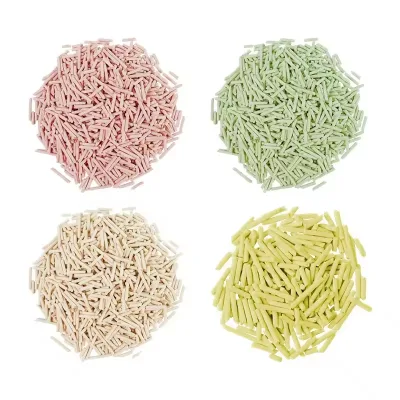
The core keyword "eco-friendly flushable tofu cat litter" defines a specific segment of the pet care market where sustainability meets functional performance. Based on observed product attributes, the primary material composition for this category is tofu, often derived from soy, or cassava starch. These plant-based materials distinguish the product from traditional clay or silica gel alternatives. The defining characteristic of this litter type is its biodegradability and decomposability, which allows for disposal via flushing in many jurisdictions, provided local plumbing regulations permit. The product is explicitly categorized as "Tofu cat litter" with applications strictly for cats, designed for both indoor and outdoor use, including inside pet cages.
The physical form of these products varies, with observations noting a "Strip Shape" for certain models, while others may be granular. The particle size specification is a critical technical detail; verified data indicates a standard range of 1.5mm to 2.0mm. This specific granule size is essential for clumping efficiency and dust control. Buyers must verify that the supplier's production line consistently maintains this dimensional standard, as deviations can impact the litter's ability to clump effectively or generate excessive dust. The material is described as "Natural," "Plant Based," and "Biodegradable," reinforcing the eco-friendly positioning. These attributes are not merely marketing terms but reflect the raw material source, which is renewable and compostable under the right conditions.
Technical Specifications and Functional Performance
When evaluating tofu cat litter, the functional performance metrics are paramount. The observed product features highlight a robust set of capabilities: fast clumping, high adsorbency, and low dust generation. These are not optional features but baseline expectations for a product labeled as high-quality. The "Fast Clumping" attribute ensures that waste is isolated quickly, preventing odor spread and making cleanup efficient. "Highly Adsorbent" and "Odor Control" are linked to the material's ability to absorb moisture and neutralize ammonia smells, often enhanced by added fragrances or activated carbon.
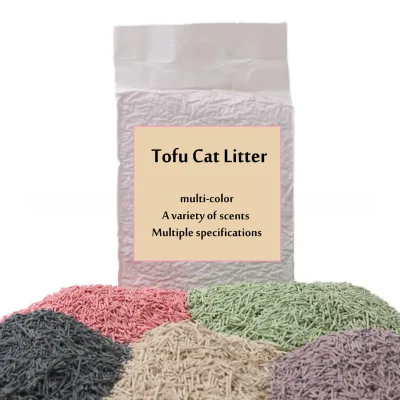
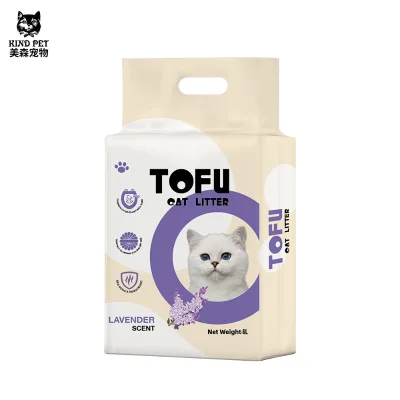
The fragrance profiles observed include Milk, Peach, Green Tea, Lavender, and Honey Peach. Some suppliers offer customizable fragrances, including Activated Carbon, which serves a dual purpose of scent masking and odor neutralization. The "Flushable" attribute is a key differentiator, but it relies on the material's ability to break down rapidly in water without clogging pipes. This is supported by the "Biodegradable" and "Decomposable" tags found in the product data. Additionally, the litter is described as "Comfortable" and "Breathable," suggesting a texture that is gentle on cat paws, which encourages consistent usage.
| Feature Category | Observed Attributes | Verification Requirement |
|---|---|---|
| Clumping Ability | Fast Clumping, Large Capacity | Verify clump hardness and disintegration time in water. |
| Dust Control | Low Dust, Dust-Free | Conduct dust emission tests or review third-party lab reports. |
| Odor Management | Odor Control, Deodorizes, Activated Carbon | Check for specific odor-neutralizing agents and longevity. |
| Material Safety | Eco-friendly, Natural, Biodegradable | Confirm non-toxic certification and absence of harmful additives. |
| Granule Size | 1.5mm-2.0mm | Measure particle distribution to ensure consistency. |
| Packaging | PP Bag+PE Bag, Customized | Inspect packaging integrity for moisture protection. |
Compliance, Certification, and Regulatory Checks
Navigating the regulatory landscape for pet products requires diligence, particularly when claims involve environmental impact and human safety (flushability). While the provided data mentions background standards like ISO 9001, BSCI, REACH, and ASTM D6400, these are listed as low-confidence background information and should not be assumed as guaranteed facts for every supplier. Buyers must treat these as verification targets rather than pre-existing conditions.
For "eco-friendly" claims, the most relevant standard to verify is ASTM D6400, which defines the requirements for compostable plastics and biodegradable materials. Although the litter is plant-based, confirming that the product meets specific biodegradation timelines is crucial for accurate marketing. Similarly, "flushable" claims often require compliance with local plumbing standards, which vary by region. In the context of international trade, REACH (Registration, Evaluation, Authorisation and Restriction of Chemicals) is a critical framework for ensuring the product does not contain restricted substances, especially if the litter contains added fragrances or colorants.
Buyers should explicitly request documentation proving that the product is free from harmful chemicals and that the biodegradability claims are backed by laboratory testing. The "OEM/ODM" capability mentioned in the data suggests that suppliers are open to customizing formulations, which introduces a need for rigorous quality assurance on any new blend. The "Customizable" nature of the fragrance and packaging also implies that the supplier must adhere to the regulatory standards of the destination market, not just the country of origin.
Cost Drivers and Pricing Dynamics
The pricing for eco-friendly tofu cat litter is influenced by several factors, with the observed range spanning from $0.34 to $700 USD. This wide variance is likely driven by differences in packaging size, order volume, and specific feature sets. The minimum order quantity (MOQ) observed ranges from 1 to 5000 units, indicating that suppliers cater to both small-scale testers and large-scale distributors. The "Small Orders: Accepted" attribute confirms flexibility for buyers who wish to sample products before committing to bulk purchases.
Cost drivers include the raw material price of tofu or cassava starch, which can fluctuate based on agricultural harvests. Processing costs for creating the specific "Strip Shape" or ensuring the 1.5mm-2.0mm particle size also contribute to the final price. Packaging is another significant variable; the data lists options like "PP Bag+PE Bag Packed" or custom packaging, which can alter the unit cost. Furthermore, the inclusion of premium features such as "Automatic Cleaning" compatibility, advanced "Odor Control," or specific "Fragrance" blends will increase the price point.
Buyers should analyze the price per kilogram or per liter rather than the total unit price to make accurate comparisons. The "Products Specification" data lists weights ranging from 1.5kg to 24kg, which directly impacts the unit economics. Larger bulk packages (e.g., 20kg or 24kg) typically offer a lower cost per unit but require higher capital outlay and storage capacity. The "OEM/ODM" services, while welcomed, may incur additional setup fees or higher per-unit costs due to the customization of molds and packaging designs.
Supplier Evaluation and Manufacturing Capabilities
Selecting a supplier for tofu cat litter requires a thorough assessment of their manufacturing capabilities and supply chain stability. The data indicates that the primary origin is China, with specific manufacturing addresses noted in Shandong. This regional concentration suggests a mature supply chain for pet products in that area, but buyers should verify the specific factory location to ensure logistical feasibility. The "Place of Origin" and "Manufacturing Address" should be cross-referenced to confirm the facility's capacity and location.
Key evaluation criteria include the supplier's ability to handle "Customization" requests, as many buyers seek unique branding or specific product formulations. The "OEM/ODM: Welcomed Accepted" attribute is a positive signal, but buyers must assess the supplier's track record in managing custom orders. Questions regarding lead times, production capacity, and quality control processes are essential. The "Stocked" status of certain items suggests that some suppliers maintain inventory, which can reduce lead times for standard SKUs, while custom orders will require production time.
Buyers should also evaluate the supplier's commitment to sustainability beyond the product itself. Do they use eco-friendly packaging materials? Do they have waste management protocols? The "Sustainable" and "Recyclable" attributes in the product data should be mirrored in the supplier's operational practices. Additionally, the "Brand Name" variations (e.g., "zy", "TS") indicate that many suppliers operate as private label manufacturers. Buyers must ensure that the supplier has the legal authority to produce the requested brand or that they are willing to sign non-disclosure agreements to protect proprietary formulations.
Quality Control and Long-Term Procurement Strategy
Implementing a robust quality control (QC) strategy is vital for maintaining product consistency. The "Low Dust" and "Fast Clumping" features are performance metrics that must be verified through regular testing. Buyers should establish a protocol for sampling batches to check for dust levels, clump integrity, and moisture absorption rates. The "Standard" of 1.5mm-2.0mm for particle size should be a non-negotiable QC checkpoint. Deviations in this range can lead to poor customer experiences, such as tracking issues or ineffective odor control.
Long-term procurement considerations involve building a resilient supply chain. The "Customization: Available" and "Packing Specification: OEM/ODM" options allow for strategic differentiation in the market. However, relying on a single supplier for customized products can be risky. Buyers should consider diversifying their supplier base to mitigate supply chain disruptions. The "Small Orders: Accepted" feature is valuable for testing new markets or formulations without significant financial risk.
Furthermore, the "Application" of the product for "Indoor Use," "Outdoor Use," and "Inside Pet Cage" suggests versatility. Buyers should ensure that the product specifications align with the intended use case. For example, litter used in outdoor cages may require different durability or weather resistance compared to indoor litter. The "Function: Extra Odor Control" is a key selling point that should be consistently delivered. Regular audits of the supplier's production line and quality control records are recommended to ensure that the "Eco-friendly" and "Biodegradable" claims remain valid over time.
Market Applications and Consumer Expectations
The target market for eco-friendly flushable tofu cat litter is driven by pet owners who prioritize sustainability and convenience. The "Popular" style and "Environment-friendly" advantage indicate strong consumer demand for products that align with green lifestyles. The "Flushable" feature is particularly appealing in urban environments where waste disposal is a concern, provided local regulations allow it. The "Comfortable" and "Breathable" attributes address the comfort of the pet, which is a primary concern for owners.
The product's versatility, as noted in the "Application" data (Indoor, Outdoor, Pet Cage), expands its market potential. It can be marketed to a wide range of consumers, from apartment dwellers to those with larger homes or outdoor pet enclosures. The "Fragrance" options, including Milk, Peach, and Lavender, cater to consumer preferences for pleasant home scents, which is a significant factor in purchasing decisions. The "Customizable" fragrance option allows suppliers to tailor products to specific regional tastes or seasonal trends.
In conclusion, sourcing eco-friendly flushable tofu cat litter requires a balanced approach that considers material quality, regulatory compliance, cost efficiency, and supplier reliability. By focusing on the verified attributes such as the 1.5mm-2.0mm particle size, biodegradability, and clumping performance, buyers can ensure they are procuring high-quality products that meet the evolving demands of the pet care market. The flexibility offered by OEM/ODM services and the availability of small order quantities provide opportunities for strategic market entry and expansion.
FAQs
What material is used for eco-friendly flushable tofu cat litter?
The primary material is tofu or cassava starch, which are plant-based and biodegradable. These natural ingredients ensure the litter is eco-friendly and safe for cats while allowing for flushability in many jurisdictions.
Can this litter be used for both indoor and outdoor applications?
Yes, the product is designed for indoor use, outdoor use, and inside pet cages. Its versatile application supports various environments while maintaining comfort and breathability for the cat.
What is the standard particle size for this cat litter?
The verified particle size specification ranges from 1.5mm to 2.0mm. This specific granule size is critical for ensuring fast clumping efficiency and minimizing dust generation during use.
Does the supplier accept small orders for sampling purposes?
Yes, small orders are accepted with a minimum order quantity as low as one unit. This flexibility allows buyers to test product quality before committing to larger bulk purchases.
Are custom fragrances and packaging options available for this product?
Customization is available for fragrances like milk, peach, and green tea, as well as packaging specifications. Suppliers welcome OEM and ODM requests to meet specific branding and functional needs.
Which features ensure effective odor control in this litter?
The litter features fast clumping, high adsorbency, and deodorizing capabilities to manage odors effectively. Some variants include activated carbon or specific fragrances to further neutralize ammonia smells.