Source Eco-Friendly Kraft Key Card Envelope for Hotel, Business, and Gift
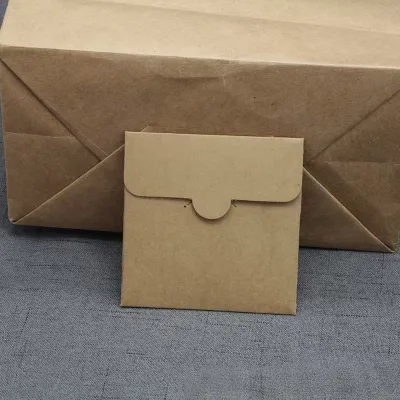
Find 30 listings for Eco-Friendly Kraft Key Card Envelope suitable for hotel key cards, business promotions, and gift packaging. Buyers can compare specifications like size, sealing methods, and customization options from suppliers in Chengdu, China.
Key considerations
Products List


Custom Printed Eco Friendly Packaging Kraft Paper Envelopes with Logo
$0.01 - $0.02
MOQ: 200000 Pieces


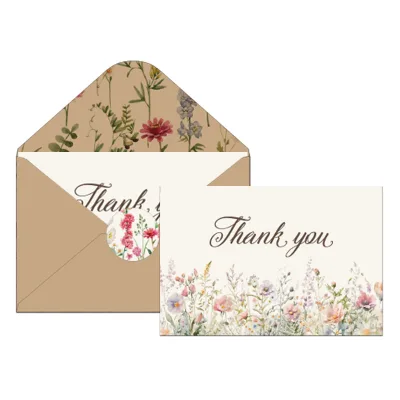
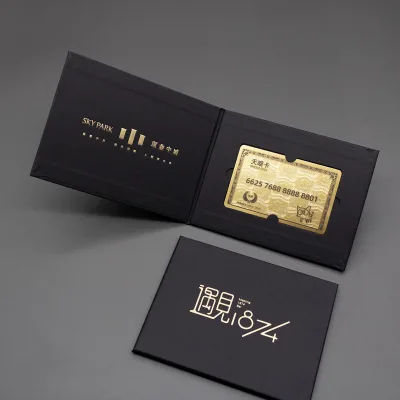


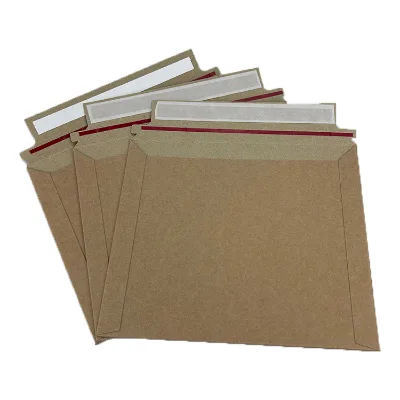


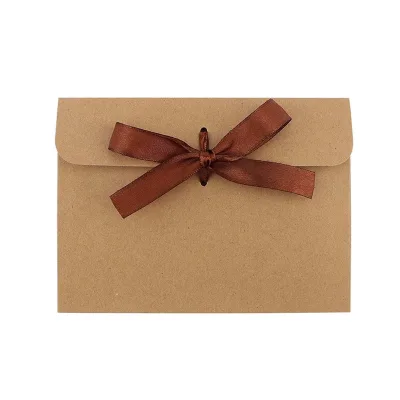

Retro Kraft Paper Letter Creative Festival Greeting Card Packaging Envelope Bag
$0.20 - $0.32
MOQ: 1000 Pieces


Comprehensive Sourcing Guide
Strategic Sourcing Guide for Eco-Friendly Kraft Key Card Envelopes
Procuring eco-friendly kraft key card envelopes requires a nuanced understanding of material science, supply chain logistics, and the specific customization capabilities of manufacturers. In the B2B sector, the demand for sustainable packaging has shifted from a preference to a necessity, particularly for hospitality and corporate gifting sectors. This guide synthesizes verified product attributes and industry standards to assist procurement professionals in selecting the right solutions without relying on unverified marketing claims. The focus remains on the intersection of environmental responsibility, functional utility for key cards, and the operational realities of sourcing from manufacturing hubs like Chengdu, China.
Material Composition and Environmental Attributes
The foundation of any eco-friendly envelope lies in its raw material composition. For the specific category of kraft key card envelopes, the primary material is identified as Kraft paper. This distinguishes the product from standard office paper or synthetic alternatives. Kraft paper is derived from wood pulp processed through the kraft process, which retains the natural lignin and fiber strength, resulting in a durable, brown-colored paper that is inherently recyclable and bio-degradable.
When evaluating suppliers, buyers must verify that the "Paper" and "Kraft" designations are consistent across the product line. The provided data confirms that the material is explicitly listed as "Paper" and "Kraft" in various product models. Furthermore, the attribute "Recyclable" and "Bio-Degradable" are high-confidence facts associated with these products. This means the envelope can be processed through standard recycling streams and will break down naturally in composting environments, unlike plastic-coated or laminated alternatives.
However, buyers should exercise caution regarding the "Coating" attribute. The data indicates that the standard finish for these envelopes is "Uncoated." While uncoated kraft paper is highly sustainable, some applications may require a barrier against moisture. The product specifications explicitly state "Non-waterproof" performance. Therefore, if the procurement need involves environments with high humidity or potential liquid exposure, the uncoated nature of the standard kraft envelope presents a functional limitation. Buyers must verify if a specific coating can be applied during the customization process without negating the bio-degradable status, as coatings can sometimes interfere with recycling or composting.
Technical Specifications and Customization Capabilities
The versatility of kraft key card envelopes is driven by their high degree of customization. The "Shape" and "Making Process" are both listed as "Customized," allowing suppliers to adapt the envelope to the exact dimensions of the key card it will hold. The standard size for these envelopes is noted as "Small," with specific models like the "DL" and "Taki Envelope" adhering to standard dimensions, while others like the "HDP" series offer precise measurements such as 176mm*125mm.
Customization extends beyond dimensions. The "Raw Materials" are listed as "Customized," suggesting that suppliers can blend different paper grades or incorporate recycled content percentages if requested. The "Surface Finish" accepts "Various Process Customization," which may include embossing, debossing, or specific texturing to enhance the tactile experience of the key card.
The "Envelope Type" is predominantly "Self-seal Envelope" and "Letter Envelope," with a "Sealing Method" that relies on self-sealing mechanisms. This is critical for hotel key cards, where speed of access and ease of use are paramount. The "Letter Pad Style" varies between "Western" and "Creative," indicating that the design aesthetic can be tailored to match brand identity. For instance, a hotel might prefer a "Western" style for a classic look, while a tech startup might opt for a "Creative" style with unique folding patterns.
It is essential to distinguish between standard sizes and custom sizes. While some models adhere to "standard size" or "C6" standards, others are explicitly "Custom Size." Procurement teams must provide exact dimensions to ensure the key card fits snugly without excessive movement, which could damage the card or the envelope during transit.
Compliance, Certification, and Verification Protocols
In the realm of sustainable sourcing, certification is often the primary metric for verifying environmental claims. While the provided data includes a low-confidence background reference to "FSC" (Forest Stewardship Council), this should not be treated as a guaranteed attribute for every listed product. Instead, it serves as a benchmark for what buyers should actively seek.
Buyers must treat certification status as a variable to be verified rather than a fixed fact. The presence of "Recyclable" and "Bio-Degradable" attributes is confirmed, but the specific certification backing these claims (such as FSC, PEFC, or specific local environmental standards) must be confirmed with the supplier. The product origin is listed as "Chengdu, China," a major manufacturing hub, but the specific mills supplying the raw material may vary.
To ensure compliance, procurement professionals should request the following documentation:
- Chain of Custody Certificates: To trace the paper from the forest to the finished envelope.
- Material Safety Data Sheets (MSDS): To verify that no harmful chemicals were used in the uncoated or customized processes.
- Third-Party Test Reports: Specifically for biodegradability and recyclability, ensuring the claims align with international standards like ISO 14855 for compostability.
Without explicit certification data in the product listing, buyers should not assume the product meets specific regulatory requirements for their target market. For example, if the destination is the European Union, the packaging must comply with EU directives on waste and packaging, which may require specific labeling or material composition limits that are not automatically guaranteed by the "Kraft" designation alone.
Cost Drivers and Pricing Dynamics
The pricing of eco-friendly kraft key card envelopes is influenced by several distinct factors. The observed price range in the market is 0.01 to 255 USD, a wide spectrum that reflects the difference between bulk commodity orders and highly customized, low-volume runs. The minimum order quantity (MOQ) ranges from 100 to 200,000 units, indicating that the unit cost is highly sensitive to volume.
Key cost drivers include:
- Customization Level: The "Acceptance of Customization" for printing, logo, and shape adds significant cost. A standard uncoated envelope with no printing will be at the lower end of the price range. Conversely, a custom-sized envelope with a customized logo, specific surface finish, and unique paper blend will command a premium.
- Material Grade: While "Kraft" is the base, the quality of the kraft paper (e.g., virgin vs. recycled content, GSM weight) affects the price.
- Packaging Configuration: The "prod_packing" varies significantly. Some products are packed as "250 Bags Packed in Carton, I.E. 5,000 PCS Per Cart," while others use "Polybag" or specific carton dimensions like "482530 Cm." Efficient packing reduces shipping costs, which is a major component of the total landed cost.
- Logistics: The origin in "Chengdu, China" implies shipping via "Express, Air and Ocean." Ocean freight is the most cost-effective for large volumes, while air or express is necessary for urgent, small-batch orders. The "Sample Time" of 3-5 days is a critical factor for project timelines but does not directly impact the unit cost of the final order.
Buyers should note that the "Standard Size" options generally offer better economies of scale compared to "Custom Size" options, which require die-cutting setup and potential material waste.
Typical Applications and Functional Use Cases
The versatility of kraft key card envelopes makes them suitable for a diverse range of applications. The primary use case identified is "Hotel Key Card," where the envelope serves as a secure and elegant carrier for room keys. The "Self-seal" feature ensures that the key card remains secure during the guest's journey from the front desk to the room.
Beyond hospitality, the "Application" field lists "Stationery Packaging," "Medical Packaging," and "Gift Packaging." This indicates that the product is not limited to the hotel industry.
- Stationery Packaging: The "Letter Pad Style" and "Western" or "Creative" designs make these envelopes ideal for high-end stationery sets or business correspondence.
- Medical Packaging: While the "Non-waterproof" attribute is a limitation, the "Bio-Degradable" nature makes them suitable for non-critical medical supplies or promotional medical kits where hygiene is managed through other means.
- Gift Packaging: The "Gift Envelope" type and "Usage" as "Promotion, Gift, Business" highlight their role in corporate gifting. The ability to accept a "Customized Logo" allows companies to brand these envelopes as part of their marketing strategy.
The "Product Type" is explicitly "Envelope," and the "Products Name" includes "Shredded Paper," suggesting that some suppliers may offer shredded kraft paper as a filler or alternative product within the same category, which can be used for additional eco-friendly packaging needs.
Supplier Evaluation and Quality Control
Selecting the right supplier requires a rigorous evaluation process that goes beyond the product listing. Since the "Making Process" is "Customized," the supplier's manufacturing capabilities are paramount. Buyers should assess the supplier's ability to handle the "Various Process Customization" for surface finishes and their experience with "Self-seal" mechanisms.
Quality control should focus on the following areas:
- Dimensional Accuracy: Verify that the "Custom Size" matches the key card dimensions precisely. The "Small" size specification must be validated against the actual card to prevent fitment issues.
- Seal Integrity: Test the "Self-sealing" method to ensure it holds securely without damaging the key card or the envelope.
- Material Consistency: Ensure the "Kraft" paper is consistent in color and texture, as natural variations can be acceptable but should not indicate poor quality control.
- Packaging Integrity: The "prod_packing" must be robust enough to protect the envelopes during shipping. The variation in carton sizes (e.g., "362630 Cm" vs "482530 Cm") suggests that different suppliers have different packing efficiencies.
Buyers should also verify the "Sample Time" of 3-5 days. This indicates a responsive supply chain, but it is crucial to ensure that the sample quality matches the mass production standards. The "Logo" customization capability should be tested with a sample to ensure the print quality is sharp and the colors are accurate.
Long-Term Procurement Considerations
Sourcing eco-friendly kraft key card envelopes is not just a one-time transaction but a long-term partnership strategy. The "Customized" nature of the product means that as the buyer's needs evolve, the supplier must be able to adapt. The "Raw Materials" being "Customized" offers flexibility for future sustainability initiatives, such as increasing recycled content or changing paper grades.
Buyers should consider the scalability of the supplier. The MOQ range of 100 to 200,000 units suggests that the supplier can handle both small pilot runs and large-scale deployments. However, the lead time and production capacity must be aligned with the buyer's demand forecast. The "Shipping" options of "Express, Air and Ocean" provide flexibility, but buyers should plan for the longer lead times associated with ocean freight for large orders.
Finally, the environmental impact of the supply chain should be continuously monitored. As regulations tighten, the "Recyclable" and "Bio-Degradable" claims must remain valid. Buyers should maintain open communication with suppliers regarding any changes in material sourcing or manufacturing processes that could affect the environmental profile of the product. By focusing on these long-term factors, procurement teams can ensure a sustainable and resilient supply chain for their eco-friendly packaging needs.
FAQs
What materials are used for eco friendly kraft key card envelopes?
The primary material is kraft paper, which is explicitly listed as recyclable and bio-degradable. These envelopes are uncoated and non-waterproof, making them suitable for dry environments like hotel key cards or gift packaging without moisture exposure.
Can I customize the size and shape of these kraft envelopes?
Yes, both the shape and making process are fully customized to meet specific needs. While standard sizes like DL or C6 are available, buyers can request custom dimensions such as 176mm by 125mm to ensure a snug fit for key cards.
What is the minimum order quantity for these envelopes?
The minimum order quantity ranges from 100 to 200,000 units depending on the supplier and customization level. Lower MOQs like 100 are available for small batches, while larger orders may require quantities up to 200,000 units to achieve better pricing.
How long does it take to receive samples for these envelopes?
Sample time is typically 3 to 5 days for production and delivery. This allows buyers to verify the self-sealing mechanism, paper quality, and printing accuracy before committing to a larger bulk order of 5,000 pieces or more.
Are these kraft envelopes suitable for hotel key card applications?
Yes, they are specifically designed for hotel key card applications with a self-sealing method for security. The small size and customizable nature ensure they fit standard key cards while offering a professional, eco-friendly presentation for guests.
What customization options are available for printing and logos?
Customization includes acceptance of custom logos, various surface finishes, and specific printing types. Buyers can request unique letter pad styles like Western or Creative, and the raw materials can be adjusted to blend different paper grades if needed.