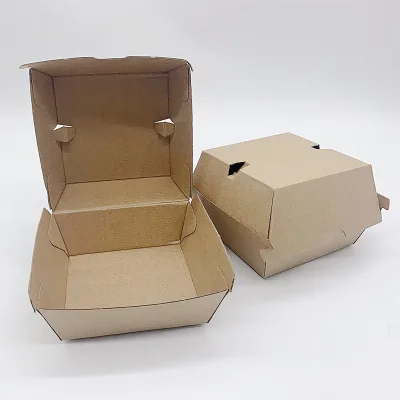
Source eco-friendly kraft paper burger box for Food, Packing, and Tableware
Compare 30 listings for eco-friendly kraft paper burger box options featuring single or double wall designs, custom sizes, and food-grade certifications like FDA and LFGB. Buyers can evaluate suppliers from China for OEM/ODM services and export packaging.
Key considerations
Products List

Eco-Friendly Biodegradable Compostable Kraft Paper Burger Hamburger Box
$0.01 - $0.04
MOQ: 30000 piece


Custom Packaging Eco Friendly Kraft Brown Paper Snack Chicken Burger Box
$0.01 - $0.04
MOQ: 30000 piece

Custom Eco Friendly Disposable Kraft Paper Take Away Burger Packaging Box
$0.01 - $0.04
MOQ: 30000 piece


Biodegradable Kraft Fries Hamburger Box Custom Cardboard Paper Burger Box
$0.02 - $0.05
MOQ: 30000 piece


Biodegradable Kraft Paper Burger Box for Environmentally Friendly Packaging
$0.03 - $0.05
MOQ: 50 Pieces


Biodegradable Kraft Paper Burger Packaging Box for Eco-Friendly Restaurants
$0.03 - $0.05
MOQ: 50 Pieces

Recycled Material Kraft Paper Box Burger Packaging for Eco-Conscious Businesses
$0.03 - $0.05
MOQ: 50 Pieces




Comprehensive Sourcing Guide
Strategic Sourcing Guide for Eco-Friendly Kraft Paper Burger Boxes
The global shift toward sustainable packaging has elevated the demand for eco-friendly kraft paper burger boxes, positioning them as a critical component for food service operators, quick-service restaurants, and retail food brands. Sourcing these items requires a disciplined approach that balances environmental claims with functional performance, regulatory compliance, and supply chain reliability. This guide provides a comprehensive framework for buyers to evaluate potential suppliers and select products that meet specific operational needs without relying on unverified marketing assertions. The following sections detail the technical specifications, compliance requirements, cost structures, and quality assurance protocols essential for successful procurement in this category.
Technical Specifications and Material Composition
Understanding the physical and material attributes of the product is the first step in defining a precise procurement requirement. The core material for these boxes is consistently identified as 100% Kraft Paper or Paperboard. This material choice is fundamental to the product's identity as an eco-friendly solution, offering a natural brown appearance that is often preferred for its rustic aesthetic and biodegradable properties. Buyers should verify that the paper thickness, measured in Grams per Square Meter (GSM), aligns with the intended load-bearing requirements of the food item. The supply data indicates that manufacturers offer both single-wall and double-wall configurations, a critical distinction for thermal insulation and structural integrity.
The structural design varies significantly based on the application. Models such as the BDTB and XGK01 series demonstrate that customization is a standard capability, allowing for specific dimensions to accommodate different burger sizes. Capacity options typically range from 8oz to 16oz, ensuring that the packaging can handle small appetizers or substantial main courses. The wall type is a primary determinant of performance; single-wall boxes are generally suitable for short-term holding, while double-wall constructions provide enhanced rigidity and heat retention for longer service times. Furthermore, the product features often include water and oil-proofing treatments, which are essential for maintaining the structural integrity of the box when in contact with greasy or moist food items.
Print handling options add another layer of customization. Suppliers frequently offer embossing, glossy lamination, and matt lamination to enhance brand visibility and tactile appeal. While the base material is natural brown, color customization is available, allowing brands to align packaging with their visual identity. The printing page is typically single-sided, focusing on the exterior surface for branding, though specific requirements should be confirmed during the inquiry phase. The product type is broadly categorized under paper plates, bowls, and specifically burger boxes, with some listings noting versatility for other food containers, thermal applications, and even non-food sundries, though the primary design intent remains food service.
Compliance and Certification Verification
In the food packaging sector, regulatory compliance is non-negotiable. Buyers must rigorously verify that the supplier can provide documentation proving the product meets the safety standards of the target market. The observed data highlights a range of certifications that are critical for international trade, including FDA (United States), LFGB (Germany/EU), CE (European Conformity), CIQ (China Inspection and Quarantine), and EEC (European Economic Community) standards. These certifications indicate that the materials used are safe for direct food contact and have undergone specific testing for chemical migration and toxicity.
When evaluating a supplier, the presence of these certifications should be treated as a baseline requirement rather than a differentiator. Buyers should request current, valid certificates that explicitly cover the specific product model being ordered. It is important to note that while some background information mentions FSC (Forest Stewardship Council), this should not be assumed without explicit verification from the supplier, as the supply data lists it with lower confidence. Similarly, claims regarding biodegradability and eco-friendliness must be supported by the material composition (100% Kraft Paper) and the absence of non-recyclable liners or coatings that would compromise the product's end-of-life profile.
The standard for food-grade materials is often referenced as "Food Grade Burger Box" in product listings, but buyers must ensure this aligns with local regulations. For instance, the FDA certification is specific to the US market, while LFGB is the stringent standard for the German and broader EU markets. A supplier claiming to serve multiple regions should be able to demonstrate that their production lines are calibrated to meet the most rigorous of these standards. The "Multiple specifications" standard noted in the data suggests that compliance may vary by model, reinforcing the need for case-by-case verification.
Cost Drivers and Pricing Dynamics
The pricing of eco-friendly kraft paper burger boxes is influenced by a complex interplay of material costs, customization levels, and order volume. The observed price range in the market is notably low, spanning from $0.01 to $1.00 per unit, which reflects the competitive nature of the paper packaging industry and the relatively low cost of raw kraft paper. However, this range is highly dependent on the Minimum Order Quantity (MOQ). The data indicates an MOQ range from 50 to 30,000 units, suggesting that unit costs will decrease significantly as order volumes increase.
Buyers should anticipate that the base price for a standard, single-wall, natural brown box will be at the lower end of the spectrum. Costs will escalate with the addition of value-added services such as custom printing, lamination (glossy or matt), embossing, and specialized sizing. The "Custom Size Accepted" and "Customer Logo Accepted" attributes imply that bespoke orders will carry a premium over stock items. Additionally, the choice of wall type (single vs. double) and paper thickness (GSM) directly impacts the raw material cost, which is passed through to the final price.
Packing specifications also play a role in logistics costs. The standard export carton packing, often cited as 300 pieces per carton, affects the efficiency of shipping and storage. Buyers should calculate the total landed cost, including freight, by considering the carton dimensions and weight. While the unit price may appear attractive, the total cost of ownership must account for the MOQ requirements, which can be substantial for smaller buyers. The "Free for You" sample offer noted in the data can be a valuable tool for cost analysis, allowing buyers to assess quality before committing to a large production run.
Typical Applications and Functional Performance
The primary application for these boxes is clearly defined as packing food, specifically burgers, but the functional versatility extends to a broader range of uses. The product features list applications including tableware, thermal containers, spice packaging, and sundries. The "Heat and Cold Resistance" attribute indicates that these boxes are designed to maintain food temperature, making them suitable for hot meals like burgers as well as cold items like salads or desserts. The "Microwavable" feature, where applicable, adds significant utility for consumers who require reheating options, though this must be verified against the specific coating or treatment used.
The functional performance relies heavily on the oil-proof and waterproof properties of the paper. Without these treatments, kraft paper would quickly degrade when exposed to the fats and moisture inherent in burger packaging. The "Disposable" and "Single Use" attributes highlight the intended lifecycle of the product, emphasizing convenience and hygiene. However, some listings mention "Reusable Limited Times," suggesting that the durability of double-wall constructions might allow for short-term reuse in specific contexts, such as takeout delivery where the customer might temporarily store the food.
The "Eco-Friendly" and "Biodegradable" features are central to the product's value proposition. These boxes are designed to decompose more rapidly than plastic alternatives, reducing landfill burden. The natural brown color of the kraft paper is often a selling point for brands aiming to project an organic, natural image. The "Food / Burger" theme is consistent across most models, but the "Standard Export Carton" packing ensures that the boxes remain protected during transit, maintaining their sterility and structural integrity until they reach the point of sale.
Supplier Evaluation and Operational Capabilities
Selecting the right supplier requires a thorough assessment of their operational capabilities and geographic footprint. The data indicates that production originates from several key regions in China, including Xingtai, Ningbo, and Guangdong. These locations are known for their robust manufacturing infrastructure and expertise in paper processing. Buyers should verify the specific origin of the product to ensure it aligns with their logistics strategy and any trade preferences they may have.
The "OEM/ODM" (Original Equipment Manufacturer/Original Design Manufacturer) acceptance is a critical capability for brands seeking custom solutions. Suppliers offering these services should demonstrate a flexible production line capable of handling custom sizes, logos, and printing techniques. The "Custom Order: Accept" attribute reinforces this flexibility. However, buyers must evaluate the supplier's capacity to maintain consistency across large batches. The "Multiple specifications" standard suggests a diverse product portfolio, but the buyer must ensure that the specific model (e.g., XGK01-9 or XGK01-13) meets their exact requirements.
Lead times and production capacity are not explicitly detailed in the provided data, but the wide range of MOQs suggests that suppliers cater to both small and large-scale operations. Buyers should inquire about the lead time for custom orders versus stock items, as customization typically extends the production timeline. The "Standard Export Carton" packing indicates a commitment to international shipping standards, which is essential for buyers importing these goods. Brand names like "Million Pack" appear in the data, but buyers should not rely on brand recognition alone; instead, they should focus on the supplier's ability to meet the specific technical and compliance requirements outlined in this guide.
Quality Control and Long-Term Procurement Strategy
Implementing a robust quality control (QC) protocol is essential to ensure that the purchased boxes perform as expected. Buyers should establish clear acceptance criteria based on the technical specifications, including paper thickness, wall type, and print quality. The "Test Results" mentioned in the background data should be treated as observations rather than guaranteed claims for every batch. Therefore, independent third-party testing or on-site inspections may be necessary, especially for the first production run.
Long-term procurement considerations involve building a sustainable relationship with a supplier who can guarantee consistent quality and compliance. The "Eco-Friendly" nature of the product is a long-term asset for brand reputation, but it requires ongoing verification that the materials remain biodegradable and free from harmful chemicals. Buyers should negotiate contracts that include clauses for quality assurance, ensuring that any deviation from the agreed specifications results in remediation.
The "Free for You" sample offer is a strategic tool for initial quality assessment. By testing samples for oil resistance, heat retention, and structural strength, buyers can validate the supplier's claims before scaling up. Additionally, the "Stocked" feature indicates that some suppliers maintain inventory, which can be beneficial for replenishing stock quickly. However, for custom orders, the lead time must be factored into the inventory planning. Ultimately, the goal is to secure a supply chain that delivers high-quality, compliant, and cost-effective packaging solutions that support the brand's sustainability goals and operational efficiency.
FAQs
What certifications are required for food contact safety?
Products typically hold FDA, LFGB, CE, CIQ, and EEC certifications to ensure food safety. Buyers must verify these documents match the specific model ordered for their target market compliance.
Which wall types are available for thermal insulation?
Manufacturers offer both single-wall and double-wall configurations to suit different needs. Double-wall boxes provide enhanced rigidity and heat retention for longer service times compared to single-wall options.
Can I customize the size and logo of the box?
Yes, custom sizes and customer logos are accepted for most models. This customization allows brands to align packaging with their visual identity while accommodating specific burger dimensions.
How does the minimum order quantity affect pricing?
The minimum order quantity ranges from 50 to 30,000 units, significantly influencing unit costs. Higher volumes generally reduce the price per unit, with standard boxes starting near $0.01.
What materials are used to ensure eco-friendly properties?
Boxes are made from 100% Kraft Paper or Paperboard to ensure biodegradability. This material choice supports a natural brown appearance and reduces landfill burden compared to plastic alternatives.
Are these boxes suitable for microwave heating?
Some listings indicate the product features are microwavable for reheating convenience. However, this depends on the specific coating or treatment used, so verification against the model is necessary.
Where are the manufacturing origins located?
Production originates from key regions in China including Xingtai, Ningbo, and Guangdong. Buyers should verify the specific origin to align with their logistics strategy and trade preferences.