Source Eco Friendly L Shaped Desk with Side Extension for Office, Hotel, Living Room
Compare 30 listings for an Eco Friendly L Shaped Desk with Side Extension suitable for office, hotel, and living room use. Buyers can review specifications, materials, and pricing to find the right modern panel desk with natural or brown finishes.
Key considerations
Products List


Eco Friendly Melamine Computer Desk Sustainable with Open Shelving for Quiet Study
$88.00 - $138.00
MOQ: 30 Pieces


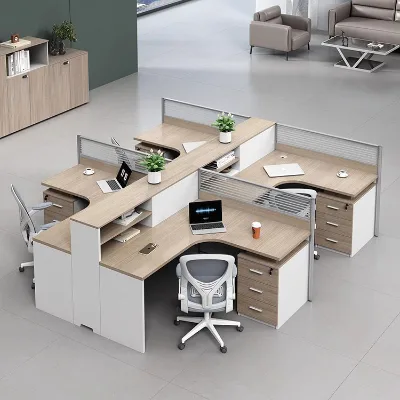


Luxury White Wood L-Shaped Desk with Modern Design for Home Office Use
$15.42 - $16.43
MOQ: 100 Pieces


Contemporary Executive L-Shaped Desk with Wooden Finish & Ample Storage Space
$100.00 - $500.00
MOQ: 1 Pieces


Contemporary Executive L-Shaped Desk with Wooden Finish and Generous Storage
$100.00 - $500.00
MOQ: 1 Pieces

Executive Desk Office Desk Office Computer Desk L-Shape with Storage Eco-Friendly
$500.00 - $1000.00
MOQ: 1 Pieces


Comprehensive Sourcing Guide
Strategic Sourcing Guide for Eco-Friendly L-Shaped Desks with Side Extensions
The global shift toward sustainable office environments has elevated the demand for eco-friendly L-shaped desks with side extensions. These units serve as central workstations that maximize floor space while offering integrated storage solutions. For procurement professionals, identifying a product that balances environmental responsibility with functional robustness requires a rigorous examination of material composition, dimensional specifications, and supply chain transparency. This guide synthesizes available market data to provide a disciplined framework for sourcing these specific furniture items, ensuring that buyers can navigate the complexities of B2B procurement without relying on unverified claims.
Material Composition and Environmental Attributes
The foundation of any eco-friendly furniture piece lies in its material sourcing. In the current market, L-shaped desks often utilize a combination of solid wood and engineered wood products. Data indicates that leg materials can vary significantly between solid wood and man-made board. Solid wood legs offer structural integrity and a natural aesthetic, often associated with higher durability and biodegradability. Conversely, man-made board components, such as those found in panel-style desks, provide a consistent texture and can be sourced from rapidly renewable resources or recycled content.
When evaluating the "eco-friendly" aspect, buyers must scrutinize the specific type of board used. The presence of "Panel" wood styles suggests the use of engineered wood, which often involves adhesives. Procurement teams should verify the formaldehyde emission levels and the presence of low-VOC (Volatile Organic Compounds) binders. The product attributes observed in the market include "Natural" and "Brown" color finishes, which often imply minimal chemical treatment to preserve the wood grain, though "White" finishes are also available and may require specific coating verification.
The distinction between "Wood" and "Manmade Board" is critical. A desk labeled with "Wood" as a primary material may imply a higher percentage of natural timber, whereas "Manmade Board" suggests a composite structure. For a truly sustainable profile, buyers should request documentation confirming that the man-made board is FSC-certified or made from post-consumer recycled content. The "New" condition of the products listed ensures that the materials are not reclaimed, which simplifies the verification of their origin and processing standards.
Technical Specifications and Dimensional Flexibility
L-shaped desks with side extensions are defined by their unique geometry, which allows for expanded workspace without increasing the footprint proportionally. The market data reveals a wide variance in standard dimensions, indicating that customization is a key feature of this category. Specific model numbers such as HJ-OT075, HJ-OT066, and HJ-OT089 correspond to distinct dimensional profiles. For instance, one configuration measures approximately 19.92 inches in width, 29.92 inches in height, and 55 inches in depth, while another model offers a more substantial footprint of 70.87 inches in width, 28.74 inches in height, and 66.93 inches in depth.
The side extension capability is often highlighted by attributes such as "With Side Table" or "L-Shaped Office Desk." This feature transforms a standard desk into a multi-zone workstation, suitable for complex workflows. The "Size: Can Customized" attribute is particularly relevant for buyers with specific spatial constraints. Customization allows for adjustments in width, height, and depth to fit unique office layouts. The standard dimensions observed range from compact units like 58w61h21.6d to larger executive configurations like 1500590745mm.
Buyers must also consider the "Folded" status of the units. The observed "Unfolded" state suggests that these are permanent fixtures rather than collapsible furniture, which impacts shipping volume and assembly requirements. The "Knock Down Packing" option is a significant logistical factor, as it reduces shipping costs and carbon emissions associated with transporting fully assembled units. This packing method, often accompanied by instructions, requires on-site assembly, which must be factored into the project timeline and labor costs.
Compliance, Certification, and Safety Standards
While the term "eco-friendly" is prevalent, it is not a regulated standard in itself. Procurement professionals must look for concrete evidence of compliance with international safety and environmental standards. The provided data lists specific product standards, such as "19.92w29.92h55d," which serve as dimensional baselines rather than safety certifications. However, the "Warranty: 2 Years" attribute implies a manufacturer's confidence in the product's durability and structural integrity.
In the absence of explicit certification data in the source material, buyers must proactively request proof of compliance. Key areas of verification include fire safety ratings, structural load testing, and chemical emission standards. For desks used in "Office Building/Workshop" environments, compliance with local building codes and occupational safety regulations is mandatory. The "Payment Term: T/T, Irrevocable L/C at Sight" suggests a formal trade relationship, which often necessitates a contract that includes clauses for quality assurance and adherence to agreed-upon standards.
Buyers should also verify the "Origin" of the products. The data points to "Shouguang, Weifang, Shandong" and "China" as primary origins. While these regions are known for manufacturing, the specific environmental regulations and labor practices of the supplier must be audited. The "Production Name: Hj" and various model codes indicate a standardized production line, but the specific environmental management system (e.g., ISO 14001) of the factory should be confirmed to ensure the "eco-friendly" claim is substantiated.
Cost Drivers and Procurement Economics
The pricing for L-shaped desks with side extensions is influenced by several variables, including material quality, customization level, and order volume. The observed price range in the market spans from $12.71 to $1,518.79, reflecting a broad spectrum of product tiers. The lower end of this range likely corresponds to basic models with man-made board construction and standard dimensions, while the higher end represents custom-configured units with solid wood legs and premium finishes.
The Minimum Order Quantity (MOQ) is another critical cost driver. The data shows an MOQ range of 1 to 100 units. A lower MOQ of 1 or 10 pieces allows for smaller-scale procurement or prototyping, whereas an MOQ of 100 units is typical for bulk corporate orders. Buyers must balance the unit cost savings of larger orders against the inventory holding costs and the flexibility to adapt to changing office needs. The "Trade Term: Ex-Work Factory, Fob, CIF" options provide flexibility in managing logistics costs, with Ex-Work placing the burden of transport on the buyer and CIF including insurance and freight to the destination port.
Additional cost factors include the "Delivery Time: Within 20 Days," which impacts project scheduling and potential rush fees. The "Packing" method, whether standard box or knock-down, also affects the final landed cost. Buyers should calculate the total cost of ownership, including assembly labor, shipping, and potential returns, rather than focusing solely on the unit price.
Typical Applications and Functional Versatility
The versatility of L-shaped desks with side extensions makes them suitable for a diverse range of applications. The observed usage categories include "Office," "Hotel," "Living Room," "Bedroom," "School," and "Study." This broad applicability suggests that the design is adaptable to both commercial and residential settings. In an "Office Building/Workshop" context, these desks provide ample space for dual-monitor setups and peripheral equipment, enhancing productivity.
The "Kind: PC Desk" attribute confirms their suitability for computer-based work, where the side extension can serve as a dedicated area for printers, scanners, or filing systems. The "Modern" style and "Natural" or "Brown" color options align with contemporary interior design trends, making them appropriate for open-plan offices and executive suites. For educational institutions, the durability and spaciousness of these desks support collaborative learning environments.
The "Specific Use" attribute highlights the desk's role in professional settings, but the inclusion of "Living Room" and "Bedroom" indicates a crossover into home office markets. This dual-purpose capability is increasingly relevant in the post-pandemic era, where residential spaces are expected to function as professional workspaces. Buyers should ensure that the selected model meets the specific ergonomic and aesthetic requirements of the intended environment.
Supplier Evaluation and Quality Control Protocols
Selecting a reliable supplier is paramount to ensuring the delivery of high-quality, eco-friendly furniture. The data indicates that suppliers are located in Shandong, China, a major manufacturing hub. Buyers should evaluate potential partners based on their production capacity, quality control processes, and responsiveness to customization requests. The "Customization: Available" and "Customized: Customized" attributes suggest that suppliers are capable of tailoring products to specific client needs, but this requires clear communication and detailed specifications.
Quality control should focus on the integrity of the joinery, the stability of the legs, and the finish quality. The "Warranty: 2 Years" is a strong indicator of a supplier's commitment to quality, but buyers should also request sample units for independent testing. Key performance indicators for quality control include the load-bearing capacity of the desk, the scratch resistance of the surface, and the stability of the side extension.
The "Payment" terms, such as "Tt" (Telegraphic Transfer), are standard but require careful management to mitigate financial risk. Buyers should consider using escrow services or letters of credit for large orders to ensure that payment is released only upon satisfactory delivery and inspection. The "Lead Time" of within 20 days is relatively short, but buyers must account for potential delays due to customization or logistics issues.
Long-Term Procurement and Sustainability Considerations
Sourcing eco-friendly furniture is not a one-time transaction but a long-term strategy that requires ongoing evaluation. Buyers should prioritize suppliers who demonstrate a commitment to sustainability through transparent reporting and continuous improvement. The "Eco-friendly" label should be backed by third-party certifications and verifiable data on the supply chain.
Long-term considerations include the durability of the materials and the ease of maintenance. Desks with "Solid Wood" legs and "Manmade Board" surfaces may have different maintenance requirements, and buyers should factor these into their lifecycle cost analysis. The "Packing" method, particularly "Knock Down Packing," facilitates easier repairs and replacements, extending the product's useful life.
Furthermore, buyers should consider the end-of-life scenario for the furniture. Materials that are easily recyclable or biodegradable align with circular economy principles. The "Modern" style and neutral color options ensure that the desks remain relevant and functional for longer periods, reducing the need for frequent replacements. By integrating these long-term considerations into the procurement strategy, buyers can achieve both cost efficiency and environmental responsibility.
FAQs
What materials are used for Eco Friendly L Shaped Desk with Side Extension legs?
Leg materials vary between solid wood and manmade board depending on the specific model. Solid wood offers natural durability while manmade board provides consistent texture and often uses engineered wood products for stability.
Can I customize the size of an Eco Friendly L Shaped Desk with Side Extension?
Yes, customization is available for dimensions and specifications to fit unique office layouts. Buyers can request specific widths and depths, such as 1500mm by 590mm, to match their spatial requirements.
How long is the delivery time for Eco Friendly L Shaped Desk with Side Extension orders?
Delivery typically occurs within 20 days after order confirmation. This lead time applies to standard production runs, though custom configurations may require additional processing time before shipment.
Which packing methods are used for shipping Eco Friendly L Shaped Desk with Side Extension?
Products are commonly packed in boxes or knock-down packs with instructions to reduce shipping volume. This method lowers carbon emissions during transport and requires on-site assembly by the buyer.
What is the minimum order quantity for Eco Friendly L Shaped Desk with Side Extension?
Minimum order quantities range from 1 unit to 100 units depending on the supplier and model. Lower MOQs allow for prototyping while higher volumes typically secure better unit pricing for bulk corporate orders.
Where are Eco Friendly L Shaped Desk with Side Extension manufacturers located?
Manufacturers are primarily located in Shouguang, Weifang, Shandong, and other regions in China. These hubs offer established supply chains for wood furniture production and export logistics.