Source Eco-Friendly Kraft Paper Candle Gift Box with Ribbon for Jewelry, Perfume, and Crafts
Find 30 listings for Eco-Friendly Kraft Paper Candle Gift Box with Ribbon suitable for jewelry, perfume, and crafts. Compare custom shapes, magnetic closures, and printing options from verified Chinese manufacturers offering OEM services.
Key considerations
Products List
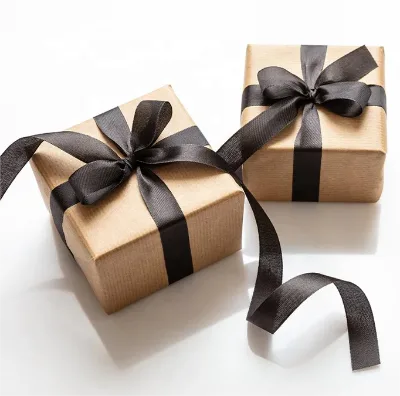

Eco-Friendly Kraft Cosmetic Box Candle Jar Packaging with Custom Gift Card
$0.50 - $1.80
MOQ: 500 Pieces


Luxury Silver White Cardboard Candle Packaging Box with Ribbon for Gift
$0.70 - $1.95
MOQ: 1000 Pieces

Luxury Friendly Eco Rigid Paper Gift Packaging Candle Box with Foil Hot Stamping
$1.45 - $1.75
MOQ: 3000 Pieces


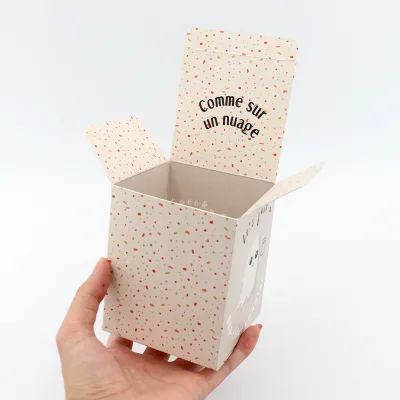


High Quality Cardboard Christmas Candle Jar Package Paper Gift Box with Custom Logo
$0.13 - $0.15
MOQ: 3000 Pieces


Comprehensive Sourcing Guide
Strategic Sourcing Guide for Eco-Friendly Kraft Paper Candle Gift Boxes with Ribbon
Sourcing packaging solutions for the candle industry requires a nuanced understanding of material sustainability, structural integrity, and aesthetic customization. When buyers search for an "eco-friendly kraft paper candle gift box with ribbon," they are often looking for a specific convergence of natural materials, protective functionality, and premium presentation. The following guide analyzes the technical specifications, compliance requirements, and procurement strategies derived from current market data to assist buyers in making informed decisions.
Technical Specifications and Material Composition
The foundation of any sustainable packaging solution lies in its material composition. For candle packaging, the primary material observed in the market is Coated Paper or Cardboard, often derived from kraft paper sources. The structural integrity of these boxes is critical, as candles are heavy and the packaging must protect the product during transit. The observed data indicates that "Coated Paper" is a standard specification, which allows for high-quality printing while maintaining the natural aesthetic associated with eco-friendly branding.
A critical technical feature for candle boxes is the inclusion of a liner. The market data highlights "Foam insert" as a common liner type. This is essential for securing the candle jar, preventing movement, and providing cushioning against impact. Without a proper liner, the risk of breakage increases significantly, especially for glass or ceramic candle containers. Additionally, the box shape varies, with "Square" and "Rectangle" being the predominant forms. The size specifications range from "Small" to "Middle," indicating that buyers must carefully match the box dimensions to their specific candle jar volumes to avoid wasted space or structural failure.
Surface handling is another vital technical aspect. The available options include "Matt Lamination," "Glossy Lamination," "UV coating," "Stamping," "Embossing," and "Gold Foil." For an eco-friendly product, buyers often prefer matte finishes or uncoated kraft textures, though UV coating and varnishing are frequently used to enhance durability. The "Magnetic closure" is a noted accessory that adds a premium feel and ensures the box remains securely closed, which is a key selling point for gift packaging. The design format requirements are strict, typically accepting "Ai/Pdf/CDR/Psd/EPS" files, necessitating that buyers have professional design assets ready for production.
Compliance, Certification, and Sustainability Claims
When marketing products as "eco-friendly," buyers must navigate the landscape of certifications and standards carefully. The supplied data points to "SGS" as a specific certification observed in the market. SGS is a globally recognized inspection, verification, testing, and certification company. While the presence of SGS certification in the data suggests that some suppliers offer third-party verification, buyers should not assume all products carry this status. Instead, the procurement strategy should involve explicitly requesting proof of SGS certification or equivalent third-party testing for the specific batch of packaging.
Sustainability claims often extend to the material itself. The data lists "Paper" as the primary ingredient and notes that the product feature includes "Recyclable." This aligns with the global push for sustainable packaging. However, the term "Recyclable" can be misleading if the box includes non-recyclable additives like heavy metallic foils or complex laminations. Buyers must verify whether the "Matt Lamination" or "Gold Foil" options compromise the recyclability of the cardboard base. Furthermore, the "Customized" standard indicates that there is no single universal standard for these boxes; rather, the standard is defined by the buyer's specific requirements.
Compliance also extends to the manufacturing process. The data mentions "Offset Printing" as a surface handling process. Offset printing is generally considered more environmentally friendly than some digital alternatives for large runs due to lower waste, but it requires specific setup. Buyers should inquire about the ink types used, ensuring they are soy-based or water-based to maintain the eco-friendly profile of the final product. The "Inspection Before Shipment" guarantee noted in the data is a crucial compliance step, ensuring that the final product meets the agreed-upon quality and safety standards before leaving the factory.
Cost Drivers and Pricing Dynamics
Understanding the cost structure of custom candle packaging is essential for budget management. The observed price range in the market is between 0.01 and 2 USD per unit. This wide variance is driven by several factors, including the complexity of the design, the type of paper used, and the quantity ordered. The "MOQ range" of 50 to 3000 units indicates that buyers can start with relatively small orders, but the unit price will likely be higher at the lower end of the spectrum.
The primary cost drivers include the customization level. "Accept Custom" and "Accept Custom Logo" are standard features, but the extent of customization significantly impacts cost. For instance, adding "Gold Foil" or "Embossing" will increase the price compared to a standard offset print. The inclusion of a "Foam insert" is another cost factor; while necessary for protection, it adds material and labor costs. Additionally, the "Magnetic closure" is a premium feature that adds to the overall unit cost compared to tuck-end or sleeve boxes.
Shipping and logistics also play a major role in the final landed cost. The data specifies "Export Carton" and "Customized Thick K=K Corrugated Carton" for packaging the goods. The "Lead Time" is noted as "30 Days After Receiving Deposit," which is a standard timeframe for custom manufacturing. Buyers must factor in the time required for sample production, which is estimated at "3-5 Working Days," and the subsequent bulk production lead time. The price terms listed as "EXW or Fob and C&F" indicate that the buyer may need to arrange their own freight forwarding or pay for shipping costs depending on the agreed Incoterm, which can vary the total cost significantly.
Typical Applications and Industrial Use Cases
The versatility of kraft paper candle boxes makes them suitable for a wide range of industrial uses. The data explicitly lists "Gift & Craft," "Food," "Cosmetic," "Jewelry," "Beverage," "Apparel," "Watch," and "Perfume" as potential applications. However, for the specific keyword of "candle gift box," the primary use cases are "Gifts," "Arts and Crafts," and "Home Decoration." The "Range" of applications includes "Christmas Gifts" and "Travel," suggesting that these boxes are often used for seasonal promotions or portable gift sets.
The "Luxury" aspect is frequently highlighted, with items described as "Luxury Silver White Cardboard Candle Packaging Box." This indicates that the target market often includes high-end candle brands that require packaging to reflect the premium nature of the product. The "Handmade" feature observed in the data suggests that some suppliers offer artisanal touches, which can be a differentiator for boutique candle makers. The "Usage" also extends to "Health Care Products" and "Garment & Shoes," showing that the same packaging lines can often be repurposed for other lifestyle products, offering economies of scale for multi-product brands.
Supplier Evaluation and Geographic Considerations
When evaluating suppliers, geographic origin is a significant factor. The data indicates two primary locations: "Hebei, China" and "Guangzhou, China." Hebei is known for its paper and packaging manufacturing capabilities, while Guangzhou is a major hub for export-oriented industries. Buyers should verify the specific factory location, as this can impact shipping costs and lead times. The "Advantage" of "10 Years Experiences" suggests that established suppliers with a long track record are preferable, as they are more likely to have refined their production processes and quality control measures.
Supplier reliability is further assessed through their "Guarantee" policies. The "Inspection Before Shipment" is a critical indicator of a supplier's confidence in their product. Buyers should also look for suppliers who offer "Sample Production" within the "3-5 Working Days" timeframe, as this demonstrates agility and efficiency. The "Export: All Over World" claim suggests that the suppliers have experience with international logistics, which is vital for buyers sourcing from outside China. However, buyers must verify the specific export capabilities and ensure the supplier can handle the required documentation and compliance for their target market.
Quality Control and Long-Term Procurement Strategies
Quality control is paramount when dealing with custom packaging. The "Inspection Before Shipment" standard is a baseline requirement. Buyers should also implement their own quality checks, focusing on the structural integrity of the "Magnetic closure" and the adhesion of the "Foam insert." The "Weight" of the product is listed as "<0.5 kg," which is a useful benchmark for ensuring the packaging is not overly heavy, which could increase shipping costs.
For long-term procurement, consistency is key. The "Customized" nature of the product means that every order may have slight variations if the design or materials change. Buyers should establish a "Standard" specification document that details the exact paper type, printing method, and liner requirements to ensure consistency across batches. The "Design Format" requirements (Ai/Pdf/CDR/Psd/EPS) should be strictly adhered to to avoid production errors.
Finally, buyers should consider the "Recyclable" feature as a long-term value proposition. As regulations on single-use plastics and non-recyclable packaging tighten globally, sourcing from suppliers who prioritize recyclable materials and transparent certification processes will future-proof the supply chain. The "30 Days" lead time should be factored into inventory planning to avoid stockouts, and the "3-5 Working Days" sample time should be utilized to validate the design before committing to large-scale production. By maintaining a rigorous evaluation process and focusing on verified certifications like SGS, buyers can secure a reliable supply of high-quality, eco-friendly candle packaging.
FAQs
What printing options are available for custom candle boxes?
Custom printing is accepted with options including Matt Lamination, Glossy Lamination, UV coating, Stamping, embossing, and Gold Foil. These surface handling techniques allow for high-quality branding while maintaining the structural integrity required for candle packaging.
Can I order small quantities of these custom boxes?
Yes, the minimum order quantity ranges from 50 to 3000 units depending on the specific supplier and customization level. Buyers can start with smaller batches, though unit prices may vary based on the final quantity selected.
Which certifications are available for these eco-friendly boxes?
SGS certification is observed in the market for these products, providing third-party verification of quality and safety. Buyers should explicitly request proof of this certification or equivalent testing for specific batches to ensure compliance.
How long does it take to receive samples before bulk production?
Sample production typically takes 3 to 5 working days after design approval. This allows buyers to validate the magnetic closure, foam insert, and printing quality before committing to the full 30-day bulk production lead time.
What liner types are used to protect candles inside the box?
Foam inserts are commonly used as the liner type to secure the candle jar and prevent movement during transit. This cushioning is essential for protecting glass or ceramic containers from impact damage during shipping.
Where are these candle packaging boxes manufactured?
Manufacturing locations include Hebei and Guangzhou in China, which are known for paper and export-oriented packaging capabilities. Buyers should verify the specific factory origin to estimate shipping costs and lead times accurately.
What is the typical price range for these custom boxes?
The observed price range is between 0.01 and 2 USD per unit, driven by design complexity and order volume. Factors like Gold Foil, magnetic closures, and foam inserts will influence the final cost within this spectrum.