Source Eco-Friendly Large Cat Tree for Climbing Resting
Compare 29 Eco-Friendly Large Cat Tree options featuring solid wood and sisal materials for climbing, resting, and scratching. Buyers can review customization, MOQ, and packing details from suppliers in China.
Key considerations
Products List






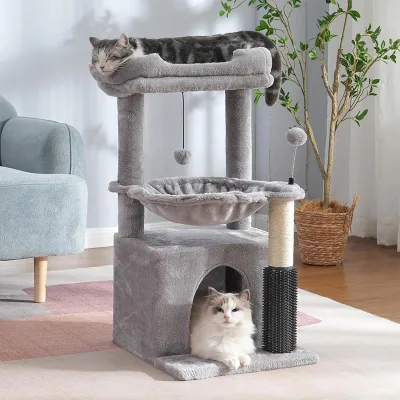
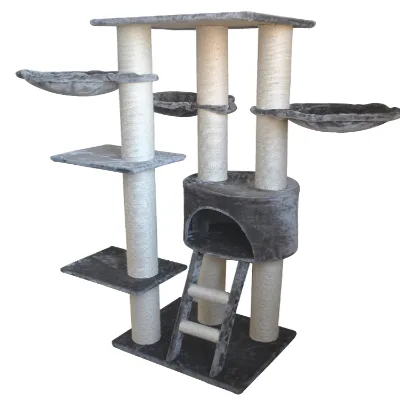
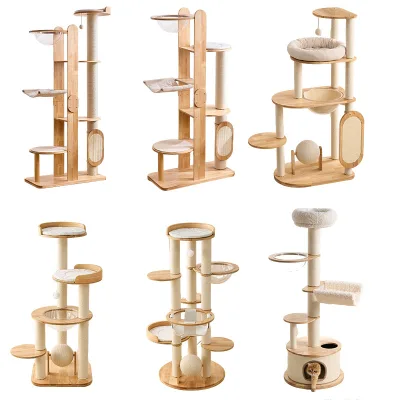
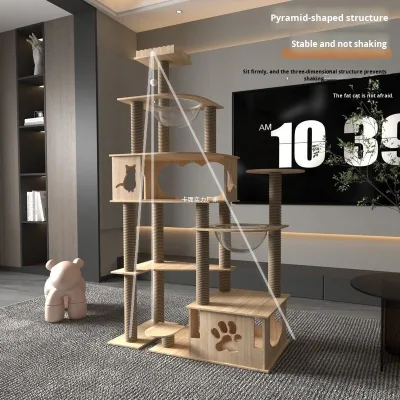
Comprehensive Sourcing Guide
Strategic Sourcing Guide for Eco-Friendly Large Cat Trees
The global demand for sustainable pet furniture has surged, driven by pet owners seeking durable, environmentally conscious products that enhance feline well-being. For procurement professionals in the B2B sector, sourcing an eco-friendly large cat tree requires a nuanced understanding of material composition, structural integrity, and supply chain transparency. This guide provides a comprehensive framework for evaluating suppliers and products, ensuring that the final procurement aligns with both ecological standards and commercial viability. The focus remains on verifying factual attributes such as material types, structural designs, and origin locations while avoiding unverified claims regarding specific certifications or pricing tiers.
Material Composition and Structural Integrity
The foundation of any high-quality cat tree lies in its material selection. For large-scale units, the primary structural components typically involve solid wood, MDF (Medium Density Fiberboard), particle board, and rattan. These materials offer the necessary rigidity to support climbing and resting activities for cats of all ages, from kittens to adults. The supplied data indicates that specific models utilize bamboo as a distinct material, offering a renewable alternative to traditional timber. When evaluating "eco-friendly" claims, buyers must verify the source of the wood and the binding agents used in composite boards like MDF and particle board.
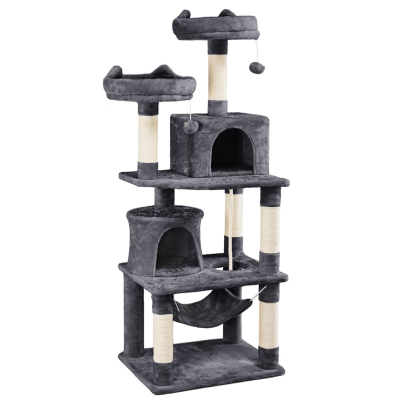
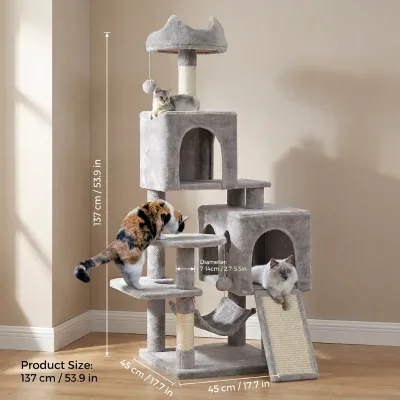
Structural stability is paramount for large cat trees, which often feature single posts, double posts, or triangular support systems. The "Bot" configuration mentioned in product attributes suggests specialized base designs intended to prevent tipping. A critical observation from the available data is the use of sisal rope as a standard material for scratching surfaces. This natural fiber is preferred over synthetic alternatives due to its durability and biodegradability. Buyers should confirm that the sisal rope is tightly wound and securely attached to the wooden posts to ensure longevity. The combination of solid wood cores with sisal exteriors creates a product that balances environmental responsibility with the functional demands of active felines.
Design Aesthetics and Functional Versatility
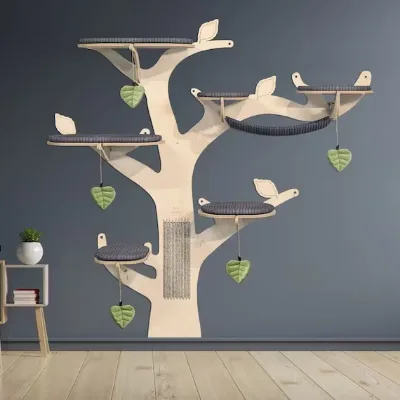
Modern cat tree design has evolved beyond basic utility to encompass aesthetic integration with home environments. The observed product attributes highlight several style designs, including Minimalist Modern, Ins Style, and Forest Style. These designs often utilize neutral color palettes such as Beige and Nature tones, which allow the furniture to blend seamlessly into various interior decors. Some models feature unique design elements, such as "Large Cat Tree with leaves," which add a decorative touch while providing functional perching and hiding spots.
The core functions of these large cat trees are multifaceted, encompassing climbing, scratching, resting, perching, and hiding. This versatility ensures that the product meets the behavioral needs of cats across different life stages. The "All Ages" suitability, alongside specific models designed for kittens (short models) and adult cats (tall models), indicates a broad market appeal. Procurement teams should prioritize suppliers who offer a range of sizes and configurations, as this flexibility allows for better inventory management and customer satisfaction. The inclusion of "Cartoo" style designs suggests an opportunity to target younger demographics or those seeking playful, vibrant aesthetics, although the primary focus for eco-conscious buyers often remains on natural tones and organic shapes.
Compliance, Certification, and Environmental Claims
Navigating the landscape of environmental compliance requires careful verification of supplier documentation. While the provided data references FSC (Forest Stewardship Council) as a potential certification, it is categorized as low-confidence background information. Consequently, buyers must not assume that any listed product automatically holds FSC certification. Instead, procurement strategies should focus on requesting valid, current certification documents from the supplier for every batch of wood and composite materials used.
The "Eco-Friendly" feature is explicitly listed in several product attributes, yet this term is broad and requires definition. Buyers should verify that the "Eco-Friendly" claim is supported by specific practices, such as the use of non-toxic glues, water-based finishes, or sustainably harvested bamboo and wood. The "Accept Customized Logo" and "OEM/ODM" capabilities suggest that suppliers are willing to collaborate on branding, which can be leveraged to include specific sustainability messaging on the product or packaging. However, any claim regarding the product's environmental impact must be substantiated by third-party testing or recognized standards before being marketed to end consumers.
Cost Drivers and Procurement Parameters
Understanding the cost structure of large cat trees is essential for effective budgeting and margin analysis. The observed price range in the market spans from 2 to 140 USD, a significant variance that reflects differences in size, material quality, and complexity of design. The Minimum Order Quantity (MOQ) also varies widely, ranging from 6 pieces to 500 sets. This disparity allows buyers to select suppliers based on their specific inventory needs, whether they are testing a new market with a small order or securing bulk stock for established retail channels.
Key cost drivers include the type of wood used, the complexity of the structural design (e.g., triangular support vs. single post), and the finishing processes. Products originating from specific regions like Shandong and Jiangsu, China, may offer competitive pricing due to localized supply chains for wood and rattan. The "Standard Package" and specific packing dimensions (e.g., 535320 cm or 60x40x40 cm) are critical factors in calculating shipping costs and warehouse space requirements. Buyers should note that larger units with custom sizes will inevitably incur higher logistics costs compared to standardized models.
Supplier Evaluation and Origin Verification
Selecting the right supplier involves more than just comparing prices; it requires a thorough assessment of their operational capabilities and geographic location. The data indicates that products originate from China, with specific mentions of Shandong and Jiangsu provinces. These regions are known for their manufacturing expertise in pet furniture and wood processing. When evaluating potential partners, buyers should verify the supplier's capacity to handle OEM and ODM requests, as well as their ability to provide customized logos and packaging.
The "Commercial Buyer" attributes list a diverse range of potential end-users, including department stores, gift shops, and food and beverage services. This suggests that the product has broad applicability beyond traditional pet stores. Suppliers should be able to demonstrate experience in serving these varied sectors. Additionally, the "Single gross weight" of 15.000 kg for certain units highlights the importance of evaluating the supplier's logistics network to ensure safe and timely delivery. Buyers should also check for the "Stocked" status of items, as this can significantly reduce lead times for immediate market entry.
Quality Control and Long-Term Procurement Strategy
Implementing a robust quality control (QC) protocol is vital for maintaining brand reputation in the pet furniture sector. Given the structural nature of cat trees, QC checks should focus on the stability of the base, the tightness of the sisal rope, and the finish quality of the wood. The "Stable Structure" attribute, which includes single, double, and triangular supports, must be physically verified to ensure the product can withstand the weight and activity of large cats.
For long-term procurement, buyers should consider the scalability of the supplier's production lines. The availability of "Custom Sizes" and "Customization" options indicates that suppliers can adapt to changing market trends. However, buyers must ensure that customization does not compromise the "Eco-Friendly" integrity of the product. Establishing a clear communication channel for feedback on product performance, such as wear and tear on the sisal or stability issues, will help refine future orders. Furthermore, verifying the "Season" attribute, which is listed as "All-Season," ensures that the product remains relevant year-round, reducing the risk of seasonal inventory obsolescence.
Comparative Analysis of Product Specifications
To facilitate informed decision-making, the following table summarizes key product attributes observed in the market for eco-friendly large cat trees. This comparison highlights the diversity in models, materials, and specifications available to buyers.
| Attribute | Observation 1 | Observation 2 | Observation 3 |
|---|---|---|---|
| Primary Material | Bamboo | Solid Wood, MDF | Wood, Sisal |
| Structure Type | Single Post | Double Posts | Triangular Support |
| Color Palette | Beige | Nature | Orange, Chocolate |
| MOQ Range | 6 pcs | 200 sets | 500 sets |
| Origin Location | Shandong, China | Jiangsu, China | China (General) |
| Packing Size | 535320 cm | 60x40x40 cm | Custom Sizes |
| Style Design | Minimalist Modern | Forest Style | Ins Style |
| Target Age | All Ages | Kitten (Short) | Adult Cat (Tall) |
| Key Feature | Eco-Friendly | Stocked | Custom Logo |
This table illustrates that while there is a common thread of eco-friendly materials and versatile designs, the specific execution varies significantly. Buyers must align these specifications with their target market's preferences. For instance, a retailer focusing on modern, minimalist homes might prioritize the "Minimalist Modern" style with "Beige" colors, while a store catering to playful, family-oriented environments might prefer the "Cartoo" style with "Orange" or "Chocolate" accents.
Final Procurement Considerations
In conclusion, sourcing eco-friendly large cat trees requires a balanced approach that prioritizes material authenticity, structural reliability, and supply chain transparency. The market offers a wide array of options, from bamboo-based models to solid wood structures with sisal scratching posts. Buyers must remain vigilant in verifying environmental claims and ensuring that the "Eco-Friendly" designation is backed by tangible evidence rather than marketing buzzwords. By focusing on the verified attributes of material, design, and origin, procurement professionals can build a resilient supply chain that meets the growing demand for sustainable pet products. The ability to customize logos, sizes, and packaging further enhances the value proposition, allowing brands to differentiate themselves in a competitive landscape. Ultimately, success in this sector depends on a meticulous evaluation of supplier capabilities and a commitment to quality that extends beyond the initial purchase.
FAQs
What materials are used for eco friendly large cat trees?
These trees typically use solid wood, MDF, particle board, rattan, or bamboo for construction. Sisal rope is the standard material for scratching surfaces, ensuring durability and natural fiber composition for feline safety.
Can buyers request customized logos on these products?
Yes, suppliers accept customized logos and offer OEM or ODM services for branding. This allows buyers to add their own identity to the product packaging or the tree itself while maintaining the core eco-friendly features.
Which structural designs ensure stability for large cats?
Stable structures include single posts, double posts, triangular supports, and specialized bot bases. These designs prevent tipping and support climbing and resting activities for cats of all ages, from kittens to adults.
How do prices and minimum order quantities vary?
Prices range from 2 to 140 USD depending on size and complexity. Minimum order quantities vary significantly, ranging from as low as 6 pieces to as high as 500 sets for bulk procurement needs.
Where are these cat trees manufactured?
Products originate from China, with specific manufacturing hubs in Shandong and Jiangsu provinces. These regions provide established supply chains for wood processing and pet furniture assembly to meet global demand.
What core functions do these cat trees provide?
Core functions include climbing, scratching, resting, perching, and hiding spots. The designs cater to all ages, with specific models optimized for kittens or adult cats to meet diverse behavioral needs.
Are these products suitable for all seasons?
Yes, the products are designed for all-season use regardless of the climate. Their durable materials and indoor-focused designs ensure they remain functional and attractive throughout the year for pet owners.