Source eco-friendly recyclable paper tube for Cosmetics Food and Jewelry
Compare 30 listings for eco-friendly recyclable paper tube options from verified suppliers. Buyers can evaluate customization, materials, and lead times for cosmetics, food, and jewelry packaging needs.
Key considerations
Products List


Biodegradable Recyclable Eco-Friendly Customized Empty Cosmetics Paper Tube
$0.14 - $0.35
MOQ: 100 Pieces


Custom Eco Friendly Printed High Grade Essential Oil Packaging Paper Tube
$0.25 - $0.52
MOQ: 100 Pieces




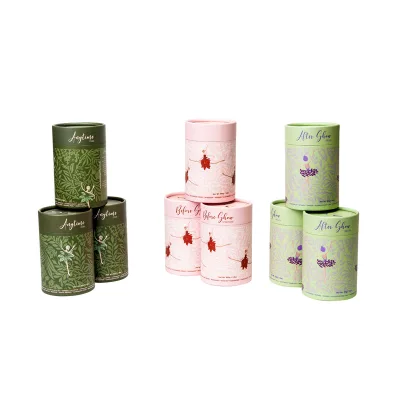

Eco-Friendly and Degradable Recyclable Bagasse Material and Kraft Paper Tube for Cosmetics
$0.17 - $0.18
MOQ: 10000 Pieces


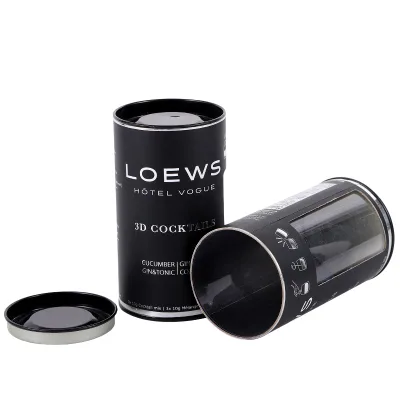


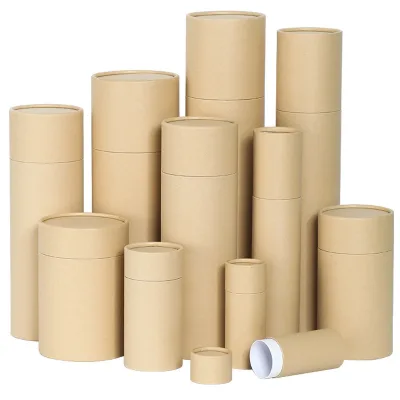
Comprehensive Sourcing Guide
Strategic Sourcing Guide for Eco-Friendly Recyclable Paper Tubes
The global shift toward sustainable packaging has elevated the demand for eco-friendly recyclable paper tubes, a category that balances structural integrity with environmental responsibility. For B2B procurement professionals, sourcing these items requires a nuanced understanding of material composition, manufacturing capabilities, and compliance frameworks. This guide synthesizes observed market data and technical specifications to provide a disciplined approach to evaluating suppliers and products. The focus remains on verifying facts rather than relying on unverified marketing claims, ensuring that procurement decisions are grounded in tangible product attributes and supplier capabilities.
Technical Specifications and Material Composition
The foundation of a successful paper tube procurement strategy lies in a precise definition of technical specifications. The core material for these products is consistently identified as paper, often sourced from recycled materials to align with sustainability goals. The structural form is predominantly cylindrical, a shape that offers superior stacking strength and efficient use of space in logistics. Observed product attributes indicate that the weight of individual units is typically under 0.5 kg, making them suitable for a wide range of applications without adding excessive shipping costs.
Material selection is critical. While the primary composition is paper, some variations in the market may include aluminum components for specific barrier requirements, though the standard eco-friendly offering relies on kraft paper or recycled paper stocks. The surface treatment is a key differentiator; suppliers often offer offset printing and labeling processes, with additional options such as varnishing to enhance durability and aesthetic appeal. The printing capabilities generally support CMYK color models, allowing for high-fidelity branding.
When evaluating the physical dimensions, buyers must note that sizes are often customizable to meet specific OEM requirements. The standard product models observed in the market include specific identifiers like "WD+20250418+DB05" or "paper tube-08," which serve as reference points for ordering. However, the most critical specification is the "oem" nature of the size and shape, meaning that the tube must be engineered to fit the specific product it will contain, whether it is a cosmetic jar, a food item, or a garment accessory. The sealing type is another technical variable; screw caps are a common feature, ensuring a secure closure that protects the contents during transit.
Compliance, Certification, and Environmental Standards
In the realm of eco-friendly packaging, compliance is not merely a regulatory checkbox but a core value proposition. Buyers must rigorously verify the certification status of potential suppliers. The most prominent certifications observed in the market include ISO, CE, and FSC (Forest Stewardship Council). The FSC certification is particularly significant for paper tubes, as it verifies that the wood pulp used in the paper originates from responsibly managed forests.
However, buyers should exercise caution. While FSC is a trusted standard, the presence of this certification in a product listing does not automatically guarantee that every single unit in a large order meets the same standard. Procurement teams must request specific documentation for the batch being purchased. Similarly, ISO and CE certifications indicate adherence to quality management systems and safety standards, respectively, but these should be validated against the specific manufacturing facility rather than assumed for the entire supplier network.
The "recyclable" feature is a primary attribute of these products. To substantiate this claim, buyers should look for evidence of the paper's composition and the absence of non-recyclable laminates or excessive chemical treatments that might hinder the recycling process. The standard for these products is often listed as "customized" or "customizable," which implies that the environmental compliance must be negotiated and verified on a per-order basis. Buyers should explicitly ask suppliers to confirm that the adhesives, inks, and coatings used in the production process are also eco-friendly and do not contaminate the recycling stream.
Cost Drivers and Pricing Dynamics
Understanding the cost structure of paper tubes is essential for budgeting and negotiation. The observed price range in the market spans from $0.01 to $1.99 per unit, a wide variance that reflects differences in size, material thickness, printing complexity, and order volume. The primary cost driver is the Minimum Order Quantity (MOQ). The market data indicates an MOQ range of 100 to 10,000 units, with specific instances showing thresholds of 500 or 10,000 pieces.
Higher MOQs generally correlate with lower unit costs, as they allow manufacturers to optimize their production runs and reduce setup costs. For example, a supplier with an MOQ of 10,000 units may offer a price at the lower end of the spectrum, while a supplier accommodating an MOQ of 100 units will likely charge a premium. Additionally, the "Color MOQ" is a specific cost factor to consider; some suppliers require a minimum of 20,000 units to apply custom colors, which can significantly impact the total cost for smaller orders.
Other cost drivers include the customization level. Customized printing, varnishing, and specific sealing types add to the production time and material costs. The delivery time also plays a role in the total landed cost; standard lead times observed are between 15 to 18 days, with some extended to 25 days for complex custom orders. Buyers should factor in these lead times when planning inventory to avoid rush fees. Furthermore, the packing method, such as "Paper Carton" or "Sanitary Bag+Corrugated Carton," affects shipping efficiency and potential damage costs, which should be weighed against the base unit price.
Typical Applications and Industry Use Cases
The versatility of eco-friendly recyclable paper tubes makes them suitable for a diverse array of industries. The observed usage categories are extensive, ranging from Arts and Crafts to Electronic Products, Jewelry, and Food. This breadth of application highlights the tube's ability to serve as both a protective container and a marketing vehicle.
In the cosmetics and personal care sector, paper tubes are increasingly favored for packaging creams, lotions, and toothpaste. The cylindrical shape is ergonomic and aesthetically pleasing, while the recyclable nature appeals to environmentally conscious consumers. The chemical industry also utilizes these tubes for packaging powders and granular substances, benefiting from the tube's ability to provide a barrier against moisture and light when properly treated.
The food and beverage industry represents another significant application area. Paper tubes are used for packaging tea, snacks, and other dry goods. The "industrial_use" attribute often points to beverage packaging, where the tube serves as a sustainable alternative to plastic bottles or cans. In the garment and shoe sector, paper tubes are used for packaging accessories or as structural elements in display units. The greeting card and letter markets also utilize these tubes for secure storage and transport of delicate paper goods.
The following table summarizes the primary applications and their corresponding requirements:
| Industry Sector | Primary Usage | Key Requirements |
|---|---|---|
| Cosmetics & Personal Care | Creams, Lotions, Toothpaste | Moisture barrier, aesthetic printing, screw cap sealing |
| Food & Beverage | Tea, Snacks, Dry Goods | Food safety compliance, recyclability, structural strength |
| Jewelry & Gifts | Packaging for small items | High-quality printing, custom shapes, premium finish |
| Electronics | Component storage | Anti-static properties (if required), robust stacking strength |
| Garment & Shoes | Accessory packaging | Durability, brand visibility, easy opening |
Supplier Evaluation and Verification Protocols
Selecting the right supplier requires a systematic evaluation process that goes beyond price comparison. Buyers should prioritize suppliers who demonstrate transparency in their manufacturing processes and supply chain. The origin of the products is a critical factor; observed data indicates that many suppliers are based in China, with specific locations including Shanghai and Zhejiang. While these regions are hubs for packaging manufacturing, buyers should verify the specific factory's capacity and quality control measures.
A key evaluation metric is the supplier's ability to provide samples. The market data confirms that free samples are often available, which allows buyers to physically inspect the material quality, print fidelity, and structural integrity before committing to a large order. Buyers should use these samples to test the tube's performance in real-world scenarios, such as stacking tests or moisture resistance checks.
Customization capabilities are another vital criterion. The "Customization" attribute is widely available, but the extent of this customization varies. Buyers should assess whether the supplier can handle complex printing requirements, such as specific color matching or varnishing, and whether they can accommodate unique sealing types like screw caps. The "custom_order" attribute being "Accept" is a positive indicator, but the buyer must confirm the lead time implications of such orders.
Furthermore, buyers should verify the supplier's response to the "prod_standard" attribute. While the standard is often listed as "customized," the supplier must demonstrate a clear process for defining and adhering to these custom standards. This includes having a robust quality assurance protocol to ensure that every batch meets the agreed-upon specifications.
Quality Control and Long-Term Procurement Strategy
Maintaining quality consistency is paramount in long-term procurement. Buyers should establish a clear quality control framework that includes pre-production sample approval, in-process inspections, and final random sampling. The "Surface Treatment" processes, such as offset printing and labeling, must be scrutinized for consistency. Any deviation in color or print quality can undermine the brand's image, especially in the cosmetics and gift sectors where aesthetics are paramount.
For long-term success, buyers should consider the scalability of their supplier relationship. As order volumes increase, the supplier must be able to maintain lead times and quality standards. The observed lead times of 15 to 25 days suggest that planning is essential; buyers should avoid last-minute orders to prevent production bottlenecks. Additionally, the "Delivery Time" should be factored into the supply chain schedule to ensure timely inventory replenishment.
Sustainability should remain a central pillar of the procurement strategy. Buyers should regularly audit their suppliers to ensure that the "recyclable" claims remain valid and that the supply chain continues to adhere to environmental standards. This includes verifying that the paper used is indeed from recycled sources and that the manufacturing process minimizes waste. By maintaining a focus on these long-term considerations, buyers can build a resilient supply chain that supports both business goals and environmental commitments.
In conclusion, sourcing eco-friendly recyclable paper tubes requires a meticulous approach that balances technical specifications, compliance, cost, and supplier reliability. By leveraging the observed data and adhering to the verification protocols outlined in this guide, procurement professionals can make informed decisions that drive value and sustainability for their organizations.
FAQs
What certifications do eco-friendly recyclable paper tubes have?
These tubes typically hold ISO, CE, and FSC certifications. Buyers must verify specific batch documentation as standards apply per order rather than universally across all units.
Can I get free samples for these paper tubes?
Yes, free samples are available for inspection. This allows buyers to verify material quality and print fidelity before committing to a large production order.
What is the minimum order quantity for these tubes?
The minimum order quantity ranges from 100 to 10,000 pieces depending on the supplier. Specific listings show thresholds of 500 or 10,000 units for standard orders.
How long does delivery take for custom orders?
Delivery times generally span 15 to 18 days for standard requests. Complex custom orders may extend the lead time to 25 days depending on production capacity.
Which materials are used for these recyclable tubes?
The primary material is paper, often sourced from recycled stocks. Some variations may include aluminum components for specific barrier requirements while maintaining recyclability.
What customization options are available for printing?
Customized printing is acceptable with support for CMYK color models. Suppliers offer offset printing, labeling, and varnishing to enhance durability and aesthetic appeal for branding.