Source Eco Friendly Reusable Drink Holder for Takeout, Office, and Events
Find and compare 30 Eco Friendly Reusable Drink Holder options from verified Chinese manufacturers. Evaluate pulp-moulded trays and insulated carriers for takeout, office, and event use based on customization, material, and pricing.
Key considerations
Products List

Eco Friendly Biodegradable Takeaway Pulp Drink Holder Paper Cup Holder
$0.03 - $0.03
MOQ: 60000 Pieces

Eco-Friendly Wholesale Take out Biodegradable Kraft Paper Drink Cup Holder
$0.03 - $0.03
MOQ: 60000 Pieces


Disposable Compostable Cup Holder Two or Four Cup Paper Pulp Cup Holder
$0.03 - $0.03
MOQ: 60000 Pieces


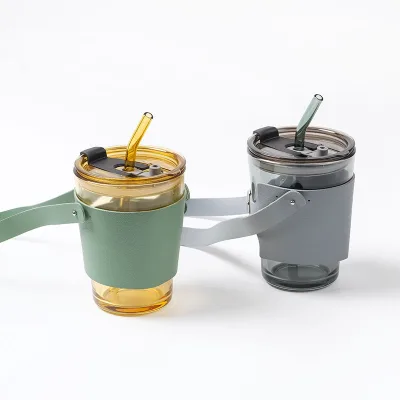
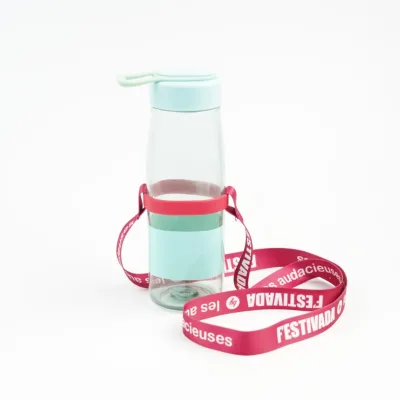


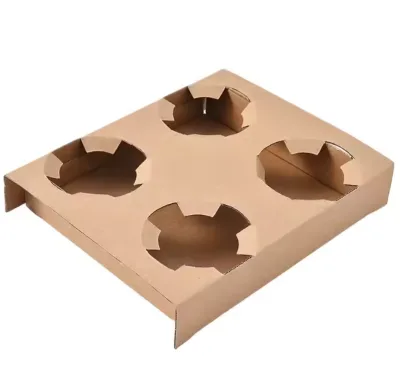


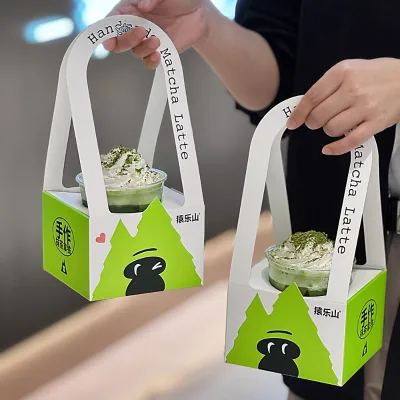


Paper Cup Holder 2 Coffee Paper Cup Holder Take Away Carrier Coffee Paper Cup Holder
$0.01 - $0.05
MOQ: 30000 Pieces

Factory Price Lightweight Design Able to Hold Cups of Different Sizes Bottle Holder
$0.12 - $0.35
MOQ: 20 Pieces
Comprehensive Sourcing Guide
Eco Friendly Reusable Drink Holder Sourcing Guide
The market for eco-friendly reusable drink holders has evolved to prioritize sustainable materials that reduce single-use waste while maintaining structural integrity for daily logistics. Based on current product listings, these items are frequently manufactured from recycled paper pulp using a pulp moulding process, offering a biodegradable alternative to plastic carriers. Buyers should note that while the core material is sustainable, the specific application varies significantly between disposable takeout trays and durable tote-style carriers, requiring careful distinction during the sourcing phase to ensure the selected product matches the intended operational lifespan.
Procurement strategies must account for the diverse functional requirements observed in the current supply base, ranging from simple cup holders designed for food service to more complex insulated carriers capable of holding multiple beverages. The observed product attributes indicate a strong focus on customization, with options for branded logos, specific dimensions, and varied closure mechanisms like lace-up styles or tear-open designs. Sourcing teams need to evaluate whether the primary goal is immediate waste reduction through disposable units or long-term brand visibility through reusable tote bags, as the material composition and durability standards differ fundamentally between these two categories.
Product Scope and Observed Listing Signals
Buyers must carefully distinguish between products labeled as disposable and those marked as non-disposable, as this distinction dictates the material thickness and structural design required for the application. The observed data reveals a split in the market where some units are explicitly designed for single-use scenarios with a weight of approximately 38 grams, while others are engineered as reusable baskets or tote bags with higher bearing capacities, such as those rated for 2-3 kilograms. This variance means that a single search query may yield results that are functionally incompatible with a specific business model, necessitating a rigorous filter for the "Disposable" attribute before proceeding with any supplier engagement.
The physical specifications of these holders vary widely, with dimensions ranging from compact 22511545mm units to larger 22522550mm configurations, often accommodating two or four cups simultaneously. Color options are generally limited to natural kraft or black finishes, which aligns with the eco-friendly aesthetic but may restrict branding opportunities unless custom printing is explicitly negotiated. Furthermore, the packaging density is a critical logistical signal, with carton sizes varying from 600 pieces per carton to 1000 pieces per package, directly impacting shipping costs and warehouse storage requirements for the buyer.
Technical Specifications to Verify
When evaluating the technical performance of recycled paper pulp holders, the primary verification step is confirming the insulation capabilities and thermal retention times, as these are critical for customer satisfaction in food service environments. Some listings indicate a cold time retention of 2-3 hours, which suggests a specific density or layering in the pulp moulding process that buyers should request samples to validate. It is essential to verify that the "Insulated" feature is not merely a marketing term but is backed by physical testing data, especially for products intended to transport hot or cold beverages over extended periods without condensation or structural failure.
Dimensional accuracy and load-bearing capacity are the next critical technical parameters that must be cross-referenced against the supplier's production capabilities. While standard sizes like 22511545mm are common, buyers must ensure that the specific model, such as the "2cups" or "4cups" variants, can consistently support the intended weight without deformation. The "Bearing Capacity" of 2-3 kilograms observed in certain reusable models provides a benchmark, but for custom orders, the buyer should demand a stress test report to confirm that the pulp moulding process can maintain structural integrity under the specific load conditions of their supply chain.
Compliance and Safety Documentation
Food safety compliance is non-negotiable for any drink holder intended for direct contact with consumables, requiring verification of certifications such as FDA or EU standards. The observed product data explicitly mentions CE/EU and FDA certifications, which serve as a baseline for materials that are safe for food contact, but buyers must ensure these certifications are current and applicable to the specific batch of recycled paper pulp being supplied. Relying on a general "standard" claim is insufficient; procurement teams should request valid certificate copies that cover the specific product model and material composition to mitigate liability risks associated with food contamination.
Beyond food safety, environmental compliance and end-of-life disposal claims must be scrutinized to ensure they align with the "Eco-Friendly" marketing positioning. While the material is identified as recycled paper pulp, buyers should verify if the product meets specific biodegradability or compostability standards in the target market, as regulations vary significantly between regions. The presence of a "Customized" standard or "Standard" designation in the listing suggests that compliance may be flexible, so it is vital to define the exact regulatory framework required for the destination country before finalizing the order to avoid customs delays or market rejection.
Cost Drivers and Commercial Terms
The pricing structure for these holders is heavily influenced by the customization level, with options for custom logos, specific sizes, and unique packaging configurations adding variable costs to the base unit price. The observed price range of 0.01 to 19 USD indicates a vast disparity between basic, unbranded disposable units and premium, insulated, or highly customized reusable carriers. Buyers should anticipate that the cost per unit will decrease with volume, but the minimum order quantity (MOQ) can range from as low as 10 pieces for samples to 60,000 pieces for full production runs, requiring a clear understanding of the volume needed to achieve a viable unit cost.
Commercial terms regarding payment and delivery timelines are equally critical factors in the total cost of ownership. The standard payment method observed is T/T, which requires careful negotiation of deposit percentages and balance release conditions to protect cash flow. Additionally, the lead time of 20-25 days for production must be factored into the supply chain schedule, particularly when accounting for the variability in sample availability and the potential for delays in customizing logos or packaging. Buyers should also consider the cost implications of the "Free Sample" policy, ensuring that shipping costs for samples are clearly defined to avoid unexpected expenses during the evaluation phase.
Supplier Qualification and Quality Control
Supplier qualification should begin with a verification of their manufacturing location and process capabilities, specifically confirming their expertise in pulp moulding and recycled material processing. The observed origins in Zhejiang and Fujian, China, suggest a concentration of specialized manufacturers in these regions, but buyers must validate that the specific factory has the capacity to handle the required production volume, which can range from 540,000 to 700,000 pieces per hour for high-volume orders. It is essential to confirm that the supplier can consistently maintain the "Customization" and "OEM/ODM" capabilities advertised, ensuring they have the design and production infrastructure to meet unique branding requirements.
Quality control protocols must be established to ensure that the final product matches the observed specifications for weight, size, and structural integrity. Given the variability in the "Disposable" and "Non-Disposable" attributes, buyers should implement a rigorous inspection plan that includes random sampling to check for defects in the pulp moulding process, such as uneven surfaces or weak bonding. The "Packing" method, whether 600 or 1000 pieces per carton, should also be verified to ensure that the packaging protects the product during transit and that the carton size aligns with the buyer's logistics constraints, preventing damage or loss during shipping.
Long-Term Procurement Checks
Sustainable sourcing requires a commitment to ongoing verification of the supplier's material sourcing and environmental impact claims over the life of the contract. Buyers should establish a schedule for periodic audits to ensure that the recycled paper pulp continues to meet the specified quality standards and that the "Eco-Friendly" claims remain valid as regulations evolve. This long-term perspective is crucial for maintaining brand reputation, as any deviation in material quality or failure to meet environmental standards could lead to significant reputational damage and loss of consumer trust.
Finally, the procurement strategy must include a mechanism for continuous improvement and adaptation to changing market demands, such as new size requirements or updated safety standards. The ability of the supplier to offer "Customized Logo" and "Customized Package" options should be leveraged to keep the product relevant and aligned with evolving brand strategies. By maintaining open communication channels and regularly reviewing performance metrics like delivery times and defect rates, buyers can ensure a resilient supply chain that supports both immediate operational needs and long-term sustainability goals.
FAQs
What material is used for the Eco Friendly Reusable Drink Holder?
The product is made from recycled paper pulp using a pulp moulding process. This material ensures the item is eco-friendly while providing the necessary structure for holding cups securely during transport.
Can I customize the logo on the drink holder?
Yes, customized logos are acceptable for this product. Buyers can request specific branding to be printed on the kraft or black colored trays to match their business identity.
What are the available sizes for the cup holder?
Standard sizes include 225*115*45mm and 225*225*50mm dimensions. These specifications accommodate different cup configurations, including models designed for two or four cups.
How long is the delivery time for bulk orders?
The typical delivery time ranges from 20 to 25 days after order confirmation. This lead time applies to standard production runs originating from factories in Zhejiang or Fujian, China.
Is the product certified for food safety?
Yes, the product holds CE/EU and FDA certifications for food safety. These standards ensure the recycled paper pulp material is safe for direct contact with food and beverages.
What is the minimum order quantity for this item?
The minimum order quantity varies, with some listings starting at 10 pieces while others require up to 60,000 units. Buyers should verify specific MOQ requirements based on the selected model and customization needs.
Can the product be customized in terms of packaging?
Yes, packaging can be customized to meet specific buyer requirements. Options include carton sizes of 600 pieces per carton or 1000 pieces per package depending on the supplier configuration.