Source Eco Friendly Reusable Cutlery Set for Home Hotel Restaurant
Find 30 listings for Eco Friendly Reusable Cutlery Set options including bamboo and stainless steel varieties. Buyers can compare specifications, certifications, and pricing to select the right flatware for home, hotel, or restaurant use.
Key considerations
Products List




Comprehensive Sourcing Guide
Strategic Sourcing Guide for Eco-Friendly Reusable Cutlery Sets
Sourcing eco-friendly reusable cutlery sets requires a nuanced approach that balances material sustainability with rigorous performance standards. In the current B2B landscape, buyers must navigate a complex array of product attributes, from bamboo and wood composites to high-grade stainless steel. The following guide synthesizes available market data to provide a framework for evaluating suppliers, verifying compliance, and ensuring long-term value. This analysis focuses on the tangible facts observed in the current supply chain, distinguishing between verified product attributes and general market expectations.
Material Composition and Durability Profiles
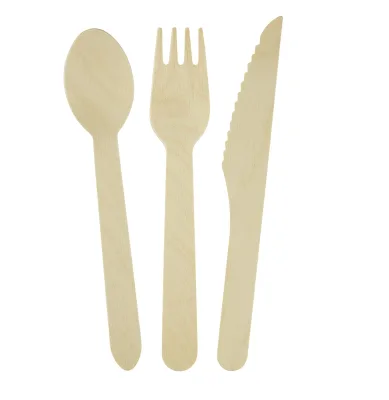
The foundation of any sustainable cutlery procurement strategy lies in the material selection. The observed market data reveals a distinct bifurcation between organic and metallic options, each serving different procurement needs. On the organic side, products are frequently described as being made from "Bamboo & Wood" or "100% Bamboo." These items are marketed with an "Eco-Friendly" feature set, appealing to brands prioritizing biodegradability and renewable sourcing. However, a critical observation in the data is the conflicting attribute regarding disposability. While some listings explicitly state "Disposable," others specify "Non-Disposable." This discrepancy necessitates a strict verification step where buyers must confirm the intended lifecycle of the product. For a "reusable" set, the "Non-Disposable" designation is the primary filter, ensuring the item is engineered for multiple wash cycles rather than single-use events.
Conversely, the metallic segment of the market offers "Stainless Steel" options, specifically citing "SUS304 /201" as the material grade. This distinction is vital for procurement teams, as SUS304 offers superior corrosion resistance and durability compared to the 201 grade, which is more prone to rust in high-moisture environments like commercial dishwashers. The data indicates that these metal sets often feature a "Multicolor" finish, achieved through various coating or plating processes, while maintaining the structural integrity required for heavy-duty use in "Home/Hotel/Restaurant" settings. When evaluating material quality, buyers should request mill certificates for stainless steel to verify the exact alloy composition, ensuring the "SUS304" claim is not merely a marketing label.
Technical Specifications and Dimensional Standards
Precision in technical specifications is paramount for ensuring that cutlery sets meet the ergonomic and functional requirements of the end-user. The observed product data highlights a wide variance in dimensions, reflecting the diversity of design styles available. For instance, specific models are defined by precise measurements such as "22cm" or "22.6 x 1.9 CM," which likely correspond to the overall length of knives or forks. Other entries provide a range of "47mm-158mm," suggesting a modular design or a set containing various utensil sizes within a single SKU.
Packaging specifications also play a significant role in the logistical planning of the procurement process. The data shows varied packing methods, ranging from "1PC/Kraft Paper Box" to "1PC/OPP Bag" and bulk cartons containing "240PCS/CTN." Some suppliers offer "Color Box" packaging, which adds value for retail-ready products, while others utilize simple "Plastic" or "Kraft Paper" solutions. The weight of the cartons is also a critical data point; one observed specification lists a carton weight of "58.8lbs," which directly impacts shipping costs and warehouse handling requirements. Buyers must align these packaging metrics with their distribution channels. For example, a "1000boxes/Carton" configuration is ideal for large-scale wholesale distribution, whereas "1PC/OPP Bag" is more suitable for direct-to-consumer e-commerce fulfillment.
Compliance, Certification, and Regulatory Verification
Navigating the regulatory landscape is perhaps the most critical aspect of sourcing eco-friendly cutlery, particularly when targeting markets in Europe and North America. The observed data confirms the presence of several key certifications, including "CE/EU," "FDA," and "LFGB." The "CE/EU" mark indicates compliance with European safety, health, and environmental protection requirements, while "FDA" approval is essential for products intended for food contact in the United States. The "LFGB" certification is a German standard that is often stricter than general EU regulations, covering food safety and migration limits for materials.
However, the data also lists background standards such as "EN13432" and "ASTM D6400" with a low-confidence tag. These standards relate to compostability and biodegradability. While they are relevant for bamboo products, they should not be assumed to apply to every listed item without explicit verification. A buyer must treat these as verification targets rather than guaranteed attributes. For stainless steel products, the focus shifts to food-grade safety standards rather than compostability. When evaluating a supplier, procurement teams should request valid, up-to-date test reports from accredited laboratories that specifically reference the "FDA" or "LFGB" standards for the specific product model, such as "JMBamboo" or "HN-C025." Relying on generic certification claims without supporting documentation poses a significant compliance risk.
Cost Drivers and Minimum Order Quantity Dynamics
Understanding the cost structure of eco-friendly cutlery sets requires an analysis of the observed Minimum Order Quantity (MOQ) and pricing ranges. The data indicates a significant spread in MOQs, ranging from "100" to "100,000" units, with specific models like "HN-C025" and "AL031" listing an MOQ of "3000sets" or "3000PCS." This variance suggests that suppliers cater to different market segments, from small startups to large institutional buyers. The observed price range of "0.01-2.75" USD per unit further illustrates the disparity between basic, mass-produced items and premium, customized sets.
Several factors drive these costs. First, the "Customization" attribute is a major cost variable. The data confirms that "Customization" is available and that "Logo" application via "Laser Engraved" techniques is a common service. Laser engraving on bamboo or stainless steel adds a layer of processing complexity and cost compared to standard, unbranded inventory. Second, the "OEM" and "ODM" support offered by suppliers allows for design modifications, which inevitably increases the unit price and potentially the MOQ. Third, the material choice dictates the baseline cost; "100% Bamboo" sets may be priced differently than "SUS304" steel sets depending on the sourcing of raw materials and the finishing processes involved. Buyers should negotiate based on their volume, understanding that an MOQ of "3000" is a common threshold for securing a competitive price point, while orders below this level may incur higher per-unit costs or require a premium for "Stocked" items.
Supplier Evaluation and Customization Capabilities
When selecting a supplier for reusable cutlery, the evaluation process must extend beyond price to include capabilities in customization and production flexibility. The data indicates that "Customized" options are widely available, with many suppliers accepting "OEM" (Original Equipment Manufacturer) requests. This is particularly relevant for brands looking to differentiate their product line through unique "Design Style" elements, such as the "Modern" style observed in some listings. The ability to apply a "Laser Engraved" logo is a specific capability that adds brand value without compromising the eco-friendly narrative.
However, not all products are customizable. The data explicitly notes instances where "Customized" is marked as "Non-Customized," indicating that certain models are sold as standard stock items. Buyers must clearly distinguish between "Stocked" products, which offer immediate availability but limited branding options, and "Customized" products, which offer branding but require longer lead times and higher MOQs. The "Product Packing" section also reveals flexibility, with options for "Customization" in packaging design. This is crucial for brands that want to align their packaging with their sustainability goals, such as using "Kraft Paper" instead of plastic. A robust supplier evaluation should include a review of their past work for similar customization projects, ensuring they can deliver consistent quality in laser engraving and packaging assembly.
Quality Control and Long-Term Procurement Considerations
Ensuring the longevity and safety of the cutlery set is the final pillar of a successful sourcing strategy. The "Non-Disposable" attribute for bamboo products implies that these items must withstand repeated washing and drying cycles without degrading. For stainless steel sets, the "SUS304" designation suggests a high standard of durability, but buyers must verify that the "Multicolor" finishes are food-safe and do not chip or peel over time. The "Feature: Eco-Friendly" claim must be backed by tangible quality, ensuring that the product does not leach harmful substances during use.
Long-term procurement considerations also involve the supply chain's resilience. The "prod_origin" is listed as "China" for the observed products, which is a common manufacturing hub for this category. Buyers should assess the supplier's capacity to handle fluctuations in demand, especially given the wide MOQ range. The "Product Packing" specifications, such as "1000boxes/Carton," suggest a high-volume logistics model. For buyers planning to scale, establishing a relationship with a supplier who can support "OEM/ODM" and manage complex packaging requirements is essential. Additionally, the "Usage" category, which includes "Wedding/Party/Coffee Shop/Holiday," indicates that the product must be versatile enough to meet diverse consumer needs. Quality control protocols should include random sampling for dimensional accuracy (e.g., verifying the "22cm" standard) and material integrity checks to ensure the "Eco-Friendly" promise is not compromised by poor manufacturing practices.
Comparative Analysis of Product Attributes
To assist in decision-making, the following table summarizes the key differences between the primary product categories observed in the market data. This comparison highlights the trade-offs between material type, customization potential, and compliance requirements.
| Attribute | Bamboo & Wood Category | Stainless Steel Category |
|---|---|---|
| Primary Material | 100% Bamboo / Bamboo & Wood | SUS304 / 201 Stainless Steel |
| Disposability | Mixed (Non-Disposable & Disposable) | Non-Disposable (Reusable) |
| Key Certifications | CE/EU, FDA, LFGB | CE/EU, FDA, LFGB |
| Customization | Available (Laser Engraved Logo) | Available (OEM/ODM Support) |
| Design Style | Natural, Eco-Friendly | Modern, Multicolor |
| Typical MOQ | 3000 sets (varies by model) | 3000 sets (varies by model) |
| Packaging | Kraft Paper Box, OPP Bag | Color Box, Carton, OPP |
| Target Usage | Wedding, Party, Coffee Shop | Home, Hotel, Restaurant |
This comparison underscores that while both categories offer "Eco-Friendly" and "Customized" solutions, the material choice dictates the product's application and longevity. Bamboo sets are ideal for events and casual dining where a natural aesthetic is preferred, while stainless steel sets are better suited for high-volume commercial environments requiring durability and a modern finish. By carefully aligning these attributes with specific business needs, buyers can construct a procurement strategy that delivers value, compliance, and sustainability.
FAQs
What certifications do eco friendly reusable cutlery sets have?
Products typically hold CE/EU, FDA, and LFGB certifications for food safety. These marks verify compliance with European and American regulations, ensuring the materials are safe for contact with food in home or restaurant settings.
Which materials are used for bamboo reusable cutlery sets?
The primary materials are 100% Bamboo or a Bamboo & Wood composite. These organic options are marketed as eco-friendly and often feature laser-engraved logos for branding while maintaining a natural aesthetic.
Can I find stainless steel cutlery sets with specific grades?
Yes, stainless steel sets are available in SUS304 and 201 grades. SUS304 offers superior corrosion resistance for commercial use, while 201 is a more economical option suitable for lighter duty applications.
What is the typical minimum order quantity for these sets?
Minimum order quantities range from 100 to 100,000 units depending on the supplier. Specific models often require an MOQ of 3,000 pieces or sets, while stocked items may have lower thresholds.
How are eco friendly reusable cutlery sets packaged for shipping?
Packaging varies from individual Kraft paper boxes to bulk cartons containing 240 pieces. Options include OPP bags, color boxes, or custom packaging configurations designed for wholesale distribution or retail readiness.
Is customization available for logo engraving on these sets?
Customization is widely available with laser engraving used to apply logos on bamboo or steel. Buyers can request OEM services to modify designs, though some standard stock items may not support these changes.